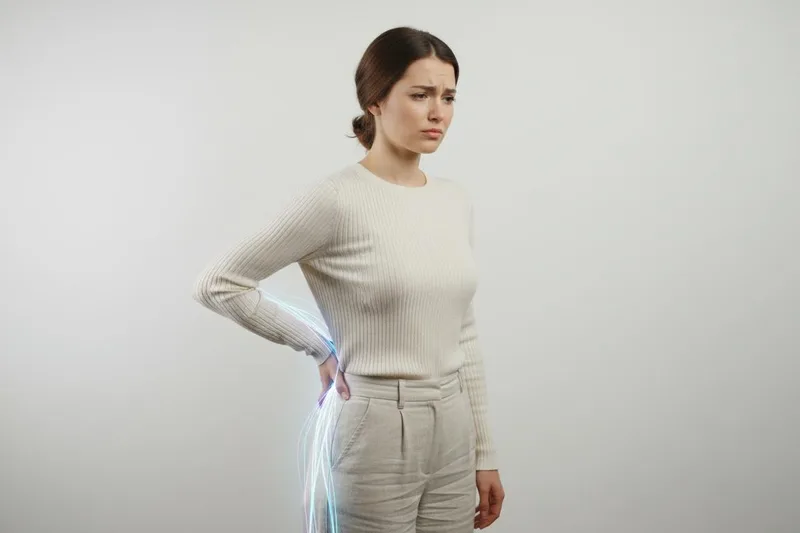
Most of us have experienced back pain, a shooting pain down our legs, or numbness in our limbs at some point in our lives. Sometimes we think the reasons are simple, but there may actually be a deeper story behind it.
Foraminal Stenosis is a condition that can occur in our spine, but many people don't know about it. So, let's talk about it in a simple way today, in a way that you can understand.
Simply put, what is foraminal stenosis?
Think of your spine as a big tube. Our
spinal cord runs through this tube. There are small
nerves that come out of this spinal cord, which carry messages to our entire body, and do things like move our limbs and give us sensation. So, these nerves come out of the spinal cord through small holes called
foramen . To be precise, holes called
neural foramen .
Foraminal stenosis is when those holes become blocked or narrowed for various reasons. Just like when a water pipe gets blocked, it becomes difficult for the water to flow, when these holes get blocked, the nerve gets squeezed.
Think about what happens when an electrical wire gets stuck in a door. The wire gets crushed, and maybe even stops the electricity from flowing properly. That's how nerve compression happens. The messages traveling through the nerve can be interrupted, causing pain, and sometimes even permanent damage to the nerve.
Where on our back is this condition most common?
Our spine is divided into several sections. This condition, called foraminal stenosis, can occur in any of these sections.
- Cervical Spine : This is the second most common location where this condition is seen.
- Thoracic Spine: This area is a little smaller.
- Lumbar Spine: This is where foraminal stenosis most commonly occurs.
- Sacral Spine: Right at the bottom of the spine.
- Coccygeal Spine: We call it the part where the tailbone is.
Is this a disease that many people get?
In fact, this condition is more common than you might think, especially among people over the age of 55. It increases in incidence as you get older. But surprisingly, many people with foraminal stenosis do not show any symptoms. Some studies suggest that by the age of 60, about 40% of people have moderate lumbar stenosis. This can increase to about 75% by the age of 80. However, even with severe cases, only about 17.5% of people show symptoms.
What are the symptoms of foraminal stenosis?
The symptoms are similar to those
of a pinched nerve . We also call this condition
Radiculopathy . One or more of the following symptoms may occur:
- Pain: This is the main and most common symptom. Not only is there pain in the back and neck, but pain can also radiate down the nerve into the arm or leg.
- Numbness or tingling sensation (`Paresthesia`): It may feel like an "electric shock" or like ants are running around.
- Numbness: The affected area is numb and unable to feel touch .
- Muscle weakness or loss of control: You may feel like an arm or leg is going numb, or you may find it difficult to lift a weight.
The location of the symptoms is important!
It is very important for the doctor to know where in the body you are experiencing these symptoms, so that he can diagnose and treat the condition. Think of our spinal cord as a `freeway`, and the nerves that come out of it are like `ramps`. Messages from the brain, or messages from different parts of the body to the brain, have to go through this `road`. So, if you have a symptom like this in your leg, arm, or anywhere else, the doctor can find out which level of the spinal cord nerve is connected to that
part of the skin (`dermatome`) . This will be a great help in identifying the exact location of the problem.
When and how symptoms appear
It is also important for your doctor to know when your symptoms occur and what you are doing. For example, someone with lumbar foraminal stenosis may have pain that worsens when standing and improves when sitting. Keeping a diary of your symptoms (e.g., when they started, what they were like, and how long they have been present) can help your doctor better understand your condition and treat it.
Why does foraminal stenosis occur? What are the causes?
There are several possible causes for this. For some people, it may be due to one reason, while for others, it may be a combination of several reasons.
- Injuries : Back injuries, such as those caused by fallsThese nerve holes can be compressed by things like scar tissue , herniated or bulging discs (we call them "slipped discs"), and spinal fractures.
- Aging : As we age, our bones, joints, and ligaments naturally wear out. This also increases the risk of developing foraminal stenosis.
- Musculoskeletal or inflammatory conditions : This can also be caused by conditions such as degenerative disk disease , ankylosing spondylitis (in which the joints of the spine become inflamed and fuse together), and Paget's disease of the bone .
- Spine surgery: This condition can also occur after some spine surgeries. Sometimes, a condition called Persistent Spinal Pain Syndrome (PSPS) can also occur when back pain surgery is unsuccessful.
- Growths or tumors: Growths, tumors, or tumors (benign or malignant) in the spine can compress the nerves. Bone spurs (osteophytes) (we call them "bone spurs") can also block these openings.
- The natural structure of the spine: The spinal canal naturally narrows slightly as it moves down the spine. This is one reason why this condition is common in the lumbar region.
- Anatomy differences: Some people are born with a slightly different spine structure. It doesn't necessarily mean they're sick, but it can make them more likely to develop foraminal stenosis. People with scoliosis ( curvature of the spine) are also at risk.
Can this cause complications?
Most of the time, foraminal stenosis does not cause serious complications. However, sometimes the following can occur:
- Chronic pain: Pain that is persistent and difficult to control.
- Specific nerve pain, such as sciatica: a sharp pain that travels down the leg.
- Nerve damage: Nerve damage can be permanent.
- Weakness or paralysis of the muscles controlled by the relevant nerve: A limb may be paralyzed.
- Urinary and bowel incontinence:This is caused by compression of the nerves that control the bladder and bowels. If this happens, you should see a doctor immediately.
- Psychological problems caused by pain: Anxiety , depression, etc.
- Pain and decreased flexibility to the point of being unable to be physically active or perform daily tasks.
How do doctors detect this?
A doctor will first ask you about your symptoms and do a physical exam. They may then order
an MRI (Magnetic Resonance Imaging) scan to confirm the diagnosis. An MRI scan can show the bones, nerves, and muscles very clearly. However, keep in mind that foraminal stenosis can be seen on an MRI, but many people do not have symptoms, so an MRI is not always necessary. For people who cannot have an MRI (for example, those with a pacemaker),
a CT (Computed Tomography) scan and
a myelogram are the best options. Sometimes other tests that look for nerve problems may also be done. For example,
electromyography (EMG) and
nerve conduction studies . Your doctor will tell you if you need other tests based on your health history and needs.
What are the treatments? Can this be cured?
Foraminal stenosis can be treated, and in some people it can be completely corrected. There are several treatment options. However, the treatment that is right for you may vary depending on your health condition, the cause of the stenosis, and other factors. Your doctor is the best person to advise you on this. If you have no symptoms, most of the time, no treatment is needed.
Conservative treatments are usually considered when you have early symptoms, such as pain. If complications, such as loss of urinary control or muscle weakness, occur,
interventional treatments or surgery are usually needed. Treatments can be divided into three main types:
1. Conservative Treatments
These are usually the first treatments to start with. This usually involves taking medication and changing activities.
- Relative rest: If the condition is caused by an injury and swelling, reducing movement may help. However, complete bed rest is usually not recommended.
- Physical therapy: This can increase physical strength and flexibility, and reduce the impact of symptoms.
- Oral anti-inflammatory medications: Medications such as NSAIDs (Nonsteroidal anti-inflammatory drugs) can reduce the swelling around the nerve and relieve symptoms.
- Oral steroid medications: These are also given to reduce swelling.
- Oral opioid medications: These are given short-term for severe pain. However, they are not given continuously due to the risk of addiction.
2. Interventional Treatments
These are a little more than conservative treatments. Sometimes
injections of medications, such as steroids, into the affected nerve can help. These injections are done under X-ray to make sure the medicine is going into the right place. These injections can sometimes delay the need for surgery.
3. Surgical Treatments
Nowadays, spinal decompression surgery is often performed
using a minimally invasive approach . This means that small incisions are used, which reduces bleeding, pain, and recovery time. There are several types of surgery that can be performed:
- Foramen surgery: Foraminotomy is a surgery to enlarge the hole (neural foramen) through which the nerve exits. Foraminectomy is the same, but it also removes some of the surrounding tissue to make the hole larger.
- Facet joint surgery: Facetectomy is the removal of an entire facet joint to relieve pressure on the spinal cord and nerves.
- Lamina surgery: Laminotomy is the removal of a small piece of bone and soft tissue from a vertebra to relieve pressure on the spinal cord or nerves. Laminectomy is the removal of a large central portion of the vertebra.
- Bone spur removal: If bone spurs (osteophytes) are pressing on nerves, removing them will also reduce the pressure.
- Spinal Cord Stimulator: This involves implanting an electrical stimulator into a part of the spinal cord. This stimulator sends a small electrical current to the cells in the spinal cord. This current prevents those cells from sending pain signals. This can be helpful if surgery is not successful or cannot be performed.
What are the complications/side effects of the treatment?
Because there are so many treatments, complications and side effects vary. Also, recovery time and what to expect after treatment can vary from person to person. Your doctor can best explain the side effects you may experience and the recovery time.
Can I reduce or completely prevent the occurrence of foraminal stenosis?
Foraminal stenosis is something that occurs in unexpected ways, and sometimes it does not show any symptoms. Therefore,
There is currently no way to prevent this or reduce the risk. What should I expect if I have foraminal stenosis?
Often, this condition is asymptomatic. Some people are diagnosed with it during a scan for another reason. Others never know they have it. Foraminal stenosis can cause back pain before any nerve symptoms appear. If you have back pain for more than a few weeks, see a doctor. Your doctor can then determine if your pain is due to foraminal stenosis or something else, or refer you to a specialist. If you have severe symptoms such as numbness, tingling, or muscle weakness – especially if they affect your arms or legs – see a doctor as soon as possible. If your foraminal stenosis is severe enough to cause these symptoms, it can lead to nerve damage and other serious complications. How long does foraminal stenosis last?
This can be temporary or permanent. If it's caused by something short-term, like swelling from a minor injury, it may go away on its own. However, if it's associated with a chronic condition, or if it occurs after surgery, or if it's due to the natural shape of your spine, it's likely to be permanent. What is the outlook for foraminal stenosis?
Most cases of foraminal stenosis do not cause symptoms. Even with severe stenosis, only about 17.5% of people develop symptoms. If you do not have symptoms, there is little reason to worry (your doctor will tell you exactly what to do). If symptoms do occur, the outlook can change. Mild symptoms can be managed with treatment. For some people, treatment can help control the worsening of symptoms. If foraminal stenosis is severe, immediate treatment, such as surgery, is usually needed to prevent the condition from getting worse and/or to stop permanent nerve damage or other complications from occurring. How do I take care of myself if I have foraminal stenosis?
If you have foraminal stenosis, you usually don't need to do anything special or make any changes until you start to feel symptoms. If you have back pain, you can try to manage it on your own at first. However, if it persists after a few weeks, see a doctor. Note: Pain is a symptom that you should not ignore or try to treat on your own if it has been present for more than a few weeks. Chronic pain over time can change the way your body and brain process pain signals, leading to conditions like Central Pain Syndrome.
If your doctor diagnoses you with foraminal stenosis, he or she will guide you on how to care for yourself and help you choose the treatment options available. When should I go to an Emergency Treatment Unit (ETU) ?
If you have sudden, severe back pain, especially with an injury, or if you suddenly develop signs that you may have a problem with your spine or nerves, go to the nearest emergency room. Such symptoms include:- Sudden muscle weakness in one or both legs.
- You can't control the flow of urine or stool.
- Pain so severe that you can't do your daily activities.
How serious is foraminal stenosis?
This is usually not a serious condition. Many people do not even know they have it because they have no symptoms. It only becomes serious if the nerve compression is severe enough to cause muscle weakness, numbness, or loss of sensation. What is the difference between Spinal Stenosis and Foraminal Stenosis?
Foraminal stenosis is a type of spinal stenosis . It affects a specific area of the spine, the opening through which nerves exit the spine to travel to other parts of the body (the neural foramen). Spinal stenosis can be a narrowing of any part of the spine, not just a neural foramen. It can also be a combination of both. What is the best treatment for Foraminal Stenosis?
The best treatment for this can vary from person to person. Treatments that help one person may not help another. Your doctor can best explain the treatments available to you, especially those that will help you the most and that will fit your goals and needs. (Take-Home Message)
So, the most important thing you can learn about Foraminal Stenosis is that if you have symptoms like back pain, numbness, tingling, or loss of sensation in your limbs, don't just ignore them. The most important thing is to see a doctor and find out exactly what the problem is. In most cases, there are good treatments for this condition called Foraminal Stenosis. If you recognize it early, you have a good chance of controlling and curing it before it causes major problems and permanent nerve damage. Then you will be able to do the things you love without limiting your life. Foraminal stenosis, back pain, nerve compression, numbness, spine, MRI, physical therapy



💬 Comments (0)
No comments yet. Be the first to share your thoughts here.
Add Your Comment