
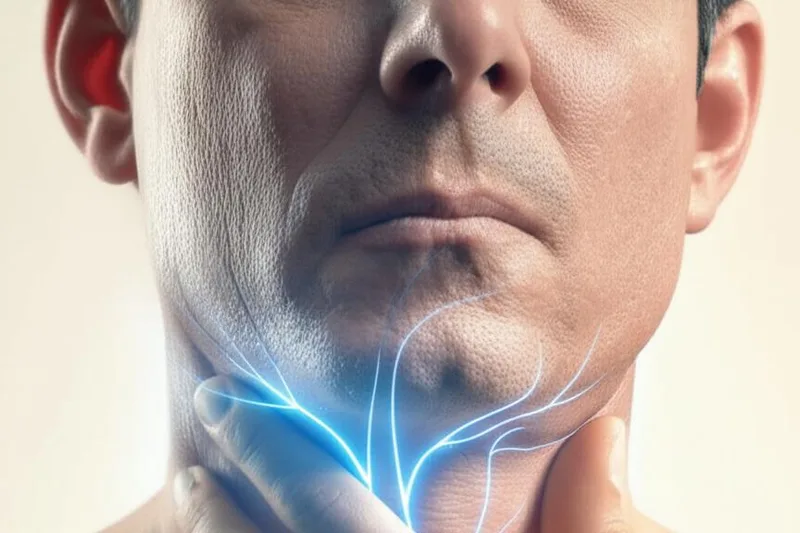
Have you ever had a sudden, sharp pain in your throat, behind your tongue, or inside your ear? Or do you find it hard to swallow or feel like your throat is numb? There are many reasons for this, but sometimes there is a nerve behind it that we don't hear much about, but it is very important. Today we are going to talk about it.
Who is this Glossopharyngeal Nerve?
Simply put, this is the ninth of the 12 main pairs of nerves that originate in our brain. Just like the main roads in our country, there are 12 main nerve pathways that carry messages from the brain to different parts of the body. We call these the Cranial Nerves. So this Glossopharyngeal nerve is one of them. It originates in our brain, travels down the neck, and connects to several very important parts of our body. For example, to places like the middle ear, throat, salivary glands, tonsils, and tongue.
There are three types of fibers inside this nerve. That means it does three things.
- Motor fibers: These control muscles . This nerve controls a muscle that helps us swallow food.
- Sensory fibers: These carry sensations from various places, such as taste, pain, and touch, to the brain.
- Parasympathetic fibers: These control things that we cannot control consciously, such as saliva production.
What are the main functions of this nerve?
Because this nerve does several things at once, it's very important to our daily lives. Let's see what it is.
| Function | A simple explanation |
|---|---|
| Taste | This nerve is responsible for the sense of taste in the back third of our tongue. |
| Carrying the senses | This nerve carries sensations (pain, touch) from the tonsils, back of the throat, middle ear, and behind the ear to the brain. |
| Helping to swallow | Swallowing is a very complex process. This nerve, along with several other nerves, helps to safely pass food into the stomach when we swallow, rather than into the windpipe. |
| Saliva production | Saliva is needed to make it easier to swallow food. This nerve stimulates the parotid gland in our cheek to produce saliva. |
| Blood pressure control | This nerve also helps to transmit information about blood pressure and oxygen levels in the blood to the brain from special sensors in the blood vessels in our neck. |
What are the diseases that affect this nerve?
If this nerve is damaged or its function is disrupted, various problems can occur.
Glossopharyngeal Neuralgia
This is the main painful condition associated with this nerve.
A sudden, severe pain, like a jolt or electric shock, that lasts for a few seconds or a minute. This pain is usually felt in the jaw area, the back of the tongue, the tonsils , and inside the ear.
This pain comes and goes suddenly. It can start when you talk, laugh, swallow, or sneeze. The pain can be so severe that some people are afraid to even eat.
The main reason for this is that the nerve is pressed by a blood vessel along its path. Apart from that, this pain can also be caused by diseases such as cancer of the brain, throat, tonsils, infections, and multiple sclerosis. This pain is difficult to control with ordinary painkillers. Therefore, the doctor usually prescribes special drugs such as `(Gabapentin)`, `(Pregabalin)` or `(Carbamazepine)`.
Other nerve damage (Nerve Palsy)
This nerve can be damaged in an accident, stroke , or during surgery.
- Tonsillectomy: This nerve can become compressed due to scar tissue that forms after tonsil removal.
- Carotid endarterectomy: This nerve can be damaged during surgery to clean out the main blood vessels in the neck.
- Diabetes Mellitus: People with poorly controlled diabetes are at increased risk of this type of cranial nerve damage.
This nerve is rarely damaged on its own because it runs close to several other important nerves (the auditory nerve, the vagus nerve). Therefore, if it is damaged, several symptoms can often occur together.
Signs that there is a problem with your nerves
If you have one or more of the following symptoms, it is important to pay attention to them and seek medical advice.
| Symptom | Description |
|---|---|
| Difficulty swallowing (Dysphagia) | Feeling of choking or difficulty swallowing food or drink. |
| Dry mouth | The mouth is often dry due to decreased saliva production. |
| Throat numbness | A feeling of numbness or loss of sensation in the back of the throat or on the back of the tongue. |
| Decreased gag reflex | Decreased gag reflex when something is put down the throat, especially on one side only. |
| Taste changes | Decreased or altered taste sensation on the back of the tongue. |
Important: These types of neurological symptoms can sometimes be an early sign of a serious underlying condition. So if you have these symptoms, don't panic, and see your doctor right away for advice.
How do we keep this nerve healthy?
There's really no need to take special care of this nerve alone. But if we can keep our entire nervous system healthy, this nerve will also be healthy. There are a few simple things we can do for that.
- Avoid smoking. Smoking is a substance that causes great damage to the nervous system as well as blood vessels.
- Limit alcohol consumption.
- Eat a balanced diet. Eat foods that provide the vitamins and micronutrients that our nerves need.
- If you have diabetes, control it well. Follow your doctor's instructions and medications exactly.
The Glossopharyngeal nerve is a small but very powerful part of our body. Its dysfunction can have a major impact on our quality of life. Therefore, it is very important to be aware of it and seek medical advice if there is any problem.
Take-Home Message
- The glossopharyngeal nerve is one of the 12 main nerves that originate from our brain. It is essential for swallowing, taste, saliva production, and sensation in the throat/ear.
- Symptoms such as sudden, severe pain in the throat, ear, or back of the tongue (neuralgia), difficulty swallowing, dry mouth, and numbness in the throat can be caused by a problem with this nerve.
- If you have any of these symptoms, don't ignore them and see your doctor immediately. They could be a sign of a more serious condition.
- Maintaining a healthy lifestyle (no smoking, balanced diet) and especially managing medical conditions like diabetes are very important for the health of our nervous system.


💬 Comments (0)
No comments yet. Be the first to share your thoughts here.
Add Your Comment