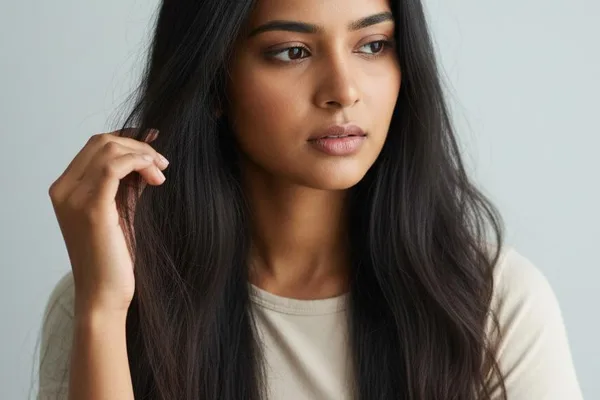
Are you worried about female hair loss? (Female Hair Loss / Alopecia)

Are you worried about female hair loss? (Female Hair Loss / Alopecia)

Have you ever woken up in the morning and found strands of hair falling out of your hair, or have you ever seen strands of hair falling out with the water while taking a shower? Do you feel like your hair is thinning out? This is a common problem for many women. So today, let's talk about hair loss in women, which is medically known as alopecia.

First, let's see what hair loss means.

Simply put, we call 'female hair loss' when a woman's hair falls out unexpectedly and excessively. It is normal for a healthy person to lose about 50 to 100 hairs a day. This is because while our hair naturally falls out on one side, new hairs grow on the other side. This is like a balance. But if this balance is lost, that is, if the number of new hairs that grow is less than the amount that falls out , then we call this hair loss.

Remember, it's normal to lose a little hair every day. The problem becomes when this amount suddenly increases or when you notice patches of hair loss on your scalp.

What is the life cycle of a hair follicle?

Even one of our hairs has a life cycle. It occurs in three main stages.

1. Anagen phase: This is the period when the hair shaft is actively growing. This period can last from two to eight years. 85% - 90% of the hair shafts on our head are in this phase.

2. Catagen phase: This is when the hair shaft stops growing and the hair follicle shrinks. This lasts about two to three weeks.

3. Telogen phase: This is the final phase. During this phase, the hair follicle is resting and falls out after about two to four months. Then a new hair follicle begins to grow in its place.

The anagen phase of our eyelashes and short hairs on our arms and legs is very short, about a month. But the hair on our head can stay in this growth phase for six years or even longer.

What are the main types of women's hair?

Women's hair styles are different from one another. They can be mainly divided into three types.

Type of hair loss Simply put...
Androgenetic alopecia (FPHL) This is the most common type of baldness in women. It is characterized by thinning hair on the top and sides of the head. Some people also call it 'female pattern baldness'.
Anagen effluvium This happens because of certain medications. These medications affect the growing hair follicles and cause hair to fall out suddenly. The best example is chemotherapy given for cancer.
Telogen effluvium What happens in this is that more hair follicles than normal suddenly enter the resting phase (Telogen phase). Then, a large number of hair follicles fall out in a short period of time. This can be caused by things like extreme stress or childbirth.

Why do women lose their hair? What are the main reasons?

There is no single reason for hair loss. There can be many reasons. Sometimes, several reasons come together to cause this.

  • Genetic influence : If your mother or grandmother had this problem, you are more likely to have it too.
  • Hormonal changes: Hormonal imbalances that occur during periods like pregnancy , childbirth , and menopause are a major cause.
  • Certain medical conditions: Conditions such as thyroid problems, anemia (low blood count), and vitamin and mineral deficiencies (e.g. vitamin D , iron, zinc).
  • Medications: Some medications taken for high blood pressure, cancer, and arthritis can cause hair loss as a side effect.
  • Excessive mental or physical stress: A sudden major trauma, surgery, or excessive stress can cause hair loss.
  • Nutritional deficiencies: Sudden weight loss, not eating a balanced diet, etc.
  • Harmful things to do to your hair: Things like over-heating your hair (straightening, curling), using harsh chemicals, and styles that pull your hair tight (tight ponytails) can damage your hair follicles.

The relationship between menopause and hair loss

Menopause is a time of major hormonal changes in a woman's life. During this time, estrogen and progesterone hormone levels decrease. This directly affects hair. Hair follicles shrink, hair strands begin to thin, and hair growth slows down.

Signs that you may be losing hair

See if you have these characteristics too.

  • The amount of hair I shed daily now feels noticeably higher .
  • When combing the front of the head, the middle part appears to be wider .
  • My hair is thinning and my scalp is starting to show .
  • When I put a ponytail on, I feel much smaller than before.
  • It feels like my hair is breaking through the trees.

How does a doctor diagnose this condition?

If you suspect you are losing your hair, the best thing to do is to see a doctor, especially a dermatologist. He or she will examine you.

  • Taking a complete history: They will ask you many things, such as whether anyone in your family has this problem, what medications you take, your diet, and whether you have any mental stress.
  • Physical examination: The scalp is carefully examined. A ``pull test`` may also be performed, in which the hair strands are gently pulled.
  • Blood tests: Blood tests may be ordered to check things like iron levels, thyroid hormones, and vitamin levels in the blood.
  • Scalp biopsy: Sometimes, if the cause cannot be determined, a very small piece of skin is taken from the scalp and examined under a microscope. This is done under a numbing agent, so you won't feel any pain.

What are the treatments for this?

Treatment depends on the cause of your hair loss. The same treatment doesn't work for everyone.

The most important thing is to start treatment early. The sooner you start, the better your chances of getting results.

There are several main treatment methods:

  • Medicines:
  • Minoxidil: Comes as a liquid or foam applied to the scalp. It stimulates hair follicles and helps new hair grow. But you have to keep using it. If you stop, your hair may fall out again.
  • Hormone-controlling medications: Medications like Spironolactone may be recommended by your doctor for those who are losing hair due to hormonal effects.
  • Vitamin and nutritional supplements: If your body is deficient in a particular vitamin or mineral, supplements will be given.
  • Other treatments:
  • Low-light laser therapy: A special device, such as a helmet or comb, directs red light at the hair follicles to stimulate growth.
  • Platelet-Rich Plasma (PRP) Injections: The nutrient-rich plasma is extracted from your own blood and injected into your scalp. This helps promote hair growth.
  • Hair transplant surgery: This involves taking hair follicles from a part of your head where you have good hair (usually the back of your head) and replanting them in areas where you have less hair.

You should definitely talk to your doctor before starting any of these treatments, as some treatments are not suitable for pregnant women or nursing mothers.

What can we do to prevent hair loss?

While we can't prevent all causes, there are some things we can do.

  • Eat a balanced diet: Include foods rich in iron, zinc, protein, and vitamins (vegetables, fruits, nuts, meat, fish, eggs) in your diet.
  • Treat your hair gently: Avoid harsh shampoos, excessive heat, brushing your hair vigorously, and tying your hair tightly.
  • Manage stress: Relax your mind with things like yoga and meditation.
  • Avoid smoking: Smoking damages hair follicles.

Although hair loss may not be physically painful, it can be very emotionally damaging. It can lead to low self -confidence and social anxiety. If you feel this way, don't hold it in your heart and talk to someone you trust. It's also important to seek help from a mental health counselor if necessary.

Take-Home Message

  • It's normal to lose 50-100 hairs a day. If you're losing more hair than that, or if it's continuously falling out, be concerned.
  • Women's hair loss can be affected by many factors, including genetics, hormonal changes, medical conditions, and lifestyle.
  • If you feel like you're losing too much hair, the best thing to do is to see a doctor, especially a dermatologist, as soon as possible.
  • Depending on the cause, there are various treatment options (medication, laser therapy, PRP). Early treatment can yield better results.
  • Eating a balanced diet, managing stress, and treating your hair gently can help maintain hair health.

Female hair loss, hair loss, baldness, alopecia, alopecia, female hair loss, hair loss treatment, minoxidil, FPHL

Frequently Asked Questions (FAQ)

What is the life cycle of a hair follicle?

Even one of our hairs has a life cycle. It occurs in three main stages.

⚠️ Important: The medical articles and information on Nirogi Lanka are for general awareness only, and are by no means a substitute for professional medical advice, diagnosis, or treatment. For any medical problem you have, consult a qualified physician immediately.

💬 Comments (0)

No comments yet. Be the first to share your thoughts here.

Add Your Comment

Please calculate: 4 + 8 =
Are you worried about female hair loss? (Female Hair Loss / Alopecia)
Women's HealthNovember 28, 2025

Are you worried about female hair loss? (Female Hair Loss / Alopecia)

Have you ever woken up in the morning and found strands of hair falling out of your hair, or have you ever seen strands of hair falling out with the water while taking a shower? Do you feel like your hair is thinning out? This is a common problem for many women. So today, let's talk about hair loss in women, which is medically known as alopecia.

First, let's see what hair loss means.

Simply put, we call 'female hair loss' when a woman's hair falls out unexpectedly and excessively. It is normal for a healthy person to lose about 50 to 100 hairs a day. This is because while our hair naturally falls out on one side, new hairs grow on the other side. This is like a balance. But if this balance is lost, that is, if the number of new hairs that grow is less than the amount that falls out , then we call this hair loss.

Remember, it's normal to lose a little hair every day. The problem becomes when this amount suddenly increases or when you notice patches of hair loss on your scalp.

What is the life cycle of a hair follicle?

Even one of our hairs has a life cycle. It occurs in three main stages.

1. Anagen phase: This is the period when the hair shaft is actively growing. This period can last from two to eight years. 85% - 90% of the hair shafts on our head are in this phase.

2. Catagen phase: This is when the hair shaft stops growing and the hair follicle shrinks. This lasts about two to three weeks.

3. Telogen phase: This is the final phase. During this phase, the hair follicle is resting and falls out after about two to four months. Then a new hair follicle begins to grow in its place.

The anagen phase of our eyelashes and short hairs on our arms and legs is very short, about a month. But the hair on our head can stay in this growth phase for six years or even longer.

What are the main types of women's hair?

Women's hair styles are different from one another. They can be mainly divided into three types.

Type of hair loss Simply put...
Androgenetic alopecia (FPHL) This is the most common type of baldness in women. It is characterized by thinning hair on the top and sides of the head. Some people also call it 'female pattern baldness'.
Anagen effluvium This happens because of certain medications. These medications affect the growing hair follicles and cause hair to fall out suddenly. The best example is chemotherapy given for cancer.
Telogen effluvium What happens in this is that more hair follicles than normal suddenly enter the resting phase (Telogen phase). Then, a large number of hair follicles fall out in a short period of time. This can be caused by things like extreme stress or childbirth.

Why do women lose their hair? What are the main reasons?

There is no single reason for hair loss. There can be many reasons. Sometimes, several reasons come together to cause this.

  • Genetic influence : If your mother or grandmother had this problem, you are more likely to have it too.
  • Hormonal changes: Hormonal imbalances that occur during periods like pregnancy , childbirth , and menopause are a major cause.
  • Certain medical conditions: Conditions such as thyroid problems, anemia (low blood count), and vitamin and mineral deficiencies (e.g. vitamin D , iron, zinc).
  • Medications: Some medications taken for high blood pressure, cancer, and arthritis can cause hair loss as a side effect.
  • Excessive mental or physical stress: A sudden major trauma, surgery, or excessive stress can cause hair loss.
  • Nutritional deficiencies: Sudden weight loss, not eating a balanced diet, etc.
  • Harmful things to do to your hair: Things like over-heating your hair (straightening, curling), using harsh chemicals, and styles that pull your hair tight (tight ponytails) can damage your hair follicles.

The relationship between menopause and hair loss

Menopause is a time of major hormonal changes in a woman's life. During this time, estrogen and progesterone hormone levels decrease. This directly affects hair. Hair follicles shrink, hair strands begin to thin, and hair growth slows down.

Signs that you may be losing hair

See if you have these characteristics too.

  • The amount of hair I shed daily now feels noticeably higher .
  • When combing the front of the head, the middle part appears to be wider .
  • My hair is thinning and my scalp is starting to show .
  • When I put a ponytail on, I feel much smaller than before.
  • It feels like my hair is breaking through the trees.

How does a doctor diagnose this condition?

If you suspect you are losing your hair, the best thing to do is to see a doctor, especially a dermatologist. He or she will examine you.

  • Taking a complete history: They will ask you many things, such as whether anyone in your family has this problem, what medications you take, your diet, and whether you have any mental stress.
  • Physical examination: The scalp is carefully examined. A ``pull test`` may also be performed, in which the hair strands are gently pulled.
  • Blood tests: Blood tests may be ordered to check things like iron levels, thyroid hormones, and vitamin levels in the blood.
  • Scalp biopsy: Sometimes, if the cause cannot be determined, a very small piece of skin is taken from the scalp and examined under a microscope. This is done under a numbing agent, so you won't feel any pain.

What are the treatments for this?

Treatment depends on the cause of your hair loss. The same treatment doesn't work for everyone.

The most important thing is to start treatment early. The sooner you start, the better your chances of getting results.

There are several main treatment methods:

  • Medicines:
  • Minoxidil: Comes as a liquid or foam applied to the scalp. It stimulates hair follicles and helps new hair grow. But you have to keep using it. If you stop, your hair may fall out again.
  • Hormone-controlling medications: Medications like Spironolactone may be recommended by your doctor for those who are losing hair due to hormonal effects.
  • Vitamin and nutritional supplements: If your body is deficient in a particular vitamin or mineral, supplements will be given.
  • Other treatments:
  • Low-light laser therapy: A special device, such as a helmet or comb, directs red light at the hair follicles to stimulate growth.
  • Platelet-Rich Plasma (PRP) Injections: The nutrient-rich plasma is extracted from your own blood and injected into your scalp. This helps promote hair growth.
  • Hair transplant surgery: This involves taking hair follicles from a part of your head where you have good hair (usually the back of your head) and replanting them in areas where you have less hair.

You should definitely talk to your doctor before starting any of these treatments, as some treatments are not suitable for pregnant women or nursing mothers.

What can we do to prevent hair loss?

While we can't prevent all causes, there are some things we can do.

  • Eat a balanced diet: Include foods rich in iron, zinc, protein, and vitamins (vegetables, fruits, nuts, meat, fish, eggs) in your diet.
  • Treat your hair gently: Avoid harsh shampoos, excessive heat, brushing your hair vigorously, and tying your hair tightly.
  • Manage stress: Relax your mind with things like yoga and meditation.
  • Avoid smoking: Smoking damages hair follicles.

Although hair loss may not be physically painful, it can be very emotionally damaging. It can lead to low self -confidence and social anxiety. If you feel this way, don't hold it in your heart and talk to someone you trust. It's also important to seek help from a mental health counselor if necessary.

Take-Home Message

  • It's normal to lose 50-100 hairs a day. If you're losing more hair than that, or if it's continuously falling out, be concerned.
  • Women's hair loss can be affected by many factors, including genetics, hormonal changes, medical conditions, and lifestyle.
  • If you feel like you're losing too much hair, the best thing to do is to see a doctor, especially a dermatologist, as soon as possible.
  • Depending on the cause, there are various treatment options (medication, laser therapy, PRP). Early treatment can yield better results.
  • Eating a balanced diet, managing stress, and treating your hair gently can help maintain hair health.

Female hair loss, hair loss, baldness, alopecia, alopecia, female hair loss, hair loss treatment, minoxidil, FPHL

Frequently Asked Questions (FAQ)

What is the life cycle of a hair follicle?

Even one of our hairs has a life cycle. It occurs in three main stages.

⚠️ Important: The medical articles and information on Nirogi Lanka are for general awareness only, and are by no means a substitute for professional medical advice, diagnosis, or treatment. For any medical problem you have, consult a qualified physician immediately.

💬 Comments (0)

No comments yet. Be the first to share your thoughts here.

Add Your Comment

Please calculate: 4 + 8 =