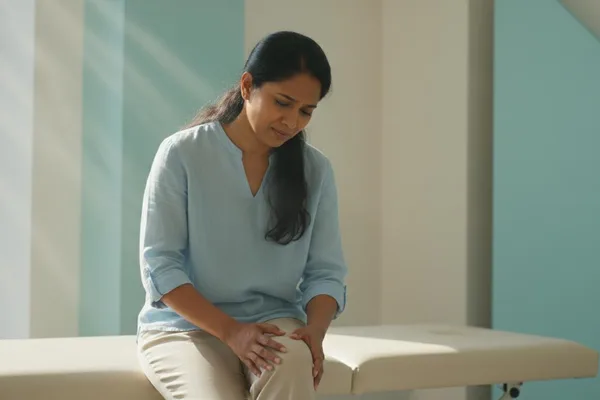
Do you have pain in your arms, legs, or back? Let's find out exactly who an Orthopedic Surgeon is!

Do you have pain in your arms, legs, or back? Let's find out exactly who an Orthopedic Surgeon is!
Hello friend! How are you? Today we are going to talk about some very important parts of our body. Those are our bones, joints, and muscles. Just imagine, without these, we cannot stand, walk, or do anything. So, when there is any problem or pain in such an important system, there is a specialist doctor who helps us. Maybe you have ever fallen and injured an arm or leg, or suffered from knee or shoulder pain. That is when we need to meet this specialist doctor. Let's see who this doctor is and what he does.

What is the musculoskeletal system? Let's understand it very simply!

Simply put, this is the name we give to the entire system that helps our bodies move and function. Think of it like a house.
  • Bones : These are the framework of our body. Like the walls and roof of a house. Bones give our body shape and strength. They also protect important organs inside us, such as the brain and heart .
  • Joints : Joints are the places where two bones connect. Like the hinges on a door. They allow us to bend, extend, and move our bodies. The knees , elbows, shoulders, and hips are the joints we use most often.
  • Muscles: These are like the engines of our body. They are connected to bones and when they stretch and contract, we can move. Muscles help control both the things we do consciously (walking, running) and the things we do unconsciously (heartbeat).
  • Ligaments and Tendons: Ligaments are strong bands that connect one bone to another. Tendons are bands that connect muscles to bones. Without them, joints would not be stable, and the force from the muscles would not be transmitted to the bones.
So all of this together is what keeps us functional. If there's even a little glitch in this system, all of our daily activities can be disrupted, right?

Who is this bone and joint specialist (Orthopedic Surgeon)?

You know, there are some doctors who treat almost all diseases (we call them general practitioners - GPs). Also, there are some doctors who are specially trained and knowledgeable about one particular disease or one part of the body. Such a specialist is called a bone and joint specialist . In English, we call it an ``Orthopedic Surgeon''. These doctors are the ones we mentioned earlier.Those who have received special training to treat injuries , diseases, and any other type of problems that occur in the bones, joints, muscles, ligaments, and tendons.
Important: Despite the word `Surgeon` in their name, these are not all surgeons. In fact, they often try to treat your problem non-surgically , using medications, exercises, or other methods. Surgery is only necessary if all else fails, or if the nature of the injury/disease absolutely requires surgery.
These specialists have studied medicine for years, then spent years more specifically training in the bone and joint system. Therefore, they have extensive knowledge in this field.

When do we need to see an Orthopedic Surgeon?

Okay, now you're probably thinking, "What kind of problem would require me to go to a doctor like this?" See if you've ever had any of these symptoms:
  • Fractures: If you fall or have an accident and break an arm, leg, or other bone, sometimes it can be a small crack.
  • Sprains and Strains: Imagine you suddenly tripped while playing cricket, or you twisted your back while lifting something heavy. These are injuries to the ligaments or tendons.
  • Joint Pain : Persistent pain and swelling in joints such as knees, shoulders, elbows, and hips. One cause of this may be a condition called `(Arthritis)`.
  • Back and Neck Pain: This is a common problem for many people. This pain can be caused by things like poor posture, lifting heavy objects , and changes that occur with age.
  • Sports Injuries : Any type of injury sustained while playing sports. For example, an ACL (anterior cruciate ligament) tear in the knee, a dislocated shoulder, etc.
  • Numbness and weakness in the limbs: Sometimes, a pinched nerve can cause numbness and pain in the hands and fingers. An example is a condition called ``Carpal Tunnel Syndrome.''
  • Deformities of bones or joints: Some conditions are congenital (e.g., clubfoot) or develop later, such as scoliosis.
  • Bone weakness:Conditions like osteoporosis cause bones to become weak and break easily.
  • Difficulty walking, inability to move joints: If a joint feels stuck, as if it cannot be moved.
If you have any of these symptoms, it's best to see a general practitioner and, based on their advice, see a bone and joint specialist.

How can an Orthopedic Surgeon help you?

When you go to see a specialist like this, he or she will take several steps to accurately diagnose your problem and provide appropriate treatment.

1. Diagnosis – Accurately identifying the disease

  • You will be asked about your symptoms: First, the doctor will ask you questions. Where is the pain, how did it start, when does it get worse, and whether you have any other medical conditions. The details you provide are very important.
  • Physical Examination: Next, the doctor will examine you. He or she will feel the area of ​​pain, move your limbs, and bend your knees. This will help them get an idea of ​​where the problem is and how serious it is.
  • Imaging Tests: Sometimes pictures need to be taken to see exactly what's going on inside.
  • `(X-ray)` (X-ray): This can mainly be used to see things like fractures, breaks, cracks, and joint dislocations in bones.
  • `(CT scan)` (CT scan - Computed Tomography scan): This can take clearer, cross-sectional images than an X-ray. It can give some idea not only of the bones, but also of the soft tissues.
  • `(MRI scan)` (M.R.I. Scan - Magnetic Resonance Imaging scan): This can very clearly see problems with soft tissues such as muscles, ligaments, tendons, and cartilage (the cushion-like part between joints).
After these tests, the doctor will determine exactly what your problem is.

2. Treatment – ​​curing the disease

After the diagnosis, the doctor will decide on the most suitable treatment for you. Remember, I said earlier that surgery is not for everything.

Non-surgical Treatments:

Most often, these methods start with:
  • Medication: Painkillers and anti-inflammatory drugs may be given.
  • Injections: Some joint pain, for example, pain caused by arthritis, can be relieved by treatments such as steroid injections that are administered directly into the joint.
  • Casts, Splints, Braces: When a bone is broken, a cast is placed to immobilize it. When a sprain occurs, a splint or brace may be placed to protect a joint.
  • Physical Therapy:This is very important. A physiotherapist will teach you specific exercises to do, ways to strengthen your muscles, and ways to increase the range of motion in your joints. This can help you heal faster and reduce the risk of problems recurring.
  • Lifestyle Modifications: Sometimes, if you are overweight, you may be advised to lose weight. This is because excess weight puts more pressure on joints like the knees and hips. You may also be advised to sit properly and lift things in a way that does not hurt your back.

Surgical Treatments:

Even if all other treatments have been tried, or depending on the severity of the problem, the doctor may decide to perform surgery. Don't be afraid, the doctor will explain everything to you.
  • Fracture Repair: The broken bone pieces are aligned and fixed with wires, nails, plates, and screws.
  • Joint Replacement: A worn-out, painful joint, such as a knee or hip, is removed and replaced with an artificial joint made of metal or plastic (`Hip replacement`, `Knee replacement`). This eliminates pain and allows you to walk and work well again.
  • `(Arthroscopy): This is a type of surgery called "keyhole surgery." One or two small holes are made near the joint, through which a small camera (arthroscope) and surgical instruments are inserted to repair problems inside the joint (e.g., torn cartilage, ligaments). Since there is no large incision, recovery is quick.
  • Ligament and Tendon Repair: Ligaments or tendons, such as the ACL, that are torn during sports are stitched back together.
  • Nerve Release Surgery: In conditions like Carpal Tunnel Syndrome, a minor surgery is performed to release the compressed nerve.
These are just a few examples. Your doctor will discuss with you the treatment that is best suited to your condition.

Things to remember before and during your appointment with an Orthopedic Surgeon

  • A letter from your GP (Referral): In most cases, your family doctor (GP) will refer you to this type of specialist. Take that letter with you.
  • Old reports: If you have any previous X-rays or scans, bring those too.
  • Medication details: Tell your doctor what medications you are currently taking.
  • Ask questions:
"Don't be afraid to ask questions of the doctor. Ask and answer all your doubts and questions. The more informed you are about your illness and treatment, the faster you will recover."
Ask questions like what to do, what not to do, and how long it will take to recover.

How to keep our bones, joints, and muscles healthy? A few tips

There are things we can do to keep this important system of ours from getting sick or injured:
  • A well-balanced diet: Eat foods rich in calcium and vitamin D (milk, cheese, yogurt, green vegetables, small fish). These strengthen bones.
  • Regular exercise: Exercises like walking, running, and swimming strengthen muscles and make joints flexible.
  • Maintaining a healthy body weight: Excess weight puts unnecessary pressure on the joints.
  • Follow safety precautions: Use safety equipment when playing sports and at work. Be aware of potential fall hazards.
  • Good Posture: Keep your back straight when sitting, standing, and lifting weights.

Take-Home Message

So, my friend, today we talked a lot about who an `Orthopedic Surgeon`, or a bone and joint specialist, what he does, and when we should go to him, right? The most important thing to remember is:
  • If you have any pain, discomfort, or injury related to your bones, joints, or muscles, don't ignore it.
  • An orthopedic surgeon is someone who is like a friend to you, ready to help you with these problems.
  • Surgery is not always necessary. There are many non-surgical treatments.
  • By seeing a doctor quickly and seeking advice, you can cure your problem before it gets worse.
I hope you find this information useful. Wishing everyone good health! orthopedic surgeon sinhala, bone specialist, joint specialist, fracture medicine, arthroscopy, knee pain, back pain, sports injuries sinhala, musculoskeletal system sinhala

⚠️ Important: The medical articles and information on Nirogi Lanka are for general awareness only, and are by no means a substitute for professional medical advice, diagnosis, or treatment. For any medical problem you have, consult a qualified physician immediately.

💬 Comments (0)

No comments yet. Be the first to share your thoughts here.

Add Your Comment

Please calculate: 3 + 1 =
Do you have pain in your arms, legs, or back? Let's find out exactly who an Orthopedic Surgeon is!
Hospitals and DoctorsFebruary 11, 2026

Do you have pain in your arms, legs, or back? Let's find out exactly who an Orthopedic Surgeon is!

Hello friend! How are you? Today we are going to talk about some very important parts of our body. Those are our bones, joints, and muscles. Just imagine, without these, we cannot stand, walk, or do anything. So, when there is any problem or pain in such an important system, there is a specialist doctor who helps us. Maybe you have ever fallen and injured an arm or leg, or suffered from knee or shoulder pain. That is when we need to meet this specialist doctor. Let's see who this doctor is and what he does.

What is the musculoskeletal system? Let's understand it very simply!

Simply put, this is the name we give to the entire system that helps our bodies move and function. Think of it like a house.
  • Bones : These are the framework of our body. Like the walls and roof of a house. Bones give our body shape and strength. They also protect important organs inside us, such as the brain and heart .
  • Joints : Joints are the places where two bones connect. Like the hinges on a door. They allow us to bend, extend, and move our bodies. The knees , elbows, shoulders, and hips are the joints we use most often.
  • Muscles: These are like the engines of our body. They are connected to bones and when they stretch and contract, we can move. Muscles help control both the things we do consciously (walking, running) and the things we do unconsciously (heartbeat).
  • Ligaments and Tendons: Ligaments are strong bands that connect one bone to another. Tendons are bands that connect muscles to bones. Without them, joints would not be stable, and the force from the muscles would not be transmitted to the bones.
So all of this together is what keeps us functional. If there's even a little glitch in this system, all of our daily activities can be disrupted, right?

Who is this bone and joint specialist (Orthopedic Surgeon)?

You know, there are some doctors who treat almost all diseases (we call them general practitioners - GPs). Also, there are some doctors who are specially trained and knowledgeable about one particular disease or one part of the body. Such a specialist is called a bone and joint specialist . In English, we call it an ``Orthopedic Surgeon''. These doctors are the ones we mentioned earlier.Those who have received special training to treat injuries , diseases, and any other type of problems that occur in the bones, joints, muscles, ligaments, and tendons.
Important: Despite the word `Surgeon` in their name, these are not all surgeons. In fact, they often try to treat your problem non-surgically , using medications, exercises, or other methods. Surgery is only necessary if all else fails, or if the nature of the injury/disease absolutely requires surgery.
These specialists have studied medicine for years, then spent years more specifically training in the bone and joint system. Therefore, they have extensive knowledge in this field.

When do we need to see an Orthopedic Surgeon?

Okay, now you're probably thinking, "What kind of problem would require me to go to a doctor like this?" See if you've ever had any of these symptoms:
  • Fractures: If you fall or have an accident and break an arm, leg, or other bone, sometimes it can be a small crack.
  • Sprains and Strains: Imagine you suddenly tripped while playing cricket, or you twisted your back while lifting something heavy. These are injuries to the ligaments or tendons.
  • Joint Pain : Persistent pain and swelling in joints such as knees, shoulders, elbows, and hips. One cause of this may be a condition called `(Arthritis)`.
  • Back and Neck Pain: This is a common problem for many people. This pain can be caused by things like poor posture, lifting heavy objects , and changes that occur with age.
  • Sports Injuries : Any type of injury sustained while playing sports. For example, an ACL (anterior cruciate ligament) tear in the knee, a dislocated shoulder, etc.
  • Numbness and weakness in the limbs: Sometimes, a pinched nerve can cause numbness and pain in the hands and fingers. An example is a condition called ``Carpal Tunnel Syndrome.''
  • Deformities of bones or joints: Some conditions are congenital (e.g., clubfoot) or develop later, such as scoliosis.
  • Bone weakness:Conditions like osteoporosis cause bones to become weak and break easily.
  • Difficulty walking, inability to move joints: If a joint feels stuck, as if it cannot be moved.
If you have any of these symptoms, it's best to see a general practitioner and, based on their advice, see a bone and joint specialist.

How can an Orthopedic Surgeon help you?

When you go to see a specialist like this, he or she will take several steps to accurately diagnose your problem and provide appropriate treatment.

1. Diagnosis – Accurately identifying the disease

  • You will be asked about your symptoms: First, the doctor will ask you questions. Where is the pain, how did it start, when does it get worse, and whether you have any other medical conditions. The details you provide are very important.
  • Physical Examination: Next, the doctor will examine you. He or she will feel the area of ​​pain, move your limbs, and bend your knees. This will help them get an idea of ​​where the problem is and how serious it is.
  • Imaging Tests: Sometimes pictures need to be taken to see exactly what's going on inside.
  • `(X-ray)` (X-ray): This can mainly be used to see things like fractures, breaks, cracks, and joint dislocations in bones.
  • `(CT scan)` (CT scan - Computed Tomography scan): This can take clearer, cross-sectional images than an X-ray. It can give some idea not only of the bones, but also of the soft tissues.
  • `(MRI scan)` (M.R.I. Scan - Magnetic Resonance Imaging scan): This can very clearly see problems with soft tissues such as muscles, ligaments, tendons, and cartilage (the cushion-like part between joints).
After these tests, the doctor will determine exactly what your problem is.

2. Treatment – ​​curing the disease

After the diagnosis, the doctor will decide on the most suitable treatment for you. Remember, I said earlier that surgery is not for everything.

Non-surgical Treatments:

Most often, these methods start with:
  • Medication: Painkillers and anti-inflammatory drugs may be given.
  • Injections: Some joint pain, for example, pain caused by arthritis, can be relieved by treatments such as steroid injections that are administered directly into the joint.
  • Casts, Splints, Braces: When a bone is broken, a cast is placed to immobilize it. When a sprain occurs, a splint or brace may be placed to protect a joint.
  • Physical Therapy:This is very important. A physiotherapist will teach you specific exercises to do, ways to strengthen your muscles, and ways to increase the range of motion in your joints. This can help you heal faster and reduce the risk of problems recurring.
  • Lifestyle Modifications: Sometimes, if you are overweight, you may be advised to lose weight. This is because excess weight puts more pressure on joints like the knees and hips. You may also be advised to sit properly and lift things in a way that does not hurt your back.

Surgical Treatments:

Even if all other treatments have been tried, or depending on the severity of the problem, the doctor may decide to perform surgery. Don't be afraid, the doctor will explain everything to you.
  • Fracture Repair: The broken bone pieces are aligned and fixed with wires, nails, plates, and screws.
  • Joint Replacement: A worn-out, painful joint, such as a knee or hip, is removed and replaced with an artificial joint made of metal or plastic (`Hip replacement`, `Knee replacement`). This eliminates pain and allows you to walk and work well again.
  • `(Arthroscopy): This is a type of surgery called "keyhole surgery." One or two small holes are made near the joint, through which a small camera (arthroscope) and surgical instruments are inserted to repair problems inside the joint (e.g., torn cartilage, ligaments). Since there is no large incision, recovery is quick.
  • Ligament and Tendon Repair: Ligaments or tendons, such as the ACL, that are torn during sports are stitched back together.
  • Nerve Release Surgery: In conditions like Carpal Tunnel Syndrome, a minor surgery is performed to release the compressed nerve.
These are just a few examples. Your doctor will discuss with you the treatment that is best suited to your condition.

Things to remember before and during your appointment with an Orthopedic Surgeon

  • A letter from your GP (Referral): In most cases, your family doctor (GP) will refer you to this type of specialist. Take that letter with you.
  • Old reports: If you have any previous X-rays or scans, bring those too.
  • Medication details: Tell your doctor what medications you are currently taking.
  • Ask questions:
"Don't be afraid to ask questions of the doctor. Ask and answer all your doubts and questions. The more informed you are about your illness and treatment, the faster you will recover."
Ask questions like what to do, what not to do, and how long it will take to recover.

How to keep our bones, joints, and muscles healthy? A few tips

There are things we can do to keep this important system of ours from getting sick or injured:
  • A well-balanced diet: Eat foods rich in calcium and vitamin D (milk, cheese, yogurt, green vegetables, small fish). These strengthen bones.
  • Regular exercise: Exercises like walking, running, and swimming strengthen muscles and make joints flexible.
  • Maintaining a healthy body weight: Excess weight puts unnecessary pressure on the joints.
  • Follow safety precautions: Use safety equipment when playing sports and at work. Be aware of potential fall hazards.
  • Good Posture: Keep your back straight when sitting, standing, and lifting weights.

Take-Home Message

So, my friend, today we talked a lot about who an `Orthopedic Surgeon`, or a bone and joint specialist, what he does, and when we should go to him, right? The most important thing to remember is:
  • If you have any pain, discomfort, or injury related to your bones, joints, or muscles, don't ignore it.
  • An orthopedic surgeon is someone who is like a friend to you, ready to help you with these problems.
  • Surgery is not always necessary. There are many non-surgical treatments.
  • By seeing a doctor quickly and seeking advice, you can cure your problem before it gets worse.
I hope you find this information useful. Wishing everyone good health! orthopedic surgeon sinhala, bone specialist, joint specialist, fracture medicine, arthroscopy, knee pain, back pain, sports injuries sinhala, musculoskeletal system sinhala
⚠️ Important: The medical articles and information on Nirogi Lanka are for general awareness only, and are by no means a substitute for professional medical advice, diagnosis, or treatment. For any medical problem you have, consult a qualified physician immediately.

💬 Comments (0)

No comments yet. Be the first to share your thoughts here.

Add Your Comment

Please calculate: 3 + 1 =