
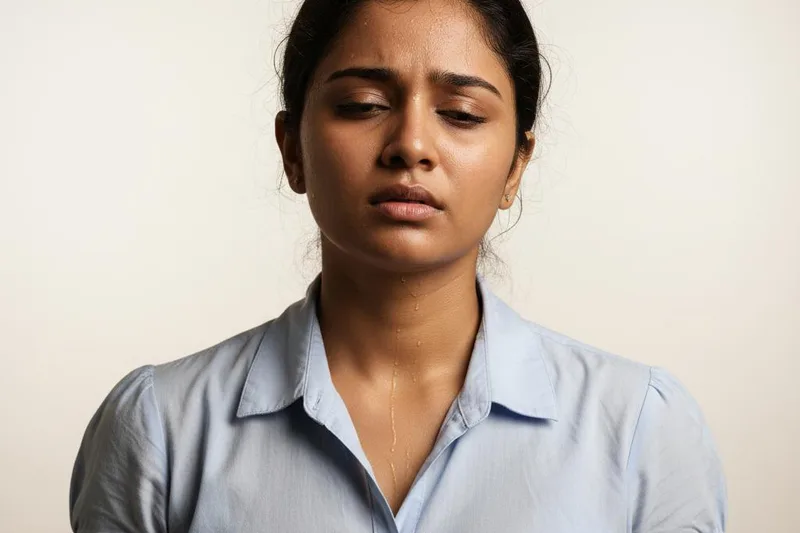
It's been so hot these days, isn't it? Even if you go out for a little while during the day, you're sweating all over, exhausted, and feeling like you're losing your mind, right? While many people think this is normal fatigue, sometimes it can be a situation that requires a little more attention. Today we're talking about a condition caused by this extreme heat, medically known as 'Heat Exhaustion'.
Simply put, what is Heat Exhaustion?
Think of our bodies as like a car engine. Just as there is a radiator to cool down the engine when it gets hot, our bodies have their own way of cooling it down when it gets hot. That is sweating. When the sweat evaporates, our skin cools down.
However, when we exercise in a hot environment, our bodies are unable to cool down as quickly as they heat up. We lose a lot of water and salt (especially the electrolyte sodium) through sweating. This is when a condition called heat exhaustion occurs. In this case, the body temperature is higher than normal, but usually does not exceed 40 degrees Celsius (104 Fahrenheit).
Most importantly, Heat Exhaustion is a serious warning from our body. If not managed properly, it can progress to the next most dangerous condition, 'Heat Stroke'.
Let's know the exact difference between Heat Exhaustion and Heat Stroke.
It is very dangerous to confuse these two conditions, as the treatment and urgency are completely different. Heat Stroke is a medical emergency that can be life-threatening.
The main difference is that in Heat Stroke, the brain is affected. Doctors call this encephalopathy . This means that the person's consciousness may be impaired, their behavior may change (perhaps becoming aggressive), and their words may be slurred. But in Heat Exhaustion, consciousness is usually intact. Although you may feel a little dizzy, it does not last long.
You can easily understand this difference from this table.
| Characteristic | Heat Exhaustion | Heat Stroke - An Emergency! |
|---|---|---|
| Body temperature | Increased, but usually below 40°C (104°F). | Very high, usually above 40°C (104°F). |
| Sweating | Sweating excessively. | Sweating may stop, and the skin may feel dry and hot . |
| Skin type | Cold and clammy. | Hot, red, and dry. |
| Mental state | I am conscious. I may feel a little dizzy. | Disorientation, confusion, slurred speech, loss of consciousness. |
| Vomiting/nausea | Nausea and vomiting may occur. | It often happens. |
| Headache | It can happen. | A severe, throbbing headache may occur. |
What are the symptoms of Heat Exhaustion?
The first symptom may be muscle cramps. It's like having a muscle spasm in your leg. This is also called 'heat cramps' . This condition can occur in the muscles you use the most, such as your legs, arms, or stomach. This is your body's first warning.
In addition, these symptoms may also appear:
- Excessive sweating: Sweating so much that your clothes get wet.
- Skin feeling cold and clammy: The body is not as hot as with a fever, but the skin feels cold and clammy to the touch.
- Severe headache and dizziness: Feeling dizzy and having difficulty standing.
- Feeling tired and exhausted: Feeling too tired to do anything.
- Nausea and vomiting: Feeling like your stomach is turning, and you may even vomit.
- Fast heartbeat: Doctors call this tachycardia . If you feel your pulse, it may feel like it's beating fast, but the pulse is weak.
- Rapid breathing: Breathing deeply and rapidly, as if gasping for breath (hyperventilation) .
- Excessive thirst: No matter how much water you drink, it still feels like it's not enough.
Who is most at risk for this condition?
Although anyone can develop heat exhaustion, some people are at higher risk.
- People who work in the sun: This risk is especially high for farmers working in the fields, those working in the construction sector such as building roads and pouring concrete, three-wheeler drivers, and those who trade on the street.
- Athletes: For those who play or train outdoors in extreme heat (e.g., at school sports events).
- People over 65 years of age: As we age, our body's ability to regulate temperature decreases.
- Young children: Their body temperature control system is not yet well developed.
- People with certain medical conditions: People with diseases such as heart disease, high blood pressure, and diabetes are at higher risk.
- People taking certain medications: Some medications can cause increased fluid loss from the body. Ask your doctor about the medications you are taking.
- Obese people: They have difficulty dissipating heat due to excess body fat.
What do we do if we suspect someone has heat exhaustion? (First aid)
This is very important. Your quick action can prevent someone from going into a dangerous situation like heat stroke.
First of all, remember, if someone is confused, slurred speech, or unconscious, it could be Heat Stroke. It is an emergency! Call 1990 immediately and call an ambulance or take them to a hospital Emergency Treatment Unit (ETU) as soon as possible.
If you only have symptoms of Heat Exhaustion, follow these steps:
| What to do | Description |
|---|---|
| 1. Go somewhere cool. | Immediately get out of the sun and into a shaded, well-ventilated area. If possible, go to an air-conditioned room or under a fan. |
| 2. Loosen your clothes. | Remove any tight, unnecessary clothing, shoes, and socks. Allow air to reach your skin. |
| 3. Cool the body | Wet your body with water. Place pieces of cloth soaked in cold water on your forehead, neck, armpits, and groin. These areas have large blood vessels, so the body cools down quickly. Blow air with a fan. |
| 4. Give fluids little by little. | If the person is conscious, give them small amounts of water to drink. Even better, give them something like Jeevani, orange water, or orange juice with a little salt and sugar. These will help restore lost electrolytes. Do not force anything if the person is vomiting or unconscious. |
| 5. Elevate your legs. | Have the person lie down and elevate their legs about 12 inches on something like a pillow. This will help blood flow to the brain. |
Usually, this first aid should improve within 30 minutes. If there is no improvement, or the condition worsens, seek medical advice immediately.
How to avoid heat exhaustion?
Prevention is always better than cure. So, there are some simple things we can do to protect ourselves during this hot weather.
- Drink plenty of water: Don't wait until you're thirsty, drink water throughout the day. If you're going out, carry a bottle of water with you. If you're doing strenuous work that requires you to sweat, you should drink at least 2-4 glasses of water per hour.
- Salty liquids: If you sweat a lot, water alone may not be enough. Drinking things like Jeevani, orange juice, and salted porridge will provide the body with the necessary salts.
- Avoid the hottest hours of the day: Whenever possible, minimize exposure to the sun's harsh rays between 11 a.m. and 3 p.m. Plan to do your work early in the morning or late in the evening.
- Wear light clothing: Wear light-colored, loose-fitting clothing that absorbs sweat, such as cotton. This allows air to pass through your body and makes it easier for sweat to evaporate.
- Acclimatize: If you are starting to work in a hot environment, don't work too hard all at once. Gradually increase your working time over a few days. This will allow your body to adjust to the environment.
- Take frequent breaks: If you are working in the heat, take a break at least once an hour and cool off in the shade.
Take-Home Message
- Heat exhaustion is our body's warning sign of extreme heat. Don't ignore it.
- The main symptoms are excessive sweating, dizziness, nausea, and fatigue.
- Knowing the difference between heat exhaustion and heat stroke can be life-saving. Loss of consciousness is a key symptom of heat stroke and is a medical emergency.
- If someone develops heat exhaustion, immediately move them to a cool place, cool them down, and give them fluids.
- This condition can be largely prevented by drinking plenty of water, avoiding the hottest times of the day, and wearing light clothing.
- If you are in doubt about the symptoms you or someone else is experiencing, see your doctor immediately or go to the nearest hospital.


💬 Comments (0)
No comments yet. Be the first to share your thoughts here.
Add Your Comment