
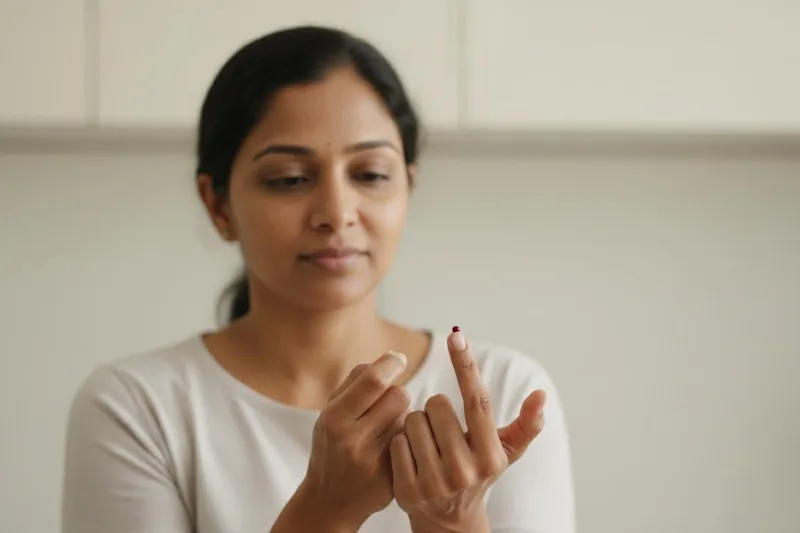
Imagine that you are chopping vegetables in the kitchen and accidentally cut your hand. Or let's say a small child falls while playing and sprains his knee. At first, there is a little blood, but after a while, even if we do nothing, the bleeding just stops, right? This is not just another thing. This is an amazing defense mechanism in our body. In medicine, we call this hemostasis . Simply put, this is the natural process that stops bleeding from a wound and prepares the body to heal that wound.
So how does this process called hemostasis happen?
This sounds like a very interesting story. The word hemostasis is made up of two parts. "Hemo" means "blood" and "stasis" means "to stop" or "to hold still." In simple terms, it means "to stop the flow of blood." This process begins within seconds of an injury. It is normal for bleeding to occur from an injury for two to seven minutes.
This is not a one-step process. It happens in a series of steps, like a team of skilled craftsmen working together to complete a project. Let's look at the four main steps.
| Steps | What happens (in simple terms) |
|---|---|
| Step 1: Blood vessel constriction | The blood vessels (blood vessels) at the site of the injury tighten, like squeezing a water pipe. This slows down the flow of blood. |
| Step 2: Making a temporary plug | Platelets, a type of small cell that floats in our blood, rush to the site of the injury and stick to it. They clump together and temporarily seal the wound. It's like putting a cap on a bottle. This is also called primary hemostasis . |
| Step 3: Starting the coagulation chain | Now the real work begins. Proteins in the blood called coagulation factors are activated one after another, strengthening that temporary seal. It's like a chain reaction. This is called secondary hemostasis . |
| Step 4: Formation of a permanent blood clot | Eventually, the platelets and a special protein called fibrin come together to form a very strong, permanent blood clot, like bricks and mortar building a wall. This completely closes the wound. Later, as the wound heals, this blood clot dissolves and new skin forms. |
Simply put, hemostasis is our body's natural "plaster." Without it, even a minor scratch could cause us to bleed profusely and even be life-threatening.
What happens if this process goes wrong?
Although this process usually works very well, sometimes it can go wrong. Then two problems can arise:
1. Hypocoagulability: This is when the blood does not clot properly when needed. Even a small wound can cause prolonged bleeding, resulting in bruises and sores.
2. Hypercoagulability: This is when blood clots form in the body when they are not needed. This can be very dangerous.
If blood clotting increases too much (Hypercoagulability)
This is dangerous because unwanted blood clots that form inside the body (which we call thrombosis ) can travel through blood vessels and become lodged in vital organs like the brain, heart, and lungs. That's what happens.
- Stroke: If a blood clot blocks a blood vessel that carries blood to the brain.
- Heart Attack: If a blood clot blocks a blood vessel that supplies blood to the heart.
- Pulmonary Embolism: This can occur when a blood clot ( Deep Vein Thrombosis - DVT ), which usually forms in a deep vein in the leg, breaks loose and becomes lodged in a vein in the lungs.
Some types of cancer, genetic conditions (e.g. Factor V Leiden , Protein C deficiency ), and other medical conditions (e.g. Antiphospholipid syndrome , severe infections - sepsis ) can increase blood clotting in this way.
If blood clotting decreases too much (Hypocoagulability)
This is the opposite. Because your blood doesn't clot properly, any injury can be dangerous. Even a small cut can cause excessive bleeding. There can also be invisible bleeding inside the body.
The main examples of this are:
- Hemophilia: This is a genetic disease in which the body does not produce one or more of the factors needed for blood clotting.
- Von Willebrand disease: This is a common genetic disease similar to hemophilia.
- Thrombocytopenia: A decrease in the number of platelets, which are the primary blood clotting cells. This condition can be seen in some types of cancer (e.g., leukemia ).
How do you find out if there are any problems like this?
If you have these symptoms, your doctor will refer you to a hematologist. He will ask about your symptoms and order the necessary blood tests.
Some of those tests are:
- Complete Blood Count (CBC)
- Platelet Count
- Bleeding Time
- Prothrombin Time (PT)
- Activated Partial Thromboplastin Time (aPTT)
- Fibrinogen Level
When should you see a doctor?
If you have any symptoms, you should never ignore them. These could be emergencies.
| Symptom category | Things to pay attention to |
|---|---|
| Signs of increased blood clotting (Hypercoagulability) - These are emergencies, go to the ETU immediately! | |
| Brain (paralysis) | Numbness on one side of the body, difficulty speaking, drooping on one side of the face, severe headache. |
| Heart (heart disease) | Chest pain, shortness of breath, weakness, rapid heartbeat, fainting. |
| In the lungs (Pulmonary Embolism) | Sudden shortness of breath, chest pain, coughing up blood, blue lips or fingertips, fainting. |
| In the leg (DVT) | Pain, swelling, and redness in the groin area or elsewhere on the leg. |
| Symptoms of hypocoagulability - talk to your doctor if you have these. | |
| Common features | • Frequent nosebleeds and difficulty stopping them. • Bleeding gums when brushing your teeth. • Even a small wound bleeds for a long time. • Bruising (blue/purple spots) on the body for no reason. |
Take-Home Message
- Hemostasis is a natural, essential process by which our body stops bleeding from an injury.
- This is a complex process that involves several steps.
- Sometimes this process can go wrong. Both conditions, called hypercoagulability or hypocoagulability, can be dangerous.
- Symptoms such as sudden chest pain, difficulty breathing, or loss of consciousness on one side of the body may be a sign of a blood clot. In such cases, go to a hospital's Emergency Department (ETU) immediately.
- If you are bruising for no reason, or if you are bleeding profusely from minor wounds, do not ignore it and definitely talk to your doctor .


💬 Comments (0)
No comments yet. Be the first to share your thoughts here.
Add Your Comment