
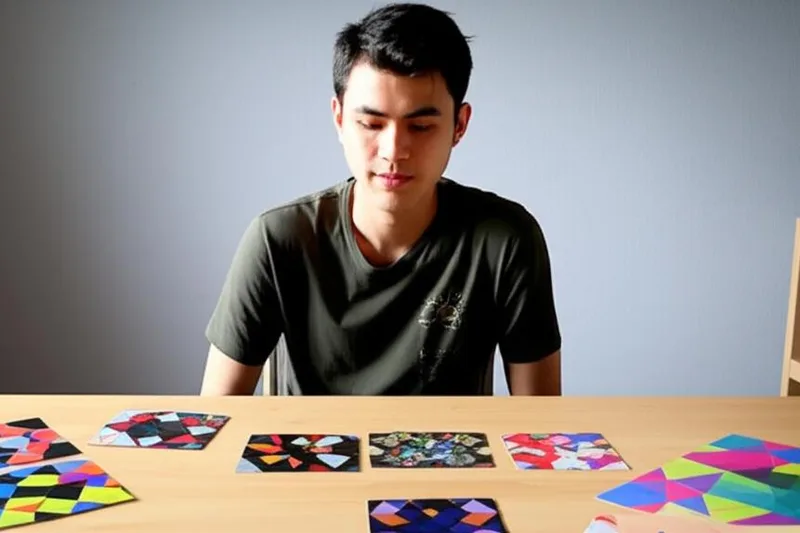
Have you ever noticed a child who is very good at learning and can work independently, but is a little hesitant to join friends and talk? Some parents think this is shyness, but sometimes there can be a medical reason for this. Today we will talk about this condition, which is often called "High-Functioning Autism", but actually has a broader meaning.
What exactly is "High-Functioning Autism"?
The first thing to say is that 'High-Functioning Autism' is not an official medical diagnosis. It's an informal term that we use in everyday conversation. It's usually used to describe people who are able to perform basic life skills such as speaking, writing, reading, eating, dressing themselves, and even living independently.
Medically, this condition is called Autism Spectrum Disorder (ASD) . Simply put, autism is a developmental disorder related to brain development. The word 'spectrum' is very important here. Think of it like a rainbow. Like a rainbow with different colors, the severity of symptoms in people with ASD varies greatly. Some may have very severe symptoms, while others may have very mild symptoms. Intelligence quotient (IQ) levels can also vary significantly from person to person.
In the past, before the 1990s, autism was only diagnosed in people with very severe symptoms. But later, milder forms of the condition were also recognized. You may have heard of Asperger 's Syndrome . It's also a milder condition.
But in 2013, the American Psychiatric Association put all these autism-related disorders under one umbrella. That's what we're talking about today, autism spectrum disorder (ASD). So now you know, even though we say "High-Functioning Autism" and "Asperger's," they all belong to the broader category of ASD .
What are the characteristics of someone with ASD (High-Functioning Autism)?
Like everyone on the ASD spectrum, the main challenge for those we call 'High-Functioning' is social relationships and communication.
- Weaknesses in social skills: They have difficulty understanding other people's emotions, facial expressions , and social cues. This can make it difficult to make friends. For example, at a birthday party, when other children are playing together, a child with ASD may stand alone to one side. This is not because they don't like it, but because they don't know how to deal with the social situation. They also make less eye contact and engage in small talk.
- Repetitive and Restrictive Habits: They are very fond of routine and order. They do not like it to change even a little. For example, they have to take the same route to school every day, they have to put their toys in the same order. They may have repetitive habits. For example, they clap their hands, they rock back and forth.
- Special Interest: They may be extremely interested in a particular subject, such as dinosaurs, trains, or video games, and may be tempted to talk only about that.
The important thing is that no matter how academically gifted someone with ASD is, the challenge they all have in common is these underdeveloped social skills.
How does a doctor diagnose this condition?
There is no definitive medical test, such as a blood test, to diagnose ASD. Doctors usually make an official diagnosis by observing a child's behavior and development over time. A child can usually detect signs of ASD as early as 18 months of age. By age 2, a specialist can usually make a definitive diagnosis. However, sometimes, especially for those with mild symptoms, the diagnosis may be made much later, perhaps in adolescence or adulthood.
The process of diagnosing a child with ASD consists of three main parts.
| Diagnostic steps | Simply put... |
|---|---|
| 1. Developmental Monitoring | The parents and the doctor will continue to monitor the child's development together. They will check to see if the child is reaching developmental milestones appropriate for their age. Your doctor will assess this by talking to and playing with your child. |
| 2. Developmental Screening | This is a little more in-depth. It pays special attention to the child's movement, thinking, behavior, emotions, and language skills. These tests are usually recommended at 9, 18, and 30 months. |
| 3. Developmental Diagnosis | If the tests reveal any problems, the doctor will refer the child to a specialist. This could be a child psychologist, speech-language pathologist, or developmental pediatrician. They will conduct formal tests and determine for sure whether the child has ASD. |
How to diagnose diseases in adults
Diagnosing ASD in adults is a little different. The doctor will talk about your current life, social relationships , repetitive behaviors, interests, and challenges you face. They may also ask about your childhood. You may also want to ask a parent or sibling about it.
ASD and school/work life
Studies have found that young people with ASD are more likely to choose STEM subjects (Science, Technology, Engineering, and Math) in college. Children with ASD who are of average intelligence also tend to be better at math than other children of the same intelligence. Experts believe that this is due to the special organizational skills and ability to recognize patterns that people with ASD have.
But despite these talents, unemployment among people with ASD is very high. In 2021, 85% of adults with ASD were unemployed.
The main reason for this is the challenges they face during job interviews. Because ASD affects social skills , they may lack the conversational skills needed during an interview. Even if they have all the skills needed for the job, the interviewer may have a bias against them.
But despite these challenges, many people with ASD go on to achieve great heights in their careers. Temple Grandin is a prime example of this. She has a unique career in designing animal control systems.
That means, given the right support and opportunity, people with ASD can make a huge difference to the world with their unique talents.
Take-Home Message
- "High-Functioning Autism" is not an official medical term. The correct term is Autism Spectrum Disorder (ASD) .
- This is a spectrum, meaning that the symptoms and their severity vary greatly from person to person.
- The main challenge is social skills and communication. This challenge can exist no matter how intellectually gifted you are.
- If you have any concerns about your child or yourself, do not base your decisions on online tests or what others say. Always seek advice from a qualified medical professional.
- With proper identification, support, and understanding, anyone with ASD can live a successful and fulfilling life.


💬 Comments (0)
No comments yet. Be the first to share your thoughts here.
Add Your Comment