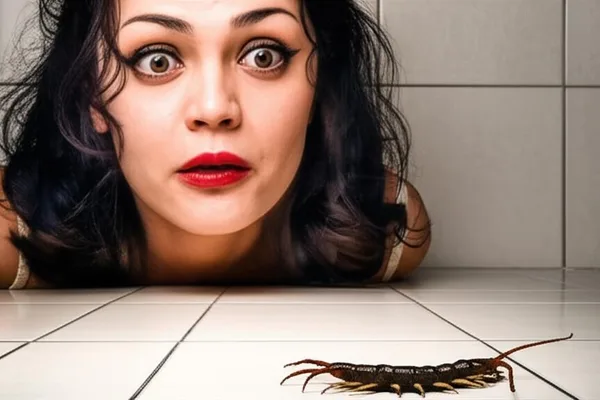
Are you afraid of house centipedes? (House Centipede) Let's find out exactly about this!

Are you afraid of house centipedes? (House Centipede) Let's find out exactly about this!

Have you ever been shocked and terrified when you went to the kitchen or bathroom at night or in the morning to see a creature with many legs running along the wall at lightning speed? If you are someone who dislikes worms and cockroaches, seeing such an animal at home is not a good experience. This animal is what we call the House Centipede . Although they do not pose any threat to humans, it is normal to feel a little scared and nervous when they are seen at home.

Okay, so today we'll talk about where these houseflies come from, what they look like, what they eat, and what we can do to control them at home.

Who are the centipedes in this house? (House Centipedes)

The most common type of cockroach we see around homes is the house cockroach, scientifically known as `(Scutigera coleoptrata)`. Because they have so many legs, some people jokingly call them “old-legged cockroaches.” These cockroaches are usually about an inch or two long. Their bodies are divided into about 15 segments, each with a pair of long legs.

These insects are usually dark brown or yellow in color, and sometimes have dark markings on their bodies. A fully grown insect has three dark stripes running from the head to the back. There is also a pair of hair-like antennae on the head. Some species of insects have compound eyes, which can have up to 200 eyes, while others have only a few simple eyes on either side of their heads. There are also species of insects that have no eyes at all.

House spiders have a special pair of legs that act like forks under their mouths. These are called ``forcipules.'' They use these forks to inject venom into their prey and for self-defense. Also, the pair of legs at the back of their bodies are very long, like the two antennae at the front. This makes it very difficult for their prey to tell which side of the spider is in front and which is in back.

Are these newspapers really our enemies or our friends?

Even though you may feel a bit scared when you see these creatures, the truth is that they are your friends who will help you. Isn't that amazing? Simply put, houseflies' main diet is other insects that are much more annoying to us.

Yes, they hunt and eat cockroaches, termites , spiders, silverfish, bed bugs, and other small insects (arthropods) in your home.

Their long legs allow them to run after their prey very fast. They run and jump on their prey, and then they grab it with their long legs, trapping it in place, so that the prey has no way to escape. In other words, having one or two of these spiders in your home is like free pest control.

Where in the house do these people hide the most?

These insects prefer damp, humid, cool, and dark places. That's why they hide during the day and come out to hunt at night. Think about whether your home has any of these places:

  • Bathrooms: Bathrooms are a place they are told to avoid because of the high humidity.
  • Kitchen : In places like under the sink , behind cabinets.
  • Basements or attics: Dark rooms in our homes where we store things, under closets, behind piles of boxes.
  • Behind the logs of firewood brought home.
  • The plants are in pots with soil.

They usually don't come down drains. If they are outdoors, they live under rocks, rotting logs, and the bark of trees.

How do you know for sure if there are houseguests at home?

Since these creatures come out at night, it can be a little difficult to pinpoint if they are in your home. The main sign is that you see these bugs in your home frequently.

But remember this: Seeing bedbugs in your home frequently means that your home is full of bedbug food, which means other pests (like cockroaches and termites) are present. It could be a sign of a bigger problem.

If your home already has a problem with pests like cockroaches, termites, and spiders, there's a much higher chance that you'll also have bedbugs.

What do housewives do? What They DON'T DO
Hunting and eating other nuisance insects (cockroaches, termites). Damage to stored food, clothing, or furniture.
Hiding in damp, dark places. Damage to buildings or their structures.
Running away in fear when seeing people. Attacking or harming pets (dogs, cats).
Giving a hint that there are other pests in the house. It rarely bites humans, but if it does, it is not serious.

So how do you control these paperboys?

Since houseflies help control other pests that bother you, there's really no reason to kill them completely. Using pesticides isn't very effective on these flies either. Because their long legs mean they're less likely to come into contact with pesticide-coated surfaces when they're above ground.

The best thing to do is to destroy the environment they have to live in at home.

Here are some things you can do:

  • Reduce humidity: Ensure that high-humidity areas of the home (bathrooms, under sinks) are well ventilated. Use fans if possible. Do not leave the floor damp .
  • Seal gaps: Fill any small gaps or cracks in the walls and floors. Also pay attention to gaps around windows and doors.
  • Keep your home tidy: Get rid of things like unnecessary boxes and piles of old newspapers. These can collect moisture and become good hiding places for bedbugs.
  • Most importantly: Eliminate the roaches' food! Yes, control other insects in your home, such as cockroaches, termites, and bedbugs. When they run out of food, the roaches will naturally leave.

If you get stung by a wasp, it usually causes only minor pain and swelling, similar to a bee sting. Wash the area well with soap and water and keep it clean. However, in the rare case of an allergic reaction that causes severe swelling and difficulty breathing, you should see your doctor immediately . But remember, this is a very, very rare occurrence.

Take-Home Message

  • Although house centipedes may look unsightly, they are not dangerous to humans, and they do not cause damage to homes.
  • They are truly our friends because they eat the most annoying pests in our homes, such as cockroaches, termites, and bedbugs.
  • If you frequently see ants in your home, it could be a sign that there is another pest infestation in your home.
  • The best way to control them is not to use pesticides, but to reduce humidity in the home , seal cracks in walls, and control other pests.
  • So, if you see a housefly in the future, don't panic, just think of him as a "pest control" offering free services to your home.

House Centipede, Centipedes, Insects, Pest Control, Scutigera coleoptrata, Insecticides, Home Safety

⚠️ Important: The medical articles and information on Nirogi Lanka are for general awareness only, and are by no means a substitute for professional medical advice, diagnosis, or treatment. For any medical problem you have, consult a qualified physician immediately.

💬 Comments (0)

No comments yet. Be the first to share your thoughts here.

Add Your Comment

Please calculate: 5 + 8 =
Are you afraid of house centipedes? (House Centipede) Let's find out exactly about this!
General Health InformationSeptember 20, 2025

Are you afraid of house centipedes? (House Centipede) Let's find out exactly about this!

Have you ever been shocked and terrified when you went to the kitchen or bathroom at night or in the morning to see a creature with many legs running along the wall at lightning speed? If you are someone who dislikes worms and cockroaches, seeing such an animal at home is not a good experience. This animal is what we call the House Centipede . Although they do not pose any threat to humans, it is normal to feel a little scared and nervous when they are seen at home.

Okay, so today we'll talk about where these houseflies come from, what they look like, what they eat, and what we can do to control them at home.

Who are the centipedes in this house? (House Centipedes)

The most common type of cockroach we see around homes is the house cockroach, scientifically known as `(Scutigera coleoptrata)`. Because they have so many legs, some people jokingly call them “old-legged cockroaches.” These cockroaches are usually about an inch or two long. Their bodies are divided into about 15 segments, each with a pair of long legs.

These insects are usually dark brown or yellow in color, and sometimes have dark markings on their bodies. A fully grown insect has three dark stripes running from the head to the back. There is also a pair of hair-like antennae on the head. Some species of insects have compound eyes, which can have up to 200 eyes, while others have only a few simple eyes on either side of their heads. There are also species of insects that have no eyes at all.

House spiders have a special pair of legs that act like forks under their mouths. These are called ``forcipules.'' They use these forks to inject venom into their prey and for self-defense. Also, the pair of legs at the back of their bodies are very long, like the two antennae at the front. This makes it very difficult for their prey to tell which side of the spider is in front and which is in back.

Are these newspapers really our enemies or our friends?

Even though you may feel a bit scared when you see these creatures, the truth is that they are your friends who will help you. Isn't that amazing? Simply put, houseflies' main diet is other insects that are much more annoying to us.

Yes, they hunt and eat cockroaches, termites , spiders, silverfish, bed bugs, and other small insects (arthropods) in your home.

Their long legs allow them to run after their prey very fast. They run and jump on their prey, and then they grab it with their long legs, trapping it in place, so that the prey has no way to escape. In other words, having one or two of these spiders in your home is like free pest control.

Where in the house do these people hide the most?

These insects prefer damp, humid, cool, and dark places. That's why they hide during the day and come out to hunt at night. Think about whether your home has any of these places:

  • Bathrooms: Bathrooms are a place they are told to avoid because of the high humidity.
  • Kitchen : In places like under the sink , behind cabinets.
  • Basements or attics: Dark rooms in our homes where we store things, under closets, behind piles of boxes.
  • Behind the logs of firewood brought home.
  • The plants are in pots with soil.

They usually don't come down drains. If they are outdoors, they live under rocks, rotting logs, and the bark of trees.

How do you know for sure if there are houseguests at home?

Since these creatures come out at night, it can be a little difficult to pinpoint if they are in your home. The main sign is that you see these bugs in your home frequently.

But remember this: Seeing bedbugs in your home frequently means that your home is full of bedbug food, which means other pests (like cockroaches and termites) are present. It could be a sign of a bigger problem.

If your home already has a problem with pests like cockroaches, termites, and spiders, there's a much higher chance that you'll also have bedbugs.

What do housewives do? What They DON'T DO
Hunting and eating other nuisance insects (cockroaches, termites). Damage to stored food, clothing, or furniture.
Hiding in damp, dark places. Damage to buildings or their structures.
Running away in fear when seeing people. Attacking or harming pets (dogs, cats).
Giving a hint that there are other pests in the house. It rarely bites humans, but if it does, it is not serious.

So how do you control these paperboys?

Since houseflies help control other pests that bother you, there's really no reason to kill them completely. Using pesticides isn't very effective on these flies either. Because their long legs mean they're less likely to come into contact with pesticide-coated surfaces when they're above ground.

The best thing to do is to destroy the environment they have to live in at home.

Here are some things you can do:

  • Reduce humidity: Ensure that high-humidity areas of the home (bathrooms, under sinks) are well ventilated. Use fans if possible. Do not leave the floor damp .
  • Seal gaps: Fill any small gaps or cracks in the walls and floors. Also pay attention to gaps around windows and doors.
  • Keep your home tidy: Get rid of things like unnecessary boxes and piles of old newspapers. These can collect moisture and become good hiding places for bedbugs.
  • Most importantly: Eliminate the roaches' food! Yes, control other insects in your home, such as cockroaches, termites, and bedbugs. When they run out of food, the roaches will naturally leave.

If you get stung by a wasp, it usually causes only minor pain and swelling, similar to a bee sting. Wash the area well with soap and water and keep it clean. However, in the rare case of an allergic reaction that causes severe swelling and difficulty breathing, you should see your doctor immediately . But remember, this is a very, very rare occurrence.

Take-Home Message

  • Although house centipedes may look unsightly, they are not dangerous to humans, and they do not cause damage to homes.
  • They are truly our friends because they eat the most annoying pests in our homes, such as cockroaches, termites, and bedbugs.
  • If you frequently see ants in your home, it could be a sign that there is another pest infestation in your home.
  • The best way to control them is not to use pesticides, but to reduce humidity in the home , seal cracks in walls, and control other pests.
  • So, if you see a housefly in the future, don't panic, just think of him as a "pest control" offering free services to your home.

House Centipede, Centipedes, Insects, Pest Control, Scutigera coleoptrata, Insecticides, Home Safety

⚠️ Important: The medical articles and information on Nirogi Lanka are for general awareness only, and are by no means a substitute for professional medical advice, diagnosis, or treatment. For any medical problem you have, consult a qualified physician immediately.

💬 Comments (0)

No comments yet. Be the first to share your thoughts here.

Add Your Comment

Please calculate: 5 + 8 =