

Oh, sometimes little kids bite each other when they get angry or when they're playing, right? This can happen even during fights between adults. So what do you do if someone bites you and you get hurt? Isn't that something to be concerned about? Today, let's talk about human bites. Let's see if this is something that's as simple as it sounds, or if there are areas to be concerned about.
What does it mean when people chew? Are these the same thing?
Simply put, a 'human bite' is when a person's teeth hit another person's skin and cause a wound . Did you know that these bites can come in two main forms?
1. Direct bite (Occlusion Bite)
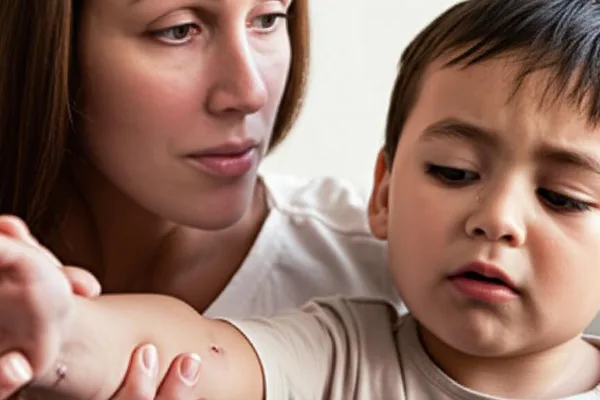
This is the most common type of biting . Imagine a child biting another child intentionally, out of anger, or for fun. This is very common among young children. They don't know how to express their feelings like anger, sadness, or frustration in words, so they sometimes bite to express them. This type of biting is most commonly seen among young children.
2. Clenched or Closed Fist Bite
This is a slightly different, more indirect injury . Imagine, when someone punches someone else, the fast-moving hand hits the other person's teeth. Then the skin of the hand is punctured and injured. In this case, there is a high chance of damage to the joint at the top of the fingers, that is, the metacarpophalangeal joint . Because of this, there can be an infection , tendonitis , or stiffness in the joint that makes it impossible to move. Things like this happen most often in those fights.
Most of the time, people are not seriously injured by bites. Our teeth are not as sharp as those of animals. So, usually, only bruising or a small laceration occurs. However, if the skin is broken and a wound occurs, you should definitely seek medical advice . Because the bacteria in our saliva are more likely to cause infection.
Is it really dangerous for people to chew?
Yes, sometimes human bites can be more dangerous than you think. The main reason is the various bacteria that live in our saliva. Even if the wound seems small, these bacteria can cause serious infections and even other complications. That's why it's important to be careful if you break your skin.
Healthcare providers treat about 2.5 million human bites each year . About 10% of children who bite develop infections from bacteria in their saliva. However, human bites account for only about 3% of all bites that come to emergency rooms.
What are the symptoms of this bite?
You may first feel symptoms at the site of the injury. These may include:
- Pain
- Tenderness
- Bleeding
- Swelling
However, if the wound becomes infected , the symptoms may be a little more severe:
- Severe pain and swelling
- Pus appears to be coming from the wound.
- Redness around the wound
- Feeling warm to the touch around the wound
- Fever, feeling cold, feeling unwell
Sometimes, if you sprain a joint, such as a finger , it can damage the tendons or nerves there. If this happens, you may experience symptoms like:
- Loss of feeling in the fingertips
- Difficulty in bending and straightening the finger properly
Who is at higher risk of developing an infection after a bite?
The risk of infection varies depending on your general health and the location of the bite. If you have any of the following, you are more likely to develop an infection:
- If you have been bitten on an area such as an arm, leg, face, scalp, or a sensitive bone/joint .
- If you are taking medications that weaken your immune system .
- If you have diabetes .
- If you are addicted to drugs or alcohol (Substance use disorder).
- If you have vascular disease .
- If you are over 50 years old.
Can these bites cause other complications?
Yes, absolutely. If not treated properly, human bites can lead to infections and other serious complications . The risk of infection depends on several factors:
- The type of injury and its location.
- Your general health.
- The time it takes from the time the injury occurs to the time it takes to receive treatment.
If you don't get to a hospital quickly, complications can occur, as the infection can spread over time.
Bites in areas such as the hands, feet, nose, and ear cartilage can cause more complications than bites elsewhere on the body. Even if they seem like a minor injury, they can damage the underlying joints, tendons, or bones , or cause a serious infection.
If these infections are not treated quickly, they can cause permanent damage to the injured body part . For example, a closed fist bite can damage the metacarpophalangeal joint, possibly leading to arthritis . In the worst case, amputation may be necessary. Occlusion bites also pose a risk of:
- Bone infection (Osteomyelitis)
- Joint infection (Septic arthritis)
- Tenosynovitis
- Tendinitis
Although very rare, there have been reports of diseases such as HIV/AIDS, Hepatitis B, and Tetanus being transmitted through human bites. However, these are very rare and the chances of them occurring are very low.
Can a human bite kill you?
If you get proper medical attention, the risk of death from a human bite is very low. However, human bites can be dangerous, especially because of the different types of bacteria that are passed through our saliva. The complications that can occur from this can be very serious, including severe infections and permanent damage to bones, joints and tendons. So it's important to always be careful.
How does a doctor diagnose this?
When you go to see a doctor, they will first ask you about your health history . This includes any other medical conditions you have, any immunizations you have had, any allergies you have, and any medications you are taking. Then, they will ask about the bite. This includes how it happened, when it happened, and who bit you . This information will help them decide how to treat the wound.
What can you do at home if someone bites you?
If someone hits you, there are a few things you should do first.
1. If the wound is bleeding heavily , place a clean, dry cloth over the wound and press it firmly .
2. Then, gently clean the wound using a mild soap and lukewarm water .
3. If you have a syringe , it's a good idea to use it to fill the wound with water. The pressure will help reduce the amount of bacteria. But be very careful not to damage the wound or the surrounding skin.
4. If you can remove any dead skin or other debris from the wound (unless you are afraid of causing further damage), remove it.
5. Then, gently pat the wound dry and apply an antibacterial ointment to reduce the risk of infection.
6. Finally, cover the wound with a clean bandage .
If the skin is not broken , meaning it is only superficially injured, you don't necessarily need to see a doctor. But watch carefully for signs of infection . The wound should heal on its own.
When exactly should I see a doctor?
If someone bites you, especially in a sensitive area like your arm, face, or neck, you should definitely see a doctor and get checked out . The risk of infection is very high. It's best to seek medical advice within 24 hours of any bite that breaks the skin.
Additionally, if you have any of the following, call your doctor immediately, or go to the nearest hospital emergency room:
- If the bleeding cannot be stopped even after applying pressure for several minutes.
- If you see redness, swelling, or pus coming from the wound.
- If you see red streaks spreading from the wound.
- If the bite is large or deep .
- If bones or muscles are visible .
- If you think you may need stitches for the wound.
- If you have not had a tetanus vaccine within the last five years, or if you are not sure about it.
How does a doctor treat this?
After a doctor examines your wound, you can expect to take several steps, including:
- Cleaning: The doctor will thoroughly clean the wound again, apply an antiseptic, and check for any damage to the nerves, ligaments, tendons, and bones.
- Testing: Tissue cultures may be taken from the wound to check for infectious organisms. If there are signs of damage to joints or tendons, or if the wound appears to be infected, blood tests or imaging tests such as X-rays may be ordered.
- Treatment plan: Your doctor will decide which treatment is best for you. Deep wounds may be closed with non-dissolving stitches. In more severe cases, debridement may be performed to remove all dead tissue, followed by a skin graft . Surgery may be necessary if there is a fracture, joint/tendon damage, or a severe infection.
If your immunizations are not up to date , you may also need to get a tetanus shot . Any bite that penetrates the skin more than 1 cm deep should be treated immediately with a tetanus shot.
You will need to see the doctor again in 24 to 72 hours. If you start to show any signs of infection, you should go sooner.
What medications are given for this?
If necessary, a doctor will prescribe medication for you. Antibiotics may be given in the following cases:
- For soft tissue infections: 7-10 days.
- For severe infections: 10-14 days.
- For severe bone/joint infections: 4-6 weeks.
Your doctor may prescribe an antibiotic like Amoxicillin (Augmentin®) . It contains penicillin. If you are allergic to penicillin , you may be given a type of medication like this:
- Clindamycin
- Trimethoprim/sulfamethoxazole
- Ciprofloxacin (Cipro®)
Can't these human bites be prevented?
Yes. You can prevent biting by teaching your child not to bite others . You can also prevent this from happening by not getting involved in fights . It is very important to teach children from a young age to control their emotions and to manage their anger in other ways.
How long does it take to heal after a bite?
The time it takes to heal from a human bite varies from person to person. It depends on several factors:
- The type, location, and severity of the bite.
- The damage caused and the possible infections that may occur.
- Other underlying health conditions you have.
Even after initial treatment, you should watch the wound for signs of infection . Severe bites can sometimes cause scarring and even long-term effects. Remember, if you are bitten by a human, seeing a doctor is the best way to minimize complications.
A little extra knowledge: How much chewing power do humans have?
Compared to other mammals (like dogs and bears), humans don't have very much chewing power. Scientists measure an animal's chewing pressure in pounds per square inch (psi) . A human's average chewing force is about 162 psi . Some dogs can chew up to 250 psi, and some bears can chew up to 1,000 psi! So, in that respect, we're pretty tame, right?
So, the final thing to remember! (Take-Home Message)
People biting is most common among young children, but adults should be careful about this too.
Although most human bites are not serious, any bite that breaks the skin should definitely be checked out by a doctor.
Human saliva can contain a lot of bacteria, which can cause infections. Therefore , it is very important to seek medical attention to prevent infection and other complications. Clean the wound thoroughly, and if you need to see a doctor, don't delay. Your health is worth it!
` Human Bites, Human Bites, Wounds, Infections, First Aid, Infection, First Aid




💬 Comments (0)
No comments yet. Be the first to share your thoughts here.
Add Your Comment