

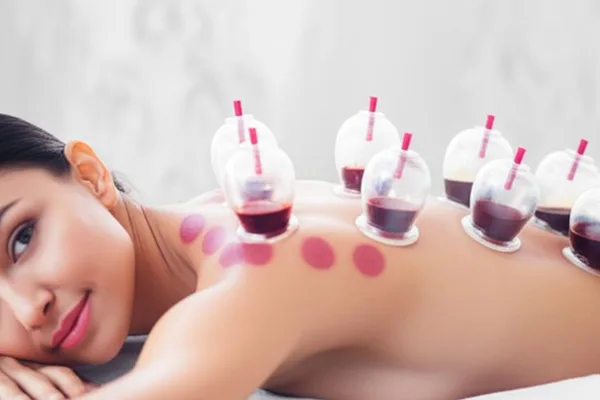
You may have noticed that some people have dark purple circular spots on their backs and shoulders. When you watch sports events like the Olympics, you may remember that even world-famous athletes like Michael Phelps had these spots on their bodies. Many people call this 'cupping'. So what exactly is cupping therapy ? Is it really good for our bodies? Does it reduce pain? Are there any side effects? Okay, today we will talk about everything simply and clearly.
Simply put, what is cupping?
Cupping is a very old alternative medicine technique. It involves placing specially designed cups on your skin and creating a vacuum inside them, which causes the skin to lift. The main purpose of this technique is to increase blood flow to certain parts of the body, or to remove unwanted fluids and waste from those areas. Many people use it to reduce pain, reduce swelling, provide relief, and as a deep-tissue massage.
This is not something that came about yesterday. This treatment method has been around since ancient times in Egyptian, Chinese, and Middle Eastern cultures. Initially, this method began with the use of animal horns to suck out poison from wounds, but later evolved to use bamboo, clay, and glass cups. Today, silicone and plastic cups are also widely used.
There are two main types of cupping therapy.
Cupping therapy can be mainly divided into two types.
1. Dry Cupping
2. Wet Cupping
Dry Cupping Method
This is the most commonly used and simplest method. There is no blood drawn. The practitioner applies a small amount of oil or lotion to your skin and places special cups on your skin and presses them against it. In some traditional methods, a flammable substance, such as alcohol, is placed inside the cup, lit on fire, and then quickly placed on the skin as soon as the fire goes out. As the air inside the cup cools, a vacuum is created, which pulls the skin upwards. However, in modern methods, this vacuum is created by using a rubber pump instead of fire.
In this way, the cups are placed on the skin for about 5 to 10 minutes. Sometimes these cups are moved back and forth on the skin, like a massage. This is called massage cupping .
Wet Cupping or Hijama
This method is a bit complicated. First, a cup, similar to dry cupping, is placed on the skin for about 3 minutes to create a vacuum. Then, the cup is removed, and a few very fine, small cuts are made on the skin surface with a very small surgical knife (scalpel). Next, the cup is placed back in the same place to create a vacuum, and a little dirty blood is drawn out through those cuts.
Cleanliness and sterilization of the equipment are extremely important in this method. Otherwise, serious infections can occur. Therefore, if you choose this treatment, you must definitely choose a qualified, experienced, and clean place.
After treatment, an antibiotic ointment is applied and a bandage is applied to prevent infection. The skin returns to normal in about 10 days.
What are the benefits of cupping therapy?
Although there is no scientific evidence to support the idea that cupping can relieve pain and illness, there are many theories. There is little high-quality scientific research on the subject. However, many people who have tried this treatment report positive results.
Below are some situations where cupping therapy is considered beneficial.
| Condition/Purpose | Description |
|---|---|
| Pain management | For chronic pain such as back pain, neck pain, knee osteoarthritis, and fibromyalgia. |
| Skin diseases | Conditions such as acne, eczema, and herpes zoster. |
| Respiratory system problems | To reduce bronchial congestion caused by asthma and allergies. |
| Other situations | Some people also use it for high blood pressure, migraines, anxiety, and depression. |
Most importantly: Keep in mind that more high-quality research is needed to confirm how effective cupping therapy is for these conditions. So, don't stop your current medical treatment for your condition and try these. Always consult your doctor for advice.
Side effects and things to be aware of
Cupping is a relatively safe treatment when performed by a qualified, experienced practitioner. However, some side effects may occur.
- Minor discomfort: You may feel some discomfort as the skin stretches while the cups are in place.
- Bruising: This is the most common. Purple or red bruise-like spots appear around the area where the cups were placed. These usually fade completely within a few days or a week or two.
- Burns: When using traditional fire cupping, the cup can burn the skin if it gets too hot. This is rare, but there is a risk.
- Skin infections: Infections can occur, especially during wet cupping, if the equipment is not clean and the incisions are not properly cared for.
- Bloodborne diseases: If the equipment used in wet cupping is not properly sterilized, there is a risk of contracting dangerous diseases like Hepatitis B and C.
Who should not have cupping therapy?
This treatment is not suitable for everyone. If you have any of the following conditions, it is wise to avoid cupping therapy.
- If you are pregnant.
- When you are menstruating.
- If you are taking blood thinners.
- If you have cancer.
- If you have blood clotting problems such as hemophilia.
- Heart disease or if you have a pacemaker implanted in your heart.
- If there is a condition in which the functioning of internal organs is impaired (organ failure).
- Avoid cupping on areas with skin wounds, abrasions, or infections.
If you are unsure about any of these conditions, please speak to your family doctor and get permission before undergoing this treatment for any reason. It is very important for your safety.
Ask your doctor and therapist before treatment.
If you are interested in this treatment, talk to your doctor first. Then, ask the person who is doing the treatment about these things.
- What training and qualifications do they have in this field?
- How is their experience?
- Ask about cleanliness and the method of disinfecting equipment.
- Ask if there are any reasons why you should not have cupping based on your health condition.
Remember, although a special license is not currently required to perform this treatment, it is safer to receive this service from a professional such as a massage therapist, acupuncturist, or physiotherapist.
Take-Home Message
- Cupping is not a new thing, but a very old alternative treatment method.
- There are two main types: Dry Cupping and Wet Cupping.
- Although it may help reduce pain, strong scientific evidence is still limited.
- It is normal to have circular bruises on the skin after treatment, and they will fade within a few days.
- Be sure to only get this treatment from a place that is experienced, qualified, and very careful about cleanliness.
- If you have other medical conditions or are taking any medications, it is essential to consult your doctor before undergoing cupping.




💬 Comments (0)
No comments yet. Be the first to share your thoughts here.
Add Your Comment