
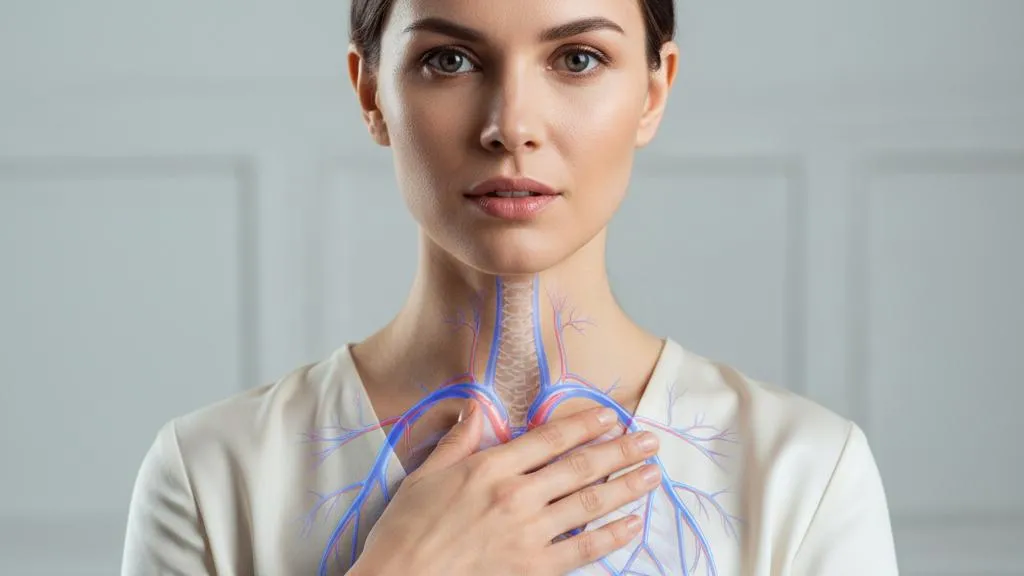
Your body is an amazing living machine. Inside this machine, many small and quiet parts work together every single day to keep you healthy and strong. Today, we want to explore a very important blood vessel hiding right inside your chest. You may never have heard its name before. It is called the internal thoracic vein.
When you understand how your chest and heart work, you can take better care of your health. Doctors and medical educators want you to know how blood moves through your upper body. Let us take a simple, clear journey into the world of your chest veins and learn why this specific blood vessel matters to you.
Key Takeaways
- The internal thoracic vein is a paired blood vessel running down both sides of your chest wall.
- Its primary job is to collect oxygen-poor blood from your chest wall and breasts and carry it back toward your heart.
- It works alongside the internal thoracic artery to maintain proper blood flow in your upper body.
- Rare conditions like chest trauma or thoracic outlet syndrome can sometimes affect this blood vessel.
- Simple lifestyle habits like regular exercise, a healthy diet, and staying hydrated keep your entire vein network strong.
Simply Put, What Is the Internal Thoracic Vein?
Think of your body's blood vessels as a vast road network. Some roads are massive highways. This others are small neighborhood streets. The internal thoracic vein acts like an important regional collector road located right inside your chest.
You actually have two of these veins. One sits on the right side of your chest, and the other sits on the left side. They work quietly behind the scenes every second of your life.
The main job of these veins is to collect used blood from the tissues of your chest wall and your breasts. This used blood lacks oxygen and contains waste products. The internal thoracic vein gathers this blood and safely guides it back toward your heart so it can get a fresh supply of oxygen.
Let Us Review the Difference Between Veins and Arteries
To understand your circulatory system fully, it helps to know the difference between veins and arteries. Your blood system relies on both types of vessels to function properly.
Arteries are blood vessels that carry fresh, oxygen-rich blood away from your heart and out to every part of your body. Think of them like water pipes bringing clean drinking water from a city tank straight to person homes.
Veins are blood vessels that do the opposite job. They collect used, oxygen-poor blood filled with waste products from your body tissues and bring it back to your heart. Think of veins like drainage pipes that carry used water away from homes.
The internal thoracic vein is a specialized vein. It is a vital member of your body's large venous drainage system.
| Blood Vessel Type | Main Function / Type of Blood Carried |
|---|---|
| Arteries | Main Function: Carries blood away from the heart to the rest of the body. Type of Blood Carried: Oxygen-rich, clean blood. |
| Veins | Main Function: Carries blood from body tissues back to the heart. Type of Blood Carried: Oxygen-poor, used blood. |
Where Is This Vein Located, and How Does It Work?
This vein sits deep inside your chest. It runs very close to your breastbone, which doctors call the sternum. It does not travel alone. A matching artery called the internal thoracic artery runs right next to it.
Imagine small streams joining together to form a larger creek, and many creeks joining to form a wide river. Your body's blood flow works in a very similar way.
First, tiny tiny veins collect used blood from the spaces between your ribs and your chest wall muscles. Second, these tiny veins empty their blood directly into your internal thoracic vein. Think of these smaller blood vessels as tributary streams feeding a main river.
Third, once the internal thoracic vein collects all this blood, it channels it upward into a larger blood vessel called the brachiocephalic vein. Fourth, the brachiocephalic vein empties into the superior vena cava. This is the main highway bringing blood down from your upper body into the right side of your heart.
Your heart then pumps that blood into your lungs. In your lungs, the blood trades its waste carbon dioxide for fresh oxygen before heading back out to nourish your body.
What Is the Appearance and Shape of This Vein?
This vein is quite small. It usually measures about two to three millimeters across in diameter. That is roughly the thickness of a standard pencil lead.
Interestingly, the exact branching pattern of this vein is not identical in every single person. Human anatomy has natural variations.
For example, on the left side of the chest, the internal thoracic vein may split into two branches between the third and fourth ribs. On the right side, some people have a single continuous vein while others have branching pathways in different rib spaces. These variations are completely normal and are not signs of disease.
Like other major blood vessels, the wall of this vein consists of three distinct microscopic layers:
- The Inner Layer: Made of smooth cells that help release chemical signals and keep blood flowing smoothly without clinging or clotting.
- The Middle Layer: Built from smooth muscle tissue that gives the vessel flexibility and tone.
- The Outer Layer: Composed of tough connective tissues like collagen and elastin that provide structural strength and elasticity.
What Health Issues Can Affect This Vein?
Because this vein sits safely deep inside your chest cavity, it is well protected against everyday bumps and scrapes. However, certain medical situations or injuries can cause problems.
| Potential Issue | What Happens |
|---|---|
| Chest Injuries | Severe trauma from accidents or broken ribs can sometimes injure nearby chest blood vessels. |
| Vessel Compression | Tight muscles or bone structures in the upper chest can pinch blood vessels, leading to Thoracic Outlet Syndrome. |
| Medical Procedures | During specific treatments like draining fluid around the heart, accidental vessel contact can occur, though modern ultrasound tools make this very rare. |
What Are the Signs of Thoracic Outlet Syndrome?
When nerves or blood vessels near your upper chest and collarbone experience squeezing or compression, it creates a condition called Thoracic Outlet Syndrome. If this happens, you might notice specific warning signs.
- Unusual or persistent tiredness and fatigue in your arms.
- Swelling in your hands, arms, or fingers.
- A noticeable feeling of weakness in your arms or neck.
If you experience these symptoms consistently, you should schedule an appointment with a doctor right away to get a proper evaluation.
How Do Doctors Figure Out If There Is a Problem?
If you visit a doctor with symptoms of Thoracic Outlet Syndrome or concerns about your upper body blood flow, your doctor will perform a careful assessment. They may recommend several diagnostic tests to look closely at your chest anatomy.
- A standard chest X-ray to view your bones and general chest structure.
- A computed tomography or CT scan for detailed cross-sectional images.
- An magnetic resonance imaging or MRI scan to visualize soft tissues and blood vessels clearly.
- Specialized vascular tests like an arteriogram or venogram. During these tests, a safe contrast dye is injected into your bloodstream so doctors can track blood flow using imaging equipment.
These advanced tools allow your healthcare team to see exactly how your blood vessels are functioning and pinpoint any areas of concern.
What Treatments Are Available?
If diagnostic tests reveal a blood vessel blockage or clot, your medical team will choose the best treatment to restore smooth blood flow.
- Anticoagulant Medicines: Commonly known as blood thinners, these medicines prevent new blood clots from forming and keep existing clots from growing larger.
- Thrombolytic Medicines: These specialized drugs help dissolve dangerous blood clots that have already formed inside a blood vessel.
Always remember that any medical treatment must be prescribed and monitored strictly by a qualified doctor. Trying to treat circulatory conditions on your own can be dangerous.
How Can You Keep Your Vein and Circulatory System Healthy?
Your internal thoracic vein is just one part of a vast network. Keeping your entire circulatory system healthy requires positive everyday habits.
- Manage Your Blood Pressure: If you have high blood pressure, follow your doctor's guidance to keep your numbers in a healthy range.
- Eat a Balanced Diet: Fill your plate with fresh vegetables, fruits, whole grains, and lean proteins while cutting back on excess salt, sugar, and unhealthy fats.
- Exercise Regularly: Try to get at least thirty minutes of moderate physical activity, such as brisk walking, most days of the week.
- Drink Plenty of Water: Staying properly hydrated helps your blood circulate smoothly throughout your entire body.
- Avoid Tobacco Use: Smoking and tobacco products damage your blood vessels and harm your heart health.
These simple lifestyle choices protect your heart, veins, and arteries, ensuring a long and healthy life.
When to Seek Emergency Medical Care
Call 911 (US/Canada) or 999 (UK) or go to your nearest Emergency Department right away if you experience sudden, severe chest pain, sudden shortness of breath, sudden severe arm swelling, or fainting. These can be signs of a serious medical emergency requiring urgent attention.
💡 Take-Home Message
The internal thoracic vein is a small, quiet, but essential blood vessel located in your chest. It collects oxygen-poor blood from your chest wall and breasts, guiding it back toward your heart. While health issues affecting this specific vein are uncommon, conditions like Thoracic Outlet Syndrome can occur. Recognizing symptoms early and maintaining a healthy lifestyle protects your entire circulatory system for years to come.






No comments yet. Be the first to share your question or experience below.