

Have you ever heard the phrase interventional cardiology? Perhaps your doctor mentioned it during a routine checkup, or you are researching heart health because you or a loved one received a diagnosis of a heart block or blocked artery. Whatever brought you here, this specialized medical field has transformed modern heart care.
For decades, treating blocked heart arteries meant major surgery that required opening the chest. Today, interventional cardiology offers advanced, minimally invasive solutions that get you back to your life much faster. Let us break down what this means in simple, everyday language.
Key Takeaways
- Minimally Invasive: Interventional cardiologists use tiny, flexible tubes called catheters instead of major chest incisions.
- Faster Recovery: Most patients go home within one to two days and return to normal routines quickly.
- Advanced Treatments: Procedures include angioplasty, stent placement, heart valve repairs, and congenital defect closures.
- Expert Specialists: These doctors undergo years of intensive specialized medical training beyond standard cardiology.
- Not Always Bypass: A heart block does not automatically mean you need open-heart bypass surgery.
Know your body mass index (BMI) and weight classification
What is Interventional Cardiology?
Put simply, interventional cardiology is a specialized branch of medicine that uses tiny, flexible plastic tubes called catheters to diagnose and treat heart and blood vessel problems. Think of how a nurse inserts an intravenous (IV) line into your arm. A cardiac catheter is similar, but it is navigated carefully through your blood vessels all the way to your heart.
Because doctors thread these instruments through a small puncture in an artery—usually in your wrist or groin—there is no need to cut open your chest or split your breastbone. This minimally invasive approach is the biggest advantage of the field. It reduces pain, lowers infection risks, and shortens your hospital stay.
Doctors who specialize in this field are called interventional cardiologists. They focus on treating diseased blood vessels, narrowed coronary arteries, structural heart problems, heart valve defects, and even congenital heart conditions that affect both children and adults.
What is the Difference Between Interventional Cardiology and Cardiothoracic Surgery?
While both fields deal with your heart, they use very different approaches. Understanding the distinction helps you see why your medical team recommends one over the other.
An interventional cardiologist performs minimally invasive procedures using catheters, tiny balloons, and wire mesh tubes. They do not perform open-heart surgery. They work inside your blood vessels while your heart continues beating normally.
By contrast, a cardiothoracic surgeon performs major operations. This includes traditional open-heart surgery, where surgeons open the chest cavity and may temporarily stop your heart while using a heart-lung machine. Surgeons also operate on the lungs, esophagus, and other chest structures.
In many modern hospitals, cardiologists and cardiothoracic surgeons work together closely on a Heart Team to review your specific case and recommend the safest, most effective treatment for your unique condition.
What Do Interventional Cardiologists Do?
Interventional cardiologists are experts in using catheter-based technology to both diagnose and treat cardiovascular disease. Some procedures are strictly diagnostic, meaning they help doctors see exactly what is happening inside your heart. Other procedures are therapeutic, meaning they actively fix the problem during the same session.
What Tests Does an Interventional Cardiologist Order?
The primary goal of these diagnostic tests is to evaluate how well your blood flows through your heart and blood vessels. If plaque buildup or narrowing restricts blood flow, these tests locate the exact spot.
Common diagnostic tests and imaging evaluations include:
- Coronary CT Angiography: Advanced computed tomography scans that create detailed 3D images of your heart arteries.
- Intracardiac Echocardiogram: Ultrasound imaging performed from inside the heart chambers using a specialized catheter.
- Cardiac MRI: Magnetic resonance imaging that provides high-resolution pictures of heart muscle tissue and blood flow.
- Chest X-ray: Standard imaging to assess heart size, shape, and lung congestion.
- Pressure Wire Measurements: Assessing blood pressure gradients across a narrowed artery segment.
What is an Interventional Cardiac Procedure?
An interventional cardiac procedure is any treatment performed through a catheter rather than through open surgery. For example, if a patient has a narrowed heart valve, replacing or repairing that valve using a catheter threaded from a leg artery is considered an interventional cardiac procedure.
What Treatment Methods Do Interventional Cardiologists Use?
Interventional cardiologists use a wide array of advanced tools to restore healthy blood flow and fix structural defects:
- Cardiac Catheterization: Guiding a catheter into the heart to measure pressures and check heart function.
- Coronary or Peripheral Angiography: Injecting contrast dye into blood vessels and using X-ray imaging to find blockages.
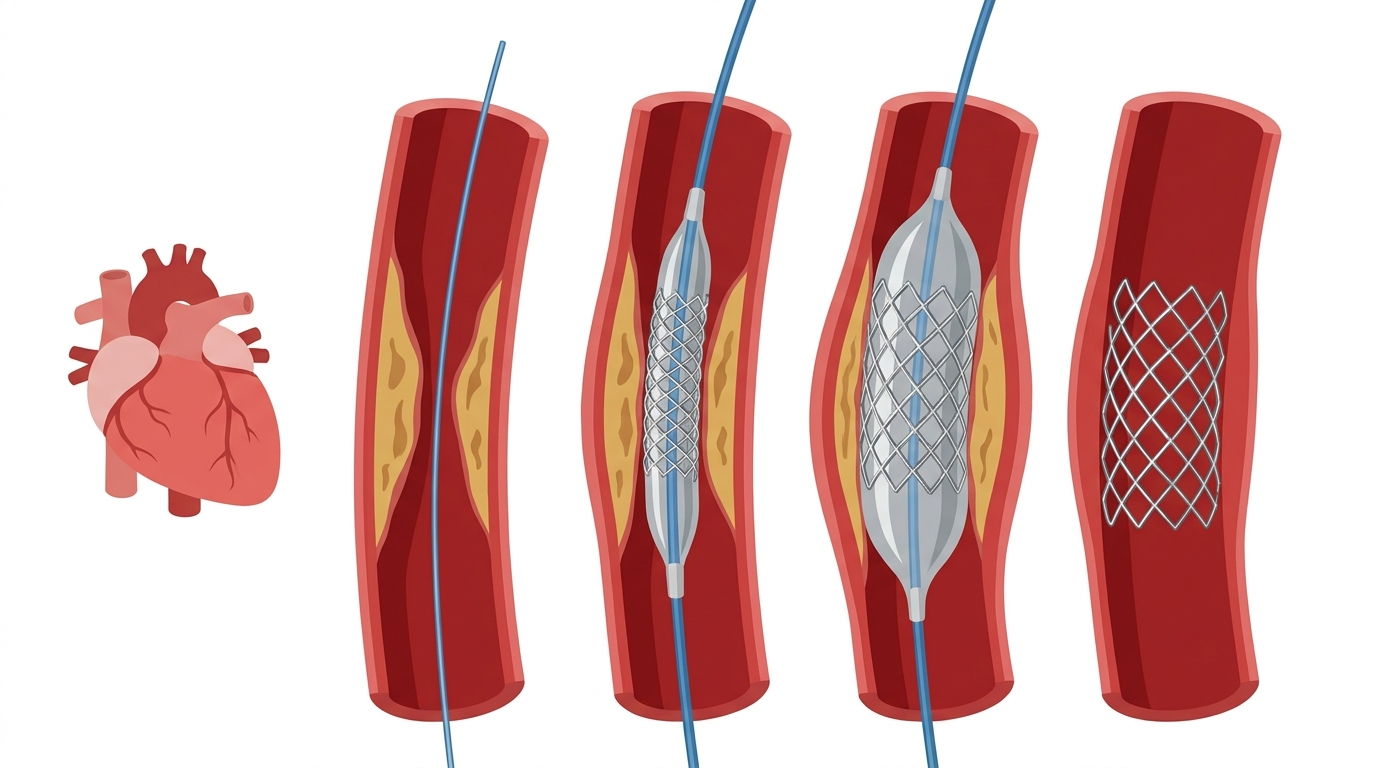
- Angioplasty: Inflating a tiny balloon inside a narrowed artery to push plaque aside and widen the vessel.
- Coronary Atherectomy: Using specialized microscopic blades, lasers, or rotational devices to shave away hard plaque buildup inside arteries.
- Fractional Flow Reserve (FFR): Measuring pressure differences to determine if a blockage severely restricts blood flow.
- Intravascular Ultrasound (IVUS): Placing a miniature ultrasound probe inside an artery to view plaque composition from within.
- Optical Coherence Tomography (OCT): Using light waves to capture microscopic cross-sectional images of blood vessel walls.
- Stent Placement: Inserting a tiny expandable wire mesh tube to keep a newly opened artery from closing up again.
- Heart Valve Replacement and Repair: Fixing or replacing leaking or narrowed heart valves using catheter delivery systems (such as TAVR).
- Left Atrial Appendage Closure: Sealing a small pouch in the heart to prevent blood clots in patients with atrial fibrillation.
- Atrial and Ventricular Septal Defect Closure: Patching holes in the walls dividing the heart's upper or lower chambers.
- Alcohol Septal Ablation: Treating thickened heart muscle in hypertrophic cardiomyopathy by injecting pure alcohol into a targeted blood vessel.
- Patent Foramen Ovale (PFO) Closure: Closing an abnormal opening between the heart's upper chambers present at birth.
- Renal Denervation: Targeting kidney nerves via catheter ablation to help lower treatment-resistant high blood pressure.
- Thrombolysis: Delivering clot-dissolving medicines directly into a blocked blood vessel during an emergency.
What is the Most Common Procedure Performed by Interventional Cardiologists?
Without a doubt, the most common procedures performed by these specialists are coronary angioplasty and stent placement. During this procedure, the doctor guides a catheter with a deflated balloon to the site of a coronary artery blockage.
Once positioned, the doctor inflates the balloon to press fatty cholesterol plaque flat against the artery wall, instantly widening the channel. In most cases, the doctor then places a permanent wire mesh tube called a stent to hold the artery open.
If you experience an acute heart attack, an emergency angioplasty and stenting procedure is truly lifesaving. Opening the blocked artery quickly restores oxygen-rich blood to your heart muscle and limits permanent damage.
What Diseases and Conditions Does Interventional Cardiology Treat?
Interventional cardiology addresses a broad spectrum of cardiovascular disorders that affect your heart muscle, valves, and circulatory system. Key conditions include:
- Coronary Artery Disease (CAD): Plaque buildup in the arteries that supply blood to your heart muscle.
- Heart Attacks (Myocardial Infarction): Sudden blockages cutting off blood flow to heart tissue.
- Heart Valve Disease: Narrowed or leaking heart valves that make your heart work harder.
- Atherosclerosis: General hardening and narrowing of arteries throughout the body.
- Carotid Artery Disease: Narrowing of the main blood vessels supplying blood to your brain.
- Hypertrophic Cardiomyopathy: Abnormal thickening of the heart muscle.
- Coronary Artery Fistula: Abnormal connections between coronary arteries and heart chambers or other vessels.
- Peripheral Artery Disease (PAD): Reduced blood flow in arteries supplying your arms or legs.
- Chronic Venous Disease: Poor blood return from leg veins back to the heart.
- Aortic Valve Stenosis: Severe narrowing of the main heart valve opening.
- Thromboembolic Disease: Conditions involving dangerous blood clots in circulation.
- Aneurysms: Abnormal ballooning or weakening of blood vessel walls.
- Atrial and Ventricular Septal Defects: Congenital holes in the heart walls.
Do You Need a Referral to See an Interventional Cardiologist?
Yes, in most healthcare systems, you cannot simply book an appointment with an interventional cardiologist on your own. You typically need a formal referral from your primary care doctor or a general cardiologist.
This ensures that you have undergone initial diagnostic testing—such as an electrocardiogram (ECG), echocardiogram, or stress test—and that an interventional specialist is indeed the right expert to evaluate your specific cardiovascular needs.
Where Do Interventional Cardiologists Work?
Interventional cardiologists practice in advanced medical settings equipped with specialized catheterization laboratories (cath labs). You will find them working in major hospitals, academic medical centers, and specialized cardiovascular institutes.
Because heart attacks happen unexpectedly, interventional cardiologists are often on call around the clock to rush to the hospital and perform emergency life-saving procedures for patients having acute cardiac events.
What Training is Required for Interventional Cardiology?
Becoming an interventional cardiologist requires an extraordinary level of education and rigorous hands-on clinical training. The typical educational pathway spans more than a decade:
- Medical School: Earning an MD or DO degree (4 years).
- Internal Medicine Residency: Training in general hospital medicine and patient care (3 years).
- General Cardiology Fellowship: Specialized study of heart diseases and diagnostic testing (3 years).
- Interventional Cardiology Fellowship: Advanced dedicated training focusing exclusively on catheter-based procedures (1 to 2 years).
After completing this extensive training, doctors must pass rigorous board certification examinations. Many elite specialists also earn fellowship credentials from professional organizations like the Society for Cardiovascular Angiography and Interventions (SCAI), indicating they have successfully performed over 1,000 specialized procedures.
What Can You Expect During an Interventional Cardiology Appointment?
Unless you are admitted through the emergency department for an acute heart attack, your first visit to an interventional cardiologist will usually take place in an outpatient clinic. The doctor will review your medical history, discuss your symptoms, and examine your diagnostic test results.
Be sure to bring a complete list of all medicines you take—including prescription drugs, over-the-counter medicines, vitamins, and herbal supplements. Your doctor will ask about your lifestyle habits, such as smoking history and alcohol use, and whether anyone in your family has a history of heart disease.
If you require a catheter-based procedure, your care team will provide detailed pre-procedure instructions. This often includes fasting (avoiding food and drink) for 6 to 8 hours before the procedure and temporarily stopping certain medicines.
When to Seek Emergency Medical Attention
Heart issues require immediate medical care. Call 911 (US/Canada), 999 (UK), or your local emergency number right away, or go to the nearest Emergency Department (ER / A&E) if you experience:
- Sudden, crushing chest pain, pressure, or tightness.
- Pain radiating to your jaw, neck, back, or left arm.
- Severe, unexplained shortness of breath.
- Sudden dizziness, lightheadedness, or fainting.
- Cold sweats accompanied by nausea and fatigue.
Comparing Heart Care Approaches
Understanding the difference between catheter-based procedures and traditional open surgery.
| Feature | Interventional Cardiology (Angioplasty/Stents) / Open-Heart Surgery (CABG / Bypass) |
|---|---|
| Incision Size | Interventional Cardiology (Angioplasty/Stents): Tiny needle puncture in wrist or groin Open-Heart Surgery (CABG / Bypass): Large chest incision (sternotomy) |
| Heart Status | Interventional Cardiology (Angioplasty/Stents): Heart beats normally during procedure Open-Heart Surgery (CABG / Bypass): Heart is often temporarily stopped |
| Hospital Stay | Interventional Cardiology (Angioplasty/Stents): Usually 1 day or outpatient Open-Heart Surgery (CABG / Bypass): Typically 4 to 7 days |
| Recovery Time | Interventional Cardiology (Angioplasty/Stents): A few days to 1 week Open-Heart Surgery (CABG / Bypass): 6 to 12 weeks |
💡 Take-Home Message: Key Points to Remember
Interventional cardiology represents one of the most remarkable advancements in modern medicine. It combines cutting-edge technology with patient-friendly techniques to treat complex heart conditions safely and effectively.
- No Major Chest Openings: Using tiny catheters eliminates the need for large surgical incisions in many cases.
- Rapid Healing: Shorter hospital stays allow you to return to your normal routine much faster.
- Highly Trained Experts: Procedures are performed by board-certified specialists with years of rigorous fellowship training.
- Ask Questions: If your doctor recommends an interventional procedure, discuss your options openly to ease anxiety.
Taking care of your heart starts with knowledge and proactive communication. If you have concerns about your heart health, schedule an appointment with your doctor today. A healthy heart is the foundation of a vibrant life!






No comments yet. Be the first to share your question or experience below.