
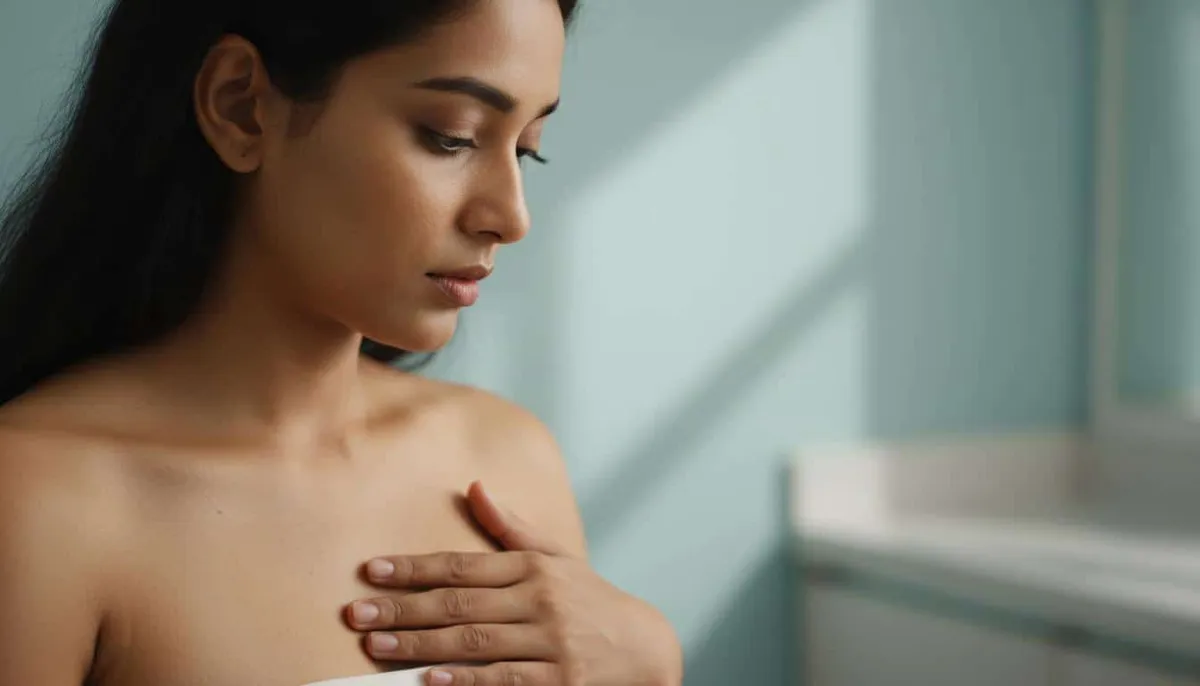
Have you ever glanced in the bathroom mirror after a shower, noticed a dark, wiry hair growing right near your nipple or on your chest, and immediately wondered, "Wait a second—why do women get hair on their breasts, and what happens if I have it?" Be honest, your very first instinct was probably to grab a pair of tweezers and hope nobody ever noticed, wasn't it? Whether you are a teen girl spotting your first stray hair during puberty, an adult woman wondering if it is healthy or normal to have hair near the nipple, or even a guy curious about why chest hair patterns vary so wildly, you are definitely in the right place. When you sit down with us doctors in the exam room, we always start by looking at two main things: whether those hairs are simply normal, harmless everyday follicles doing their job, or whether your body is dropping a subtle hint about a hormone shift like Polycystic Ovary Syndrome (PCOS). Let's talk openly and honestly about why breast hair happens, what it means for your health, and the safest ways to get rid of it if it bothers you.
📌 Key Takeaways at a Glance
- It is completely normal and common: Having a few fine or even dark, coarse hairs around the dark skin of your nipple (the areola) is a totally normal part of female anatomy and nothing to be ashamed of.
- Hormones call the shots: Natural fluctuations during puberty, pregnancy, birth control changes, and menopause often wake up sleepy hair follicles on the chest.
- Watch for sudden patterns (Hirsutism): If thick, dark hair suddenly spreads across the middle of your chest, chin, upper lip, or stomach, it may point to higher male-type hormone levels (androgens), most commonly caused by Polycystic Ovary Syndrome (PCOS).
- Gentle removal is key: Trimming with small sterile scissors, careful tweezing, or professional laser hair removal are the safest methods for sensitive breast skin; never use harsh chemical depilatory creams near your nipples.
- When to check in with your doctor: Book a routine visit with your Primary Care Physician (PCP) or family GP clinic if new chest hair teams up with skipped periods, adult acne, sudden weight gain, or scalp hair thinning.
Calculate your HOMA-IR, QUICKI, and HOMA-Beta scores from fasting glucose and fasting insulin to evaluate insulin resistance in PCOS, fatty liver, and prediabetes.
Why Do Women Get Hair on Their Breasts and What Happens If You Have It?
Having hair on your breasts or around your nipples is completely normal and harmless for most women. Because human skin contains hair follicles almost everywhere except the palms and soles, normal hormone fluctuations or genetics can turn fine peach fuzz around the areola into darker strands without harming your health.
Think about it for a second: we talk openly about hair on our eyebrows, arms, and legs all the time, don't we? Yet because breasts are considered an intimate area—and because airbrushed photos on social media make it look like women have completely poreless, hairless skin—spotting a coarse black hair on your breast can feel alarming. Many patients quietly search online asking, "Is it healthy to get hair near the nipple, or is it a myth that something is wrong?"
Let us put your mind at ease right away. Having a few hairs on your breasts does not hurt your physical health, it does not interfere with breastfeeding later in life, and it is certainly not a sign of breast cancer. In fact, human skin is covered in tiny pockets called hair follicles (pilosebaceous units). Did you know there are really only a few places on your entire body where hair follicles simply do not exist? Those are the palms of your hands, the soles of your feet, your lips, and certain mucosal surfaces. Note that the backs of your hands and tops of your feet actually do have follicles—it is only the palms and soles that are completely hair-free! Pretty surprising, right?
Everywhere else—including across your chest and right around the edge of your areola (the pigmented circle of skin surrounding your nipple)—you have thousands of microscopic hair follicles. Most of the time, these follicles produce soft, nearly invisible "peach fuzz," which we doctors call vellus hair. However, the hair follicles around the nipple are uniquely sensitive to even tiny, everyday ripples in your hormone levels. When a follicle gets a little nudge from your natural hormones, it can switch gears and start producing a thicker, darker, longer strand known as a terminal hair. That is the exact culprit you see staring back at you in the mirror!
Is Breast Hair Normal or Something to Be Afraid Of? (Normal vs. Hirsutism)
Now that we know why stray nipple hairs pop up, how do we tell the difference between totally normal body hair and something that needs a closer medical look? We rarely stop to think about how hair patterns work until ours changes, do we?
If you have had one, two, or even half a dozen stray dark hairs around your nipples since your teenage years or twenties, and everything else in your body feels like clockwork, that is just your normal baseline. Some women naturally have thicker, darker hair there—especially if you have Mediterranean, South Asian, Middle Eastern, or Hispanic heritage. Genetics play a huge role in how many follicles you have and how dark the pigment is.
However, sometimes breast hair behaves differently, and that is when we doctors pay closer attention. When a girl or woman develops excessive, coarse, dark hair in a typically male pattern—such as right down the center of the chest between the breasts, along the jawline and chin, on the upper lip, down the lower abdomen, or across the back—we call this medical condition excessive male-pattern hair growth (hirsutism).
Look at what happens when normal hair crosses the line into something you should have checked out:
- Sudden, rapid, or widespread growth: You go from having zero or one stray hair to suddenly noticing a dense patch of hair growing across your breast tissue or right over your breastbone (sternum) within a few months.
- Changes in texture and color: Soft, light peach fuzz rapidly transforms into thick, wiry, jet-black hairs that feel just like facial beard stubble.
- Hair appearing in other hormone-sensitive zones: The chest hair does not show up alone; you also start plucking new dark hairs on your chin, neck, upper lip, inner thighs, or a thicker trail from your belly button down (the linea nigra area).
- Accompanying whole-body hormone clues: Your menstrual period starts showing up weeks late or disappears for months at a time, you break out in deep cystic acne along your jawline, the hair on top of your head starts thinning, or your voice sounds noticeably deeper.
What Causes Chest Hair in Women and Men? The Hormone Connection
Have you ever wondered why boys grow thick chest hair during puberty while girls usually don't—even though both have the exact same number of hair follicles on their chests? It all comes down to chemical messengers in your bloodstream called hormones.
Specifically, a group of hormones called male-type sex hormones (androgens)—which include testosterone and DHEA-S—act like fertilizer for hair follicles on the chest, face, and stomach. Even though people often casually call androgens "male hormones," every single female body naturally produces them in small, healthy amounts inside the ovaries and the adrenal glands (tiny hormone glands sitting like little hats on top of your kidneys) to help maintain bone strength, muscle health, and energy.
What Happens When Boys and Men Get Chest Hair?
Many teen boys and young men also search about what happens when males get chest hair or why theirs looks patchy. In males, a surge of testosterone during puberty converts the fine vellus hairs across the pectoral muscles and sternum into coarse terminal chest hair. Whether a man gets a thick carpet of chest hair in his late teens or barely a few strands around his nipples in his thirties is almost 100% determined by genetics and how sensitive his skin's androgen receptors are. Both heavy chest hair and minimal chest hair are completely healthy in men!
Why Androgens Cause Breast Hair in Girls and Women
In girls and women, estrogen and progesterone normally keep androgen levels balanced so chest follicles stay quiet. But when androgen levels creep slightly higher than normal—or when your hair follicles are simply extra sensitive to normal androgen levels—those chest follicles wake up. Let's look at the most common reasons this happens:
- Polycystic Ovary Syndrome (PCOS): Remember how we mentioned hormone clues earlier? PCOS is hands-down the most common hormonal imbalance in women of reproductive age, affecting roughly 1 in 10 women across the US, UK, Canada, and Australia. In PCOS, the ovaries produce slightly higher amounts of androgens, often accompanied by insulin resistance. This combination triggers extra hair growth on the breasts, chin, and stomach, alongside irregular ovulation and stubborn acne.
- Natural Life-Stage Hormone Rollercoasters: Even without an illness, your estrogen-to-testosterone ratio naturally shifts during puberty, throughout pregnancy (when high hormone levels frequently cause new nipple hairs to sprout!), after stopping or switching birth control pills, and during perimenopause and menopause (when estrogen drops, leaving natural testosterone slightly more dominant).
- Adrenal Gland Conditions: Less commonly, conditions that affect the adrenal glands—such as excessive cortisol production (Cushing's syndrome) or an inherited enzyme difference called congenital adrenal hyperplasia (CAH)—can release extra androgens into the bloodstream.
- Thyroid Gland Disorders and Prolactin: An underactive thyroid (hypothyroidism) or elevated levels of the milk-producing hormone (hyperprolactinemia) can indirectly throw off your sex hormone balance and alter hair growth cycles.
- Certain Medications: Some prescription drugs—including long-term oral corticosteroids, certain anti-seizure medications, hormone therapies containing testosterone or progestins, and topical minoxidil—can stimulate unwanted hair growth as a side effect.
- Idiopathic Hirsutism (Genetics): Sometimes we run every blood test in the book and your hormone numbers come back 100% normal! We call this idiopathic hirsutism, meaning your hair follicles are just genetically wired to be extra sensitive to perfectly normal hormone levels. Makes sense, right?
How Can You Tell What Your Breast Hair Means? (Comparison Guide)
To help you figure out what is going on with your own body right now, we put together a simple side-by-side breakdown comparing everyday variations with patterns that deserve a doctor's visit.
| Breast Hair Pattern & Symptoms | Clinical Explanation & Action Plan |
|---|---|
| A few scattered dark or fine hairs right around the nipple (areola) | This is a completely normal anatomical variation caused by local follicle sensitivity to everyday hormones or genetics. It is not a disease and poses zero risk to your breast health. What you should do: Nothing is medically required! You can leave them completely alone, trim them flush with the skin using clean manicure scissors, or gently tweeze stray strands if you prefer. |
| New nipple hairs appearing during pregnancy, puberty, or menopause | Normal physiological shifts in your estrogen, progesterone, and androgen ratios during major life stages temporarily stimulate sleepy hair follicles around the breast. What you should do: Practice gentle grooming if they bother you and avoid harsh treatments while pregnant or breastfeeding. Mention it at your next routine checkup if it continues progressing. |
| Gradual growth of coarse dark hair on breasts, chin, plus irregular periods or acne | This classic pattern points toward mild-to-moderate androgen excess (hirsutism), most frequently linked to Polycystic Ovary Syndrome (PCOS) or insulin resistance. What you should do: Schedule a non-urgent appointment with your Primary Care Physician (PCP) or family GP clinic for a simple morning hormone blood panel and a pelvic ultrasound if needed. |
| Red, tender, swollen bump right where you plucked or shaved a breast hair | Plucking or dull shaving on delicate areola skin can trap a regrowing hair beneath the surface (ingrown hair) or allow normal skin bacteria into the pore, causing hair follicle inflammation (folliculitis). What you should do: Stop plucking immediately. Apply a clean, warm, damp washcloth for 10 minutes three times a day. If redness spreads or pus forms, visit your family doctor or local Urgent Care center. |
| Sudden, rapid onset of heavy chest and facial hair over a few months with voice deepening | Rapid onset of severe androgen symptoms (virilization) is uncommon and requires prompt evaluation to rule out an androgen-producing ovarian or adrenal gland growth. What you should do: Contact your Primary Care Physician (PCP) or family GP clinic promptly for priority endocrine blood testing and diagnostic imaging referrals. |
When Should We Talk to a Doctor About Breast Hair?
Remember how we said earlier that you never need to feel embarrassed bringing this up? Trust us—as family doctors, we examine patients worried about breast and facial hair every single week. While a few quiet hairs around your nipples don't require a clinic visit, you should definitely book an appointment with your Primary Care Physician (PCP) or family GP clinic if you notice any of the following:
- Your chest, breast, facial, or stomach hair starts growing noticeably faster, thicker, or darker over a short span of a few months.
- Your menstrual cycles become irregular—such as skipping periods for months, having cycles longer than 35 days, or experiencing unusually heavy bleeding.
- You develop persistent adult acne across your lower face, chest, or upper back that doesn't respond to standard drugstore washes.
- You notice male-pattern signs (which we call virilization), such as your voice becoming deeper or hoarse, scalp hair thinning at the crown or temples, or increased muscle bulk.
- You experience unexplained weight gain, especially around your midsection, or dark, velvety patches of skin on the back of your neck or underarms (a sign of insulin resistance called acanthosis nigricans).
- You have been trying to get pregnant without success alongside these hair changes.
What happens when you come in to see us? First, we will simply sit down and have a relaxed chat about your menstrual history, any medications or supplements you take, and whether anyone else in your family has similar hair patterns. Next, with your consent, we do a gentle clinical examination. If we suspect a hormonal trigger like PCOS or a thyroid shift, we can order a straightforward morning blood test right at the clinic lab to check your testosterone, DHEA-S, thyroid-stimulating hormone (TSH), prolactin, and blood sugar levels. If needed, we will also refer you for a quick, painless pelvic ultrasound scan or connect you with a hormone specialist (endocrinologist) or gynecologist. Never try to self-diagnose from scary corners of the internet when a simple blood test can give you clear answers!
How to Remove Breast and Nipple Hair Safely (And Medical Treatments)
Now let's answer one of the biggest practical questions patients ask us: "How do I safely remove hair on my breasts without hurting the sensitive skin around my nipples?" The right approach depends on whether you are just tidying up a few normal stray hairs or treating an underlying hormone condition.
Safe Home Grooming for Normal Stray Hairs
First of all, let's be crystal clear: you do not have to remove breast hair at all! Leaving it natural is 100% healthy. But if removing it makes you feel more confident in a swimsuit or intimate setting, you have to treat the skin of your breasts and areolas with extra TLC. That skin is much thinner and more delicate than the skin on your legs. Look at the safest options:
- Trimming with small scissors (Safest method): Using a clean pair of small, curved manicure or facial hair scissors to snip the hair right at the skin's surface is our favorite recommendation. Why? Because the hair shaft stays inside the pore, meaning you have zero risk of painful ingrown hairs or infected follicles!
- Careful tweezing (Best for just 1 to 5 stray hairs): If you only have a few isolated dark hairs, plucking them from the root with a pair of rubbing-alcohol-wiped slanted tweezers works well and keeps them away for several weeks. Always pluck RIGHT after a warm shower when the pores are soft, pull gently in the exact direction the hair grows, and dab a little soothing, fragrance-free moisturizer afterward.
- Shaving (Use extreme caution): Be honest, you have probably been tempted to quickly swipe your razor over your chest in the shower, haven't you? While shaving doesn't actually change your genetics to make hair grow back thicker, cutting the hair blunt makes the regrowing stubble feel prickly and look darker against pale skin. Plus, nicking the tiny normal bumps on your areola (called Montgomery glands) hurts terribly and invites infection. If you do shave the flatter part of your breast, always use a fresh blade and plenty of fragrance-free shaving cream.
Professional Hair Reduction Methods
- Laser Hair Removal: If you have dark hairs and lighter-to-medium skin (or use specialized Nd:YAG lasers safe for deeper skin tones), a licensed dermatologist or certified medical aesthetician can target the pigment in the hair follicle with laser light, significantly reducing regrowth over 6 to 8 sessions.
- Electrolysis (Permanent removal): Because laser only works well on dark hair, what if your hairs are blonde, red, grey, or just a few stubborn strands around the nipple? Electrolysis uses an ultra-fine probe to permanently disable individual hair follicles one by one, making it the gold-standard permanent choice for small areas like the areola.
Medical Treatments When Hormones Are the Cause
If our clinic blood tests show that PCOS or elevated androgens are driving your chest hair growth, cosmetic removal alone will feel like an endless game of whack-a-mole unless we calm down the hormones from the inside out. Depending on your health goals, we doctors may prescribe:
- Combined Oral Contraceptive Pills: Standard birth control pills containing estrogen and progestin help regulate your cycle and boost proteins that bind up excess free testosterone in your blood.
- Anti-Androgen Medications: Prescription tablets like spironolactone work directly at the skin level by blocking androgen receptors on your hair follicles so new hairs grow in much finer and slower.
- Insulin-Sensitizing Support & Everyday Lifestyle Habits: For PCOS, balancing blood sugar naturally lowers ovarian androgen production. Swapping out sugary sodas, white bread, and ultra-processed snacks for balanced everyday meals—like oatmeal with berries for breakfast, grilled salmon or chicken with leafy greens and roasted sweet potatoes, whole-grain wraps, and plenty of water—alongside 30 minutes of brisk walking or strength training most days of the week can make a huge difference to your hormone balance!
✔️ What You Should Do & ❌ What to Avoid
- ✔️ DO sanitize your tools first: Always wipe tweezers or small trimming scissors with rubbing alcohol before touching the delicate skin around your nipples to keep bacteria out of your pores.
- ✔️ DO track your monthly cycle: Use a simple calendar or phone app to note your period dates alongside any new hair growth or skin breakouts—this gives your family doctor super helpful clues!
- ✔️ DO nourish your hormones through daily habits: Focus on steady, whole-food meals rich in fiber and lean protein, restful sleep, and regular movement to keep insulin and androgen levels naturally balanced.
- ❌ DON'T use harsh chemical hair removal creams (depilatories) on your nipples: Strong chemical creams designed for legs or bikini lines can cause painful chemical burns and severe allergic contact dermatitis on the thin tissue of the areola.
- ❌ DON'T wax Directly Over the Nipple or Areola: Hot wax can tear fragile areola skin and injure the tiny lubricating Montgomery glands sitting around your nipple.
- ❌ DON'T squeeze or dig at an ingrown breast hair: Digging at a trapped hair with fingernails or sharp tweezers pushes bacteria deeper into breast tissue and can trigger a painful skin abscess.
🚨 When to Seek Immediate Emergency Care (Red-Flag Symptoms)
If you or someone near you develops any of these red-flag symptoms, do not wait — call 911 (US & Canada), 999 or 111 (UK), or 000 (Australia) immediately or go straight to the nearest hospital Emergency Room (ER / A&E):
- Signs of a spreading breast infection (mastitis or breast abscess) after plucking or shaving: Rapidly expanding redness, intense throbbing pain, skin that feels hot and tight to the touch, pus draining from the area, or red streaks spreading across your chest combined with a high fever, chills, or body aches.
- Inflammatory breast changes: Sudden swelling of one whole breast where the skin turns bright red or purple and develops a thick, dimpled texture looking like the peel of an orange (peau d'orange), or a nipple that suddenly pulls inward (inverts).
- A firm, fixed breast lump or bloody nipple discharge: While hair growth itself is harmless, if you ever feel a hard knot beneath the skin or notice spontaneous bloody or clear fluid leaking from one nipple, seek prompt medical evaluation right away.
💡 Key Take-Home Message
- Spotting a few dark or fine hairs around your nipples is one of the most common, totally normal secrets of female anatomy—you are far from alone, and your body is not broken.
- Only the palms of your hands and soles of your feet lack hair follicles; having active follicles on your breasts simply reflects genetics and natural hormone sensitivity.
- Pay attention to the bigger picture: if chest hair multiplies rapidly alongside missed periods, stubborn jawline acne, or thinning scalp hair, check in with your Primary Care Physician (PCP) or family GP clinic to screen for very treatable conditions like PCOS.
- Treat your breast skin gently by trimming or carefully sanitizing before tweezing, and leave harsh waxes and chemical creams off the sensitive nipple area.






No comments yet. Be the first to share your question or experience below.