

Have you ever noticed your voice changing out of nowhere, felt a strange tightness when swallowing, or struggled to catch your breath? These everyday symptoms often point back to your voice box, known medically as the larynx, located right in the front of your neck.
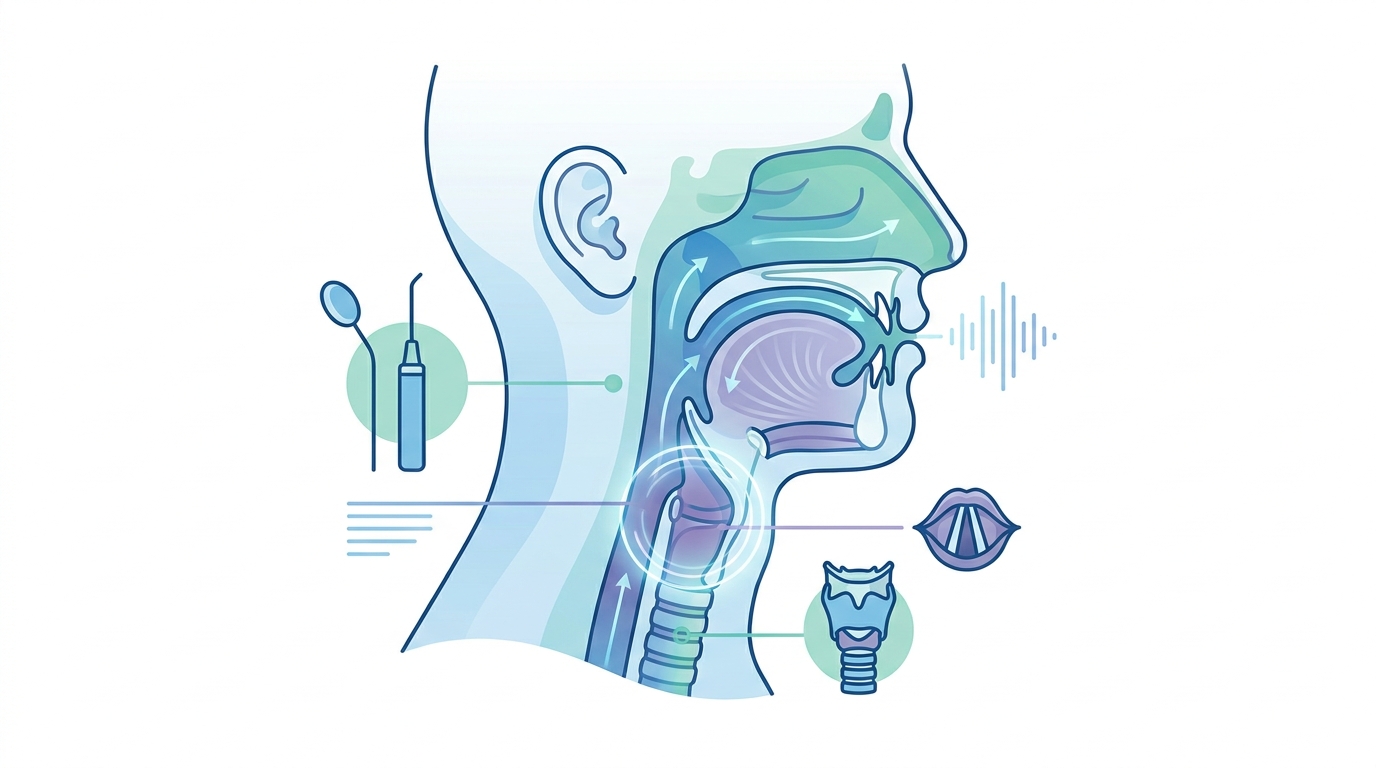
When you face persistent voice or throat problems, understanding the specialized field of laryngology can help you find answers, relief, and proper medical care. Let us explore everything you need to know about your larynx, voice health, and expert care.
Key Takeaways.
- Laryngology focuses entirely on the larynx, vocal cords, swallowing, and airway health.
- A laryngologist is a specialized doctor who undergoes advanced fellowship training beyond standard ENT training.
- Persistent hoarseness lasting more than two to four weeks requires prompt medical evaluation by a professional.
- Voice overuse, smoking, and acid reflux are major contributors to many common laryngeal conditions.
What Is Laryngology?
Laryngology is a specialized branch of medicine dedicated to studying, diagnosing, and treating disorders of the larynx. Your larynx sits right in the front of your neck and houses your vocal cords, acting as the ultimate control center for speaking, singing, and making sounds.
Beyond producing your voice, your larynx plays a vital role in helping you swallow food safely and breathe properly. Think of it as the main protective gateway that guards your windpipe against foreign objects and liquids every single day.
Who Is a Laryngologist and What Do They Do?
A laryngologist is a medical doctor who has completed extensive specialized training focused specifically on the larynx and related upper airway structures. If you suffer from chronic voice changes, swallowing difficulties, or complex throat issues, your doctor may refer you to this specific expert.
Laryngologists perform several key medical responsibilities to protect and restore your throat health:
- Diagnosing complex disorders affecting your larynx with advanced imaging tools.
- Prescribing targeted medicines, therapies, or performing delicate surgical procedures.
- Educating you on how to protect your vocal cords and maintain long-term voice health.
- Collaborating closely with other medical specialists to coordinate your complete care plan.
Laryngologists often evaluate and treat a wide variety of clinical conditions:
- Benign growths and non-cancerous vocal cord lesions.
- Cancerous or precancerous tissue growths in the throat.
- Severe infections and chronic inflammatory conditions of the larynx.
- Autoimmune disorders affecting the upper airway and vocal structures.
- Neurological conditions that impact nerve signals to the voice box.
- Complex airway narrowing and breathing tract disorders.
- Vocal cord motion abnormalities and paralysis.
Vocal strain from overuse or incorrect vocal techniques can damage your delicate vocal tissues over time. also, surgeries on your neck, thyroid gland, blood vessels, chest, or the placement of breathing tubes can sometimes impact your laryngeal health, making expert laryngology care essential.
What Is the Difference Between a Laryngologist and an ENT?
You may have heard of ENT doctors, who specialize in ear, nose, and throat medicine, known formally as otolaryngologists. Laryngology is actually a dedicated subspecialty nested directly within the broader field of otolaryngology.
This means that every single laryngologist is first trained and qualified as an ENT doctor. However, not every ENT doctor completes the additional years of fellowship training required to become a certified laryngologist.
In short: Every laryngologist is an otolaryngologist, but not every otolaryngologist is a laryngologist.
While an ENT handles a broad range of general conditions affecting your ears, nose, and throat, a laryngologist focuses deeply on specialized voice, airway, and swallowing disorders.
Common Medical Conditions Treated by Laryngologists.
Laryngologists diagnose and treat numerous medical conditions that affect your daily ability to speak, breathe, and swallow comfortably. Understanding these conditions helps you recognize when something is wrong.
- Dysphagia (Swallowing Difficulty): This condition makes it hard to swallow food or liquids safely because your larynx fails to close properly or your esophagus struggles to move food down. It is common after strokes, neck surgeries, or radiation treatments.
- Laryngeal Cancer: A serious form of cancer that begins in the tissues of the voice box, strongly linked to cigarette smoking and heavy alcohol consumption.
- Laryngeal Papillomatosis: A chronic infection caused by the human papillomavirus that leads to non-cancerous wart-like growths inside the larynx and respiratory tract.
- Laryngeal Stenosis: A narrowing of the airway inside the larynx caused by scar tissue or restricted vocal cord movement resulting from trauma or chronic inflammation.
- Laryngitis: Inflammation of your voice box caused by infections, smoking, chronic acid reflux, or vocal strain, leading to a rough, hoarse voice.
- Laryngopharyngeal Reflux (LPR): A condition where stomach acid travels up through your esophagus and irritates your throat, causing coughing, hoarseness, and throat pain.
- Spasmodic Dysphonia: A rare neurological disorder where the muscles inside your voice box experience involuntary spasms, making your voice sound strained or strangled.
- Vocal Cord Hemorrhage: A sudden rupture of blood vessels within the vocal cords that fills soft tissues with blood, often triggered by intense yelling or severe vocal strain.
- Vocal Cord Lesions: Non-cancerous nodules, polyps, or cysts that form on one or both vocal cords, often affecting singers, teachers, and sales professionals.
- Vocal Cord Dysfunction (VCD): A condition where your vocal cords close when they should open during breathing, triggered by reflux, exercise, or stress.
- Vocal Cord Paralysis: A condition where one or both vocal cords fail to open or close properly, leading to breathing, speaking, and swallowing difficulties.
- Voice Disorders: A broad category of conditions affecting voice production, often caused by vocal misuse, infections, or underlying neurological damage.
Education and Training Required to Become a Laryngologist.
Becoming a laryngologist requires a rigorous and lengthy educational journey. Doctors must first complete standard medical school and general otolaryngology residency training before pursuing subspecialty fellowship training.
- Undergraduate bachelor degree program taking about four years.
- Medical school education earning an MD or DO degree taking four years.
- Otolaryngology residency training program lasting five years.
- Board certification exams given by professional medical boards.
- Advanced fellowship training in laryngology lasting one to two dedicated years.
When Should You See a Laryngologist?
Your primary care provider can evaluate early symptoms and refer you to a specialist if you experience persistent breathing or swallowing concerns. If you develop hoarseness that lingers for more than two to four weeks, seeking direct evaluation is essential.
Vocal abuse and chronic misuse can alter your vocal cord function permanently if left untreated. If your profession relies heavily on your voice—such as teaching, public speaking, singing, or sales—consulting a laryngologist early protects your livelihood.
If you experience unexplained hoarseness lasting longer than two to four weeks, schedule an evaluation with an ENT or laryngologist right away.
When to Seek Emergency Medical Care.
Call 911 (US/Canada), 999 (UK), or go to your nearest Emergency Department right away if you experience any of the following emergency red flags:
- Sudden severe difficulty breathing or gasping for air.
- Complete inability to swallow your own saliva or liquids.
- Severe throat swelling or sudden closure of your airway.
- Coughing up significant amounts of blood.
Comparison of Voice and Throat Specialists.
| Specialist Type. | Primary Focus. | Best For. |
|---|---|---|
| Primary Care Doctor. | General health and initial triage. | Initial screening and specialist referrals. |
| ENT Specialist. | Ear, nose, and general throat conditions. | Sinus issues, ear infections, and general throat pain. |
| Laryngologist. | Advanced voice, airway, and swallowing disorders. | Professional voice users, chronic hoarseness, and complex airway disease. |
Conclusion: Protecting Your Voice.
Laryngology is a vital medical field dedicated to protecting your voice, ensuring safe swallowing, and maintaining healthy breathing pathways. Recognizing early warning signs helps prevent minor issues from turning into chronic problems.
- Never ignore persistent hoarseness, swallowing pain, or voice changes lasting over a few weeks.
- Consult qualified laryngology specialists for complex laryngeal and vocal cord conditions.
- Protect your vocal cords by avoiding smoking, managing acid reflux, and practicing healthy vocal habits.
Your voice is a precious asset that deserves proper care. If you notice persistent symptoms, reach out to a doctor right away for guidance and effective treatment.
A Note from Dr. Priya Sammani.
Voice and throat symptoms are easy to overlook, but they often serve as early indicators of underlying health conditions. If you experience persistent inflammation, hoarseness, or swallowing difficulties, early medical evaluation is essential. Avoid relying on unverified home remedies when professional care can keep your vocal cords healthy for years to come.


💬 Comments (0)
No comments yet. Be the first to share your thoughts here.
Add Your Comment