

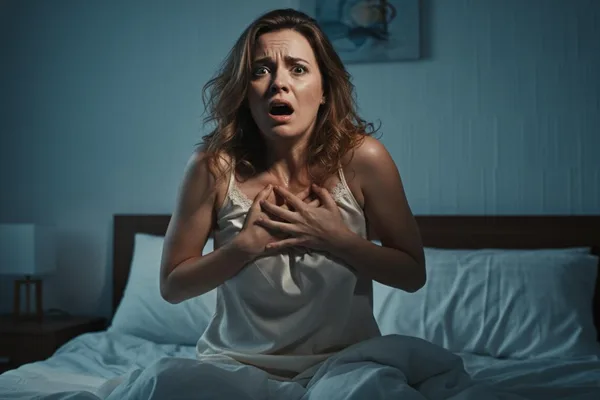
Imagine, you are sleeping soundly to relieve the fatigue of the day. But suddenly, you wake up with a terrible feeling of shortness of breath, a tightness in your chest. It is like drowning in water and you have to fight to breathe. This is an experience that many people experience, but are afraid to talk about, it is very scary. In medicine, we call this condition Paroxysmal Nocturnal Dyspnea, or PND for short. This is not just another thing, it can be an important signal that your body is giving you.
What exactly is PND?
Simply put, PND is when you suddenly wake up an hour or two after falling asleep with difficulty breathing. This is often very disturbing. You may struggle to breathe, breathe rapidly, and may even cough.
The important thing is that this condition called PND only occurs when you are asleep . This is different from the shortness of breath that occurs when you lie down while you are awake (called orthopnea).
But there is some relief. When you wake up like this, if you sit up in bed, your breathing will usually return to normal within 10 to 15 minutes, and the discomfort will gradually disappear.
Why does this happen when I sleep at night? What are the main reasons?
PND is not a disease, but a symptom of an underlying medical condition. The causes can be divided into three main categories:
| The main area that could cause | To explain simply... |
|---|---|
| Heart Disease | When we sleep on our side, the blood and fluid in our legs flow back to the chest, which is where our lungs are due to gravity. A healthy heart can easily pump this extra blood around the body. But if there is a weakness in the heart (such as Congestive Heart Failure), this extra fluid can accumulate in the lungs, creating pressure and making it difficult to breathe. |
| Respiratory Conditions | If you have a medical condition like asthma or COPD (Chronic Obstructive Pulmonary Disease), you may have difficulty breathing during the day. These conditions can be exacerbated by the changes that occur in your body at night. |
| Neurological Issues | Our breathing is controlled by signals from the brain. In conditions like Sleep Apnea, this signaling process doesn't work properly. Either the airway is blocked, or the brain stops giving the signal to breathe for a moment. This causes breathing to stop, causing you to suddenly wake up. |
Specific medical conditions that affect PND
- Sleep Apnea: Repeated cessation of breathing during sleep.
- Congestive Heart Failure: Weakening of the heart's pumping ability.
- Pulmonary Hypertension: Increased pressure in the blood vessels of the lungs.
- COPD (Chronic Obstructive Pulmonary Disease): A long-term lung disease.
- Asthma
- Pulmonary Edema: Water accumulation in the lungs.
- Parkinson's Disease
- Nocturnal Panic Attacks: Sudden panic attacks that occur at night.
- Obesity: Obesity can also cause pressure on the respiratory tract.
How is this treated?
It's important to remember this: PND is treated not just for the symptoms, but for the underlying condition that caused it. Your doctor will examine you, run some tests if necessary, and find the exact cause. Then, they will start treatment based on that cause.
| Reason | Commonly given treatments |
|---|---|
| Heart disease | Medications such as diuretics and blood pressure control medications (ACE inhibitors, beta-blockers) are given. |
| Sleep Apnea | Using a machine like CPAP or BiPAP to keep the airway open during sleep is also very important. Losing weight is also very important. |
| Respiratory diseases (asthma/COPD) | Inhaled bronchodilators and inhaled corticosteroids are used. |
| Mental health problems | Cognitive Behavioral Therapy or anti-anxiety medications are given for conditions like nocturnal panic attacks. |
What can we do to prevent PND?
The best thing to do is to get the right treatment for your underlying condition. It's important to take the medications your doctor prescribes on time. In addition, these things can help keep your heart and lungs healthy:
- Exercise: Talk to your doctor about a safe level of exercise that is right for you, and exercise daily. This will strengthen your heart and lungs.
- Breathing exercises: Deep breathing exercises and relaxation techniques can help control breathing difficulties and anxiety.
- Avoid smoking: If you smoke, quit today. Smoking is the biggest killer of the lungs. It can worsen conditions like asthma and COPD, and can even lead to new diseases.
Do I need to see a doctor?
The answer to this is very simple. Yes, definitely!
If you have ever woken up at night with shortness of breath, don't just ignore it. It could be the first warning sign of a serious underlying condition in your body. So , see your family doctor right away. He or she will be able to guide you properly.
Remember, if your shortness of breath is severe, accompanied by chest pain or a feeling of faintness, go to the nearest hospital's Emergency Department (ETU) without delay.
Good sleep is essential for our bodies and minds. Disruption of that sleep due to PND can have a major impact on the quality of life. So don't ignore this symptom. Get proper medical advice, treat the cause, and start living a life where you can sleep soundly again.
Take-Home Message
- PND is the sudden awakening from sleep at night with shortness of breath. While this can be a frightening experience, it is not a symptom that should be ignored.
- This is mainly caused by heart disease, respiratory system diseases, or nervous system problems such as Sleep Apnea.
- If you experience this even once, see a doctor immediately. It could be an early sign of a serious illness.
- Treatment is not for the symptom, but for the underlying condition that caused it.
- A healthy lifestyle (exercise, avoiding smoking) can help control the conditions that cause PND.




💬 Comments (0)
No comments yet. Be the first to share your thoughts here.
Add Your Comment