
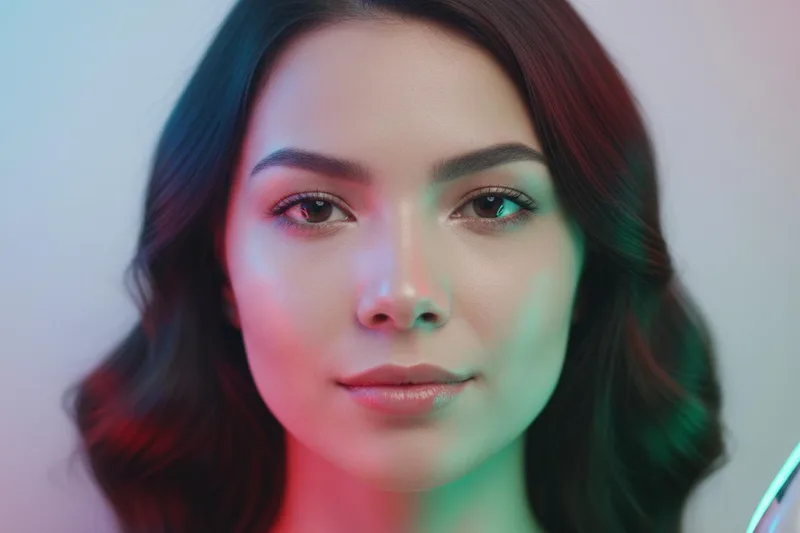
Let's learn more about LED Light Therapy to brighten the skin.

Let's learn more about LED Light Therapy to brighten the skin.

When you look at your face in the mirror, you probably think, "Here's another pimple," "I wish these wrinkles were reduced," "My skin looks a little darker." So today we're going to talk about a new treatment that many people are talking about these days that can help with skin problems. That's LED light therapy.

Simply put, what is LED light therapy?

LED (Light-Emitting Diode) is a type of small bulb that we see every day. So, LED light therapy is called this because the different colored light rays coming from these LED bulbs are sent deep into the skin without causing any harm to our skin and helps to solve the problems in the skin. This is not like surgery, which means there is no cutting or sewing of the skin here.

Think about it, the history of this goes back to the 1990s when NASA was the first to use this LED light to speed up the healing of astronauts’ wounds and stimulate cell growth. Today, dermatologists and aestheticians widely use this method to treat a variety of skin problems. Usually, for best results, this light therapy is combined with other treatments such as creams, lotions, and facials.

There are now devices on the market that can be used at home, such as LED masks.

What skin problems does this treatment help with?

LED light therapy can help with a variety of skin problems and conditions, including:

  • Mild to moderate acne
  • Skin wrinkles
  • Dry, scaly skin with precancerous spots (actinic keratosis)
  • Eczema
  • Redness of the skin and small blisters ( rosacea )
  • Psoriasis
  • Sun damage to the skin
  • Hair loss
  • Wound healing
  • In some cases, this treatment can also be used for very small and superficial skin cancers, such as Basal Cell Carcinoma (BCC).

What happens to different colored light rays?

This treatment uses light rays with different wavelengths corresponding to different colors. Each color travels to different depths in the skin. Accordingly, each color performs different functions. Let's see what colors are mainly used and what they do.

The color of light Action and penetration depth into the skin
Blue Light This affects the top layer of the skin. It is believed that this light can kill the bacteria that causes acne (P. acnes).
Red Light This goes a little deeper into the skin. It helps reduce swelling in the skin and stimulates the production of a protein called ``Collagen``, which gives the skin a youthful appearance. As we age, the production of this collagen decreases.
Yellow Light This goes deeper than blue light and helps improve blood circulation and reduce skin redness.
Near-infrared light This is what goes deep into the skin. It helps speed up wound healing, repair cells, and reduce pain.

Depending on your skin condition, your doctor or esthetician may use one or more of these colors together to treat it.

Does this really have any results?

Research shows that LED light therapy can reduce and improve some skin problems. But the key is to continue the treatment consistently .

Treatments performed at a doctor's office or in a beauty salon (spa) use very powerful equipment. Therefore, they are more effective than small devices used at home. It is difficult to expect a big change from an LED mask used at home, that is, a miracle that completely eliminates wrinkles and clears up all acne. But you can see some subtle improvement in the appearance of the skin.

Who should not have this treatment?

LED light therapy is not suitable for everyone. The following people in particular should think twice before undergoing this treatment.

  • People taking certain medications that increase sensitivity to sunlight, such as Isotretinoin (an acne medication) and lithium (a medication for mental illness).
  • If anyone in the family has skin cancer or hereditary eye diseases .

If you are at risk, be sure to talk to your doctor before treatment.

What happens during and after treatment?

Before the treatment, your face should be thoroughly cleansed and free of any makeup. You will be given special glasses to wear during the treatment to protect your eyes.

During the treatment, you will lie down on a bed and the LED device will be placed above your face. You will only need to remain still for about 20 minutes while the treatment is completed. There will be no pain during this treatment. You may feel a slight warmth on your skin.

You can return to normal activities after treatment, but it is recommended to avoid sun exposure for 48 hours and use a good sunscreen if you do go out.

What are the risks and side effects?

LED light therapy is generally a very safe and low-risk treatment. It does not use ultraviolet (UV) light, so it does not burn or damage the skin.

But if you're buying a device for home use, check to see if it's certified as "FDA cleared" or "FDA approved." It's also essential to protect your eyes.

Very rare side effects are:

  • Increased skin swelling
  • Skin rash
  • Redness
  • Pain

Experts point out that although this treatment appears to be safe in the short term, there is still not enough data on the long-term effects on the body .

How do I know exactly if this treatment is right for me?

This is the most important thing. Before you go to a beauty salon and get this treatment, or before you buy a device for your home, it is very important to first consult a dermatologist .

Why is that? Because what you think is just a normal aging spot on your skin could be the beginning of skin cancer. A doctor can diagnose exactly what your skin problem is and recommend the best treatment for it. Your doctor is the best person to decide if LED light therapy is really necessary and right for you.

Take-Home Message

  • LED light therapy is a painless, non-surgical treatment used to treat acne, wrinkles, and other skin problems.
  • For best results, it is essential to receive a series of treatments in a row. Don't expect miracles in one session.
  • Professional treatments in beauty salons are more powerful and effective than at-home devices.
  • Before starting this treatment, especially if you are taking medication for another condition, it is important to consult a doctor . It is important to accurately diagnose your skin problem and choose the treatment that is best for you.
  • While this is generally safe, the long-term effects are not yet fully understood, so make an informed decision.

LED light therapy, LED light treatment, make skin beautiful, acne treatment, reduce wrinkles, dermatology, skin treatment, collagen

👩🏽‍⚕️ Additional questions (FAQs)

💬 Who exactly is a dermatologist?

A 'Dermatologist' is a doctor who specializes in treating diseases related to people's 'Skin, Hair, and Nails'. This is the main doctor who can provide the most accurate diagnosis for more than 3,000 diseases, not just acne, but also skin cancers, severe eczema/rash, and more.

💬 Why should you go to a dermatologist instead of a regular salon for acne and blemishes on your face?

Salons are not doctors (Beauty therapists)! They cannot understand whether the acne on your face is due to a hormonal problem or whether the spots/scars are due to an infection inside the skin (Melasma). The cheap creams (Bleaching/Steroids) used in salons can completely burn the skin/cause cancer. But a Dermatologist will treat the root cause of the disease (like Medical LED Therapy) and cure it forever!

💬 When you have a skin disease, you should drop everything and see a dermatologist immediately. What are the dangerous 'Red Flags'?

There is nothing to be afraid of with a normal rash that heals quickly. But the biggest danger! 1) If a 'birthmark on your body suddenly becomes large, changes color and bleeds (Melanoma/skin cancer may occur)', 2) If large blisters/skin peeling that spread rapidly all over your body (Severe Allergic Reaction/SJS) appear, you should go to a dermatologist/hospital without delay!

Frequently Asked Questions (FAQ)

What are the risks and side effects?

LED light therapy is generally a very safe and low-risk treatment. It does not use ultraviolet (UV) light, so it does not burn or damage the skin.

⚠️ Important: The medical articles and information on Nirogi Lanka are for general awareness only, and are by no means a substitute for professional medical advice, diagnosis, or treatment. For any medical problem you have, consult a qualified physician immediately.

💬 Comments (0)

No comments yet. Be the first to share your thoughts here.

Add Your Comment

Please calculate: 7 + 6 =
Let's learn more about LED Light Therapy to brighten the skin.

Let's learn more about LED Light Therapy to brighten the skin.

When you look at your face in the mirror, you probably think, "Here's another pimple," "I wish these wrinkles were reduced," "My skin looks a little darker." So today we're going to talk about a new treatment that many people are talking about these days that can help with skin problems. That's LED light therapy.

Simply put, what is LED light therapy?

LED (Light-Emitting Diode) is a type of small bulb that we see every day. So, LED light therapy is called this because the different colored light rays coming from these LED bulbs are sent deep into the skin without causing any harm to our skin and helps to solve the problems in the skin. This is not like surgery, which means there is no cutting or sewing of the skin here.

Think about it, the history of this goes back to the 1990s when NASA was the first to use this LED light to speed up the healing of astronauts’ wounds and stimulate cell growth. Today, dermatologists and aestheticians widely use this method to treat a variety of skin problems. Usually, for best results, this light therapy is combined with other treatments such as creams, lotions, and facials.

There are now devices on the market that can be used at home, such as LED masks.

What skin problems does this treatment help with?

LED light therapy can help with a variety of skin problems and conditions, including:

  • Mild to moderate acne
  • Skin wrinkles
  • Dry, scaly skin with precancerous spots (actinic keratosis)
  • Eczema
  • Redness of the skin and small blisters ( rosacea )
  • Psoriasis
  • Sun damage to the skin
  • Hair loss
  • Wound healing
  • In some cases, this treatment can also be used for very small and superficial skin cancers, such as Basal Cell Carcinoma (BCC).

What happens to different colored light rays?

This treatment uses light rays with different wavelengths corresponding to different colors. Each color travels to different depths in the skin. Accordingly, each color performs different functions. Let's see what colors are mainly used and what they do.

The color of light Action and penetration depth into the skin
Blue Light This affects the top layer of the skin. It is believed that this light can kill the bacteria that causes acne (P. acnes).
Red Light This goes a little deeper into the skin. It helps reduce swelling in the skin and stimulates the production of a protein called ``Collagen``, which gives the skin a youthful appearance. As we age, the production of this collagen decreases.
Yellow Light This goes deeper than blue light and helps improve blood circulation and reduce skin redness.
Near-infrared light This is what goes deep into the skin. It helps speed up wound healing, repair cells, and reduce pain.

Depending on your skin condition, your doctor or esthetician may use one or more of these colors together to treat it.

Does this really have any results?

Research shows that LED light therapy can reduce and improve some skin problems. But the key is to continue the treatment consistently .

Treatments performed at a doctor's office or in a beauty salon (spa) use very powerful equipment. Therefore, they are more effective than small devices used at home. It is difficult to expect a big change from an LED mask used at home, that is, a miracle that completely eliminates wrinkles and clears up all acne. But you can see some subtle improvement in the appearance of the skin.

Who should not have this treatment?

LED light therapy is not suitable for everyone. The following people in particular should think twice before undergoing this treatment.

  • People taking certain medications that increase sensitivity to sunlight, such as Isotretinoin (an acne medication) and lithium (a medication for mental illness).
  • If anyone in the family has skin cancer or hereditary eye diseases .

If you are at risk, be sure to talk to your doctor before treatment.

What happens during and after treatment?

Before the treatment, your face should be thoroughly cleansed and free of any makeup. You will be given special glasses to wear during the treatment to protect your eyes.

During the treatment, you will lie down on a bed and the LED device will be placed above your face. You will only need to remain still for about 20 minutes while the treatment is completed. There will be no pain during this treatment. You may feel a slight warmth on your skin.

You can return to normal activities after treatment, but it is recommended to avoid sun exposure for 48 hours and use a good sunscreen if you do go out.

What are the risks and side effects?

LED light therapy is generally a very safe and low-risk treatment. It does not use ultraviolet (UV) light, so it does not burn or damage the skin.

But if you're buying a device for home use, check to see if it's certified as "FDA cleared" or "FDA approved." It's also essential to protect your eyes.

Very rare side effects are:

  • Increased skin swelling
  • Skin rash
  • Redness
  • Pain

Experts point out that although this treatment appears to be safe in the short term, there is still not enough data on the long-term effects on the body .

How do I know exactly if this treatment is right for me?

This is the most important thing. Before you go to a beauty salon and get this treatment, or before you buy a device for your home, it is very important to first consult a dermatologist .

Why is that? Because what you think is just a normal aging spot on your skin could be the beginning of skin cancer. A doctor can diagnose exactly what your skin problem is and recommend the best treatment for it. Your doctor is the best person to decide if LED light therapy is really necessary and right for you.

Take-Home Message

  • LED light therapy is a painless, non-surgical treatment used to treat acne, wrinkles, and other skin problems.
  • For best results, it is essential to receive a series of treatments in a row. Don't expect miracles in one session.
  • Professional treatments in beauty salons are more powerful and effective than at-home devices.
  • Before starting this treatment, especially if you are taking medication for another condition, it is important to consult a doctor . It is important to accurately diagnose your skin problem and choose the treatment that is best for you.
  • While this is generally safe, the long-term effects are not yet fully understood, so make an informed decision.

LED light therapy, LED light treatment, make skin beautiful, acne treatment, reduce wrinkles, dermatology, skin treatment, collagen

👩🏽‍⚕️ Additional questions (FAQs)

💬 Who exactly is a dermatologist?

A 'Dermatologist' is a doctor who specializes in treating diseases related to people's 'Skin, Hair, and Nails'. This is the main doctor who can provide the most accurate diagnosis for more than 3,000 diseases, not just acne, but also skin cancers, severe eczema/rash, and more.

💬 Why should you go to a dermatologist instead of a regular salon for acne and blemishes on your face?

Salons are not doctors (Beauty therapists)! They cannot understand whether the acne on your face is due to a hormonal problem or whether the spots/scars are due to an infection inside the skin (Melasma). The cheap creams (Bleaching/Steroids) used in salons can completely burn the skin/cause cancer. But a Dermatologist will treat the root cause of the disease (like Medical LED Therapy) and cure it forever!

💬 When you have a skin disease, you should drop everything and see a dermatologist immediately. What are the dangerous 'Red Flags'?

There is nothing to be afraid of with a normal rash that heals quickly. But the biggest danger! 1) If a 'birthmark on your body suddenly becomes large, changes color and bleeds (Melanoma/skin cancer may occur)', 2) If large blisters/skin peeling that spread rapidly all over your body (Severe Allergic Reaction/SJS) appear, you should go to a dermatologist/hospital without delay!

Frequently Asked Questions (FAQ)

What are the risks and side effects?

LED light therapy is generally a very safe and low-risk treatment. It does not use ultraviolet (UV) light, so it does not burn or damage the skin.

⚠️ Important: The medical articles and information on Nirogi Lanka are for general awareness only, and are by no means a substitute for professional medical advice, diagnosis, or treatment. For any medical problem you have, consult a qualified physician immediately.

💬 Comments (0)

No comments yet. Be the first to share your thoughts here.

Add Your Comment

Please calculate: 7 + 6 =