
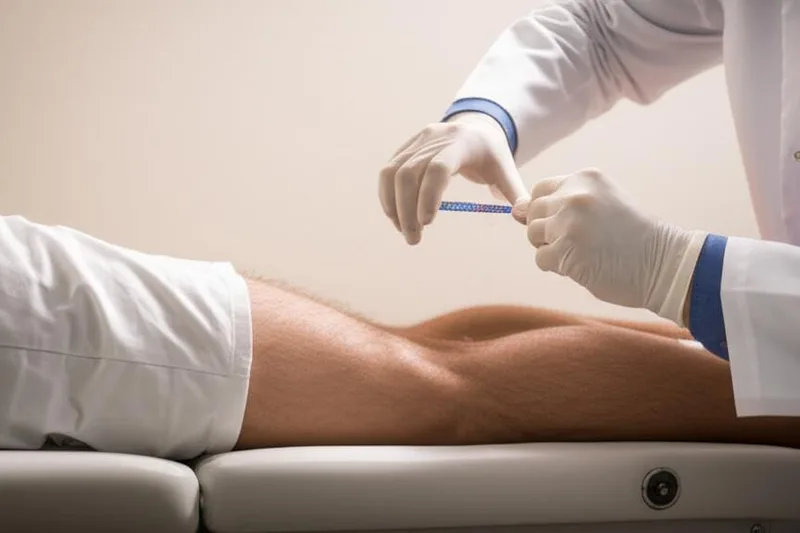
Have you or someone you know been told by your doctor to have a "Spinal Tap" test? Many people get a little scared and nervous when they hear this name. It's normal for questions like "Will they put a needle in my spine? Will it hurt? Will something go wrong?" to come to mind. But this is actually a very safe test that doctors perform and is very valuable in helping to diagnose many diseases. So, today we'll talk about it in a simple way to dispel all your fears and doubts.
What exactly is a Spinal Tap?
Simply put, this is a test. Imagine that our brain and spinal cord are not just there. They are floating in a special, clear fluid. This is what protects these important organs from various impacts. We call this fluid Cerebrospinal Fluid (CSF) .
A spinal tap involves inserting a very fine needle into your lower back, between two vertebrae, and taking a very small sample of CSF. This sample is then sent to a lab for testing.
The most important thing you need to remember here is that this needle will never hit your spinal cord . Because the needle is inserted far below where the spinal cord ends. So this is not as dangerous as you might think.
Why do you want to do this Spinal Tap?
There are several reasons to do this test. It is especially helpful in finding the cause of seizures in someone with a condition like epilepsy.
Here are some of the main reasons:
- Check for serious infections: Sometimes seizures can be caused by an infection in the brain or spinal cord. Examples of this include meningitis and encephalitis . These infections can be diagnosed by testing the CSF fluid.
- Diagnose other nervous system diseases: This test also helps diagnose other conditions that affect the central nervous system, such as multiple sclerosis and Guillain-Barre syndrome .
- Measure intracranial pressure: This is used to check for increased pressure around the brain. This method is sometimes used to reduce this pressure.
- Administering medication: This method is also used to administer spinal anesthesia, inject special dyes needed for tests such as X-rays, and administer certain medications such as Baclofen directly into the spinal fluid.
See the table below for what is tested in CSF fluid.
| What is being tested? | What are you looking at? |
|---|---|
| White blood cell count and types | You can find out if there is an infection. |
| Glucose level | Some bacterial infections cause low blood sugar levels. |
| Protein levels and types | Protein levels increase in some disease conditions. |
| Bacteria, fungi, abnormal cells | Look for signs of infection or cancer cells. |
How do you prepare before Spinal Tap?
Okay, now let's see how to prepare for this. It's important to follow these steps carefully.
- Food and Drink: There is no need to specifically restrict your food and drink. You can eat your meals as usual.
- Tell your doctor about your medications: This is very important. You should definitely tell your doctor about any medications you are taking, especially blood- thinning medications (e.g., aspirin, warfarin), and if you are drinking alcohol. Your doctor may ask you to stop taking the medication for a few days.
- Allergies: Tell your doctor if you have any allergies to latex or any other medication.
- Transportation: You will not be able to drive yourself after the test, so you will need to arrange for someone to drive you home or arrange for another vehicle.
What happens during Spinal Tap?
It's normal to feel a little scared at this point, but once you know how to do this properly, that fear will go away.
1. Position: You will either be asked to lie on one side of the bed, with your knees drawn up to your chest, and your chin tucked into your chest. Curled up like a little ball. Or you will be asked to sit in a chair, with your hands and head on a table, and lean forward. This position is designed to increase the space between your spine, making it easier to insert the needle.
2. Cleaning: The doctor or nurse will then thoroughly clean the area on your back with an antiseptic solution.
3. Numbing: Then a local anesthetic is injected into your back. You may feel a slight burning sensation at this point, but it only lasts a few seconds. After a while, the entire area will go numb.
4e. Inserting the needle: After the area is numb, the doctor slowly inserts a very thin, hollow needle between two vertebrae. You may feel a slight pinch at this point, but it should not be painful.
5. Aspirating the fluid: Once the needle is in place, a few drops of CSF fluid are collected into a small tube. This takes a few minutes.
6. Removal: After removing the liquid, slowly remove the stinger and apply a small plaster to the area.
7. A blood sample: Sometimes, a small blood sample is taken from a vein in your arm to compare the contents of your CSF with the contents of your blood.
What do you do after Spinal Tap?
After the test is finished, you will be monitored for a few hours. Before you go home, the nurse will explain and give you written instructions to follow.
Side effects and risks
As with any medical procedure, there are some risks involved, but they are very low.
- Spinal Headache: Some people (about 10% - 20%) may experience a headache after the test. The specialty of this is that the pain increases when standing or sitting, and decreases when lying down.
- Infection: The risk of infection is very low because this is done with completely sterile equipment.
- Bleeding: Sometimes, when the stinger hits a small blood vessel, a small drop of blood may come out. This does not require special treatment.
- Pain: Usually not painful, but if the stinger touches nerve tissue, you may feel a brief, electric shock-like pain.
Do this when you get home.
- Rest: Avoid strenuous work or exercise on the day of the test and the day after. Get plenty of rest.
- Drink fluids: This is very important. Drink about 2.5 liters of water a day to prevent headaches. Drink plenty of fluids like water, fruit drinks, and porridge.
- If you get a headache: Stay as still as possible. Drink plenty of fluids. But if the headache persists, call your doctor.
If you have these symptoms, call your doctor immediately.
If you experience any of the symptoms below when you go home after the test, call your doctor without delay.
| Symptoms that require urgent attention | |
|---|---|
| From the place where the needle was inserted | Bleeding, swelling, or redness. |
| Fever | Increased body temperature. |
| Headache | A severe headache that doesn't subside for days. |
| Pain | Increased pain or numbness in the back or legs. |
Take-Home Message
- A spinal tap (lumbar puncture) is nothing to be afraid of. It is a very safe and important diagnostic test performed by a doctor.
- This helps to determine if there are serious infections like meningitis.
- During the test, the needle doesn't hit your spinal cord at all. It's inserted much lower than that.
- Follow the doctor's instructions carefully before and after the test. It is especially important to rest and drink plenty of fluids.
- If you develop symptoms such as fever or severe headache after the test, notify your doctor immediately.


💬 Comments (0)
No comments yet. Be the first to share your thoughts here.
Add Your Comment