
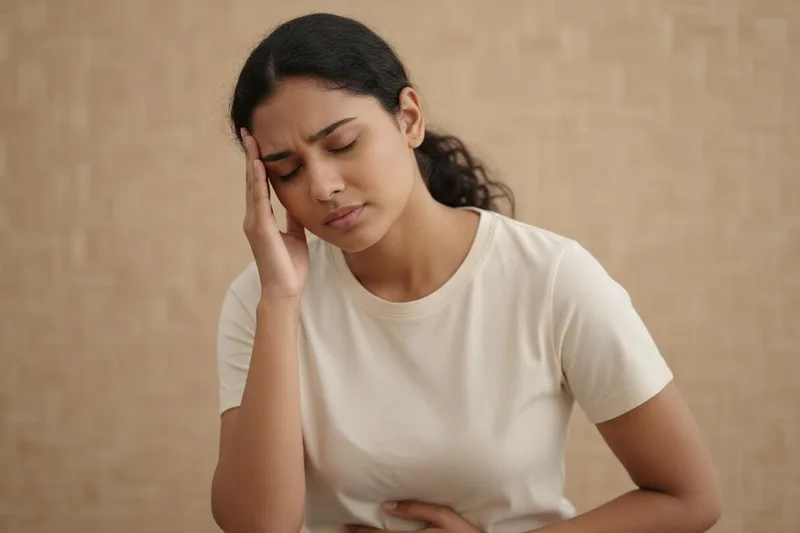
For many women, menstruation is a difficult time, isn't it? Along with stomach pain and body aches, it is also common for some people to experience severe headaches. We call this a 'Period Headache' or 'Menstrual Migraine ' . This is actually a migraine-like condition that comes with hormonal changes.
Simply put, a 'period headache' is a type of migraine that occurs around the time of your monthly menstrual cycle , or just before or during your period. The main cause of this is hormonal changes in our bodies. It usually occurs on one side of the head. The pain can be worse when you move around, or when you are exposed to bright light, strong smells, or loud noises. Sometimes it subsides within a few hours, but it can last for days.
When talking to a doctor, you might say something like this:
- Menstrual Migraines or Menstrually Related Migraines .
- Hormone Headaches or Hormonal Headaches
- Period Migraines
- Hormonal Migraines
What is the connection between hormones and these headaches?
You might be wondering how these hormones can cause headaches. Well, the hormone estrogen is mainly involved in this ' period headache'. Just before your period starts, your estrogen levels drop suddenly.
Premenstrual migraines often occur during the time before your period, when both estrogen and progesterone levels are at their lowest. Simply put, when your hormones are changing, it can affect your headaches.
What does a hormonal headache feel like?
You may have noticed that the headaches that come with this period are a little more severe than other regular headaches. Many people describe the pain as a pounding, pulsing, or throbbing sensation .
How common is this condition?
In fact, many people suffer from this problem. On average, about 12% of Americans have migraines . Of those, 60% of people who have periods and migraines report that they get them around their monthly menstrual cycle. So this is not just something that happens to you.
What are the symptoms of a menstrual migraine ?
When this headache occurs, you may experience one or more of the following symptoms:
- Headache - It can start as a mild ache and progress to a severe pain.
- Sensitivity to light, sound, and smells - Even the slightest light or sound can be unbearable.
- The scalp may feel tender or sore when touched .
- Food is tasteless .
- Dizziness .
- Blurred vision .
- Feeling tired .
- Nausea and vomiting, stomach upset, stomach pain .
- Feeling too hot (sweating) or cold (shivering) .
Where in the head does this headache occur?
Most of the time, this 'period headache' affects only one side of the head. The pain is usually felt in the forehead. However, sometimes it can occur in other places and move from one place to another. This can vary slightly from person to person.
When does this headache start?
Menstrual migraines can last from two days before your period starts until about three days after your period .
Why do I get headaches during my period?
The main reason for this is the changes in your hormone levels . Estrogen is one of the two main sex hormones in our body. Estrogen levels peak in the middle of your menstrual cycle and then drop to their lowest levels during your period. This sudden change in hormones is what makes headaches more likely. Estrogen increases your pain sensitivity.
What are the triggers for these headaches?
The main cause is hormonal changes, especially changes in estrogen. Also, if you take certain medications that affect hormones, for example:
- Birth control pills.
- Hormone replacement therapy .
If you feel like you're getting more frequent or more severe migraines while taking this medication, be sure to talk to your doctor . He or she may be able to give you a different medication with a lower dose of estrogen, or change the way you take the medication.
Who is most at risk for this headache?
If you have periods , you are at risk of getting these menstrual headaches. Also, if you have migraines after your period, or if someone in your family has migraines (genetic predisposition/family history) , you are also at higher risk.
What complications can arise from this headache?
Period headaches can really disrupt your daily activities . You may not be able to function or participate in activities normally when you have them. Unlike other headaches, you can predict when they will come, but you may have to plan your life around them. But don't worry, a doctor can help you manage them.
How do you know for sure if this is a 'period headache'?
A doctor will determine if you have a period headache by examining you and doing tests to rule out other conditions that cause similar symptoms. During your examination, your doctor will want to learn more about your migraine symptoms. They may ask you questions like:
- Can you describe the severity of the pain you are experiencing and where in your head it hurts ?
- Is the pain throbbing? Throbbing? Or stabbing?
- How often do you get these migraines?
- Does doing anything make your headache better or worse?
- Tell me what medication you take to reduce the pain and how often you take it .
- What activities, foods, stressors, or situations do you think may have triggered this migraine ?
- Do you know if anyone in your family gets migraines ?
- How did you feel before the headache came, during it, and after it subsided?
Your doctor may also order blood tests and imaging tests (such as a CT scan or MRI scan) to make sure there are no other causes for your headaches.
It's very helpful for both you and your doctor to keep a migraine journal, a headache diary. In it, write down what symptoms you have, how long you have them, and what makes your menstrual migraines better or worse.
Do I need to see a specialist for this?
If you have frequent headaches during your period, first talk to your primary care physician . He or she will refer you to a headache specialist if necessary.
How to treat 'period headaches'?
Medications are often used to treat menstrual migraines . Here are some common medications that a doctor may prescribe:
- Oral birth control pills: If you are already taking birth control pills, a doctor may change the type or dosage of the pill to reduce the large changes in hormones associated with your period.
- Nonsteroidal anti-inflammatory medications (NSAIDs): NSAIDs help reduce pain. Your doctor may recommend that you take NSAIDs two to three days before your period starts and for the first few days of your period.
- Triptans (selective serotonin receptor agonists): Triptans are a common type of medication used to treat migraines. You can take these to stop the pain when symptoms start. They come in the form of pills, injections, or nasal sprays.
- Hormone therapy: To help manage hormonal changes during your period, estrogen supplements can help balance your hormones. These come in the form of pills, vaginal gels, or a patch that you can use during the week of your period.
Sometimes, the following medications are used as first-line treatment for severe menstrual migraines :
- Antiseizure medications ( e.g. topiramate, valproate).
- Antidepressants (e.g. amitriptyline, venlafaxine).
- Antihypertensives (e.g. propranolol, candesartan).
Other medications may include:
- Metoclopramide.
- Calcitonin gene-related peptide (CGRP) antagonists.
- Dihydroergotamine.
Your doctor may also recommend taking supplements such as:
- Magnesium oxide ( 400 milligrams [mg] at bedtime).
- Riboflavin (200 milligrams twice a day).
- CoQ10 (300 milligrams in the morning).
A doctor may try a single medication or a combination of medications to treat your period headaches, to find out what works best for you. These medications work best when taken on a regular schedule. Your doctor will help you figure out when to take these medications to prevent or control your symptoms.
How can I control this headache without medication?
There are a few things you can do to naturally manage your hormone headaches without medication. However, you may need to experiment a bit to find out what works for you and what doesn't. For example, if you feel more pain and feel hot outside, try staying in a cool, dark room .
A few more tips:
- Get enough sleep .
- Eat well-balanced, timely meals (don't skip meals) .
- Engage in regular physical activity .
- Control stress .
How long will this headache last?
You can get menstrual migraines until you reach menopause. The goal of treatment is to reduce or prevent the frequency of these headaches during your period.
What is the outlook for this situation?
With treatment, many people can expect good results for their period headaches. Since there are several treatment options, it may take several menstrual cycles to find the treatment that works best for you. This means it can take some time.
Some medications work best when taken on a strict schedule. Keeping a calendar of your menstrual cycles, using birth control pills, or using an app on your smartphone to track your periods can help you manage this. Your doctor can help you find the right treatment for your condition.
Can a 'period headache' be prevented?
Yes, a doctor can help you manage and prevent these 'period headaches'. While not all headaches can be prevented, your doctor can prescribe preventive medications for you to take daily. The dosage may need to be increased as your period approaches. Talk to your doctor about ways to prevent menstrual migraines. He or she can recommend a treatment schedule that works best for you.
When should I see a doctor?
See a doctor in this situation:
- If you get a severe headache with your period .
- If the number or severity of your migraines increases, or if your headache pattern changes .
- If you experience new or different side effects .
- If the medications you take to treat your migraines no longer seem to be working, or if they are affecting your quality of life .
In case of an emergency, call 1990, or go to an Emergency Treatment Unit (ETU) immediately:
- If you suddenly start having a headache .
- If you have a headache that feels like the "worst headache of my life" ...
- If you get a headache after a head injury .
- If you experience neurological symptoms that you have never had before, such as difficulty speaking, loss of balance, vision problems, mental confusion, seizures, or numbness .
What questions should I ask my doctor?
When you go to see a doctor, it's a good idea to ask questions like these:
- Do I have a 'period headache' or another type of migraine?
- What treatment do you recommend?
- Are there any side effects of this treatment?
- What can I do to prevent period headaches in the future?
The most important things you need to remember (Take-Home Message)
When your period comes, you experience a lot of discomfort, such as stomach aches, body aches, and mood swings. But when you get a migraine, it can be even worse. But, the good news is, you don't have to 'put up with' menstrual migraines every time you have a period. A doctor can help you manage these headaches. Medications can reduce the frequency and severity of these headaches. There are also ways to prevent them. So, if you are suffering from this problem, don't be shy or afraid to talk to a doctor.
Migraine, Hormonal Headaches, Menstrual Migraine , Menstruation, Headache Treatment, Women's Health, Estrogen




💬 Comments (0)
No comments yet. Be the first to share your thoughts here.
Add Your Comment