
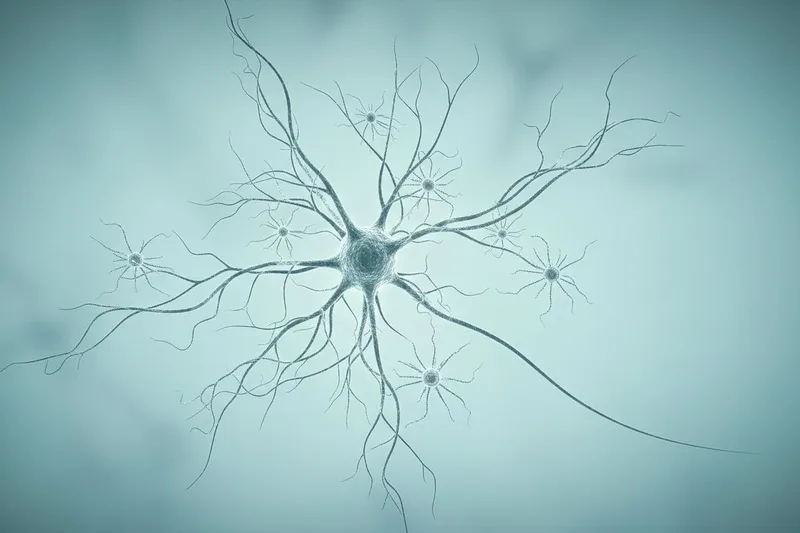
Have you ever wondered how two amazing systems inside our bodies, the nervous system (yes, that set of brains, spinal cords, and nerves!) and the immune system (the set that acts like our body's defense army!) work together? Many people used to think that these two were separate and working against each other. But today, in this topic called `Neuroimmunology`, we realize that there is a greater connection between these two than we thought. They work like two best friends!
What exactly is neuroimmunology?
Simply put, `Neuroimmunology` is a special branch of medicine. In this, we learn about the `Neuroscience`, which studies the ` Nervous System` , and the `Immune System`, which studies the `Immune System`, together, and how these two systems work together to support our body's growth, health (that's what `Homeostasis` is all about), and various diseases and injuries.
Scientists used to think that these two systems were completely separate and independent of each other. But new research has now shown that this view is wrong. In fact, these two systems are constantly communicating with each other in very complex ways.
Think about it this way. Your nervous system, especially your brain, is constantly talking to your immune cells. The brain sends signals to the immune cells, saying, "Okay, now let's create inflammation there." Inflammation is the process by which the immune system is activated and protects us from harmful things like pathogens that enter our bodies. Think about it, without this neuroimmunological process, our bodies would have no protection, right? It's like our country's security forces receiving instructions from headquarters.
"Although previously thought to work separately, the nervous system and immune system are like two best friends who constantly talk to each other and work together!"
So, what are Neuroimmune Diseases?
Now you understand how important the nervous system and the immune system are, and how they work together. However, sometimes this friendship can get a little messy. That's when neuroimmune diseases develop.
Here's how it works: Our immune system's main job is to protect us from harmful things like germs, bacteria, and viruses that enter our bodies. But sometimes, this immune system gets the wrong instructions . Or, it gets a little confused. Then, our own immune system mistakenly identifies some healthy parts of our own nervous system (that is, the brain, spinal cord, or nerves) as "the enemy" and starts attacking them. It's like the security guard in our own house thinking we're a thief and attacking us.
When the immune system attacks our own healthy nervous system in this way, various symptoms begin to appear that affect the functioning of the nervous system.
What types of diseases are there?
There are several types of neuroimmune diseases. You may have heard of some of them. This is just a list of a few, as this article would be too long to describe them all. So, consider these as examples:
- ``Acute Demyelinating Encephalomyelitis (ADEM)''
- ``Chronic Inflammatory Demyelinating Polyneuropathy (CIDP)''
- ``Acute Inflammatory Demyelinating Polyneuropathy (AIDP)''
- `Autoimmune/Paraneoplastic Encephalitis`
- ``Myelin Oligodendrocyte Glycoprotein Antibody-Associated Disease (MOGAD)''
- `Multiple Sclerosis (MS)` - This is a bit well-known, isn't it?
- Neurosarcoidosis and other CNS-mediated autoimmune disorders
- ``Neuromyelitis Optica Spectrum Disorder (NMOSD)''
- Optic Neuritis
- Transverse Myelitis
Each of these diseases is different, and not every patient experiences the same symptoms.
What could be the symptoms of these diseases?
The symptoms of neuroimmune diseases vary widely. This is because the symptoms vary depending on which part of the nervous system the immune system attacks. However, some of the most common symptoms include:
- Urinary and bowel problems: You may have difficulty controlling your urine, or you may experience things like constipation.
- Cognitive impairment: This means difficulty thinking, remembering information, and learning new things. Sometimes, even familiar things can be forgotten.
- Chronic fatigue: Feeling extremely tired and exhausted no matter how much sleep you get.
- Mood changes: Things like suddenly feeling sad, angry, or anxious.
- Muscle weakness: You may feel like your limbs are going numb and it may be difficult to lift weights.
- Sensory changes: Some parts of the body may feel numb, tingling, or have decreased sensation in some areas.
- Speech difficulty: Slurred speech, difficulty speaking.
- Trouble with balance and walking: You may feel unsteady while walking and may feel like you are going to fall.
- Vision changes: You may suddenly experience blurred vision, double vision, or eye pain.
The important thing is that if you have one or more of these symptoms, it does not necessarily mean you have a neuroimmune disease. However, if these symptoms persist, it is best to see a doctor for advice.
How common or rare are these conditions?
This is difficult to say at once. Because there are many types of neuroimmune diseases, not all of them are equally common. Some diseases (like `Multiple Sclerosis`) are quite common. But some diseases are very rare. Therefore, it is not possible to say in one way or another that "these diseases are common" or "rare".
Who is this neuroimmunologist? What does he do?
A `Neuroimmunologist` is a doctor who has studied in depth and received special training in this specialized field called neuroimmunology.
These doctors help us to `diagnose` , `treat`, and `manage` diseases that affect the nervous system and immune system. They work with your current family doctor or other specialists to help you find the best treatment options for you. They also conduct new research on these diseases and conduct clinical trials to find new treatments.
What are the treatments for these diseases?
Treatments for neuroimmune diseases vary from patient to patient and from disease to disease. Your doctor will decide on the treatment based on the type of disease you have and your symptoms. Here are some of the most commonly used treatments:
- Medications: There are various types of medications that can be used to control the malfunctioning of the immune system and reduce symptoms.
- Various therapeutic methods:
- Speech therapy: For those who have difficulty speaking.
- Physical therapy: Strengthen muscles and relieve walking difficulties.
- Occupational therapy: Provides advice and training to help you perform everyday tasks more easily.
- Assistive devices: Some people may need to use things like a wheelchair or walker if they have difficulty walking.
- Lifestyle changes:
- Exercising regularly.
- Eating a nutritious diet.
- Sleep well.
- Controlling stress.
- Managing other medical conditions: Sometimes, these neuroimmune diseases can be aggravated by other medical conditions like `High blood pressure`, `High cholesterol`, `Diabetes`. Therefore, it is very important to manage such diseases well if you have them.
Your doctor will educate you about the treatments that are right for you, their pros and cons, and the possible side effects of the treatments. Never do anything you feel like doing without first consulting a doctor.
Finally, the most important things to remember
Okay, so I hope you now have a better understanding of the topic we discussed today, `Neuroimmunology.` Although this is a bit of a complex topic, I tried to explain it as simply as possible for you.
Remember, our nervous system and immune system are not two separate systems. They are like friends who always work together and help each other.
The science of ``Neuroimmunology`` is exploring this fascinating connection further. This research could help provide better treatments for people with these diseases, and perhaps even prevent them from developing in the future.
If you have any discomfort like the symptoms mentioned in this article, do not be afraid and do not delay in seeing a doctor. The sooner the disease is diagnosed, the sooner treatment can begin. This will give you a lot of relief.
` Neuroimmunology, nervous system, immune system, autoimmune diseases, brain diseases, neurological diseases


💬 Comments (0)
No comments yet. Be the first to share your thoughts here.
Add Your Comment