

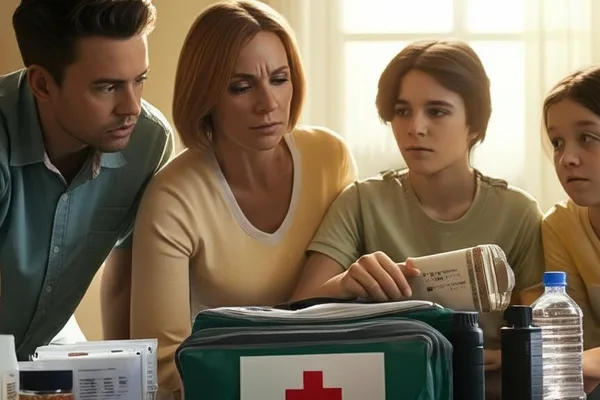
Imagine if someone suddenly got into an accident at home, or if something like a big flood or landslide suddenly happened? If we don't want to panic at that time, it's best to be prepared in advance. The basic First Aid Kit that we all had in our homes in the past has now become a little more advanced. Today we are talking about the same, and even a little more advanced, " Disaster Kit" that can help you deal with any emergency, from a small bee attack to a major natural disaster or biological attack. This can be a great help in protecting your life and that of your family.
What is a Disaster Kit?
Simply put, it consists of two parts. The first part is the usual first aid kit that we all know. It contains items needed for minor injuries and scrapes. The second part is the equipment and supplies needed to survive in an emergency.
Experts say the most important thing is to keep everything in one place, within easy reach. That way, whether you're leaving home quickly or staying indoors for a few days, you can grab everything you need at once.
Most of the time, these things are scattered around our homes, in kitchen drawers and medicine cabinets. But if not, it's wise to keep everything in one bag or box.
Let's see what items should be included in this Disaster Kit.
| Item | Why is this important? (Why is this important?) |
|---|---|
| First aid supplies | Things like band-aids, gauze, antiseptic cream, painkillers. Discuss these with your doctor and choose the appropriate items. |
| Water and perishable food | Prepare clean water and items like biscuits, canned fish, and noodles to last at least three days for each family member. |
| A battery radio and a torch | A radio is essential to hear emergency announcements in case of a power outage. Keep extra batteries for your torch. But remove the batteries from the torch and keep them separate. That way, the batteries won't run down. |
| Clothes and blankets | A change of clothes for everyone in the family and several blankets or sleeping bags. |
| Hygiene products | Things like soap, toilet paper, disinfectant, and garbage bags. |
| Important documents and money | Keep copies of ID cards, birth certificates, etc. in a waterproof bag. It's also important to have some cash on hand. |
| Plastic sheeting and tape | These can be useful for sealing off a room or creating a temporary shelter in an emergency. |
Important: It is no longer recommended to add candles to this kit as it was in the past. This is because in an emergency, there is a high risk of a candle tipping over and starting a fire. Therefore, it is safest to use a torch.
How to make this set to fit your family
The most important thing when making this disaster kit is to think about the special needs of your family.
Even if you have the best equipment in the world, it's no use if you don't know how to use it properly, right? For example, sealing a room with plastic sheets without proper ventilation can cause breathing difficulties. So be aware of how you use everything you put on.
Also, don't waste money on unnecessary things. Some people buy things like gas masks. But if you don't know how to use them properly, they can do more harm than good. The simple rule is, "If you don't know how to use something, you probably don't need it."
Special things to think about:
- Medications for chronic conditions: If anyone in your family takes daily medication for a condition like diabetes or high blood pressure , keep at least a week's supply of those medications in this kit.
- Glasses: If you wear an extra set of glasses or contact lenses, keep the necessary supplies.
- Small children: If you have small children at home, be sure to include diapers, baby formula, and baby food. Also, don't forget to include a small toy or storybook to keep them calm.
- Feminine hygiene items: Collect items such as sanitary pads for the women in the family.
How exactly do you maintain this Disaster Kit?
It's not enough to just have this set in one place. It needs to be updated regularly.
Imagine, in an emergency, when you pick up the kit, the biscuits in it are expired, or the batteries are dead? So keep these things in mind.
- Every 6 months: Replace the food and water in the kit. Remove the old ones and replace them with new ones.
- Once a year: Check the entire set. Replace the batteries. If the needs of the family have changed (e.g. children have grown up), make necessary adjustments to the set accordingly.
- Easy to carry: Pack everything in a backpack or duffel bag.
The best thing is to keep this kit in a place that everyone in the house knows and can easily access. For example, if you keep it in a place like the pantry near the kitchen or near the door to the garage, you can easily replace the food and drinks in it. This is not as complicated as you might think. With a little effort and practice, you will have nothing to fear for the safety of your family in any emergency. In the event of any serious medical condition or accident, never hesitate to go to the Emergency Department (ETU) of the nearest hospital or seek advice from your family doctor.
Take-Home Message
- A disaster kit is more than just a basic first aid kit. It should contain the supplies you need to survive.
- Keep all of this in one place, in an easy-to-reach bag.
- Prepare the kit by thinking about your family's special needs (medicine for chronic illnesses, items for young children).
- Understand how to use the items in the kit. Don't collect items you don't know how to use.
- Check the kit at least once a year and replace any expired items and batteries.
- In any medical emergency, it is important to seek advice from your doctor or go to the ETU.




💬 Comments (0)
No comments yet. Be the first to share your thoughts here.
Add Your Comment