Youth HealthSeptember 13, 2025🔄 Updated: Jul 10, 2026⏱ 6 min
Are you thinking about getting a nipple piercing? Then you should definitely know these things!
Dr. Priya Sammani, MBBS, PG Dip. FMMedical Verification
Nowadays, piercing various parts of the body as a fashion is popular among many people. Among them, nipple piercing is something that many people are interested in. Maybe you have also thought about this. But this is not just a fashion. Before doing this, it is very important that you are fully aware of the health aspects of this, the possible risks, and how to do it correctly and how to take care of it afterwards. So let's talk about it today.
What are the health risks of this?
There are some health risks involved in getting a nipple piercing, especially if you have a medical condition or medication that makes you prone to infections or slows down bleeding.
Longer healing time: Nipple piercings generally take longer to heal than other body piercings. It can take up to 6 months to fully heal.
Breastfeeding Impact: If you are planning to breastfeed in the future, you may want to think twice about getting a nipple piercing. Scar tissue around the piercing can block the milk ducts . Also, if the nerves in the nipple are damaged during the piercing, it can interfere with milk flow. The jewelry you wear may also prevent your baby from latching on properly. Sometimes, a piece of jewelry that comes off can get stuck in your baby's throat. If you are pregnant or breastfeeding, you should not get a nipple piercing for any reason. You should only consider it after you have completely stopped breastfeeding for a few months.
Abscesses: A pierced nipple is more likely to develop an abscess. This is a painful, pus- filled lump that forms under the nipple or inside the breast. This should definitely be treated by a doctor.
Infections :Nipples are very sensitive tissue. They are also directly connected to the milk ducts. Therefore, nipple piercings are more likely to cause infections than other areas. Using unsterilized equipment can lead to serious diseases such as blood- borne diseases such as `HIV`, `Hepatitis B`, `Hepatitis C` or even ` Tetanus` .
Skin tearing: If your jewelry gets caught in clothing, a towel, or a bed sheet, it can tear the skin and even require stitches .
How to get a nipple piercing safely?
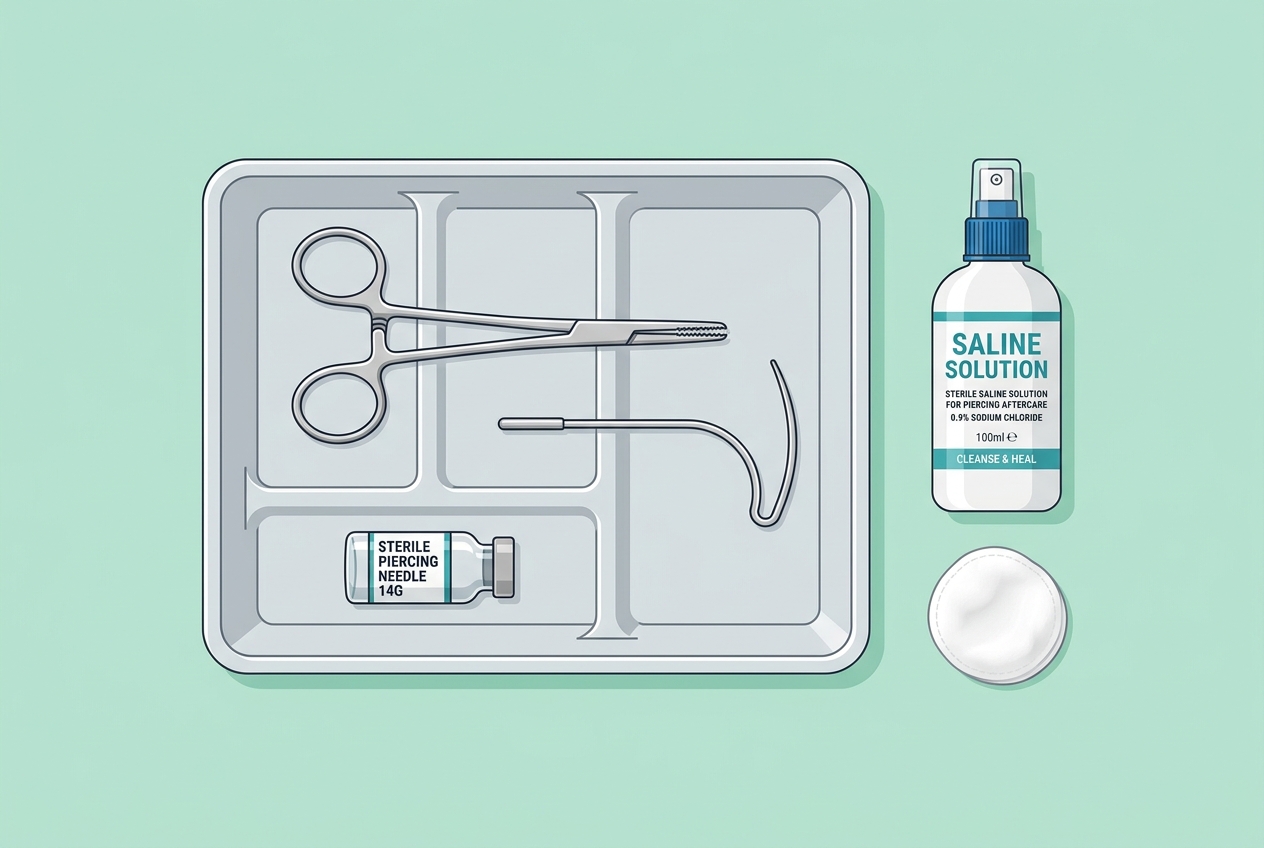
Sterile equipment used for nipple piercing aftercare
If you decide to do this, make sure to choose a clean place with a licensed, experienced professional. Never try to do it yourself or have a friend do it for you.
When choosing a good location, pay special attention to these points:
Cleanliness of the place: The place should be very clean. There should be two places for the piercing and the tattoo.
Pre-inquiry: Someone there should ask you if you are pregnant or breastfeeding. If you say yes, they should refuse to do it.
Sterilization: Check to see if the equipment and jewelry used for piercing are sterilized in a special machine called an `Autoclave`.
Needles: Make sure you are using a brand new, single-use needle and that you break the seal in front of you.
No Piercing Guns: Don't do this with piercing guns, as they cannot be properly sterilized.
Cleanliness: Make sure the person doing the piercing washes their hands thoroughly before and after work and uses new disposable gloves.
Instructions: They should give you a clear set of instructions on how to care for it after you get it.
Jewelry size: Make sure you are using the correct size jewelry to fit your nipple.
How do you cope with pain?
It's normal to feel some pain when you get your nipple pierced. The area may be sore for about the first week after the piercing. You may also experience some bleeding, itching, swelling, or discharge from the wound. You may also experience occasional pain or discomfort for the next few months.
What to expect during recovery and infection
It is very important to distinguish between normal symptoms during the healing process and dangerous symptoms that may indicate an infection.
These could be signs of an infection - see your doctor immediately!
Sign / Status
Description
Normal healing points
It is normal to have a white, crusty area around the wound, occasional soreness, itching, and mild discomfort. Even after complete healing, you may see a waxy fluid or crust.
Pain, warmth, and sensitivity
If the nipple is too painful to touch or unusually warm.
Pus discharge
If there is yellow, green, or brown pus or a foul odor.
Swelling and redness
If there is abnormal swelling and redness spreading beyond the puncture site.
Other features
If you have a fever, body aches, skin rash, or extreme fatigue.
How do you take care of the wound after a piercing?
Keeping the wound clean until it heals is essential to prevent infection.
Before touching or cleaning the nipple, wash your hands thoroughly with antimicrobial soap and warm water.
If you see crusty buildup around your jewelry, gently rinse it with warm water and remove it.
After cleaning, gently pat dry with a clean paper towel . Do not use cloth towels, as they may contain germs .
You can wash the wound with a sea salt solution . Dissolve about half a teaspoon of sea salt in a cup of warm water and soak the nipple in the solution. Then, let it air dry or pat it dry with a paper towel.
Be careful not to get the jewelry caught in clothing, towels, or bedding. This can break the skin and cause infection. You can wear a padded bra, a thick sports bra, or a cotton T-shirt to protect your newly pierced nipple.
Will the puncture site heal?
Some women remove their piercings while breastfeeding. This can cause milk to leak from the piercing. The piercing may shrink or close completely within a few weeks. However, once breastfeeding is over, you can usually put the piercing back in. If the piercing closes up somehow, go to a professional and have it re-pierced. Never try to re-pierce yourself.
Cost and types of safe jewelry
The cost of a nipple piercing varies from place to place. It is usually more expensive than an ear piercing. They charge separately for the piercing and the jewelry. When choosing jewelry, choose a metal that is less likely to cause allergies . For example, metals such as gold, stainless steel, titanium, platinum, or niobium are safe. Nickel jewelry is less expensive, but it is more likely to cause skin allergies.
Take-Home Message
Before getting a nipple piercing, be sure to understand the health risks, especially the effects it may have on breastfeeding.
Always choose a clean, sanitary location, with an experienced, licensed professional.
After the piercing, follow the care instructions carefully until the wound heals.
If you develop signs of infection (excessive pain, pus , swelling, fever), do not delay and see your doctor immediately.
nipple piercing, nipple piercing, body piercing, body piercing, infection, health risks, safety tips, piercing aftercare, piercing infection, women's health
⚠️ Important: The medical articles and information on Nirogi Lanka are for general awareness only, and are by no means a substitute for professional medical advice, diagnosis, or treatment. For any medical problem you have, consult a qualified physician immediately.
Are you thinking about getting a nipple piercing? Then you should definitely know these things!
Dr. Priya SammaniMedical Verification
⏱ 6 min read
Nowadays, piercing various parts of the body as a fashion is popular among many people. Among them, nipple piercing is something that many people are interested in. Maybe you have also thought about this. But this is not just a fashion. Before doing this, it is very important that you are fully aware of the health aspects of this, the possible risks, and how to do it correctly and how to take care of it afterwards. So let's talk about it today.
What are the health risks of this?
There are some health risks involved in getting a nipple piercing, especially if you have a medical condition or medication that makes you prone to infections or slows down bleeding.
Longer healing time: Nipple piercings generally take longer to heal than other body piercings. It can take up to 6 months to fully heal.
Breastfeeding Impact: If you are planning to breastfeed in the future, you may want to think twice about getting a nipple piercing. Scar tissue around the piercing can block the milk ducts . Also, if the nerves in the nipple are damaged during the piercing, it can interfere with milk flow. The jewelry you wear may also prevent your baby from latching on properly. Sometimes, a piece of jewelry that comes off can get stuck in your baby's throat. If you are pregnant or breastfeeding, you should not get a nipple piercing for any reason. You should only consider it after you have completely stopped breastfeeding for a few months.
Abscesses: A pierced nipple is more likely to develop an abscess. This is a painful, pus- filled lump that forms under the nipple or inside the breast. This should definitely be treated by a doctor.
Infections :Nipples are very sensitive tissue. They are also directly connected to the milk ducts. Therefore, nipple piercings are more likely to cause infections than other areas. Using unsterilized equipment can lead to serious diseases such as blood- borne diseases such as `HIV`, `Hepatitis B`, `Hepatitis C` or even ` Tetanus` .
Skin tearing: If your jewelry gets caught in clothing, a towel, or a bed sheet, it can tear the skin and even require stitches .
How to get a nipple piercing safely?
Sterile equipment used for nipple piercing aftercare
If you decide to do this, make sure to choose a clean place with a licensed, experienced professional. Never try to do it yourself or have a friend do it for you.
When choosing a good location, pay special attention to these points:
Cleanliness of the place: The place should be very clean. There should be two places for the piercing and the tattoo.
Pre-inquiry: Someone there should ask you if you are pregnant or breastfeeding. If you say yes, they should refuse to do it.
Sterilization: Check to see if the equipment and jewelry used for piercing are sterilized in a special machine called an `Autoclave`.
Needles: Make sure you are using a brand new, single-use needle and that you break the seal in front of you.
No Piercing Guns: Don't do this with piercing guns, as they cannot be properly sterilized.
Cleanliness: Make sure the person doing the piercing washes their hands thoroughly before and after work and uses new disposable gloves.
Instructions: They should give you a clear set of instructions on how to care for it after you get it.
Jewelry size: Make sure you are using the correct size jewelry to fit your nipple.
How do you cope with pain?
It's normal to feel some pain when you get your nipple pierced. The area may be sore for about the first week after the piercing. You may also experience some bleeding, itching, swelling, or discharge from the wound. You may also experience occasional pain or discomfort for the next few months.
What to expect during recovery and infection
It is very important to distinguish between normal symptoms during the healing process and dangerous symptoms that may indicate an infection.
These could be signs of an infection - see your doctor immediately!
Sign / Status
Description
Normal healing points
It is normal to have a white, crusty area around the wound, occasional soreness, itching, and mild discomfort. Even after complete healing, you may see a waxy fluid or crust.
Pain, warmth, and sensitivity
If the nipple is too painful to touch or unusually warm.
Pus discharge
If there is yellow, green, or brown pus or a foul odor.
Swelling and redness
If there is abnormal swelling and redness spreading beyond the puncture site.
Other features
If you have a fever, body aches, skin rash, or extreme fatigue.
How do you take care of the wound after a piercing?
Keeping the wound clean until it heals is essential to prevent infection.
Before touching or cleaning the nipple, wash your hands thoroughly with antimicrobial soap and warm water.
If you see crusty buildup around your jewelry, gently rinse it with warm water and remove it.
After cleaning, gently pat dry with a clean paper towel . Do not use cloth towels, as they may contain germs .
You can wash the wound with a sea salt solution . Dissolve about half a teaspoon of sea salt in a cup of warm water and soak the nipple in the solution. Then, let it air dry or pat it dry with a paper towel.
Be careful not to get the jewelry caught in clothing, towels, or bedding. This can break the skin and cause infection. You can wear a padded bra, a thick sports bra, or a cotton T-shirt to protect your newly pierced nipple.
Will the puncture site heal?
Some women remove their piercings while breastfeeding. This can cause milk to leak from the piercing. The piercing may shrink or close completely within a few weeks. However, once breastfeeding is over, you can usually put the piercing back in. If the piercing closes up somehow, go to a professional and have it re-pierced. Never try to re-pierce yourself.
Cost and types of safe jewelry
The cost of a nipple piercing varies from place to place. It is usually more expensive than an ear piercing. They charge separately for the piercing and the jewelry. When choosing jewelry, choose a metal that is less likely to cause allergies . For example, metals such as gold, stainless steel, titanium, platinum, or niobium are safe. Nickel jewelry is less expensive, but it is more likely to cause skin allergies.
Take-Home Message
Before getting a nipple piercing, be sure to understand the health risks, especially the effects it may have on breastfeeding.
Always choose a clean, sanitary location, with an experienced, licensed professional.
After the piercing, follow the care instructions carefully until the wound heals.
If you develop signs of infection (excessive pain, pus , swelling, fever), do not delay and see your doctor immediately.
nipple piercing, nipple piercing, body piercing, body piercing, infection, health risks, safety tips, piercing aftercare, piercing infection, women's health
⚠️ Important: The medical articles and information on Nirogi Lanka are for general awareness only, and are by no means a substitute for professional medical advice, diagnosis, or treatment. For any medical problem you have, consult a qualified physician immediately.




💬 Comments (0)
No comments yet. Be the first to share your thoughts here.
Add Your Comment