

Imagine listening to your favorite radio station, but instead of clear speech, the broadcast arrives muffled, stuttered, or out of sync—even when the volume is turned all the way up. For a child with Auditory Neuropathy Spectrum Disorder (ANSD), this is precisely what everyday conversation sounds like. Many parents notice something puzzling: their toddler startles at a dropped pot or turns toward music, yet seems completely bewildered by simple verbal instructions or fails to develop clear speech. This frustrating disconnect often leaves families questioning whether their child is distracted, stubborn, or having hearing loss.
Key Clinical Takeaways.
- Sound Detection vs. Speech Clarity: In ANSD, the outer hair cells of the inner ear (cochlea) detect sound normally, but neural transmission along the auditory nerve (cranial nerve VIII) to the brainstem is dyssynchronized or disrupted.
- Diagnostic Hallmark: Diagnosis requires a specific audiological profile: intact or present Otoacoustic Emissions (OAEs) paired with an abnormal or absent Auditory Brainstem Response (ABR).
- Fluctuating Symptoms: Speech comprehension often varies day-to-day and deteriorates markedly in noisy environments like classrooms or playgrounds.
- Multimodal Interventions: Treatment focuses on improving signal-to-noise ratio using remote microphone (FM) systems, cochlear implantation when indicated, speech therapy, and visual language tools (such as Sign Language or Cued Speech).
What Is Auditory Neuropathy Spectrum Disorder (ANSD)?
Auditory Neuropathy Spectrum Disorder (ANSD) is a distinct neurological hearing impairment. In traditional sensorineural hearing loss, the inner ear's sensory hair cells inside the cochlea are damaged, preventing sounds from being picked up. In contrast, a child with ANSD often has functioning cochlear hair cells, but the electrical impulses fail to travel synchronously along the auditory nerve to the brain's auditory cortex.
Because the brain receives a disorganized, "scrambled" neural signal rather than a coherent pattern, timing information is lost. This makes speech discrimination—the ability to tell one syllable or consonant from another—exceptionally difficult. Children with ANSD can often detect pure tones, but spoken words sound blurred, especially in complex acoustic environments.
how it happens: Why Does Neural Signaling Fail?
To understand the clinical presentation of ANSD, it helps to examine how sound is processed from ear to brain:
- Normal Hearing Mechanics: Acoustic sound waves travel down the ear canal, vibrate the tympanic membrane (eardrum) and ossicles (middle ear bones), and enter the cochlea. Outer hair cells amplify the vibration, and inner hair cells release neurotransmitters (such as glutamate) across synapses to stimulate the auditory nerve fibers in perfect, microsecond synchronization.
- The ANSD Disruption: In ANSD, a breakdown occurs at one or more specific neuroanatomical checkpoints:
- Synaptic Transmission Failure: Mutations in the OTOF gene (encoding the otoferlin protein) prevent normal neurotransmitter release between inner hair cells and spiral ganglion neurons.
- Auditory Nerve Demyelination: Loss of the protective myelin sheath slows nerve conduction velocity and destroys precise neural timing.
- Axonal Neuropathy: Direct structural injury or loss of auditory nerve fibers reduces the total neural bandwidth carrying signals to the brainstem.
Etiology and Major Risk Factors.
ANSD can be congenital or acquired later in childhood. Epidemiological studies estimate that ANSD accounts for about 5% to 15% of all permanent childhood hearing loss. Key clinical risk factors include:
- Neonatal Intensive Care Unit (NICU) Complications: Prematurity (gestational age < 32 weeks) and severe respiratory distress syndrome with prolonged mechanical ventilation.
- Severe Hyperbilirubinemia: Total serum bilirubin levels exceeding the neurotoxic threshold (often ≥ 20 mg/dL or 342 µmol/L, especially requiring exchange transfusion), which selectively targets the auditory brainstem nuclei and basal ganglia (kernicterus spectrum).
- Neonatal Hypoxia and Anoxia: Ischemic episodes during labor, delivery, or the immediate postnatal period that compromise oxygen delivery to high-metabolic-demand neural pathways.
- Ototoxic medicine Exposure: High cumulative doses of loop diuretics (e.g., furosemide) or aminoglycoside antibiotics (e.g., gentamicin, amikacin) given during systemic neonatal infections.
- Genetic Mutations: Nonsyndromic autosomal recessive inheritance (such as OTOF mutations) or syndromic neuropathies, including Charcot-Marie-Tooth disease, Friedreich's ataxia, and Leber hereditary optic neuropathy.
- Traumatic Brain Injury (TBI): Severe closed-head injury causing lumbosacral or skull base fractures and shearing forces across cranial nerve VIII.
Clinical signs and Developmental Milestones.
The hallmark of ANSD is unpredictable hearing behavior. Pure tone thresholds on an audiogram may range anywhere from completely normal to profound hearing loss, and a child's auditory clarity may fluctuate based on fatigue, illness, or ambient noise.
Infancy (0 to 12 Months).
Early identification requires monitoring key developmental auditory milestones:
- Birth to 3 Months: Lack of reflexive startle response (Moro reflex) to sudden loud sounds, or inconsistent waking to ambient environmental noises.
- 3 to 6 Months: Failure to turn the head or direct eye gaze reliably toward the sound of a parent's voice; absence of varied vocalizations (cooing or laughing).
- 6 to 9 Months: Inability to localize sound sources out of direct sight; babbling lacks varied consonant-vowel combinations (e.g., "ba-ba", "da-da").
- 9 to 12 Months: Failure to respond consistently to their spoken name; lack of imitation of simple words or gesture-paired phrases like "bye-bye.".
Toddlers and School-Aged Children.
As language demands expand, functional deficits become more apparent:
- Severe speech delay or atypical phonological development out of proportion to pure tone thresholds.
- Apparent "inattention" or behavioral defiance when instructions are delivered in noisy settings (classrooms, dining halls, public spaces).
- Heavy reliance on visual cues, lip-reading, and facial expressions to grasp basic conversational meaning.
- Frequent requests for repetition ("what?", "huh?") or answering questions with completely unrelated words.
Emergency Red Flags: When to Seek Immediate Hospital Care.
ANSD is a chronic sensory processing condition, but acute neurological changes require emergency evaluation. Call 911 (US/Canada), 999 (UK), or proceed directly to your nearest Emergency Department (ER / A&E) if your child exhibits any of the following symptoms:
- Sudden, Rapid-Onset Hearing Loss: Complete hearing loss occurring over hours or days, which may indicate autoimmune inner ear disease, stroke, or acute labyrinthitis.
- Signs of Acute Meningitis: Severe headache, high fever, neck stiffness (nuchal rigidity), photophobia, or a non-blanching purpuric rash.
- Acute Neurological Deficits: Facial droop, loss of coordination (ataxia), sudden strabismus (crossed eyes), or altered mental status following a head strike or severe illness.
Diagnostic Evaluation: How Is ANSD Confirmed?
Standard universal newborn hearing screenings (UNHS) that rely solely on automated Otoacoustic Emissions (aOAE) can miss ANSD. Because the cochlea is healthy, the child will produce normal emissions and "pass" an OAE-only screen, even though the auditory nerve cannot transmit the signal. complete diagnosis by a pediatric audiologist involves a specialized test battery:
1. Electrophysiological and Audiological Battery.
- Otoacoustic Emissions (OAE): Tests cochlear outer hair cell function. A miniature probe placed in the ear canal emits clicks and measures the acoustic echo generated by the cochlea. In ANSD, OAEs are initially present and robust (though they may diminish over several years in some people).
- Cochlear Microphonic (CM): An electrical potential generated by outer hair cells, assessed during diagnostic ABR testing using alternating polarity clicks. The presence of an inverted waveform confirms outer hair cell activity.
- Auditory Brainstem Response (ABR / BERA): Evaluates electrical activity along cranial nerve VIII and the brainstem pathway. In ANSD, the ABR is markedly abnormal, severely dyssynchronized, or completely absent, even when high-intensity stimulus clicks (e.g., 80 to 90 dB nHL) are delivered.
- Middle Ear Muscle Reflex (Acoustic Reflex / MEMR): Measures involuntary stapedius muscle contraction in response to high-intensity sound. In ANSD, acoustic reflexes are almost universally absent or markedly elevated across both ipsilateral and contralateral stimulus presentations.
- Tympanometry: Evaluates middle ear mobility to rule out conductive interference (such as otitis media with effusion) that might complicate assessment.
2. Multidisciplinary Secondary Workup.
Once audiological diagnostic criteria are met, further clinical investigations are warranted:
- High-Resolution MRI of the Internal Auditory Canal (IAC) and Brain: Identifies anatomical absence (aplasia) or hypoplasia of the cochlear nerve, structural brainstem abnormalities, or white matter demyelination.
- complete Genetic Testing: Next-generation sequencing panels targeting OTOF, PJVK, and related syndromic neuropathies to establish etiology and prognosis.
- Pediatric Ophthalmology Exam: Mandatory evaluation, as several hereditary conditions cause concurrent auditory and optic neuropathies.
Evidence-Based Management and Therapeutic Strategies.
Because ANSD exists on a spectrum, management plans must be tailored to the child's specific speech perception abilities and neural conduction profile.
| Intervention. | Mechanism of Action. | Clinical Utility in ANSD. |
|---|---|---|
| FM / Remote Microphone Systems. | Transmits speaker's voice via wireless signal directly to ear-level receivers, bypassing room reverberation. | High Priority: Drastically boosts signal-to-noise ratio; critical for classrooms and social development. |
| Conventional Hearing Aids. | Acoustically amplifies sound waves entering the external auditory canal. | Variable: Helpful if pure tone thresholds are elevated, but simply amplifying a distorted sound may increase distortion without improving clarity. |
| Cochlear Implantation (CI). | Surgically inserted electrode array delivers direct electrical stimulation to spiral ganglion neurons. | Effective: Highly successful in children with inner hair cell/synaptic defects (e.g., OTOF mutations) by restoring neural synchrony. |
| Speech-Language Therapy. | Systematic auditory verbal therapy (AVT) paired with auditory perceptual training. | Essential: Teaches neural processing strategies, phonetic distinction, and compensatory communication techniques. |
Visual and Manual Communication Modalities.
Children with ANSD benefit substantially from early multimodal communication access while their auditory pathways are assessed:
- Signed Languages (e.g., ASL, BSL): Fully autonomous visual languages that eliminate reliance on auditory speech perception, ensuring age-appropriate cognitive, lexical, and conceptual development without language deprivation.
- Cued Speech: A visual communication system using eight handshapes in four throat/mouth locations paired with natural lip movements. It visually distinguishes phonemes that look identical on the lips (such as /p/, /b/, and /m/), aiding phonemic awareness and literacy.
- Signing Exact English (SEE): A manual code that mirrors spoken English syntax, morphemes, and word order to support reading comprehension and grammatical acquisition.
Clinical Do's and Don'ts: Guiding Your Child's Auditory Development.
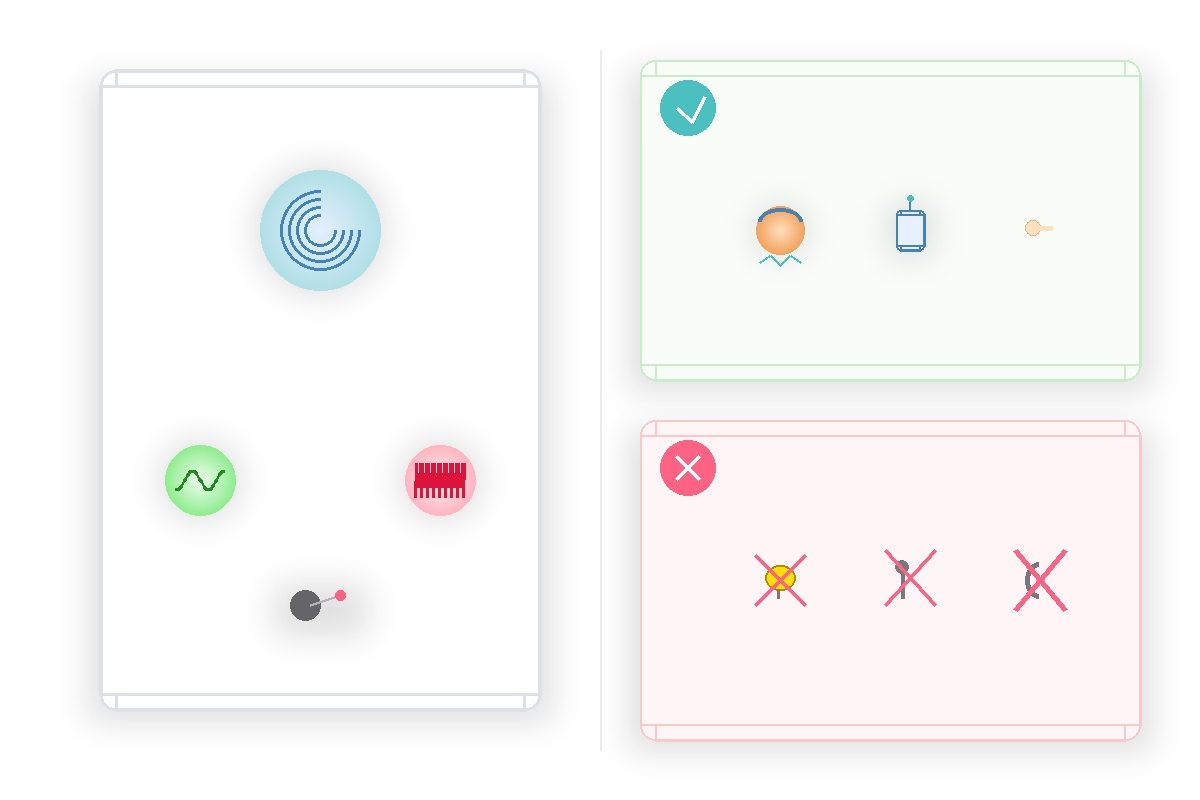
| Clinical Best Practices (Do). | Practices to Avoid (Don't). |
|---|---|
| Demand ABR Testing: If your child displays hearing difficulties despite a "passed" automated newborn screen, request a full diagnostic ABR with cochlear microphonic assessment. | Don't Assume Inattention: Avoid labeling children as disobedient or daydreamers when they miss verbal requests in reverberant rooms. |
| Optimize the Acoustic Environment: Reduce background noise during conversations, maintain direct line-of-sight for lip-reading, and use sound-dampening furnishings at home. | Don't Rely Solely on Volume: Avoid shouting; increasing loudness overstimulates distorted channels without resolving the underlying timing deficit. |
| Integrate Visual Supports Early: Implement visual schedules, gestures, or sign systems alongside auditory habilitation to maintain receptive language progress. | Don't Delay Intervention: Avoid a "wait-and-see" approach for toddler speech delays; cortical auditory plasticity decreases greatly after early childhood. |
Doctor's Clinical Note.
"When parents first receive an ANSD diagnosis, the results often sound contradictory: 'Your child's inner ear hears the sounds, but their brain cannot interpret the words.' It is important to know that ANSD is not an insurmountable barrier to language. The human brain exhibits remarkable neuroplasticity during the first few years of life. When children receive structured acoustic support—such as remote microphone technology, targeted speech therapy, and cochlear implants when appropriate—paired with visual language access, they can achieve age-appropriate communication and academic success. Early multidisciplinary care is the key to unlocking their potential."
Scientific References & Authoritative Sources:
- National Institute on Deafness and Other Communication Disorders (NIDCD / NIH). Auditory Neuropathy Spectrum Disorder. NIH Publication No. 03-4375.
- American Speech-Language-Hearing Association (ASHA). Clinical Practice Guidelines: Auditory Neuropathy Spectrum Disorder in Children.
- Centers for Disease Control and Prevention (CDC). Hearing Loss in Children: Screening and Diagnosis Guidelines. U.S. Department of Health and Human Services.
- National Health Service (NHS). Newborn Hearing Screening Programme (NHSP): Identifying Auditory Neuropathy. NHS England Population Screening.


💬 Comments (0)
No comments yet. Be the first to share your thoughts here.
Add Your Comment