

So, your little one is now three years old, right? Time flies, doesn't it? This age is a very important time in a child's life. So, it is very important to meet the doctor or nurse at this time and check on your child's well-being, that is, a `` Well-Child Visit ''. Let's see what usually happens at this time, and what you should expect? There is nothing to worry about, this is very good for the child.
What happens during this doctor's appointment?
You can expect the doctor or nurse to do these things:
1. This is how a child's growth looks like.
First, your child's weight and height are measured. Then, based on those measurements, the body mass index ( BMI ) is calculated and plotted on the child's growth chart. This is how the doctor can see if your child is growing properly.
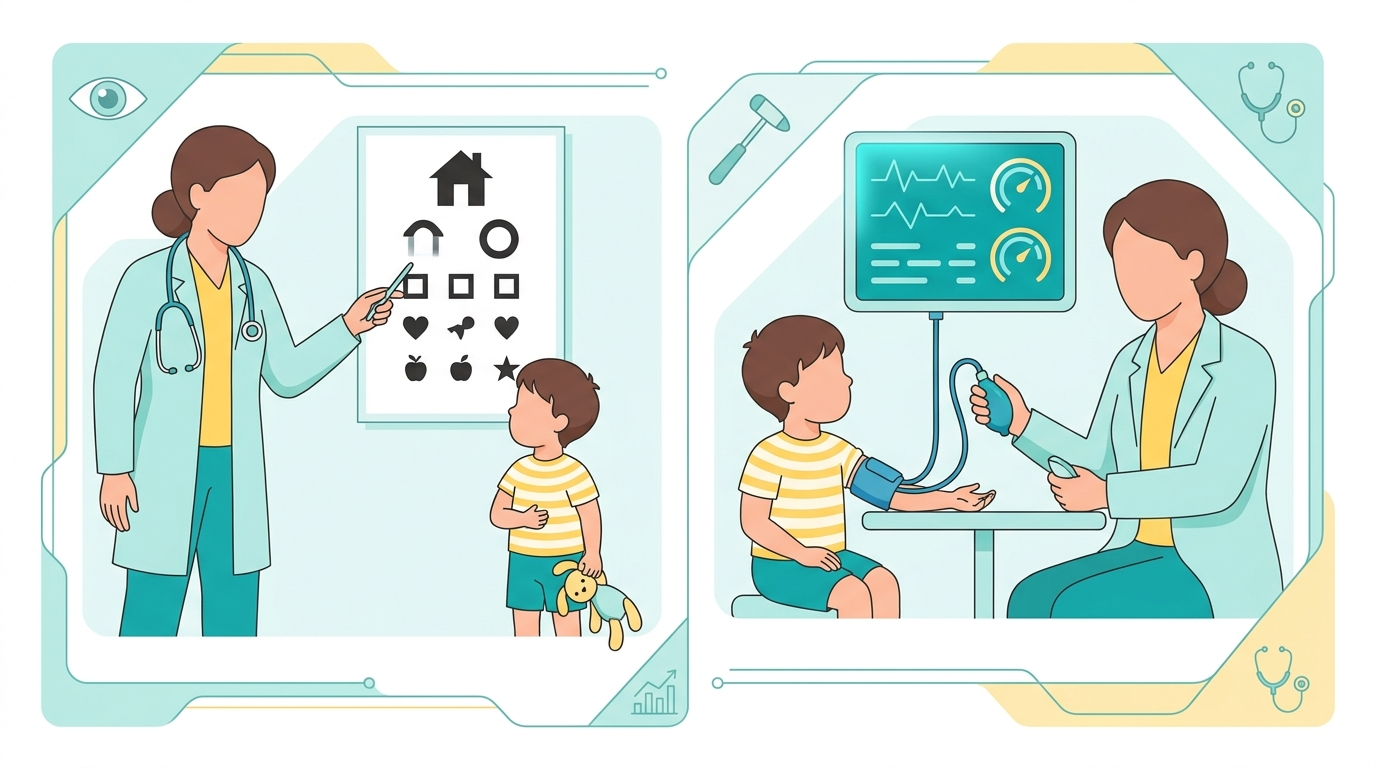
2. Blood pressure and vision check
If your child is not very active, you may also want to check their blood pressure and vision . It is very important to check these at an early age.
3. Asks you questions and answers your questions
The doctor will ask you about your little one's daily routine, discuss your concerns and fears, and give you some advice. Let's take a look at what they'll talk about:
About food and drink
During this preschool age, toddlers develop at a slower but steady pace. You should be eating three main meals and two nutritious snacks a day. Even if your toddler is a picky eater, try to continue introducing a variety of nutritious foods. Sometimes, toddlers will eat the same food more often if you prepare it the same way.
About how to urinate and defecate
By now, your little one is probably potty trained , or at least using the potty during the day. However, at this age, they may suddenly need to go to the toilet a little during the day, and they may still need a diaper at night. This is normal, so don't worry too much about it.
However, if your child still doesn't seem ready to go potty, tell your doctor . Also, if your child has constipation , diarrhea, seems to be holding in urine /poo, or is having problems after being potty trained, tell your doctor.
About sleep
Preschoolers need between 10 and 13 hours of sleep a day. Many children this age also take a short nap during the day. It is very good for their development.
Developmental milestones
By the age of three, many little ones have started doing these things:
- Talks to another person and exchanges words back and forth at least twice (e.g., "What are you doing?" "I'm playing").
- When they speak, most of the time, others understand what they are saying.
- When asked, they say their first name .
- Asks questions like "Who?", "What?", "Where?", "Why?"
- When shown a picture, you can say what is happening in it, such as running or playing.
- When I see other children, I am eager to join them and play.
- You can draw a circle when you show it.
- You can attach some things together, like large beads.
- Some of the clothes can be worn alone.
- You can use a fork.
If your child isn't doing one or more of these things, or if you feel like they've lost some of their abilities, definitely talk to your doctor about it . It's important to identify these things early.
4. Complete body examination
You will first undress your baby and perform a complete physical exam. This will include checking their eyes , teeth, and listening to their heart and lungs. The doctor will also pay special attention to your baby's speech and language development.
5. Vaccines
Vaccines can protect children from serious childhood diseases. It is important to get your vaccines on time . Vaccine schedules can vary slightly from doctor to doctor. So talk to your doctor to find out what vaccines are due next.
6. Tests if necessary
Sometimes, if the doctor feels it is necessary, he or she may also order blood tests to check for things like anemia, lead levels in the body, and tuberculosis.
Keep these things in mind until your next check-up (in 4 years).
Okay, so let's talk about some important things you need to keep in mind until your next check-up, which is when your little one is four years old.
Food and drink
- Give toddlers this age about two cups (480 ml) of low-fat or nonfat milk or fortified soy milk per day. Other low-fat dairy foods, such as yogurt, are also good.
- Don't give more than 4 ounces (120 milliliters) of 100% fruit juice per day. Limit sugary and fatty foods as much as possible. These provide little ones with little to no nutrition.
- Let the little one decide if they are hungry or if they have had enough.If he says he can't eat, don't force him. Offer him a nutritious snack later.
- If possible, try to have the whole family sit down at the table and eat together a few days a week. This will help establish good habits and strengthen family bonds.
Routine and care
- If your little one has stopped taking afternoon naps, set aside some quiet time during the day to relax . You may also need to set an earlier bedtime to ensure he gets enough sleep.
- Nightmares and waking up at night are common at this age. Don't worry. If you haven't already, establish a bedtime routine that will help you fall asleep at night. For example, wash your face, brush your teeth , or read a book. Avoid showing or telling scary or disturbing pictures or stories, especially before bed.
- If you have sent your child to preschool, visit the classroom and meet the teacher a few times before school starts. This will help your child adjust to the new environment. If you are not sending your child to preschool, find ways to play and socialize with other children (e.g., at a relative's house, a friend's house).
- Limit screen time (TV, smartphones, tablets, computers) to no more than one hour a day. Even when you do allow it, choose high-quality children's programming that is age-appropriate. If possible, watch it with your child. That way, you can help them learn something from it. Don't put a TV or other screen in your child's bedroom.
- Read books to your child every day. This will develop their language skills and imagination.
- Make some rules that your little one can understand. Praise them for good behavior. Don't get upset when they see bad behavior, calmly stop it and redirect them to the right thing.
- Never spank your child. Instead of punishing him, use methods like ``time-outs.'' That is, taking him away from what he is doing for a few minutes and putting him in a quiet place.
- Have your child brush their teeth twice a day, using a pea-sized amount of fluoride toothpaste. Make an appointment with a dentist to have their teeth checked and cleaned. Your doctor or dentist may also apply fluoride varnish to your child's teeth two to four times a year to help prevent cavities.
Security
At this age, little ones are very active and love to explore everything. So we need to be especially concerned about their safety.
- Create a safe play area for your little one. Give him plenty of time to explore, do make-believe play, and run around and play actively.
- Check that playground equipment is well maintained and appropriate for the child's age. To reduce injuries in the event of a fall, the ground should be soft (e.g., sand, rubber mats, a thick layer of wood chips or rubber chips).
- Always keep your eyes open for a second when playing near water (buckets, tanks, wells, streams), as well as on the side of the road.
- Apply sunscreen with an SPF of 30 or higher at least 15 minutes before going outside to play. Reapply every two hours.
- Protect your baby from secondhand smoke . This means that when someone else smokes, the smoke enters your baby's body. This increases the risk of heart disease and lung disease. The smoke from e-cigarettes is also harmful.
- If your child rides a tricycle or bicycle, always have them wear a helmet .
- If your child is outgrowing the height or weight limit for a rear-facing car seat, turn the car seat forward-facing . Children should remain in a forward-facing car seat, in the back of the vehicle, and be harnessed until they reach the maximum weight or height limit for that seat. When that seat is too small, switch to a belt-positioning booster seat . It should be used until your child is 4 feet 9 inches (about 150 centimeters) tall. That's usually between 8 and 12 years old.
- The best way to protect your little one from gun accidents is to not keep a gun in the house. If you have one, keep it unloaded, locked up, and out of reach of children. Keep ammunition locked up in a separate place. Keep the keys to both of these in a place where children can never find them.
- If you have concerns about your living situation , such as financial difficulties or household problems, don't be shy about talking to your doctor about them. Do you have the things you need to take care of yourself? Do you have enough food, a safe place to live, and health insurance? Ask your doctor about these things.That said, he or she can refer you to community resources or arrange for you to meet with a social worker.
Finally, things to remember
Now you probably understand that this doctor's check-up for your three-year-old is very important, right?
Check-ups like this are the only way to ensure that your child is growing and developing properly, and that they are healthy.
- Don't be afraid or embarrassed to talk to your doctor about any questions or concerns you may have about your baby. Doctors are there to help you.
- Always take care of your little one's nutrition, sleep, daily activities, and especially safety .
- Remember, you are not alone in this journey. Ask for help whenever you need it.
We all wish your little one a healthy and happy future!
` Child development, 3-year check-up, Well-Child Visit, child nutrition, developmental milestones, child vaccinations, child safety
Doctor's Note
The 3-Year Well-Child Visit (3-Year Well-Child Visit) is a comprehensive assessment of the child's social and intellectual development. Here, the child's vision screening can be done for the first time. The doctor tests the child's ability to draw a circle on his own, climb the stairs with alternating feet and express himself in 3-4 simple sentences. Advice can also be obtained about the child's nightmares and preparation for preschool.
❓ Some more questions you may encounter (FAQ)
How to check the vision of a child at 3 years old?▼
Visual impairment is diagnosed using boards with pictures of animals or simple shapes (Symbols) because they cannot read letters.
What should a 3-year-old child's speech (Speech progress) be like?▼
About 75% of what the child says should be well understood by outsiders, and should be able to speak in sentences of 3-4 words.
Is it normal for a child to scream while sleeping (Night terrors)?▼
yes Children between the ages of 3-6 may develop sleep terrors as their brains develop. It is advisable to calm the child and create a calm environment before going to sleep.





💬 Comments (0)
No comments yet. Be the first to share your thoughts here.
Add Your Comment