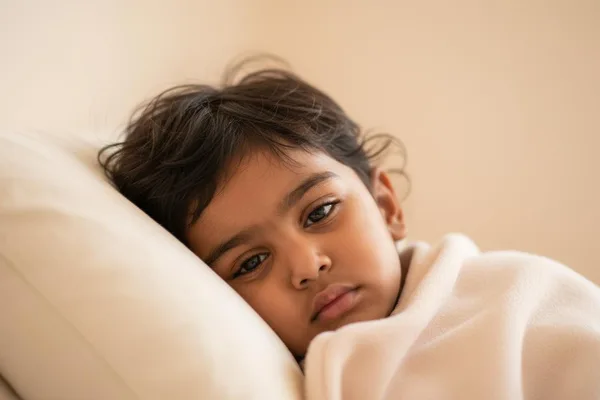
Does your baby have a stomach ache? Let's talk about "Gastroenteritis" or "Stomach Flu"!

Does your baby have a stomach ache? Let's talk about "Gastroenteritis" or "Stomach Flu"!

Oh, I understand how much you feel as a mother or father when a small child has a stomach ache. When they keep vomiting and passing stools, the little one becomes tired and weak, doesn't it? It's sad to watch. This is what we often call 'stomach flu ' or medically 'gastroenteritis'. But in most cases, this is not serious , and you can get well in a few days at home by resting well and drinking fluids. So let's talk about this in more detail, so that you can get a better understanding of this.

What exactly is this "gastroenteritis"?

Simply put, "Gastroenteritis" is an inflammation or swelling of our stomach, that is, the stomach and intestines, caused by an infection. Think of it like a little war going on inside our stomach. This is what causes us to feel nauseous, vomit, have a stomach ache, and feel like we're in a coma.

This is very common among young children. Not only your child, but many children have to face this condition at least once in their lives. The best thing is, most of the time it gets better in a few days . Resting well at home and giving fluids as prescribed by the doctor will help.

Why does this stomach ache occur? What are the causes?

The main cause of gastroenteritis is bacteria . There are three types of bacteria:

1. Viruses: The main reason why young children get this stomach ache is viruses. You may have heard of one called 'Rotavirus'. That is the main culprit for this. But now that there is a vaccine for 'Rotavirus', the number of infections caused by it has decreased a lot.

2. Bacteria : Some types of bacteria can also cause stomach upset in this way.

3. Parasites: These are another group of germs.

When these germs enter our stomach or intestines, they cause inflammation , or swelling, there. That's why we get the symptoms mentioned earlier.

How are these germs transmitted?

These germs can spread very easily from person to person.

  • Imagine your child playing and touching something that has germs on it, perhaps a toy or a doorknob. Then, if they put that hand in their mouth or eat with that hand, the germs will enter their body.
  • If you share food and drink with someone who is sick.
  • If someone in the house has this disease, they can infect others, even if they don't have symptoms.

What are the symptoms of "Gastroenteritis"? How do you recognize it?

In thisThe main symptoms are vomiting and diarrhea ( vomiting ) . These may start almost simultaneously. In some children, this may come with a fever.

When vomiting and diarrhea occur in this way, a large amount of fluid is lost from the child's body. What happens then? The body becomes dehydrated. We call this "dehydration." This can be a little dangerous, because when the body is dehydrated, other body functions cannot be performed properly. Therefore, we need to be very careful about dehydration.

Remember: Vomiting and diarrhea are the main symptoms. They may be accompanied by fever. This can lead to dehydration .

How does a doctor diagnose gastroenteritis?

Usually, the doctor can recognize that it is probably gastroenteritis just by talking about your child's symptoms. Most of the time, no major tests are needed .

However, if the child is having a lot of difficulty, or if there is blood or mucus in the stool, the doctor may order a stool test , urine test , or blood test . These are done to check for dehydration and to find out exactly what germ is causing the problem.

What can be done to treat stomach pain? Can it be cured at home?

There is no specific medicine for "Gastroenteritis". That is, there is usually no medicine to kill the virus that causes it. The best thing is that most children can be treated at home and recover . The most important thing is to make sure that the child does not become dehydrated. For this, you need to give them plenty of fluids.

However, if the child is more severely dehydrated, they may need to be hospitalized and treated in the emergency room.

How to give fluids to prevent dehydration

If your child is mildly dehydrated and your doctor tells you to treat them at home, you should give them an Oral Rehydration Solution (ORS) , which is something like "Jeevani". You can buy these at a pharmacy or supermarket without a prescription. There are brands like ``Pedialyte'', ``Enfalyte'', or you can make them at the pharmacy. These ORS contain water, sugar, and salt that are made to the exact amount needed for dehydration. That's why they are the best. If you can't find an ORS like this, talk to your doctor.

Home treatment for mild dehydrationKeep these things in mind when doing so:

  • Give your child Oral Electrolyte Solution (ORS) as often as possible. If your child is vomiting, do not give a large amount at once. Give small amounts, such as a teaspoon or two, every few minutes.
  • Breastfed babies can continue to be breastfed , unless they continue to vomit. Formula-fed babies can be given formula in the same way.
  • Do not give your baby plain water instead of ORS. Plain water does not contain the nutrients a dehydrated baby needs.
  • Older children can be given ice packs containing electrolytes (electrolyte popsicles) .
  • Never give your child full-strength fruit juice, soda, or sports drinks. These can make diarrhea worse because they are high in sugar.

Can you give food once the vomiting stops?

Once your child stops vomiting, you can gradually start giving them soft foods. For example, bread, crackers, rice, mashed potatoes, etc. Yogurt, fruits, vegetables, and lean meats like chicken are also good.

A child who is not vomiting can be fed normally if they have an appetite. However, it will take some time for them to get used to eating again. There is no need to stop feeding them unless they seem to be getting worse with diarrhea or vomiting. Avoid fatty foods , as they can make diarrhea worse.

What else can be done to bring relief to the baby?

  • Let the child rest well .
  • If you have a fever or pain, you can give `(Acetaminophen)` (paracetamol) or `(Ibuprofen)` if your doctor says so. (But remember, do not give `(Ibuprofen)` to babies under 6 months old.) Follow the instructions on the medicine package exactly, how much to give, and how often.
  • Never give your child aspirin for any reason. It has been linked to a rare but dangerous condition called Reye syndrome.
  • Do not give any medicine for diarrhea or vomiting until the doctor tells you to.

When can I send my child back to school/daycare?

Do not send your child to school or daycare until the vomiting and fever have completely stopped, and the diarrhea has subsided, for 24 hours. Also, do not send your child to swimming pools until all symptoms have completely stopped.

When is it necessary to see a doctor?

If your child has any of these symptoms, be sure to see a doctor:

  • If you can't drink anything for a few hours.
  • If you urinate very little (if you go without urinating for 4-6 hours for babies, 6-8 hours for older children).
  • If you are experiencing signs of dehydration : crying without tears, dry mouth and chapped lips, feeling dizzy/lightheaded, or feeling very sleepy or confused.
  • If you have a high fever .
  • If there is blood in the stool or vomit .
  • If you vomit for more than 24 hours or if your diarrhea does not subside after a few days.

In such a situation, don't stay home. See a doctor immediately. If you recognize even a small problem early, you can prevent it from becoming a big problem.

What can we do to prevent this stomach ache?

We've already mentioned that the germs that cause gastroenteritis are very contagious. So the best thing to do is to prevent the spread of these germs. Here are some things you can do to help:

  • Teach everyone in your home how to wash their hands properly and practice frequent hand washing. Wash your hands with soap for at least 20 seconds. Wash your hands especially after using the bathroom, before preparing food, and before eating.
  • Keep tables, doorknobs, and other frequently touched surfaces clean by wiping them down with a virus-killing cleaner.
  • Follow food safety guidelines to prevent bacteria and viruses from entering your food. We also call this "food poisoning."
  • Give your children all their required immunizations on time . For example, the Rotavirus vaccine mentioned earlier.

So, a few final things to remember

Okay, so from what we've discussed, I hope you have a good idea about "Gastroenteritis" or "Stomach Flu". Finally, the most important things to remember are these:

  • This is very common among children , so don't worry unnecessarily.
  • Most of the time , this is not a serious condition and will resolve in a few days.
  • The most important thing is to prevent dehydration . Give plenty of fluids like ORS ("Respiratory Solubility Solution").
  • Be aware of the signs of dehydration. If you have any concerns, see a doctor.
  • Good hygiene is the best way to prevent this. Hand washing is very important.
  • If you have any doubts or concerns about your child's condition, or if the symptoms seem severe, be sure to see a doctor .

Wishing your child a speedy recovery!

👩🏽‍⚕️ Additional questions (FAQs)

💬 What is gastroenteritis?

This is when a germ (virus or bacteria) causes our stomach and intestines to become inflamed and sore. We usually call this a 'stomach ache' or 'stomach upset'.

💬 What are the main symptoms of this disease?

Symptoms include continuous vomiting, watery diarrhea, fever, and severe stomach pain.

💬 What can you do at home with this?

Drink coriander, jeevani, and orange water regularly as your body is losing a lot of water. If vomiting does not stop after 24 hours, go to the hospital immediately.


` Gastroenteritis, stomach ache, stomach flu, dehydration, diarrhea, vomiting, childhood illnesses

Frequently Asked Questions (FAQ)

Can you give food once the vomiting stops?

Once your child stops vomiting, you can gradually start giving them soft foods. For example, bread, crackers, rice, mashed potatoes, etc. Yogurt, fruits, vegetables, and lean meats like chicken are also good.

When can I send my child back to school/daycare?

Do not send your child to school or daycare until the vomiting and fever have completely stopped, and the diarrhea has subsided, for 24 hours. Also, do not send your child to swimming pools until all symptoms have completely stopped.

⚠️ Important: The medical articles and information on Nirogi Lanka are for general awareness only, and are by no means a substitute for professional medical advice, diagnosis, or treatment. For any medical problem you have, consult a qualified physician immediately.

💬 Comments (0)

No comments yet. Be the first to share your thoughts here.

Add Your Comment

Please calculate: 3 + 3 =
Does your baby have a stomach ache? Let's talk about "Gastroenteritis" or "Stomach Flu"!
Viral Fever & FluMarch 27, 2026

Does your baby have a stomach ache? Let's talk about "Gastroenteritis" or "Stomach Flu"!

Oh, I understand how much you feel as a mother or father when a small child has a stomach ache. When they keep vomiting and passing stools, the little one becomes tired and weak, doesn't it? It's sad to watch. This is what we often call 'stomach flu ' or medically 'gastroenteritis'. But in most cases, this is not serious , and you can get well in a few days at home by resting well and drinking fluids. So let's talk about this in more detail, so that you can get a better understanding of this.

What exactly is this "gastroenteritis"?

Simply put, "Gastroenteritis" is an inflammation or swelling of our stomach, that is, the stomach and intestines, caused by an infection. Think of it like a little war going on inside our stomach. This is what causes us to feel nauseous, vomit, have a stomach ache, and feel like we're in a coma.

This is very common among young children. Not only your child, but many children have to face this condition at least once in their lives. The best thing is, most of the time it gets better in a few days . Resting well at home and giving fluids as prescribed by the doctor will help.

Why does this stomach ache occur? What are the causes?

The main cause of gastroenteritis is bacteria . There are three types of bacteria:

1. Viruses: The main reason why young children get this stomach ache is viruses. You may have heard of one called 'Rotavirus'. That is the main culprit for this. But now that there is a vaccine for 'Rotavirus', the number of infections caused by it has decreased a lot.

2. Bacteria : Some types of bacteria can also cause stomach upset in this way.

3. Parasites: These are another group of germs.

When these germs enter our stomach or intestines, they cause inflammation , or swelling, there. That's why we get the symptoms mentioned earlier.

How are these germs transmitted?

These germs can spread very easily from person to person.

  • Imagine your child playing and touching something that has germs on it, perhaps a toy or a doorknob. Then, if they put that hand in their mouth or eat with that hand, the germs will enter their body.
  • If you share food and drink with someone who is sick.
  • If someone in the house has this disease, they can infect others, even if they don't have symptoms.

What are the symptoms of "Gastroenteritis"? How do you recognize it?

In thisThe main symptoms are vomiting and diarrhea ( vomiting ) . These may start almost simultaneously. In some children, this may come with a fever.

When vomiting and diarrhea occur in this way, a large amount of fluid is lost from the child's body. What happens then? The body becomes dehydrated. We call this "dehydration." This can be a little dangerous, because when the body is dehydrated, other body functions cannot be performed properly. Therefore, we need to be very careful about dehydration.

Remember: Vomiting and diarrhea are the main symptoms. They may be accompanied by fever. This can lead to dehydration .

How does a doctor diagnose gastroenteritis?

Usually, the doctor can recognize that it is probably gastroenteritis just by talking about your child's symptoms. Most of the time, no major tests are needed .

However, if the child is having a lot of difficulty, or if there is blood or mucus in the stool, the doctor may order a stool test , urine test , or blood test . These are done to check for dehydration and to find out exactly what germ is causing the problem.

What can be done to treat stomach pain? Can it be cured at home?

There is no specific medicine for "Gastroenteritis". That is, there is usually no medicine to kill the virus that causes it. The best thing is that most children can be treated at home and recover . The most important thing is to make sure that the child does not become dehydrated. For this, you need to give them plenty of fluids.

However, if the child is more severely dehydrated, they may need to be hospitalized and treated in the emergency room.

How to give fluids to prevent dehydration

If your child is mildly dehydrated and your doctor tells you to treat them at home, you should give them an Oral Rehydration Solution (ORS) , which is something like "Jeevani". You can buy these at a pharmacy or supermarket without a prescription. There are brands like ``Pedialyte'', ``Enfalyte'', or you can make them at the pharmacy. These ORS contain water, sugar, and salt that are made to the exact amount needed for dehydration. That's why they are the best. If you can't find an ORS like this, talk to your doctor.

Home treatment for mild dehydrationKeep these things in mind when doing so:

  • Give your child Oral Electrolyte Solution (ORS) as often as possible. If your child is vomiting, do not give a large amount at once. Give small amounts, such as a teaspoon or two, every few minutes.
  • Breastfed babies can continue to be breastfed , unless they continue to vomit. Formula-fed babies can be given formula in the same way.
  • Do not give your baby plain water instead of ORS. Plain water does not contain the nutrients a dehydrated baby needs.
  • Older children can be given ice packs containing electrolytes (electrolyte popsicles) .
  • Never give your child full-strength fruit juice, soda, or sports drinks. These can make diarrhea worse because they are high in sugar.

Can you give food once the vomiting stops?

Once your child stops vomiting, you can gradually start giving them soft foods. For example, bread, crackers, rice, mashed potatoes, etc. Yogurt, fruits, vegetables, and lean meats like chicken are also good.

A child who is not vomiting can be fed normally if they have an appetite. However, it will take some time for them to get used to eating again. There is no need to stop feeding them unless they seem to be getting worse with diarrhea or vomiting. Avoid fatty foods , as they can make diarrhea worse.

What else can be done to bring relief to the baby?

  • Let the child rest well .
  • If you have a fever or pain, you can give `(Acetaminophen)` (paracetamol) or `(Ibuprofen)` if your doctor says so. (But remember, do not give `(Ibuprofen)` to babies under 6 months old.) Follow the instructions on the medicine package exactly, how much to give, and how often.
  • Never give your child aspirin for any reason. It has been linked to a rare but dangerous condition called Reye syndrome.
  • Do not give any medicine for diarrhea or vomiting until the doctor tells you to.

When can I send my child back to school/daycare?

Do not send your child to school or daycare until the vomiting and fever have completely stopped, and the diarrhea has subsided, for 24 hours. Also, do not send your child to swimming pools until all symptoms have completely stopped.

When is it necessary to see a doctor?

If your child has any of these symptoms, be sure to see a doctor:

  • If you can't drink anything for a few hours.
  • If you urinate very little (if you go without urinating for 4-6 hours for babies, 6-8 hours for older children).
  • If you are experiencing signs of dehydration : crying without tears, dry mouth and chapped lips, feeling dizzy/lightheaded, or feeling very sleepy or confused.
  • If you have a high fever .
  • If there is blood in the stool or vomit .
  • If you vomit for more than 24 hours or if your diarrhea does not subside after a few days.

In such a situation, don't stay home. See a doctor immediately. If you recognize even a small problem early, you can prevent it from becoming a big problem.

What can we do to prevent this stomach ache?

We've already mentioned that the germs that cause gastroenteritis are very contagious. So the best thing to do is to prevent the spread of these germs. Here are some things you can do to help:

  • Teach everyone in your home how to wash their hands properly and practice frequent hand washing. Wash your hands with soap for at least 20 seconds. Wash your hands especially after using the bathroom, before preparing food, and before eating.
  • Keep tables, doorknobs, and other frequently touched surfaces clean by wiping them down with a virus-killing cleaner.
  • Follow food safety guidelines to prevent bacteria and viruses from entering your food. We also call this "food poisoning."
  • Give your children all their required immunizations on time . For example, the Rotavirus vaccine mentioned earlier.

So, a few final things to remember

Okay, so from what we've discussed, I hope you have a good idea about "Gastroenteritis" or "Stomach Flu". Finally, the most important things to remember are these:

  • This is very common among children , so don't worry unnecessarily.
  • Most of the time , this is not a serious condition and will resolve in a few days.
  • The most important thing is to prevent dehydration . Give plenty of fluids like ORS ("Respiratory Solubility Solution").
  • Be aware of the signs of dehydration. If you have any concerns, see a doctor.
  • Good hygiene is the best way to prevent this. Hand washing is very important.
  • If you have any doubts or concerns about your child's condition, or if the symptoms seem severe, be sure to see a doctor .

Wishing your child a speedy recovery!

👩🏽‍⚕️ Additional questions (FAQs)

💬 What is gastroenteritis?

This is when a germ (virus or bacteria) causes our stomach and intestines to become inflamed and sore. We usually call this a 'stomach ache' or 'stomach upset'.

💬 What are the main symptoms of this disease?

Symptoms include continuous vomiting, watery diarrhea, fever, and severe stomach pain.

💬 What can you do at home with this?

Drink coriander, jeevani, and orange water regularly as your body is losing a lot of water. If vomiting does not stop after 24 hours, go to the hospital immediately.


` Gastroenteritis, stomach ache, stomach flu, dehydration, diarrhea, vomiting, childhood illnesses

Frequently Asked Questions (FAQ)

Can you give food once the vomiting stops?

Once your child stops vomiting, you can gradually start giving them soft foods. For example, bread, crackers, rice, mashed potatoes, etc. Yogurt, fruits, vegetables, and lean meats like chicken are also good.

When can I send my child back to school/daycare?

Do not send your child to school or daycare until the vomiting and fever have completely stopped, and the diarrhea has subsided, for 24 hours. Also, do not send your child to swimming pools until all symptoms have completely stopped.

⚠️ Important: The medical articles and information on Nirogi Lanka are for general awareness only, and are by no means a substitute for professional medical advice, diagnosis, or treatment. For any medical problem you have, consult a qualified physician immediately.

💬 Comments (0)

No comments yet. Be the first to share your thoughts here.

Add Your Comment

Please calculate: 3 + 3 =