
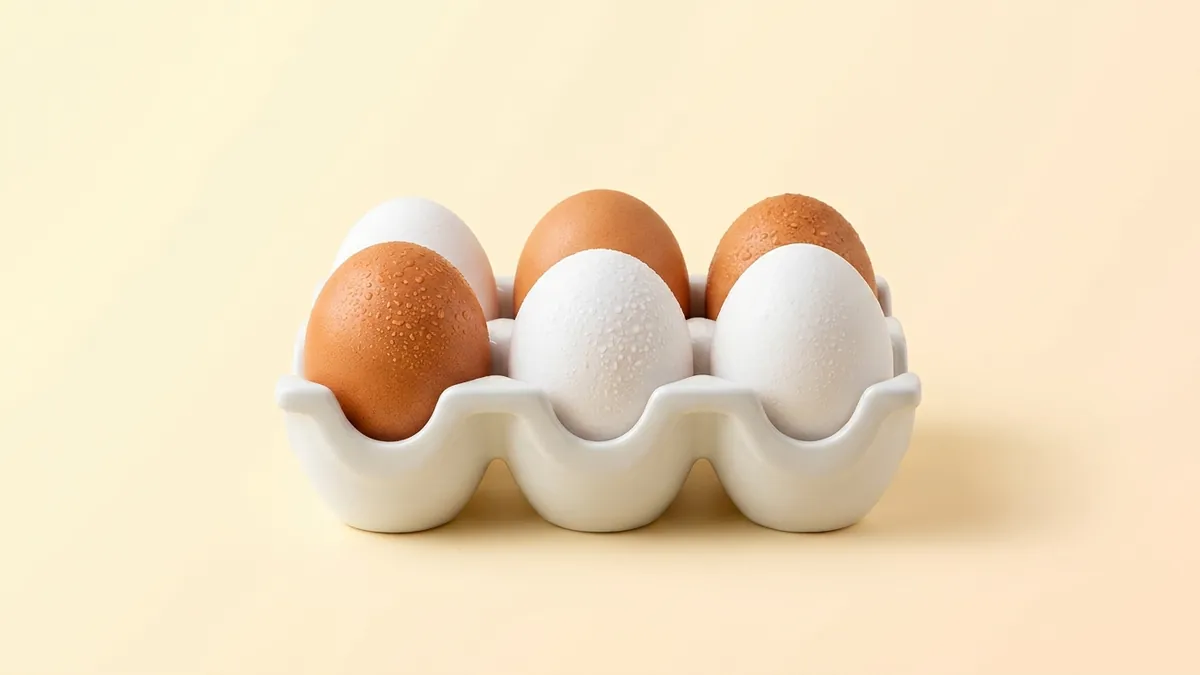
"Doctor, my husband brings groceries home and immediately puts our eggs in the fridge, right next to the milk. Meanwhile, my mother insists they belong in a basket on the kitchen counter! Who is actually right?" Just last week, Sarah, a mother of two who came into my clinic for a routine check-up, asked me to settle this exact family debate. Whether or not to keep eggs in fridge shelves is one of the most common food-safety questions people ask. Maybe you have stood in your own kitchen wondering the exact same thing after watching a British baking show where eggs sit out in a bowl, while American and Canadian supermarkets stack them inside chilly glass coolers. Let's look at what medical science and global food safety experts actually say so you can keep your family safe from food poisoning.
📌 Key Takeaways at a Glance
- Refrigeration is safest at home: Regardless of whether you live in the US, Canada, the UK, or Australia, keeping eggs in the fridge below 40°F (4°C) stops dangerous Salmonella bacteria from multiplying.
- Never use the fridge door: The built-in egg tray in your refrigerator door experiences constant temperature swings; store eggs in their original cardboard carton on a middle shelf instead.
- Do not wash raw eggs before storing: Water strips away the shell's microscopic protective barrier and pushes surface germs straight through the shell's tiny pores.
- Avoid temperature seesaws: Once an egg has been chilled, never leave it out on the counter for more than two hours, as condensation ("sweating") draws bacteria inside the shell.
- Boiled and leftover eggs need extra care: Hard-boiled eggs last up to 7 days in the fridge, whereas leftover raw egg yolks must be covered and used within 1 to 2 days.
Is It Better to Store Eggs in the Fridge or on the Counter?
Yes, storing eggs in the fridge at or below 40°F (4°C) is the safest medical method to prevent foodborne illness and preserve freshness. Consistent refrigeration halts the growth of Salmonella Enteritidis, a harmful bacterium that can lurk both on the outer shell and inside seemingly healthy, unbroken eggs.
Think about it for a second: when we buy a carton of eggs for Sunday morning pancakes or scrambled eggs on toast, they look completely sealed and solid, don't they? In reality, an eggshell is covered in between 7,000 and 17,000 microscopic pores that allow oxygen and moisture to pass through. If a microscopic trace of bacteria is sitting on that shell—or inside the egg from when the hen laid it—warm kitchen temperatures act like an incubator.
We doctors see the painful result of poorly stored eggs all the time in our clinics. It causes a type of severe stomach flu known medically as bacterial gastroenteritis (salmonellosis). Within 6 hours to 6 days of eating a contaminated, undercooked egg, a patient can develop intense stomach cramps, watery diarrhea, nausea, vomiting, and a high fever. While a healthy adult might recover after several miserable days at home sipping oral rehydration salts, young children, pregnant women, older adults, and anyone with a weakened immune system can suffer rapid, dangerous dehydration (severe fluid loss).
Keeping your eggs chilled below 40°F (4°C) essentially puts those bacteria into a deep freeze-frame where they cannot multiply quickly. Plus, cold temperatures slow down the breakdown of proteins inside the egg white, keeping your eggs fresher for three to five weeks longer than they would last on a warm kitchen counter. Pretty convincing reason to clear a spot on your fridge shelf, right?
Why Do Egg Storage Rules Differ Between the US, UK, Canada, and Australia?
Have you ever wondered why supermarkets in the United States and Canada keep eggs in refrigerated dairy aisles, while grocery stores across the United Kingdom and Europe stack them right out on unrefrigerated room-temperature shelves? And what about Australia, where you sometimes see a mix of both depending on the store? It comes down to two completely different farm-to-table strategies for stopping Salmonella.
In the United States and Canada, strict agricultural rules require commercial producers to thoroughly wash, sanitize, and spray eggs with warm water and mild disinfectant soaps right after collection. While this removes dirt and bird droppings from the shell, it also scrubs away the egg's natural microscopic protective film, known medically and biologically as the cuticle (or bloom). Because that natural seal is gone, the shell's thousands of tiny pores are wide open to bacteria in the air. Therefore, North American eggs must be refrigerated immediately and kept cold all the way to your home fridge.
In the United Kingdom, the approach is the exact opposite. Hens are widely vaccinated against Salmonella (look for the British Lion mark stamped on the shell), and producers are discouraged from washing Grade A eggs. Leaving the egg unwashed preserves that intact natural cuticle barrier, blocking outside germs from sneaking through the pores. Furthermore, UK supermarkets avoid chilling eggs so they won't "sweat" (form condensation) while shoppers drive them home in room-temperature shopping bags.
In Australia, producers typically wash and sanitize commercial eggs using specialised processes, and Food Standards Australia New Zealand (FSANZ) strongly advises keeping them refrigerated at 4°C or below to prevent spoilage during warm Australian summers. Yet here is the crucial link that brings all four countries together: even the UK's Food Standards Agency (FSA) officially recommends that once you bring unwashed supermarket eggs into your own kitchen, the safest place to store them is inside your refrigerator! Now that makes sense, right?
What Is the Biggest Mistake People Make With Eggs in the Fridge?
Remember how we talked a moment ago about UK supermarkets worrying that cold eggs might "sweat" on the way home? That brings us directly to the single biggest mistake you can make with refrigerated eggs: leaving cold eggs out at room temperature for long stretches of time.
Think about what happens when you take a cold glass of iced water or a chilled soda can out of the fridge on a mild afternoon. Within minutes, tiny water droplets bead up all over the outside of the glass. The exact same physical reaction happens on a cold eggshell.
When moisture condenses on the surface of a cold egg, those tiny water droplets bridge the microscopic pores in the shell. Any bacteria resting on the outside of the shell—or transferred from your kitchen counter—can literally swim right through the damp pores into the egg white and yolk. Worse still, as the egg warms up past 40°F (4°C), any bacteria already inside wake up and start multiplying rapidly. We doctors follow the strict "Two-Hour Rule": never leave refrigerated eggs sitting out on the kitchen counter for more than two hours (or just one hour if your kitchen is hot during the summer).
Where Should Eggs Be Stored in the Fridge—and Can I Wash Them First?
Be honest: when you unpack your groceries, you have probably placed your eggs into those cute little plastic egg-shaped trays built right into the inside of your refrigerator door, haven't you? Almost everyone does at some point! Yet food safety scientists and we doctors wish appliance makers would stop putting egg racks in the door altogether.
Why? Because the refrigerator door is the warmest, most unstable spot in the entire appliance. Every single time someone swings the door open to grab milk for coffee, a snack, or salad dressing, a blast of warm kitchen air hits the door shelves. Those constant temperature fluctuations cause egg whites to thin out faster and allow bacteria a window to grow. Instead, keep your eggs in their original cardboard carton on a middle or lower interior shelf toward the back of the fridge, where the temperature stays rock-steady.
Keeping them in the cardboard box gives you three huge bonuses:
- It cushions the shells from cracking against hard fridge shelves.
- It blocks the porous shells from absorbing strong food odors (nobody wants morning eggs that taste like last night's leftover garlic pasta or chopped onions!).
- It lets you easily see the "Best Before" or "Use By" date printed on the box.
Can I Wash Eggs Before Putting Them in the Fridge?
No, you should never wash raw eggs before storing them in the fridge. Whether your eggs came from a supermarket carton or a backyard chicken coop, washing them under the tap damages the remaining protective cuticle and uses water pressure to force surface bacteria straight through the porous shell. If an egg has a minor smudge, gently brush it off with a dry paper towel before storing, and only rinse it right before you crack it into the pan if absolutely necessary.
Can You Store Boiled Eggs, Egg Yolks, or Cracked Eggs in the Fridge?
What happens once you actually crack, separate, or boil your eggs? Patients ask us these practical kitchen questions all the time, because the safety timeline changes drastically once the raw shell is altered. Let's break down the exact rules for each scenario.
Can I Store Boiled Eggs in the Fridge?
Yes, it is completely safe and recommended to store hard-boiled eggs in the fridge, and they will stay fresh and safe to eat for up to 7 days. Here is why they don't last as long as raw eggs: boiling an egg completely cooks away the outer protective coating and opens up the pores in the shell, making it easier for fridge bacteria and odors to seep inside. After boiling, cool your eggs quickly in a bowl of ice water or cold tap water, dry them gently, and place them in the fridge within two hours. Keep them in a sealed airtight container—whether peeled or unpeeled—so they stay moist and don't make your entire fridge smell sulfurous. (One critical rule: never freeze whole hard-boiled eggs, as the cooked egg white becomes tough, watery, and rubbery when thawed!)
Can Egg Yolk Be Stored in the Fridge?
Yes, if a recipe calls for only egg whites and leaves you with leftover raw egg yolks, you can safely store those yolks in the fridge for 1 to 2 days (up to 4 days if pasteurized, though using them within 48 hours is safest). Raw yolks dry out and form a hard crust very quickly when exposed to cold fridge air. To stop this, place the unbroken yolks into a small airtight container and gently pour just enough cold water (or a teaspoon of milk) over the top to barely cover them. Cover tightly, refrigerate immediately, and simply drain off the liquid before using them in your next scramble, custard, or sauce. Raw egg whites, by the way, can be stored in a sealed container in the fridge for up to 4 days.
Can I Eat a Cracked Egg in the Fridge?
It depends entirely on when the egg cracked. If you open a brand-new carton at home or look in your fridge and find an egg that was already cracked—and you do not know how long it has been broken—throw it away immediately. Bacteria on the outside of the shell have had direct entry into the nutritious egg inside. However, if you accidentally crack a clean egg against the counter while unpacking groceries, do not put it back into the carton in its cracked shell. Instead, crack it all the way open into a clean, airtight container, keep it in the fridge for no more than 2 days, and make sure you cook it thoroughly (until both white and yolk are solid) to destroy any surface germs.
To make this super easy to check whenever you are cooking, here is a quick clinical comparison guide for every type of egg in your fridge:
| Egg Type or Condition | Medical Explanation & Safe Storage Action |
|---|---|
| Whole Raw Eggs (In Shell) | Cold temperatures below 40°F (4°C) keep Salmonella dormant and preserve protein structure for 3 to 5 weeks past purchase. What you should do: Store unwashed in the original cardboard carton on a middle fridge shelf, pointed end facing down to keep the yolk centered. |
| Hard-Boiled Eggs (Peeled or Unpeeled) | Boiling strips away the natural shell cuticle, making cooked eggs much more vulnerable to bacterial contamination and rapid spoilage. What you should do: Chill within 2 hours of cooking, store inside a covered airtight container in the fridge, and eat within 7 days. |
| Leftover Raw Egg Yolks | Once removed from the protective shell, nutrient-rich egg yolks dry out rapidly and can breed bacteria quickly even when chilled. What you should do: Submerge unbroken yolks under a thin layer of cold water in a sealed container, refrigerate immediately, and cook thoroughly within 1 to 2 days. |
| Leftover Raw Egg Whites | Separated egg whites hold up slightly better than yolks in cold storage but remain vulnerable to airborne fridge contaminants. What you should do: Seal in a clean airtight container on a middle fridge shelf and use within 2 to 4 days in thoroughly cooked recipes. |
| Cracked Eggs Found in Carton | Even a hairline crack breaks the barrier against Salmonella and other fecal bacteria from the outer shell. What you should do: Discard any egg found pre-cracked in the carton. If you crack a clean egg accidentally, transfer it to a sealed bowl and cook thoroughly within 24–48 hours. |
✔️ What You Should Do & ❌ What to Avoid
- ✔️ DO use the water float test if you are unsure of freshness: Gently place an uncracked raw egg into a deep bowl of cold tap water. If it sinks flat on its side at the bottom, it is super fresh. If it stands upright on its tip at the bottom, it is a couple of weeks old but still safe to cook thoroughly. If it floats to the top, gases have built up inside from spoilage—throw it away!
- ✔️ DO trust your nose and eyes upon cracking: Always crack eggs into a small separate bowl before adding them to your mixing bowl. A spoiled egg will give off an unmistakable pungent, sulfurous odor, or show pink, green, or iridescent discoloration in the white.
- ✔️ DO cook eggs thoroughly for vulnerable family members: For toddlers, pregnant women, seniors over 65, and immunocompromised individuals, cook eggs until both the white and yolk are completely firm (or use pasteurized shell eggs for runny-yolk dishes).
- ❌ DON'T store eggs in the refrigerator door tray: Keep them away from the warm blasts of air every time the door opens.
- ❌ DON'T wash raw eggs before storing: Keep water away from raw shells so you never push surface germs through the microscopic pores.
- ❌ DON'T leave cold eggs or egg salad out at room temperature: Never let raw chilled eggs, boiled eggs, quiches, or mayonnaise-based egg dishes sit out for more than 2 hours (or 1 hour on hot days above 90°F / 32°C).
🚨 When to Seek Immediate Emergency Care (Red-Flag Symptoms)
If you or someone near you develops any of these red-flag symptoms after eating eggs or suspected contaminated food, do not wait — call 911 (US & Canada), 999 or 111 (UK), or 000 (Australia) immediately or go straight to the nearest hospital Emergency Room (ER / A&E):
- Inability to keep any liquids down: Persistent, relentless vomiting for more than 24 hours that prevents you from sipping water or oral rehydration fluids.
- Signs of severe dehydration: Extreme dizziness or lightheadedness when standing up, confusion, sunken eyes, bone-dry mouth and tongue, or passing little to no dark-colored urine for over 8 to 12 hours.
- Bloody stools or vomit: Seeing bright red blood or dark, tarry material in your diarrhea or vomit.
- High, unyielding fever: A fever rising above 102°F (38.9°C) that does not come down with basic home care, accompanied by severe, worsening abdominal pain (rather than periodic cramping).
- Vulnerable patients showing symptoms: If an infant, young child, pregnant woman, frail older adult, or someone on chemotherapy/immunosuppressants develops rapid diarrhea and fever, contact your Primary Care Physician (PCP) / family GP clinic or visit a local Urgent Care center promptly before dehydration sets in.
💡 Key Take-Home Message
- Keeping your eggs in the fridge at or below 40°F (4°C) is the gold-standard way to prevent Salmonella bacteria from growing and keeps your eggs fresh for weeks longer.
- Skip the built-in plastic egg rack in the refrigerator door; leave your unwashed eggs inside their original cardboard carton on a middle shelf where the temperature never fluctuates.
- Once eggs are refrigerated, keep them cold until you are ready to cook them, and remember to eat hard-boiled eggs within 7 days and leftover covered raw yolks within 1 to 2 days.






No comments yet. Be the first to share your question or experience below.