
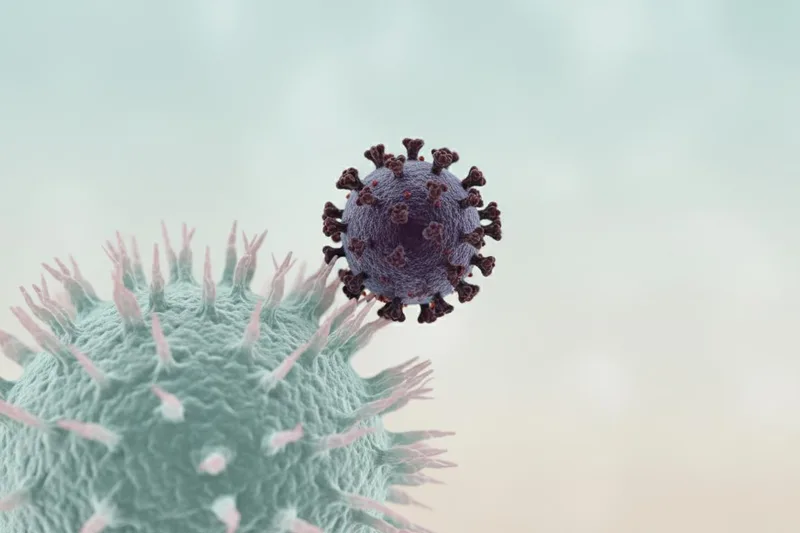
Let's learn more about HIV and AIDS. (HIV and AIDS) Don't be afraid, let's talk!

Let's learn more about HIV and AIDS. (HIV and AIDS) Don't be afraid, let's talk!

You've probably heard about HIV and AIDS. Maybe you're a little scared. But don't worry. The most important thing is to be fully informed about this. Today, we'll talk about it simply, in a way that you can understand. Because knowing about these things is very important for you and your loved ones.

What is HIV? What is AIDS? Let's understand it simply!

Okay, first let's look at what HIV is. HIV (Human Immunodeficiency Virus) is a virus that attacks the immune system in our body. Just like the army that protects our country, our body's immune system is also like that. This system is what protects us from diseases. The HIV virus directly attacks this defense system.

Now let's look at what AIDS is. AIDS (Acquired Immune Deficiency Syndrome) is the final, most severe stage of HIV infection. AIDS occurs when the HIV virus has damaged the immune system for a long time and it is very weak.

The most important thing is that there is currently no cure for HIV/AIDS. However, with the current treatments (`medicines`), a person infected with HIV can live a long and healthy life. Therefore, early detection and proper treatment are very important.

What really happens when HIV enters the body?

Imagine that our immune system has a special group of soldiers. They are called `CD4` cells . Some people also call them ` T` cells . These `CD4` cells are what fight germs and infections that enter our bodies, and they also help prevent the development of certain types of cancers.

The HIV virus is very cunning. It goes straight to attack these most important `CD4` cells of our defense forces. The virus enters these cells, takes control of them, and makes thousands of copies of itself. Then it destroys that `CD4` cell, and the newly formed viruses go on to attack other healthy `CD4` cells. That's how the HIV virus spreads in our bodies.

What happens when AIDS occurs?

Over time, the HIV virus gradually destroys a large number of `CD4` cells. Then our immune system becomes very weak. It's like a country without an army. This is the condition called AIDS.

When we reach the stage of AIDS, the body's ability to fight off disease is greatly reduced. As a result, even minor illnesses that normally don't affect us much can become serious. Various serious infections and health problems begin to occur.

What are the symptoms of HIV infection? Are they the same for everyone?

The symptoms of HIV infection are not the same for everyone. They also vary depending on the stage of infection.

First stage: Acute HIV infection

This is the first time a person is infected with the virus.

  • Symptoms usually begin between 2 and 4 weeks after the virus enters the body.
  • These symptoms can last from a few days to a few weeks.
  • What are these characteristics?
  • Fever
  • Headache
  • Body pain ( muscle pain )
  • Swollen glands (swollen glands)
  • Skin rash
  • But some people experience very mild symptoms, or no symptoms at all. So it can be difficult to recognize that you have HIV at this stage.

Next stage: Chronic HIV infection

At this point, a person may have no symptoms at all, or only very mild symptoms .

  • A person can remain symptom-free for 5 or 10 years , but the virus continues to actively destroy CD4 cells inside the body.
  • Some people can quickly progress from this stage to the next more severe stage, which is AIDS .

Worst case: AIDS

This is the most severe and final stage of HIV infection. By this time, the immune system is very weak.

  • Becoming very thin (losing weight very quickly - `very fast weight loss` ).
  • Frequent fever.
  • Feeling extremely tired .
  • The lymph nodes continue to swell.
  • A severe lung infection can develop, called `Pneumocystis pneumonia` .
  • Continuous loose stools (diarrhea).
  • Sores develop in the mouth, anus, and around the genitals.
  • Some types of cancers can develop.
  • Various skin problems (e.g. eczema, rashes) may occur.

How is HIV transmitted from one person to another? Let's find out exactly this!

HIV is transmitted through bodily fluids from an infected person entering the body of a healthy person. These fluids are mainly:

  • Blood
  • Semen (`semen`)
  • Vaginal fluids
  • Breast milk

Here are the most common ways to transmit HIV:

  • From unprotected sex: Especially if a condom is not used during anal sex and vaginal sex.
  • By sharing needles:When several people use the same needle when injecting drugs or getting tattoos.
  • People like healthcare workers may be at risk from being pricked by a needle contaminated with infected blood .
  • Mother to child: HIV can be transmitted from an HIV-infected mother to her child during pregnancy, childbirth, or breastfeeding. However, there are now effective treatments to prevent this.

What are the ways to avoid contracting HIV? Learn about this clearly!

Many people have misconceptions about how HIV is transmitted. This creates unnecessary fear. HIV cannot be transmitted through these things:

  • Urine (`pee`), poop (`poop`), spit (`spit`), vomit (`throw-up`), sweat (unless it is mixed with blood).
  • From coughing and sneezing.
  • By holding hands, by hugging.
  • By eating from the same plate, by using the same water glass.
  • From animals like mosquitoes.

Important: HIV cannot be transmitted by living with, working with, or interacting with someone who is HIV-positive. Therefore, there is no reason to discriminate against or discriminate against people with HIV.

How do you know for sure if you have HIV?

The only way to know if you have HIV is to get a blood test. You can get this test from a doctor.

  • If the test confirms that the HIV virus is present in the body, that person is said to be "HIV positive" .
  • There are now home tests available from pharmacies without a prescription. However, if a home test comes back positive, you should definitely go to a hospital for further testing and to seek medical advice.

How do you treat someone with HIV? Don't worry, there is good treatment now!

Many people infected with HIV can now live normal, healthy lives using medications called `Antiretrovirals` . These medications are also called `ART` (Antiretroviral Therapy).

  • These medications work by reducing the amount of HIV virus in the body (this is called the `viral load` ). When the amount of virus decreases, the `CD4` cells that have been destroyed start to grow again, which means the number of `CD4` cells increases.
  • The main goal of treatment is to reduce the amount of virus in the body to the point where it cannot be detected in a blood test. This is called an "undetectable" level of virus. To get to this level , you need to take the medicine every day for at least 3 to 6 months.
  • If you continue to take the medication exactly as directed, you can keep the viral load at this `undetectable` level. However, if you stop taking the medication, the viral load will increase rapidly again.Therefore, it is not a good idea to stop taking medication until your doctor tells you to.

Remember, there is a cure for HIV! So early detection and early treatment give you a better chance of living a healthy, long life.

What should we do to protect ourselves from HIV?

To protect ourselves from HIV, we all need to be aware of these things. It is especially important to teach our children and young people about this.

  • Never use needles that have been used by others for any reason. Use only new, sterilized equipment when injecting drugs, getting tattoos, or piercing ears.
  • Do not share personal items that may come into contact with blood, such as razors and toothbrushes, with other people.
  • Do not touch someone else's blood (e.g. blood from a wound). If you must, wear gloves.
  • If you are sexually active, be sure to use a latex condom correctly during every sexual encounter (vaginal, oral, or anal). This is the best way to prevent the sexual spread of HIV.

What should someone with HIV do to prevent spreading it to others?

It is very important for someone living with HIV to act responsibly. Here are some things they can do:

  • Take the `Antiretrovirals` medicine prescribed by the medical team exactly, on time, and in the prescribed dosage. This will not only improve your health, but also greatly reduce the risk of infecting others.
  • Do not share your used needles with other people for any reason.
  • Do not share personal items that could get stained with blood, such as razors and toothbrushes, with other people.
  • If you have a wound or cut on your body, cover it well with a bandage.
  • If sexually active:
  • Talk honestly with your sexual partners about your HIV status. Encourage them to get tested for HIV as well.
  • There is a special medication you can take daily to reduce the risk of your partner getting HIV. It is called `PrEP` (Pre-Exposure Prophylaxis) . You can find out more about this by talking to a doctor.

Remember this: If you are taking antiretrovirals correctly and have an undetectable viral load, you are unlikely to be able to pass HIV to someone else through sex. This is a very important message. However, there may be a very small chance that it can be spread through other means, such as breastfeeding or sharing needles.

What else do we need to know about this?

HIV is not something to be feared, but a condition that needs to be managed properly.

  • If you take your medication correctly and follow your regular medical care,HIV-positive people can live long, healthy, and happy lives just like anyone else.
  • Finding out that your child has HIV or AIDS can be a shock. However, there are many things you can do to help your child:
  • Be sure to take your child to doctor visits on scheduled dates.
  • Give all prescribed medications to your child exactly, on time, and as prescribed.
  • Make sure to get all required follow-up blood tests done on time.
  • Explain to your child in a way that he or she can understand what HIV/AIDS is, how it is transmitted, and how it is not transmitted. Answer any questions he or she may have.
  • Help keep your child physically active, get enough sleep, and eat nutritious foods .
  • Remember, you are not alone. Your child's medical care team is there to help you and your child. They will help you get the best care for your child, as well as provide emotional support for you and the rest of your family.

## Let's recall the things we talked about in one breath (Take-Home Message)

Okay, we talked a lot about HIV and AIDS today, didn't we? In short:

  • HIV is a virus that attacks the immune system. AIDS is its most severe form.
  • HIV is transmitted mainly through unprotected sex, sharing infected needles, and mother-to-child transmission.
  • HIV is not transmitted through casual contact, sharing food and drinks, or from mosquitoes.
  • You need to take a blood test to detect HIV.
  • With current antiretroviral treatments, people living with HIV can live healthy, long lives. The most important thing is to take the medication correctly and consistently.
  • When the viral load is reduced to an ``undetectable'' level, the risk of sexually transmitting HIV is almost non-existent.
  • To protect yourself from HIV, things like using condoms and not sharing needles are very important.
  • Give our love, kindness, and support to those living with HIV. Don't marginalize them.

If you want to know more about this, you can visit websites like HIVinfo.NIH.gov and CDC (The Centers for Disease Control and Prevention) . Also, you can get proper advice and services in this regard from the sexually transmitted disease clinics (`STD clinics`) in government hospitals in Sri Lanka.

Don't be afraid, if in doubt, get tested. Be informed. Stay healthy!

👩🏽‍⚕️ Additional questions (FAQs)

💬 Are HIV and AIDS two diseases?

No, but these are two cases. HIV is a virus that destroys our body's immunity (ability to resist disease). AIDS is the most severe and final stage of the disease that occurs after the virus has been in a person's body for a long time and the immunity has completely disappeared.

💬 How can HIV be transmitted from one person to another in everyday life?

It is never spread by sharing food, shaking hands, or kissing. It is only spread when an infected person's blood, semen, or vaginal fluids enter another person's body directly (for example, through sexual intercourse or sharing needles).

💬 Hasn't a cure been found for this disease yet?

There is still no cure to completely eliminate the virus from the body. However, if you take the special ARV (Antiretroviral) medication available today every day, you can now live a full life like anyone else in society without developing AIDS.


` HIV, AIDS, HIV, AIDS, treatment, symptoms, transmission

⚠️ Important: The medical articles and information on Nirogi Lanka are for general awareness only, and are by no means a substitute for professional medical advice, diagnosis, or treatment. For any medical problem you have, consult a qualified physician immediately.

💬 Comments (0)

No comments yet. Be the first to share your thoughts here.

Add Your Comment

Please calculate: 5 + 2 =
Let's learn more about HIV and AIDS. (HIV and AIDS) Don't be afraid, let's talk!

Let's learn more about HIV and AIDS. (HIV and AIDS) Don't be afraid, let's talk!

You've probably heard about HIV and AIDS. Maybe you're a little scared. But don't worry. The most important thing is to be fully informed about this. Today, we'll talk about it simply, in a way that you can understand. Because knowing about these things is very important for you and your loved ones.

What is HIV? What is AIDS? Let's understand it simply!

Okay, first let's look at what HIV is. HIV (Human Immunodeficiency Virus) is a virus that attacks the immune system in our body. Just like the army that protects our country, our body's immune system is also like that. This system is what protects us from diseases. The HIV virus directly attacks this defense system.

Now let's look at what AIDS is. AIDS (Acquired Immune Deficiency Syndrome) is the final, most severe stage of HIV infection. AIDS occurs when the HIV virus has damaged the immune system for a long time and it is very weak.

The most important thing is that there is currently no cure for HIV/AIDS. However, with the current treatments (`medicines`), a person infected with HIV can live a long and healthy life. Therefore, early detection and proper treatment are very important.

What really happens when HIV enters the body?

Imagine that our immune system has a special group of soldiers. They are called `CD4` cells . Some people also call them ` T` cells . These `CD4` cells are what fight germs and infections that enter our bodies, and they also help prevent the development of certain types of cancers.

The HIV virus is very cunning. It goes straight to attack these most important `CD4` cells of our defense forces. The virus enters these cells, takes control of them, and makes thousands of copies of itself. Then it destroys that `CD4` cell, and the newly formed viruses go on to attack other healthy `CD4` cells. That's how the HIV virus spreads in our bodies.

What happens when AIDS occurs?

Over time, the HIV virus gradually destroys a large number of `CD4` cells. Then our immune system becomes very weak. It's like a country without an army. This is the condition called AIDS.

When we reach the stage of AIDS, the body's ability to fight off disease is greatly reduced. As a result, even minor illnesses that normally don't affect us much can become serious. Various serious infections and health problems begin to occur.

What are the symptoms of HIV infection? Are they the same for everyone?

The symptoms of HIV infection are not the same for everyone. They also vary depending on the stage of infection.

First stage: Acute HIV infection

This is the first time a person is infected with the virus.

  • Symptoms usually begin between 2 and 4 weeks after the virus enters the body.
  • These symptoms can last from a few days to a few weeks.
  • What are these characteristics?
  • Fever
  • Headache
  • Body pain ( muscle pain )
  • Swollen glands (swollen glands)
  • Skin rash
  • But some people experience very mild symptoms, or no symptoms at all. So it can be difficult to recognize that you have HIV at this stage.

Next stage: Chronic HIV infection

At this point, a person may have no symptoms at all, or only very mild symptoms .

  • A person can remain symptom-free for 5 or 10 years , but the virus continues to actively destroy CD4 cells inside the body.
  • Some people can quickly progress from this stage to the next more severe stage, which is AIDS .

Worst case: AIDS

This is the most severe and final stage of HIV infection. By this time, the immune system is very weak.

  • Becoming very thin (losing weight very quickly - `very fast weight loss` ).
  • Frequent fever.
  • Feeling extremely tired .
  • The lymph nodes continue to swell.
  • A severe lung infection can develop, called `Pneumocystis pneumonia` .
  • Continuous loose stools (diarrhea).
  • Sores develop in the mouth, anus, and around the genitals.
  • Some types of cancers can develop.
  • Various skin problems (e.g. eczema, rashes) may occur.

How is HIV transmitted from one person to another? Let's find out exactly this!

HIV is transmitted through bodily fluids from an infected person entering the body of a healthy person. These fluids are mainly:

  • Blood
  • Semen (`semen`)
  • Vaginal fluids
  • Breast milk

Here are the most common ways to transmit HIV:

  • From unprotected sex: Especially if a condom is not used during anal sex and vaginal sex.
  • By sharing needles:When several people use the same needle when injecting drugs or getting tattoos.
  • People like healthcare workers may be at risk from being pricked by a needle contaminated with infected blood .
  • Mother to child: HIV can be transmitted from an HIV-infected mother to her child during pregnancy, childbirth, or breastfeeding. However, there are now effective treatments to prevent this.

What are the ways to avoid contracting HIV? Learn about this clearly!

Many people have misconceptions about how HIV is transmitted. This creates unnecessary fear. HIV cannot be transmitted through these things:

  • Urine (`pee`), poop (`poop`), spit (`spit`), vomit (`throw-up`), sweat (unless it is mixed with blood).
  • From coughing and sneezing.
  • By holding hands, by hugging.
  • By eating from the same plate, by using the same water glass.
  • From animals like mosquitoes.

Important: HIV cannot be transmitted by living with, working with, or interacting with someone who is HIV-positive. Therefore, there is no reason to discriminate against or discriminate against people with HIV.

How do you know for sure if you have HIV?

The only way to know if you have HIV is to get a blood test. You can get this test from a doctor.

  • If the test confirms that the HIV virus is present in the body, that person is said to be "HIV positive" .
  • There are now home tests available from pharmacies without a prescription. However, if a home test comes back positive, you should definitely go to a hospital for further testing and to seek medical advice.

How do you treat someone with HIV? Don't worry, there is good treatment now!

Many people infected with HIV can now live normal, healthy lives using medications called `Antiretrovirals` . These medications are also called `ART` (Antiretroviral Therapy).

  • These medications work by reducing the amount of HIV virus in the body (this is called the `viral load` ). When the amount of virus decreases, the `CD4` cells that have been destroyed start to grow again, which means the number of `CD4` cells increases.
  • The main goal of treatment is to reduce the amount of virus in the body to the point where it cannot be detected in a blood test. This is called an "undetectable" level of virus. To get to this level , you need to take the medicine every day for at least 3 to 6 months.
  • If you continue to take the medication exactly as directed, you can keep the viral load at this `undetectable` level. However, if you stop taking the medication, the viral load will increase rapidly again.Therefore, it is not a good idea to stop taking medication until your doctor tells you to.

Remember, there is a cure for HIV! So early detection and early treatment give you a better chance of living a healthy, long life.

What should we do to protect ourselves from HIV?

To protect ourselves from HIV, we all need to be aware of these things. It is especially important to teach our children and young people about this.

  • Never use needles that have been used by others for any reason. Use only new, sterilized equipment when injecting drugs, getting tattoos, or piercing ears.
  • Do not share personal items that may come into contact with blood, such as razors and toothbrushes, with other people.
  • Do not touch someone else's blood (e.g. blood from a wound). If you must, wear gloves.
  • If you are sexually active, be sure to use a latex condom correctly during every sexual encounter (vaginal, oral, or anal). This is the best way to prevent the sexual spread of HIV.

What should someone with HIV do to prevent spreading it to others?

It is very important for someone living with HIV to act responsibly. Here are some things they can do:

  • Take the `Antiretrovirals` medicine prescribed by the medical team exactly, on time, and in the prescribed dosage. This will not only improve your health, but also greatly reduce the risk of infecting others.
  • Do not share your used needles with other people for any reason.
  • Do not share personal items that could get stained with blood, such as razors and toothbrushes, with other people.
  • If you have a wound or cut on your body, cover it well with a bandage.
  • If sexually active:
  • Talk honestly with your sexual partners about your HIV status. Encourage them to get tested for HIV as well.
  • There is a special medication you can take daily to reduce the risk of your partner getting HIV. It is called `PrEP` (Pre-Exposure Prophylaxis) . You can find out more about this by talking to a doctor.

Remember this: If you are taking antiretrovirals correctly and have an undetectable viral load, you are unlikely to be able to pass HIV to someone else through sex. This is a very important message. However, there may be a very small chance that it can be spread through other means, such as breastfeeding or sharing needles.

What else do we need to know about this?

HIV is not something to be feared, but a condition that needs to be managed properly.

  • If you take your medication correctly and follow your regular medical care,HIV-positive people can live long, healthy, and happy lives just like anyone else.
  • Finding out that your child has HIV or AIDS can be a shock. However, there are many things you can do to help your child:
  • Be sure to take your child to doctor visits on scheduled dates.
  • Give all prescribed medications to your child exactly, on time, and as prescribed.
  • Make sure to get all required follow-up blood tests done on time.
  • Explain to your child in a way that he or she can understand what HIV/AIDS is, how it is transmitted, and how it is not transmitted. Answer any questions he or she may have.
  • Help keep your child physically active, get enough sleep, and eat nutritious foods .
  • Remember, you are not alone. Your child's medical care team is there to help you and your child. They will help you get the best care for your child, as well as provide emotional support for you and the rest of your family.

## Let's recall the things we talked about in one breath (Take-Home Message)

Okay, we talked a lot about HIV and AIDS today, didn't we? In short:

  • HIV is a virus that attacks the immune system. AIDS is its most severe form.
  • HIV is transmitted mainly through unprotected sex, sharing infected needles, and mother-to-child transmission.
  • HIV is not transmitted through casual contact, sharing food and drinks, or from mosquitoes.
  • You need to take a blood test to detect HIV.
  • With current antiretroviral treatments, people living with HIV can live healthy, long lives. The most important thing is to take the medication correctly and consistently.
  • When the viral load is reduced to an ``undetectable'' level, the risk of sexually transmitting HIV is almost non-existent.
  • To protect yourself from HIV, things like using condoms and not sharing needles are very important.
  • Give our love, kindness, and support to those living with HIV. Don't marginalize them.

If you want to know more about this, you can visit websites like HIVinfo.NIH.gov and CDC (The Centers for Disease Control and Prevention) . Also, you can get proper advice and services in this regard from the sexually transmitted disease clinics (`STD clinics`) in government hospitals in Sri Lanka.

Don't be afraid, if in doubt, get tested. Be informed. Stay healthy!

👩🏽‍⚕️ Additional questions (FAQs)

💬 Are HIV and AIDS two diseases?

No, but these are two cases. HIV is a virus that destroys our body's immunity (ability to resist disease). AIDS is the most severe and final stage of the disease that occurs after the virus has been in a person's body for a long time and the immunity has completely disappeared.

💬 How can HIV be transmitted from one person to another in everyday life?

It is never spread by sharing food, shaking hands, or kissing. It is only spread when an infected person's blood, semen, or vaginal fluids enter another person's body directly (for example, through sexual intercourse or sharing needles).

💬 Hasn't a cure been found for this disease yet?

There is still no cure to completely eliminate the virus from the body. However, if you take the special ARV (Antiretroviral) medication available today every day, you can now live a full life like anyone else in society without developing AIDS.


` HIV, AIDS, HIV, AIDS, treatment, symptoms, transmission

⚠️ Important: The medical articles and information on Nirogi Lanka are for general awareness only, and are by no means a substitute for professional medical advice, diagnosis, or treatment. For any medical problem you have, consult a qualified physician immediately.

💬 Comments (0)

No comments yet. Be the first to share your thoughts here.

Add Your Comment

Please calculate: 5 + 2 =