
Does your young child have ADHD? Let's talk about it!

Does your young child have ADHD? Let's talk about it!

Does your young child exhibit these behaviors? Think about it, they have trouble paying attention, they don't seem to be listening to what we say, they don't stay in one place, they are very restless, they are not organized, they mess up everything, they do things all at once without thinking, or they suddenly get very angry, they have difficulty controlling their emotions. When you see these things, you may feel worried, embarrassed, or like your child doesn't respect you. Taking care of a young child with ADHD is a real challenge. It requires a lot of patience. Even though they are starting to become more independent at this age, they still need your guidance, help, and support as parents.
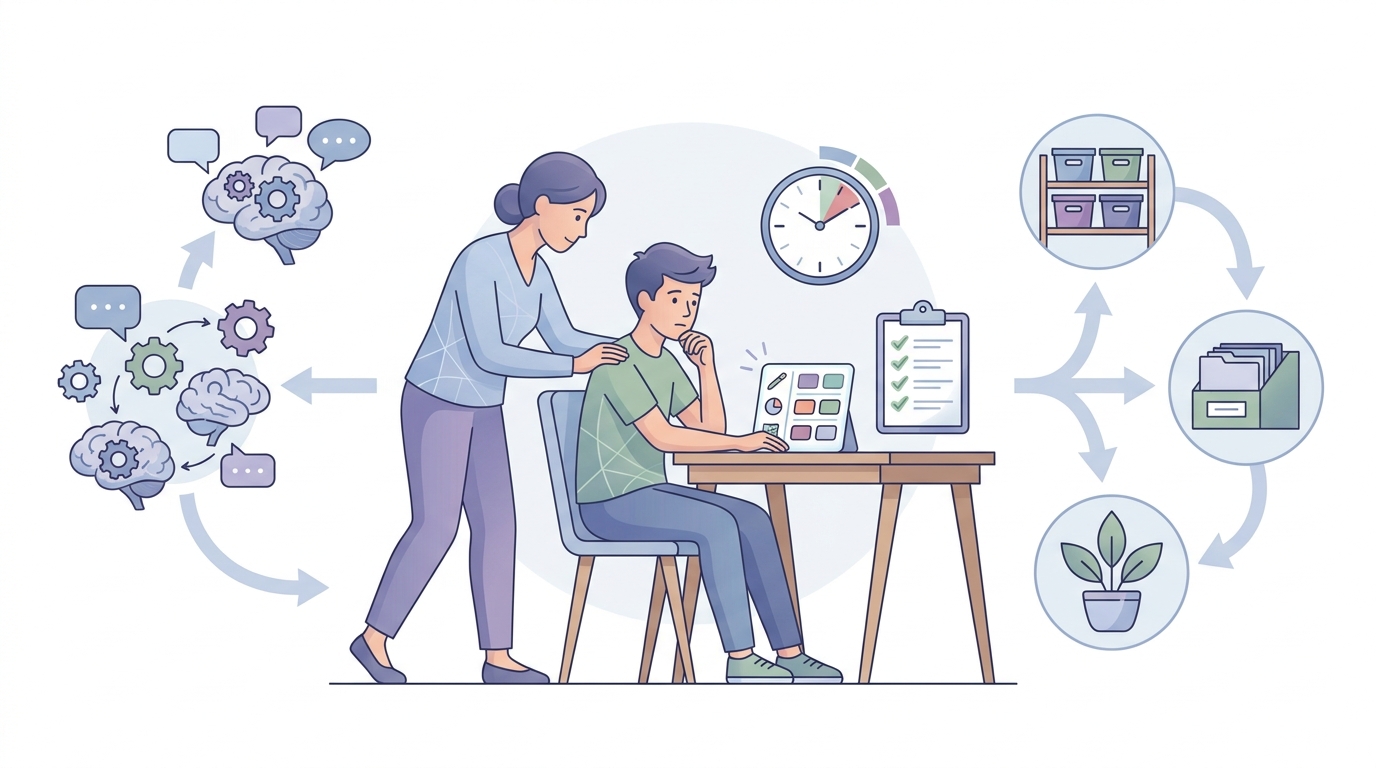
Let's understand exactly what ADHD is?

First, let's learn a little about ADHD, or attention deficit hyperactivity disorder . You probably already know about it, but learning a little more about it can help you be more patient with your child and reduce the frustration that comes with their behavior. The important thing is to understand that children with ADHD are not doing these things intentionally , intentionally to cause trouble.

Young children with ADHD can learn to control their attention and energy. However, it can be a lifelong process. They need help and support from parents, teachers, and therapists along the way.

How does ADHD affect your child? It's important to recognize it!

ADHD doesn't affect every young child in the same way. Some people may have one way, while others may have another. You should first think about what the biggest problems your child is having with ADHD. Then, think about what skills your child needs to learn to help them overcome those problems.

Simply put:

  • If you have hyperactive children , you may need to teach them to work a little more independently, rather than being agitated. You may also need to help them learn ways to calm themselves down or release their excess energy. Perhaps it would be a good idea to involve them in a sport.
  • If you have children who are impulsive , you need to teach them to be patient, not to interrupt others, or to think before they act recklessly or recklessly. They also need help controlling their emotions, such as sadness and anger.
  • Children who have trouble paying attention need to develop skills that help them plan, do their homework, and reduce distractions. They also need to be supported in things like keeping their belongings organized, tidying their room, completing homework, and being on time.

Imagine, if your child sits down to study and gets up after five minutes, or if they can't seem to think about anything even when they're looking at a book, it's not something they're doing on purpose . It's a challenge that comes with ADHD.

Should we talk to our child about ADHD and set small goals?

Help your young child understand ADHD. It can be helpful to talk to them about how ADHD is affecting them at school, at home, and with their friends. Let them know that you understand them.

Remind your child that having ADHD is not their fault. At the same time, be clear about what you expect them to do. Make it clear that it is their responsibility to control their attention, energy, actions, and emotions, and that you will help them do so. Set clear, realistic goals . Instead of expecting big things all at once, try to do one thing at a time.

What are practical ways to help your child?

What do you do with a messy room?

Is your child's room so messy that he can't even find his homework or his shoes? If your child has poor organizing skills due to ADHD, yelling "clean up!" or scolding them won't help. Instead, help them learn how to clean up.

You may have to do this with him at first. He may need to help you sort things and plan where to put them. Be patient, and work together. If possible, find a way to make it fun. Keep in mind that the room may get messy again. Since learning a new skill takes practice , plan to repeat this process often.

Let's build social skills to get along well with friends?

Young children may not realize that ADHD can affect their friendships. If they constantly interrupt others, talk too much, don't listen to what others are saying, or act in a way that is disruptive or arrogant, others may try to distance themselves from them.

Help your child recognize when their behavior is affecting their friendships. Instead of blaming them , say that this could be part of ADHD. "I know you're being mean. ""No, I interrupt when others are talking. When you have ADHD, it's hard to hold back when you have something to say. I know it hurts when your friend tells you not to interrupt when they're talking." Then, help your child think of a new skill to practice. Use a simple, easy-to-remember sentence like "Wait a minute before you speak" or "Listen a little longer." Be clear about how and when you'll try it.

Do you want to properly treat your child's ADHD?

Treatment for ADHD typically includes medication , therapy , parent coaching , and school support . If your child was diagnosed with ADHD at a young age and started treatment, their needs may have changed. Work with your child's doctor, therapist, and school team to update treatment to meet their new needs and goals.

Ask your child's therapist if they offer Parent Management Training (PMT) . This type of training can teach parents specific ways to help their young child with ADHD.

Shall we also look at the support from the school (IEP)?

If your child has an Individualized Education Program (IEP) , make sure it is updated to reflect the A-levels. This allows teachers to provide additional support your child may need – for example, extra classes, more time to complete work, a quiet place to work, or a place to sit that is less distracting.

How do you maintain a good relationship with your child?

Young children with ADHD are often very sensitive to criticism. Many of them get a lot of criticism, but it rarely changes their behavior for the better. Instead, it can make them feel bad about themselves and weaken their secure attachment to you. This can make children feel depressed, angry, or like no one understands them.

Keep your relationship warm and positive, focus on what you like and love about him. Pay attention to what he does well. Encourage him. Show interest in what he enjoys. Make time to do things together that you both enjoy. This gives you time to talk, laugh, or just be together. Make him feel that you accept him for who he is, with all his struggles.

Avoid blaming, scolding, constantly pointing out mistakes, and lecturing. These types of negative responses are more likely to increase unwanted behavior than reduce it.

Pay more attention to the things your child does well than to the problems. Praise them as often and specifically as possible. This will help you see more of the behaviors you (and your child) want to see.

Let's appreciate our children's talents while building their mental strength!

Young children with ADHD often feel like they are letting others down and that they can't do anything right. However, people with ADHD also have many talents and strengths. Some of their strengths come with ADHD – things like being able to think quickly, being adaptable, being creative, being fun, or being able to do things right away.

Help children discover their strengths and find ways to use them in their daily lives. When children use their strengths, and when they feel that their parents see it, it can boost their self-esteem, resilience , and success.

Finally, a few things to remember (Take-Home Message)

Okay, so, let me summarize some of the things we've talked about that I think will be important to you:

  • ADHD is not something a child does on purpose . Understand that and be patient.
  • Recognize the specific way your child is affected by ADHD. Not everyone is the same.
  • Talk openly with your child. Make him understand, help him.
  • Help in a practical way. Help with things like orderliness and social skills .
  • Continue treatment exactly. Follow medical advice, and if necessary, seek therapy or parent coaching.
  • Contact the school and get support through things like an IEP.
  • Keep your bond with your child strong and positive. Encourage and love him more than criticize.
  • Recognize and appreciate your child's strengths. That is a great strength for him.

Although this journey can be challenging, with your love, understanding, and the right support, you can help your young child with ADHD build a successful, happy future. You are not alone, and don't forget to seek help from doctors and therapists if needed.

👩🏽‍⚕️ Additional questions (FAQs)

💬 What kind of disease is ADHD in young children?

ADHD (Attention Deficit Hyperactivity Disorder) is a brain chemical disorder that causes people to have difficulty staying focused, paying attention, and controlling their emotions.

💬 How do normal misbehavior and ADHD symptoms differ?

A normal child will stop misbehaving when they are scared or explained to. However, a child with ADHD is unable to intentionally control their hyperactive behavior, no matter how much harm or punishment they receive.

💬 How can parents help a school-going child with ADHD at home?

If you give them a big task at once, they won't be able to do it. So break the task into smaller parts (like changing clothes first, then putting away the bag) and practice doing them one by one. Also, maintaining a routine is very important.


` ADHD, young children, parenting advice, attention deficit hyperactivity disorder, mental health, child care

Frequently Asked Questions (FAQ)

Let's build social skills to get along well with friends?

Young children may not realize that ADHD can affect their friendships. If they constantly interrupt others, talk too much, don't listen to what others are saying, or act in a way that is disruptive or arrogant, others may try to distance themselves from them.

⚠️ Important: The medical articles and information on Nirogi Lanka are for general awareness only, and are by no means a substitute for professional medical advice, diagnosis, or treatment. For any medical problem you have, consult a qualified physician immediately.

💬 Comments (0)

No comments yet. Be the first to share your thoughts here.

Add Your Comment

Please calculate: 6 + 8 =
Does your young child have ADHD? Let's talk about it!
Mental HealthApril 2, 2026

Does your young child have ADHD? Let's talk about it!

Does your young child exhibit these behaviors? Think about it, they have trouble paying attention, they don't seem to be listening to what we say, they don't stay in one place, they are very restless, they are not organized, they mess up everything, they do things all at once without thinking, or they suddenly get very angry, they have difficulty controlling their emotions. When you see these things, you may feel worried, embarrassed, or like your child doesn't respect you. Taking care of a young child with ADHD is a real challenge. It requires a lot of patience. Even though they are starting to become more independent at this age, they still need your guidance, help, and support as parents.

Let's understand exactly what ADHD is?

First, let's learn a little about ADHD, or attention deficit hyperactivity disorder . You probably already know about it, but learning a little more about it can help you be more patient with your child and reduce the frustration that comes with their behavior. The important thing is to understand that children with ADHD are not doing these things intentionally , intentionally to cause trouble.

Young children with ADHD can learn to control their attention and energy. However, it can be a lifelong process. They need help and support from parents, teachers, and therapists along the way.

How does ADHD affect your child? It's important to recognize it!

ADHD doesn't affect every young child in the same way. Some people may have one way, while others may have another. You should first think about what the biggest problems your child is having with ADHD. Then, think about what skills your child needs to learn to help them overcome those problems.

Simply put:

  • If you have hyperactive children , you may need to teach them to work a little more independently, rather than being agitated. You may also need to help them learn ways to calm themselves down or release their excess energy. Perhaps it would be a good idea to involve them in a sport.
  • If you have children who are impulsive , you need to teach them to be patient, not to interrupt others, or to think before they act recklessly or recklessly. They also need help controlling their emotions, such as sadness and anger.
  • Children who have trouble paying attention need to develop skills that help them plan, do their homework, and reduce distractions. They also need to be supported in things like keeping their belongings organized, tidying their room, completing homework, and being on time.

Imagine, if your child sits down to study and gets up after five minutes, or if they can't seem to think about anything even when they're looking at a book, it's not something they're doing on purpose . It's a challenge that comes with ADHD.

Should we talk to our child about ADHD and set small goals?

Help your young child understand ADHD. It can be helpful to talk to them about how ADHD is affecting them at school, at home, and with their friends. Let them know that you understand them.

Remind your child that having ADHD is not their fault. At the same time, be clear about what you expect them to do. Make it clear that it is their responsibility to control their attention, energy, actions, and emotions, and that you will help them do so. Set clear, realistic goals . Instead of expecting big things all at once, try to do one thing at a time.

What are practical ways to help your child?

What do you do with a messy room?

Is your child's room so messy that he can't even find his homework or his shoes? If your child has poor organizing skills due to ADHD, yelling "clean up!" or scolding them won't help. Instead, help them learn how to clean up.

You may have to do this with him at first. He may need to help you sort things and plan where to put them. Be patient, and work together. If possible, find a way to make it fun. Keep in mind that the room may get messy again. Since learning a new skill takes practice , plan to repeat this process often.

Let's build social skills to get along well with friends?

Young children may not realize that ADHD can affect their friendships. If they constantly interrupt others, talk too much, don't listen to what others are saying, or act in a way that is disruptive or arrogant, others may try to distance themselves from them.

Help your child recognize when their behavior is affecting their friendships. Instead of blaming them , say that this could be part of ADHD. "I know you're being mean. ""No, I interrupt when others are talking. When you have ADHD, it's hard to hold back when you have something to say. I know it hurts when your friend tells you not to interrupt when they're talking." Then, help your child think of a new skill to practice. Use a simple, easy-to-remember sentence like "Wait a minute before you speak" or "Listen a little longer." Be clear about how and when you'll try it.

Do you want to properly treat your child's ADHD?

Treatment for ADHD typically includes medication , therapy , parent coaching , and school support . If your child was diagnosed with ADHD at a young age and started treatment, their needs may have changed. Work with your child's doctor, therapist, and school team to update treatment to meet their new needs and goals.

Ask your child's therapist if they offer Parent Management Training (PMT) . This type of training can teach parents specific ways to help their young child with ADHD.

Shall we also look at the support from the school (IEP)?

If your child has an Individualized Education Program (IEP) , make sure it is updated to reflect the A-levels. This allows teachers to provide additional support your child may need – for example, extra classes, more time to complete work, a quiet place to work, or a place to sit that is less distracting.

How do you maintain a good relationship with your child?

Young children with ADHD are often very sensitive to criticism. Many of them get a lot of criticism, but it rarely changes their behavior for the better. Instead, it can make them feel bad about themselves and weaken their secure attachment to you. This can make children feel depressed, angry, or like no one understands them.

Keep your relationship warm and positive, focus on what you like and love about him. Pay attention to what he does well. Encourage him. Show interest in what he enjoys. Make time to do things together that you both enjoy. This gives you time to talk, laugh, or just be together. Make him feel that you accept him for who he is, with all his struggles.

Avoid blaming, scolding, constantly pointing out mistakes, and lecturing. These types of negative responses are more likely to increase unwanted behavior than reduce it.

Pay more attention to the things your child does well than to the problems. Praise them as often and specifically as possible. This will help you see more of the behaviors you (and your child) want to see.

Let's appreciate our children's talents while building their mental strength!

Young children with ADHD often feel like they are letting others down and that they can't do anything right. However, people with ADHD also have many talents and strengths. Some of their strengths come with ADHD – things like being able to think quickly, being adaptable, being creative, being fun, or being able to do things right away.

Help children discover their strengths and find ways to use them in their daily lives. When children use their strengths, and when they feel that their parents see it, it can boost their self-esteem, resilience , and success.

Finally, a few things to remember (Take-Home Message)

Okay, so, let me summarize some of the things we've talked about that I think will be important to you:

  • ADHD is not something a child does on purpose . Understand that and be patient.
  • Recognize the specific way your child is affected by ADHD. Not everyone is the same.
  • Talk openly with your child. Make him understand, help him.
  • Help in a practical way. Help with things like orderliness and social skills .
  • Continue treatment exactly. Follow medical advice, and if necessary, seek therapy or parent coaching.
  • Contact the school and get support through things like an IEP.
  • Keep your bond with your child strong and positive. Encourage and love him more than criticize.
  • Recognize and appreciate your child's strengths. That is a great strength for him.

Although this journey can be challenging, with your love, understanding, and the right support, you can help your young child with ADHD build a successful, happy future. You are not alone, and don't forget to seek help from doctors and therapists if needed.

👩🏽‍⚕️ Additional questions (FAQs)

💬 What kind of disease is ADHD in young children?

ADHD (Attention Deficit Hyperactivity Disorder) is a brain chemical disorder that causes people to have difficulty staying focused, paying attention, and controlling their emotions.

💬 How do normal misbehavior and ADHD symptoms differ?

A normal child will stop misbehaving when they are scared or explained to. However, a child with ADHD is unable to intentionally control their hyperactive behavior, no matter how much harm or punishment they receive.

💬 How can parents help a school-going child with ADHD at home?

If you give them a big task at once, they won't be able to do it. So break the task into smaller parts (like changing clothes first, then putting away the bag) and practice doing them one by one. Also, maintaining a routine is very important.


` ADHD, young children, parenting advice, attention deficit hyperactivity disorder, mental health, child care

Frequently Asked Questions (FAQ)

Let's build social skills to get along well with friends?

Young children may not realize that ADHD can affect their friendships. If they constantly interrupt others, talk too much, don't listen to what others are saying, or act in a way that is disruptive or arrogant, others may try to distance themselves from them.

⚠️ Important: The medical articles and information on Nirogi Lanka are for general awareness only, and are by no means a substitute for professional medical advice, diagnosis, or treatment. For any medical problem you have, consult a qualified physician immediately.

💬 Comments (0)

No comments yet. Be the first to share your thoughts here.

Add Your Comment

Please calculate: 6 + 8 =