

Your little one, aged eight to twelve months, has a lot of questions about his sleep, right? Sometimes he may cry all night long and not sleep. Or he may struggle to get any sleep during the day. These are common experiences for many parents of babies this age. So today, let's talk about the changes that can occur in babies' sleep during this period, the reasons for them, and most importantly, how to get your little one to sleep safely .
Can 8-12 month old babies have these problems during sleep? (Separation Anxiety)
Does your baby suddenly wake up in the middle of the night and start crying during these months, that is, in the second half of the year? When you or your father enters the room, does he calm down and calm down again after a while? This is often due to a condition called separation anxiety . Think about it, this is a normal stage of development for babies at this age. They understand that when mom and dad are not with them, they have left them. That's why they feel a little scared and worried.
"Oh, where did my parents go?" they must be thinking, right? That's what separation anxiety is, to put it simply.
So if your baby wakes up crying at night, shouldn't you worry? First, give your baby some time to fall back asleep. Be patient. Sometimes they will go back to sleep. Otherwise, you can go to your baby, and without taking them out of the crib , gently stroke their head and say, "Mommy/Daddy is here, baby, don't be scared." They will feel relieved when they feel you are there. Don't carry them around the room or play with them. That way, they will think they can play when they wake up at night.
How long should my baby sleep per day?
At this age, that is, between 8 and 12 months, a baby should sleep between 12 and 16 hours a day. This includes both nighttime and daytime sleep. On average, they should sleep about 9 to 12 hours at a time at night.
When it comes to daytime sleep , babies at this age usually take about two naps a day. Some babies can sleep for as little as 30 minutes. Others can sleep for up to 2 hours at a time. This varies from baby to baby. So, don't worry if your baby sleeps a little more or less, as long as he is healthy and happy. However, if he feels like he is constantly lacking sleep, it is a good idea to seek medical advice.
How should babies sleep safely? (SIDS Prevention)
This is the most important part of today's story. The amount of sleep babies get, the way they sleep, and the environment they sleep in are all very important. Because this directly affects their safety. Especially the SIDS (Sudden Infant Death Syndrome) that we have heard about.It is essential to take care of these things to save the baby from this dangerous situation.
Room-sharing or bed-sharing - which is right?
The American Academy of Pediatrics (AAP) recommends room-sharing until the baby's first birthday, or at least 6 months old. However, they also emphasize that bed-sharing is not recommended .
Room-sharing means sleeping in your own bedroom, next to your bed, in a crib, portable crib, play yard, or bassinet. This makes it easier to feed, comfort, and check on your baby at night. This is especially important during the first 6-12 months, when the risk of SIDS is highest.
However, making your baby sleep in your bed with you (bed-sharing) is not at all safe . If you do so, the risk of ` SIDS ` and other sleep-related accidents are much higher. Imagine, when you fall asleep, one of your arms or legs can fall on your baby's body, or the baby can suffocate on the blanket or pillow you use. So be very careful about this.
Be sure to remember these things to make your baby sleep safely!
So, here are some things you must follow to ensure your little one sleeps safely. If done correctly, you can go a long way in protecting your baby from dangers like SIDS.
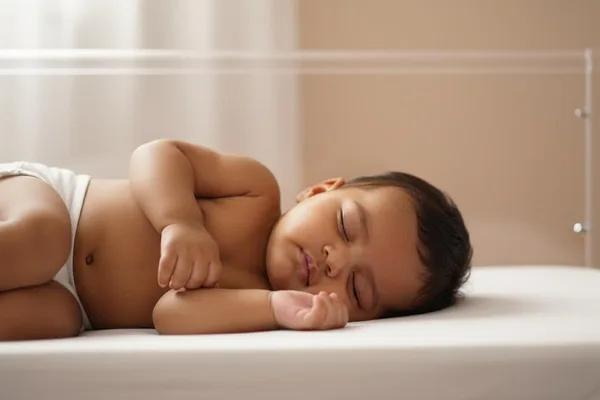
- Always put your baby to sleep on his or her back. Never put your baby to sleep on his or her stomach or side. The number of deaths from SIDS has decreased dramatically since the AAP made this recommendation in 1992. Once your baby can roll over (from stomach to back, back to stomach), it's okay to sleep in any position you like. However, when you put your baby to sleep , make sure to put him or her on his or her back .
- Use a firm, flat sleep surface. The mattress your baby sleeps on should be firm, not too soft. It should also be flat. Pull the bedding tightly and tightly over the mattress. It should not be wrinkled.
- Do not place anything else in the crib or sleeping area. Do not place soft toys, pillows, blankets (unfolded), quilts, comforters, sheepskins, or bumper pads in the crib or sleeping area. These can cause suffocation or entrapment.
- Do not let the baby overheat.Dress your baby according to the room temperature. Don't overdress or wrap him tightly. Don't cover his head while he's sleeping. Check to see if he's sweating or feeling hot. These are signs of overheating. Overheating also increases the risk of SIDS.
- Keep your baby away from smokers. ` Secondhand smoke` greatly increases the risk of `SIDS`. It is best not to smoke anywhere your baby is, especially in the bedroom.
- Give your baby a pacifier at bedtime. But don't force it. If the pacifier falls out of your baby's mouth after they fall asleep, you don't need to put it back in. If you're breastfeeding, wait until breastfeeding is well established before introducing a pacifier. Using a pacifier has also been found to help reduce the risk of SIDS.
- Be aware of other dangers. Keep cords, straps, or ribbons that can get wrapped around your baby's neck away, as well as anything with sharp edges or corners. Look around to see what is within reach of your baby while sitting or standing in the crib. Hanging toys (mobiles), wall hangings, pictures, window treatments, and window blind cords can all pose a danger if they are within reach of your baby.
- Do not let your baby sleep in products that are not specifically designed for sleeping. For example, devices designed to be used for sitting (such as a car seat), pillows used to help with breastfeeding (such as a feeding pillow), and loungers (such as a Dock-a-Tot, Podster, Bummzie) are not suitable places for your baby to sleep. Sleeping in these can cause your baby's head to tilt forward, making it difficult to breathe .
- Do not use any product or device that claims to reduce the risk of SIDS. Sleep positioners (either wedges or incliners) and monitors that measure your baby's heart rate and breathing do not actually reduce the risk of SIDS. There is no point in spending money on these.
- Do not use weighted blankets, sleepers, or swaddles on or around your baby. These are not safe for babies of this age.
- Make sure that any sleeping surface and product you use to help your baby sleep meets the relevant safety standards. For example, in the United States, it must meet federal safety standards approved by the US Consumer Product Safety Commission (CPSC). In Sri Lanka, it is also important to be aware of the quality of baby products.
Remember, all of this is for your child's safety. Even a small thing can help prevent a big accident.
In summary, let's remember this (Take-Home Message)
Okay, so we've talked about a lot today, haven't we? About your 8-12 month old baby's sleep , the problems that come up, and especially how to get them to sleep safely. Here are some simple things to keep in mind:
- It can be normal for a baby to wake up at night and cry (separation anxiety) at this age. Don't worry, comfort them with love.
- Babies need 12-16 hours of sleep a day. 9-12 hours straight at night and about two naps during the day.
- Always put your baby to sleep on his or her back.
- Do not place anything unnecessary in the baby's sleeping area (crib). (No pillows, toys, big blankets).
- Room-sharing is good, but bed-sharing is not good at all.
- Don't let the baby get too hot, and keep him away from smoke.
- Use only safe, quality sleeping equipment.
If you take care of these things, you and your baby will be able to have a healthy and safe sleep. Always remember, if you have any questions or doubts, do not hesitate to seek advice from a pediatrician . They are the ones who can help you the best.
👩🏽⚕️ Additional questions (FAQs)
💬 What is SIDS (Sudden Infant Death Syndrome)?
This refers to the tragic death of infants under one year of age, often while sleeping, without any apparent illness. The risk is particularly high between the ages of 2 and 4 months.
💬 How to put your baby to sleep to reduce the risk of SIDS?
Always put your baby to sleep on their back (so that their back is level). Never put them on their stomach or on their side. Do not put large pillows or toys in your baby's bed.
💬 Why does a baby's sleep change between 8-12 months?
During this time, the baby's fear of leaving the mother (separation anxiety) increases and he may wake up more often during the night than usual as he begins to teethe.
Sleep, baby, infant sleep, SIDS, safe sleep, separation anxiety, 8-12 months




💬 Comments (0)
No comments yet. Be the first to share your thoughts here.
Add Your Comment