

When your little one feels unusually warm to the touch, becomes quiet and listless instead of engaging in play, or refuses feeds while crying inconsolably, an immediate wave of parental anxiety often follows. The immediate question that crosses every parent's mind is invariably: "Is my child developing a fever?" Recognizing and accurately measuring a fever is a critical clinical skill because elevated body temperature is rarely an illness in its own right. Rather, it serves as a vital physiological sentinel—an early warning signal that the body's immune system is actively fighting off an underlying pathogen, infection, or inflammatory process.
Navigating pediatric fevers can feel overwhelming, especially when dealing with squirming infants or toddlers who lack the patience for medical assessments. Different age groups require distinct measurement techniques, and selecting the appropriate thermometer can mean the difference between clinical clarity and false reassurance. This complete, evidence-based guide, formulated to rigorous NHS and Mayo Clinic standards, explores everything modern parents need to know about evaluating children's temperatures safely, accurately, and with complete confidence.
Understanding the physiological mechanisms of fever empowers parents to respond calmly rather than react with panic. A fever occurs when the brain's hypothalamus—acting as the body's central internal thermostat—resets its baseline set point to a higher temperature in response to pyrogens released by white blood cells during an infection. This controlled elevation enhances immune system efficiency, accelerates antibody production, and creates a hostile thermal environment for invading bacteria and viruses. By mastering proper measurement techniques, parents can accurately track this vital sign and provide pediatricians with essential diagnostic data.
🌟 Key Clinical Takeaways for Parents.
- Core Accuracy: Rectal temperature measurement remains the clinical gold standard of accuracy for infants and children under 3 years of age.
- Equipment Choice: Always use modern digital thermometers; strictly avoid glass mercury thermometers, plastic strip forehead indicators, and unverified smartphone apps.
- Age-Based Protocols: Any rectal temperature of 38.0°C (100.4°F) or higher in an infant younger than 3 months constitutes a medical emergency requiring immediate evaluation.
- Context Matters: Evaluate your child's overall behavior, hydration status, and breathing patterns alongside the thermometer reading rather than focusing solely on the numerical value.
- Hygiene is Essential: Always clean and disinfect thermometer probes with appropriate antiseptic solutions before and after every single use to prevent secondary cross-contamination.
What Type of Thermometer Should We Use?
Gone are the days when traditional mercury-in-glass thermometers were the household standard. Today, leading pediatric authorities—including the American Academy of Pediatrics (AAP), the NHS, and the Mayo Clinic—unequivocally recommend digital thermometers as the safest, fastest, and most accurate instruments for home healthcare. Modern digital devices eliminate the catastrophic toxicity risks associated with glass breakage while offering rapid, crystal-clear digital readouts that remove any guesswork.
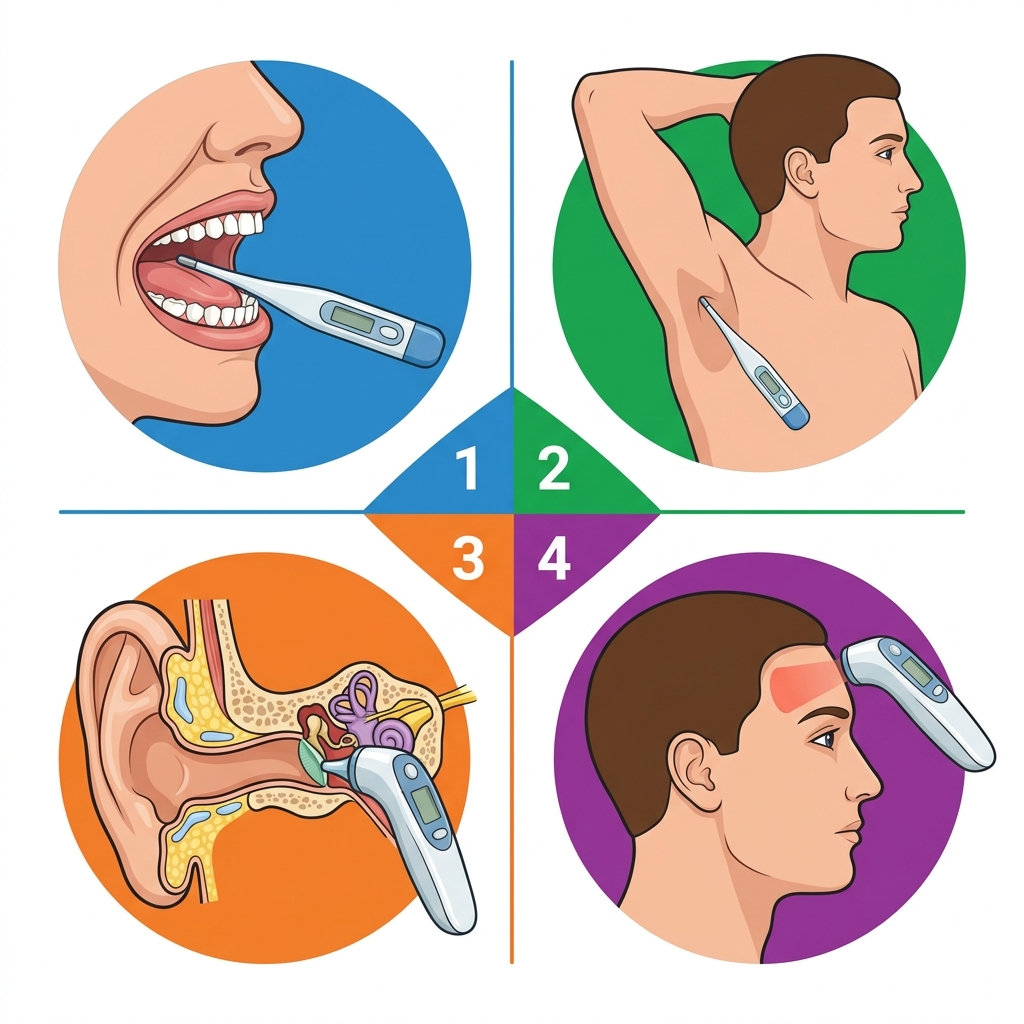
Digital thermometers available on the modern market generally fall into three primary clinical categories, each using distinct measurement technology:
- Standard Digital Multipurpose Thermometers: These versatile devices feature a rigid or flexible slim probe housing a thermal sensor at the tip, connected to an easy-to-read liquid crystal digital display screen. A single standard digital thermometer can be utilized across multiple anatomical pathways depending on the child's age and comfort level, including rectal, oral, and axillary (armpit) routes. Their affordability, durability, and multi-site capability make them an absolute essential in every family first-aid kit.
- Tympanic (Ear) Digital Thermometers: These specialized instruments use infrared sensor technology to measure the thermal infrared energy radiating directly from the tympanic membrane (eardrum) and surrounding ear canal tissue. Because the eardrum shares a rich blood supply with the brain's temperature-regulating hypothalamus, ear temperatures reflect core body temperature with exceptional speed (usually within one second). However, manufacturers strictly recommend these devices only for infants 6 months of age and older, as neonatal and young infant ear canals are exceptionally narrow, angled, and often obstructed by vernix or cerumen (earwax), which compromises measurement accuracy.
- Temporal Artery (Forehead) Infrared Thermometers: Representing a major advancement in non-invasive pediatric diagnostics, temporal artery thermometers scan the thermal emissions radiating from the superficial temporal artery running across the forehead. They require a gentle, sweeping motion across the brow and are exceptionally well-tolerated by sleeping or distressed children. Because manufacturers calibrate these devices using proprietary algorithms, it is vital to read the specific package insert and user instructions carefully, as sweeping techniques and scanning distances vary greatly between brands.
Clinical Expert Tip: Whichever device you choose, always familiarize yourself thoroughly with the manufacturer's operational guidelines before an illness strikes. Take time to learn how the device signals completion—such as an audible beep or visual indicator light—so you can interpret readings correctly under pressure.
Thermometers to Avoid.
While consumer markets offer numerous innovative temperature-taking devices, several common options fail to meet clinical standards for accuracy and reliability:
- Plastic Strip Forehead Thermometers: These inexpensive liquid crystal strips change color when applied to the skin, but they measure skin surface temperature rather than internal core body temperature. Skin temperature fluctuates wildly in response to ambient room temperature, perspiration, and peripheral vasoconstriction, making these strips notoriously unreliable for detecting true fevers.
- Pacifier Thermometers: Designed to measure temperature while an infant sucks on a specialized pacifier nipple, these devices are clinically impractical. Infants must keep the pacifier completely motionless in their mouths for several minutes to obtain an accurate reading—a nearly impossible feat for an irritable, crying feverish baby.
- Smartphone Temperature Applications: Apps claiming to transform mobile devices into clinical thermometers lack scientific validation and regulatory clearance, offering zero clinical reliability.
- Glass Mercury Thermometers: Never use traditional glass mercury thermometers under any circumstances. If dropped or bitten, these fragile glass tubes shatter instantly, releasing highly toxic liquid mercury vapor that poses severe neurodevelopmental and environmental health hazards. Modern public health agencies universally ban and discourage their household use.
What Is the Best Temperature-Taking Method by Age?
Securing an accurate temperature reading from an active, crying, or uncooperative child is a universal parenting challenge. Selecting the correct measurement method depends heavily on the child's developmental age, cognitive cooperation level, and anatomical safety.
Recommended clinical methods categorized by pediatric age groups include:
- Infants Younger Than 3 Months: For neonates and young infants, rectal (anal) temperature measurement is the absolute gold standard and the only clinically reliable method. Peripheral methods like armpit readings can easily miss dangerous hypothermia or occult bacteremia in this delicate age bracket.
- Infants 3 to 6 Months Old: Rectal measurement remains the primary recommendation. However, if parental comfort is a barrier, high-grade temporal artery scanners or axillary measurements can serve as initial screening tools, keeping in mind that any abnormal peripheral reading must be confirmed rectally.
- Infants and Toddlers 6 Months to 3 Years Old: Rectal measurement continues to provide the highest accuracy. As toddlers become increasingly mobile and resistant, alternative methods such as temporal artery scanning, tympanic ear measurement (if older than 6 months), or careful axillary measurement are acceptable clinical compromises.
- Children 4 Years and Older: Preschoolers and older children possess the cognitive ability to follow instructions, hold a thermometer securely under the tongue, and remain still. Therefore, oral temperature measurement becomes the preferred, comfortable, and accurate method for this age group.
Exploring Detailed Temperature Measurement Techniques.
Executing each measurement technique correctly ensures diagnostic reliability. Below are step-by-step clinical instructions for the three primary measurement routes.
How to Take a Rectal Temperature.
Rectal measurement provides the closest approximation of core body temperature because it measures the internal thermal environment of the pelvic cavity.
- Prepare the Equipment: Clean the digital thermometer tip thoroughly with isopropyl alcohol and rinse with cool water. Apply a generous dab of water-soluble lubricating jelly or petroleum jelly to the silver sensor tip to ensure smooth, friction-free insertion and absolute infant comfort.
- Position the Child: Lay the infant securely on their back with their knees gently bent upward toward their chest, or place them comfortably across your lap on their stomach.
- Gentle Insertion: With one hand cupping the buttocks, gently insert the lubricated thermometer tip about 1.5 to 2.0 centimeters (about one-half to one inch) into the anal sphincter. Never force the probe against any resistance.
- Hold and Wait: Hold the thermometer steady between your index and middle fingers while keeping your hand resting firmly against the child's buttocks to prevent accidental movement. Remain in position until the device emits its completion signal (usually a distinct series of beeps).
- Read and Clean: Carefully withdraw the probe, note the exact digital reading, and right away clean and disinfect the instrument before storing it safely.
How to Take an Oral Temperature.
Oral measurement is ideal for cooperative older children who can breathe through their nose and keep their mouth securely closed.
- Timing Consideration: Ensure the child has not consumed any hot or cold beverages or foods within the preceding 20 to 30 minutes, as thermal residue in the oral cavity skews readings.
- Probe Placement: Place the thermometer tip deep inside the sublingual pocket—located underneath the tongue, slightly off-center toward the right or left root of the tongue.
- Secure Closure: Instruct the child to close their lips firmly around the probe. Remind them to breathe quietly through their nose and strictly caution them never to bite down on the rigid plastic tip with their teeth.
- Completion: Leave the thermometer undisturbed until the digital signal sounds. Remove, record, and sanitize the device.
How to Take an Axillary (Armpit) Temperature.
While convenient and non-invasive, axillary measurement assesses skin surface temperature rather than internal core temperature. so, readings typically run about 0.5°C to 1.0°C (1°F to 2°F) lower than core temperature.
- Skin Preparation: Ensure the child's armpit is completely dry and free from perspiration by gently patting the skin with a clean towel.
- Probe Positioning: Place the thermometer tip dead center in the apex of the armpit, ensuring full direct contact with the skin rather than clothing.
- Arm Compression: Press the child's arm snugly against their lateral chest wall, holding their arm down gently to trap the sensor securely in an airtight thermal pocket.
- Signal and Adjustment: Wait for the audio completion signal. Keep in mind that pediatricians often mentally add about 0.5°C to an axillary reading when evaluating potential low-grade fevers.
Crucial Practical Considerations When Measuring Temperature.
External environmental factors can artificially alter body temperature readings. Keep these essential precautions in mind during home assessments:
- Avoid Post-Bath Assessment: Never measure a child's temperature right away following a warm bath, vigorous physical play, or while they are heavily swaddled in multiple thick blankets. External thermal insulation temporarily elevates skin and core temperature, resulting in falsely elevated readings. Allow the child to rest comfortably in normal clothing in a neutral room environment for 15 to 20 minutes before testing.
- Never Leave a Child Unattended: Always maintain direct physical contact and supervision while a thermometer is in place—especially during rectal measurements or when oral probes are positioned in restless children.
- Rigorous Hygiene Maintenance: Contaminated thermometers easily transmit bacterial and viral pathogens between family members. Always wash probes with warm soapy water and wipe them down with medical-grade antiseptic alcohol wipes before and after every single use.
🚨 Emergency Red Flags: When to Seek Immediate Medical Attention.
Fever is a natural defense mechanism, but certain clinical signs indicate a potentially serious underlying systemic infection requiring immediate emergency intervention (Call 911 in the US/Canada, 999 in the UK, or proceed directly to the nearest hospital Emergency Department / A&E):
- Neonatal Fever: Any infant younger than 3 months with a rectal temperature of 38.0°C (100.4°F) or higher requires immediate emergency evaluation.
- Respiratory Distress: Rapid, labored breathing, nasal flaring, chest retractions, or bluish discoloration around the lips.
- HNeurological Signs: Febrile seizures, loss of consciousness, extreme lethargy, limpness, or an inability to wake the child.
- Stiff Neck & Purpuric Rash: A rigid neck, severe headache, or a non-blanching purplish skin rash (petechiae or purpura) that does not fade when pressed with a glass tumbler.
- Signs of Severe Dehydration: Sunken eyes, a completely dry mouth, crying without tears, and an absence of wet diapers for 6 to 8 hours.
- Persistent Vomiting or Diarrhea: Inability to retain any oral fluids, leading to rapid systemic exhaustion.
- Prolonged Duration: A fever persisting continuously for more than 48 to 72 hours without clinical improvement, or a fever that resolves temporarily only to spike higher.
Comparative Analysis of Temperature Measurement Methods.
To assist parents in selecting the most appropriate diagnostic approach based on age, convenience, and clinical precision, review the structured comparison table below:
| Anatomical Method. | Recommended Age Group. | Accuracy Level. | Primary Clinical Advantage. |
|---|---|---|---|
| Rectal (Anal). | Newborns to 3 Years. | Gold Standard (Highest). | Most accurate reflection of internal core body temperature. |
| Oral (Sublingual). | 4 Years and Older. | High (When performed correctly). | Comfortable, non-invasive, highly cooperative for older children. |
| Axillary (Armpit). | All Ages (Screening). | Moderate. | Completely non-invasive, safe, and comfortable for infants. |
| Tympanic (Ear) & Temporal. | 6 Months and Older. | High (If technique is precise). | Extremely rapid results; excellent for sleeping toddlers. |
Take-Home Message: Guiding Principles for Parents.
Navigating childhood fevers is a fundamental part of the parenting journey. While seeing your child unwell is naturally stressful, possessing a clear, methodical approach transforms uncertainty into empowered caregiving. Remember that fever itself is a beneficial biological ally—a sign that your child's immune system is successfully mobilizing its defenses.
Always rely on clean, high-quality digital thermometers matched to your child's developmental age. Focus just as closely on your child's overall demeanor, fluid intake, and clinical responsiveness as you do on the digital readout. Above all, trust your parental instincts: if something feels fundamentally wrong, or if your child displays any red flag symptoms, never hesitate to reach out to your pediatrician or emergency doctor right away.
🩺 Doctor's Clinical Note.
"As pediatric doctors, we often remind parents that we treat the child, not just the numbers on the thermometer. A child running a 39.0°C fever who remains playful, interactive, and well-hydrated is in a very different clinical category than a child with a 38.2°C fever who is lethargic, inconsolable, and refusing fluids. Maintain your composure, track symptoms accurately, and partner with your pediatrician whenever you feel concerned."


💬 Comments (0)
No comments yet. Be the first to share your thoughts here.
Add Your Comment