
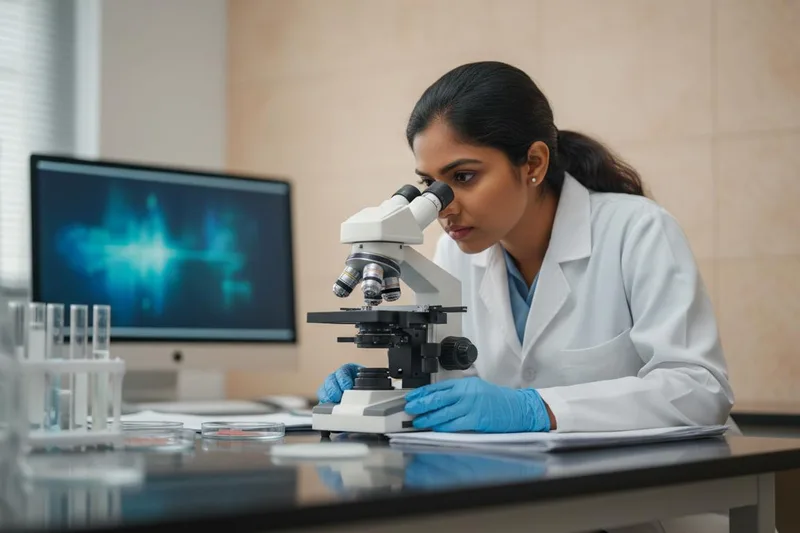
Have you ever received a blood test, a urine test, or a biopsy? Your doctor will explain to you what is wrong with you and what you need to do about it. But have you ever wondered who is preparing this report and analyzing the information in it? That is where the role of the unsung hero of our story, the Pathologist, comes into play.
Simply put, who is this Pathologist?
A pathologist is a medical doctor who is specially trained to study diseases using human body tissues, blood, urine, and other body fluids. They provide the information needed to accurately diagnose, treat, monitor, and predict the future course of a disease. Simply put, pathologists are the ones who provide your doctor with the roadmap that will guide you through your treatment journey.
How do they find this information? Mainly,
- Tissue samples, cells, and fluids taken from the body are examined under a microscope.
- Special machines (analyzers) are used to test the contents of samples such as blood.
They are like detectives. They look for even the smallest clues at the cellular level in our bodies to figure out exactly what the disease is.
What are the different areas of expertise of Pathologists?
Just like other doctors, pathologists specialize in different areas. That means each one is more skilled in one area than the other. Let's look at a few of those key areas.
| Field of expertise | Simply put, what are they doing? |
|---|---|
| Blood banking/transfusion medicine | They are in charge of the blood supply in a hospital. These specialists ensure that blood transfusions are done safely and that blood components, such as plasma, are used properly. |
| Chemical pathology | It studies the body's chemical processes (biochemistry). For example, it helps diagnose diseases by testing things like your blood sugar and cholesterol levels. |
| Cytopathology | We look at the cells of the body to detect diseases. A good example of this is the Pap smear. This field is often essential for detecting cancer. |
| Dermatopathology | Their specialty is diagnosing and monitoring skin diseases. |
| Forensic pathology | They are the ones who investigate sudden, suspicious, and violent deaths. In our country, the people who perform this role are called Forensic Medical Officers (JMOs). |
| Hematopathology | They have expertise in diseases that affect blood cells, blood clotting, bone marrow, and lymph nodes. They diagnose diseases like leukemia. |
| Medical microbiology | It accurately identifies microorganisms such as bacteria and viruses that cause infectious diseases. |
| Molecular genetic pathology | It provides information about the structure, function, and mutations of our genes. This helps in diagnosing and treating some genetic diseases. |
| Neuropathology | Their job is to diagnose diseases that affect the nervous system and muscles. |
| Pediatric pathology | Diagnoses diseases that occur during the fetal, infant, and developmental stages of children. |
| Surgical pathology | During surgery, surgeons examine the tissue they are removing. Think of it like a surgery to remove a cancerous tumor. They can take a piece of the tumor and examine it at that moment, and tell the surgeon whether or not more tissue needs to be removed. |
What is the main role of a pathologist?
A pathologist is a very important member of the healthcare team. They work closely with other doctors, such as oncologists and surgeons. Some of their main tasks include:
- Making a diagnosis: A pathologist's work is essential in diagnosing many diseases, especially many types of cancer . They take a piece of tissue from the body and check it for viruses, bacteria, or cancer cells.
- Recommending treatment options: They can tell you the best antibiotic to give for a bacterial infection, or give you the information you need to decide whether radiation, chemotherapy, or surgery is best for a cancer.
- Monitoring ongoing medical conditions: They help monitor how the disease is spreading in the body by testing blood samples from someone with a blood-borne disease, such as Hepatitis B.
- Providing a prognosis: In some diseases, such as leukemia, the prognosis of the disease can be completely determined by specific changes (mutations) in the genes. A pathologist can look for these changes in tissue samples by examining the genes.
Why don't you meet with a pathologist?
This is a problem that many people have. Unlike other doctors, pathologists do not usually meet patients directly. Although they play a major role in diagnosing diseases, the doctor who referred you for the test will explain it to you. That could be your family doctor, gynecologist, or oncologist. He or she will explain the diagnosis to you based on the pathologist's report.
Some common questions you may also be wondering about
Is a pathologist a doctor?
Yes, absolutely. A pathologist is a medical doctor who has graduated from medical school and then received years of specialized training in the field of pathology.
Where do they work?
Pathologists work in a variety of locations.
- In government and private hospitals
- In university hospitals
- In independent laboratories
- In private offices
How long does it take to become a Pathologist?
It usually takes at least 11 years to become a Pathologist. This includes university education, time spent in medical school, and then at least three years of specialist training. This shows how deep their knowledge and training is.
Take-Home Message
- A pathologist is a medical specialist who has received special training to diagnose diseases by examining your body's tissues, blood, and other fluids.
- Even though you may not meet them directly, a Pathologist is an essential and important member of your healthcare team.
- Your primary care physician will choose the best treatment for you based on the information in the pathologist's report.
- They have undergone years of specialized training and education to do this important job properly, so you can be confident that your report is backed by a team of highly knowledgeable doctors.




💬 Comments (0)
No comments yet. Be the first to share your thoughts here.
Add Your Comment