
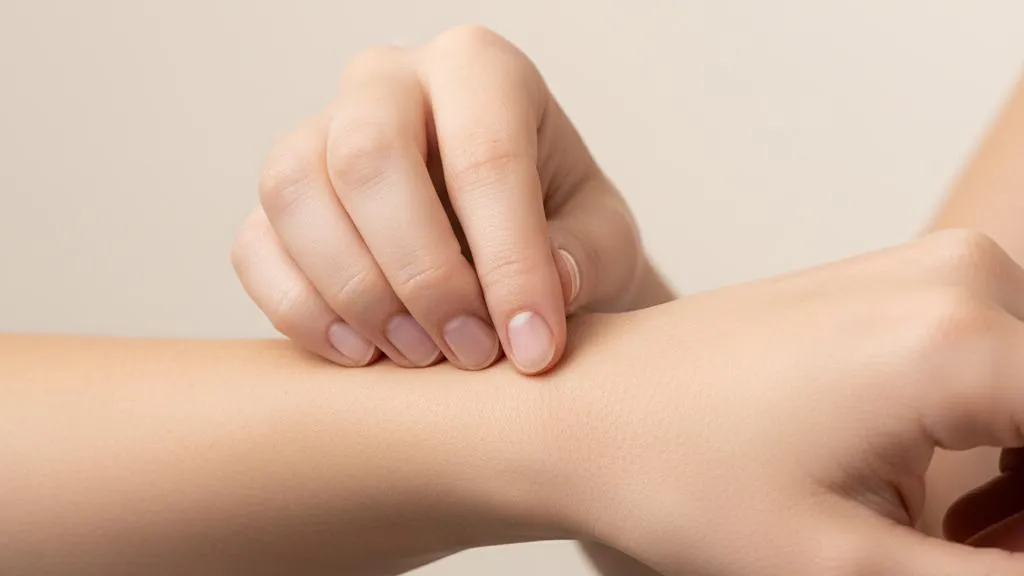
Have you ever pressed two fingers against the inside of your wrist and thought you were feeling a "vein" throbbing under your skin? You are definitely not alone—almost everyone assumes that rhythmic beat comes from a vein because blue veins are so easy to see right next to it! In reality, veins do not have a pulse at all. What you are feeling is actually a major high-pressure blood vessel called your radial artery.
We doctors rely on this single wrist artery every single day, whether we are checking your resting heart rate during a routine visit at your Primary Care Physician (PCP) or family GP clinic, drawing a specialized oxygen sample, or guiding tiny instruments all the way up to your heart. Pretty surprising, right? Let's walk through where this remarkable vessel sits, why it matters so much to your health, and how you can keep it in top shape.
📌 Key Takeaways at a Glance
- What it is: Your radial artery is a major blood vessel running down the thumb side of your forearm that delivers fresh, oxygen-rich blood to your lower arm, wrist, and hand.
- Why you feel a pulse: Because it lies just beneath the skin at your wrist, every heartbeat creates a gentle pressure wave you can easily feel with your fingertips.
- Vital medical gateway: Doctors prefer using the radial artery for heart artery X-ray dye tests (coronary angiograms), intensive care blood pressure monitoring, and kidney dialysis access because it heals quickly with minimal bleeding.
- Built-in backup system: A second vessel—your ulnar artery—runs down the pinky side of your forearm and connects to the radial artery in your palm, providing dual blood supply to your fingers.
- Simple daily protection: Regular brisk exercise, a balanced low-salt diet, and staying completely smoke-free protect your radial artery and entire circulatory system.
What Is the Radial Artery, Simply Put?
Your radial artery is a major blood vessel in your forearm that carries fresh, oxygen-rich blood from your elbow down the thumb side of your wrist into your hand. Unlike veins, which return low-oxygen blood back toward your heart under low pressure, arteries act like high-pressure pipelines delivering fuel and oxygen to working tissues.
Think about it for a second: your city relies on a main underground water network to bring clean, pressurized water to every neighborhood, right? Inside your body, your heart acts as the central pumping station, and your arteries are those main supply pipes. Every time your heart muscle squeezes, it pushes a surge of oxygen-rich blood forward through your arterial network.
Because your radial artery sits right over the flat radius bone near the surface of your wrist, you can actually feel each heartbeat ripple through its elastic wall. We rarely stop to think about that, do we? That simple, steady tap beneath your skin is direct proof that your heart and circulation are actively delivering oxygen to your fingertips.
Where Is the Radial Artery Located in Your Wrist and What Does It Do?
The radial artery begins just below the crease of your elbow, travels straight down the thumb side of your forearm, and crosses the front of your wrist into your palm. At the elbow, your upper arm's main vessel—the brachial artery—splits like a wide river dividing into two parallel branches.
Look at how your forearm's dual blood supply works together:
- The radial artery (thumb side): Runs along the outer edge of your forearm, following the radius bone right down to the fleshy base of your thumb.
- The ulnar artery (little-finger side): Travels down the inner side of your forearm alongside the ulna bone toward your pinky finger.
- The palmar arches (inside your palm): Once both arteries enter your hand, they curve inward and join together like two highways merging into a roundabout, feeding tiny digital arteries to every single finger.
Have you ever wondered why nature designed your hand with two separate main arteries instead of just one? Your hands work constantly—gripping, typing, lifting, and gesturing—which occasionally compresses one side of your wrist. Having both the radial and ulnar arteries ensures your fingers never lose their oxygen supply.
How Do You Find and Check Your Radial Pulse Safely?
To check your radial pulse, turn one palm face up and gently press the tips of your index and middle fingers into the soft groove just below the base of your thumb. You should feel a steady, rhythmic tapping within a few seconds without needing to push hard.
Be honest, you've tried checking your pulse using your thumb at least once, haven't you? We doctors always advise against using your thumb because your thumb actually has its own noticeable pulse, which can trick you into double-counting your heart rate! Follow these quick steps instead:
- Rest your arm comfortably: Sit down for a couple of minutes and place your forearm on a table or your lap with your palm facing upward.
- Position two fingertips: Place the pads of your index and middle fingers on the thumb side of your opposite wrist, right below the wrist crease and next to the firm tendon in the center.
- Apply light pressure: Press gently until you feel the beat—pushing too firmly can squash the artery flat and make the pulse vanish.
- Count for 30 seconds and double it: Count the beats you feel in 30 seconds and multiply by two to get your resting beats per minute (typically 60 to 100 beats per minute for adults).
Makes sense, right? Checking your own radial pulse is a handy skill if you ever feel lightheaded, notice a fluttering sensation in your chest, or want to track your fitness recovery after exercise.
Why Do Doctors Rely on the Radial Artery for Medical Tests and Treatments?
Remember how we talked about the radial artery sitting right near the skin over a solid bone? Because it is so easy to reach safely—and easy to press gently afterward to stop bleeding—we doctors use this wrist vessel for several vital medical procedures.
1. Heart Disease Tests and Treatments (Transradial Access)
When a cardiologist needs to check for narrowed heart vessels using a heart artery X-ray dye test (coronary angiogram) or open a blocked vessel with a tiny balloon and mesh tube (angioplasty), they thread a hair-thin flexible tube called a catheter up to the heart. Years ago, doctors almost always entered through the large femoral artery in the groin. Today, entering through the wrist—known as wrist-entry heart catheterization (transradial access)—is the preferred standard across the United States, United Kingdom, Canada, and Australia.
Look at what happens here when doctors choose your wrist over your groin: bleeding is far easier to control with a simple wristband, the risk of major bruising drops dramatically, and you can sit up and walk around shortly after your procedure instead of lying flat on your back for hours. Now that makes sense, right?
2. Measuring Exact Blood Oxygen Levels (Arterial Blood Gas)
If you arrive at an Urgent Care center or hospital Emergency Room (ER / A&E) with severe shortness of breath, an asthma flare-up, or pneumonia, a standard vein blood draw from the crook of your arm cannot tell us how well your lungs are loading oxygen into your bloodstream. Instead, we take a tiny sample directly from your radial artery—a test called an arterial oxygen blood test (arterial blood gas, or ABG). It gives us exact measurements of oxygen, carbon dioxide, and blood acidity within minutes.
3. Second-by-Second Blood Pressure Tracking (Arterial Cannulation)
During major surgery or inside an Intensive Care Unit (ICU), a standard inflatable arm cuff takes a reading every few minutes, which isn't fast enough for critically ill patients. In those situations, specialists place a tiny, narrow tube inside the radial artery—called a continuous blood pressure monitoring line (arterial cannulation)—connected to a bedside monitor. It displays blood pressure beat by beat and lets nurses draw blood painlessly without repeated needle sticks.
4. Dialysis Access for Kidney Failure (Arteriovenous Fistula)
People living with advanced kidney failure need regular blood-cleaning sessions (hemodialysis) several times a week. Ordinary arm veins are too thin and fragile to handle the high blood flow required by a dialysis machine. To solve this, a vascular surgeon often connects the radial artery directly to a nearby forearm vein, creating a surgical dialysis connection (arteriovenous, or AV, fistula). Over several weeks, the warm, high-pressure arterial blood strengthens and widens the vein so it can safely support life-saving dialysis for years.
Are There Any Medical Conditions That Affect the Radial Artery?
Here is some genuinely reassuring news: compared to larger vessels around your heart or neck, your radial artery is much less likely to develop fatty plaque buildup (atherosclerosis). Because it is smaller and sits farther down the limb, cholesterol plaques rarely block it on their own.
Still, a few specific problems can occasionally involve this vessel:
- Post-procedure vessel narrowing or blockage (radial artery occlusion): After a wrist heart catheterization or arterial line, the inner lining of the artery can occasionally become irritated, swollen, or blocked by a small clot. Fortunately, serious symptoms are rare because your ulnar artery automatically takes over blood delivery to your hand.
- Temporary artery tightening (radial artery spasm): The muscular wall of the radial artery is sensitive and can temporarily clamp down during a blood draw or catheter procedure, causing brief aching in the forearm that settles with warmth and relaxation.
- Wrist trauma or deep cuts: Because the radial artery sits close to the surface, deep accidental cuts from glass, knives, or power tools near the thumb side of the wrist can cause brisk, bright-red bleeding that needs immediate emergency pressure.
Before doctors ever insert a catheter or create a dialysis fistula in your wrist, we routinely check how well your ulnar artery supplies your hand—often using a quick bedside circulation check (the modified Allen test) or a painless ultrasound scan.
Comparing Common Wrist and Radial Artery Symptoms
Wrist aches and hand tingling are super common, and most of the time they come from strained tendons or pinched nerves rather than a blood vessel problem. Use this quick two-column guide to tell everyday musculoskeletal aches apart from circulation issues:
| Symptom or Situation | What It Usually Means & Next Steps |
|---|---|
| Dull thumb-side wrist ache after typing, gaming, or lifting | This typically points to irritated wrist tendons (such as De Quervain's tenosynovitis) rather than your radial artery, especially if your hand remains warm and pink. What you should do: Rest the joint, avoid repetitive thumb strain for a few days, and check in with your Primary Care Physician (PCP) or family GP clinic if soreness lingers beyond a week. |
| Mild bruising or tenderness after a wrist blood test or angiogram | A small purple bruise or mild soreness at the puncture site is common for a few days as the tiny opening in the radial artery seals completely. What you should do: Keep the area clean, avoid heavy lifting with that arm for 48 hours, and follow the discharge instructions given by your hospital team. |
| Pins-and-needles tingling in your thumb, index, and middle fingers | Tingling or numbness in these specific fingers—especially at night—is classically caused by nerve compression at the wrist (carpal tunnel syndrome), not an artery blockage. What you should do: Book a routine appointment at your family GP or PCP clinic for a nerve exam and simple wrist-splint advice. |
| Sudden cold, pale, or painful hand after a recent wrist procedure | If your hand turns noticeably pale, bluish, chilly, or painfully numb after a heart catheterization or arterial line, blood flow through the radial artery may be reduced. What you should do: Contact your cardiology clinic right away or go straight to your nearest Urgent Care center or hospital Emergency Room (ER / A&E) for a prompt circulation check. |
How Can You Keep Your Radial Artery and Circulatory System Healthy?
You do not need expensive supplements or complicated routines to protect your radial artery. Everything that keeps your heart strong automatically keeps the entire arterial highway—right down to your fingertips—flexible, clean, and open.
- Move your body most days of the week: Aim for at least 150 minutes of moderate aerobic activity weekly. Whether you enjoy a brisk walk around your neighborhood, laps at your local swimming pool, or a weekend bike ride, regular movement encourages your blood vessels to stay elastic and responsive.
- Choose heart-smart everyday foods: Fill your plate with colorful vegetables, berries, oats, beans, olive oil, and omega-3-rich fish like salmon or mackerel. Cutting back on heavily salted packaged snacks, takeout meals, and sugary drinks keeps your blood pressure steady and protects delicate artery walls.
- Quit smoking and vaping: Nicotine and tobacco smoke directly irritate the smooth inner lining of your arteries and trigger sudden vessel spasm. Quitting is the single best gift you can give your circulation—ask your doctor about local stop-smoking support programs.
- Keep blood pressure and cholesterol in check: High blood pressure silently strains artery walls over time. Routine checkups at your PCP or family GP clinic help catch silent elevations early before they cause damage.
✔️ What You Should Do & ❌ What to Avoid
- ✔️ Do use your index and middle fingers when checking your radial pulse on the thumb side of your wrist.
- ✔️ Do follow lifting restrictions for 24 to 48 hours after any wrist angiogram or arterial blood draw so the vessel heals cleanly.
- ✔️ Do wear protective gloves when handling sharp kitchen tools, glass, or workshop equipment to shield superficial wrist vessels.
- ❌ Don't use your thumb to check a pulse, because your thumb's own heartbeat can confuse your count.
- ❌ Don't ignore a cold, pale, or rapidly swelling wrist after a hospital procedure—early evaluation prevents lasting complications.
- ❌ Don't smoke or use nicotine products, which constrict forearm arteries and accelerate blood vessel wear.
When Should You See a Doctor About Wrist or Radial Artery Symptoms?
Most wrist aches have nothing to do with your radial artery and settle smoothly with rest. However, you should schedule a visit with your Primary Care Physician (PCP) or family GP clinic if you notice a persistent lump or throbbing bump at the wrist, ongoing forearm cramping whenever you use your hand, or lingering soreness more than a week after a hospital blood draw.
If you recently had a heart catheterization or arterial line and develop mild increasing redness, warmth, or tenderness around the dressing, a same-day check at your local Urgent Care center or outpatient clinic is a smart, safe step.
🚨 When to Seek Immediate Emergency Care (Red-Flag Symptoms)
If you or someone near you develops any of these red-flag symptoms, do not wait — call 911 (or 999 in the UK / 000 in Australia) immediately or go straight to the nearest hospital Emergency Room (ER / A&E):
- Spurting or heavy bleeding from the wrist: Bright-red blood pulsing from a cut or a recent catheter site that does not stop after 10 minutes of firm, direct pressure.
- A suddenly cold, pale, or bluish hand: Especially if accompanied by severe hand pain, new weakness, or inability to move your fingers after a wrist procedure.
- Rapidly expanding, firm swelling at the wrist: A tight, growing lump near the pulse point that could signal trapped blood under pressure (hematoma or pseudoaneurysm).
- Chest pain, shortness of breath, or dizziness: Any sudden heart-related warning signs alongside an unusually fast, slow, or irregular wrist pulse.
💡 Key Take-Home Message
- Your radial artery is a vital lifeline: It runs down the thumb side of your forearm, bringing oxygen-rich blood to your hand and giving you an easy spot to feel your pulse.
- Modern medicine relies on it: Doctors favor the radial artery for heart angiograms, ICU blood pressure monitoring, oxygen blood tests, and dialysis access because it is safe and heals fast.
- You have double protection: Your ulnar artery runs alongside it on the pinky side, ensuring continuous blood flow to your fingers even if the radial artery is ever blocked.
- Healthy habits keep it strong: Regular movement, heart-friendly meals, and staying tobacco-free protect every artery in your body.





No comments yet. Be the first to share your question or experience below.