

We all know that our body's vital organs, such as the heart, lungs, liver, and stomach, are arranged in a certain way. Normally, these organs are arranged on the same sides, in the same pattern, as in everyone else. But have you ever thought that, very rarely, a person's organs can be completely turned upside down, like a mirror image? Today we are going to talk about such an unusual, but most of the time harmless, condition. This is called (Situs Inversus) in medical science.
What is this (Situs Inversus)? Let's understand it simply.
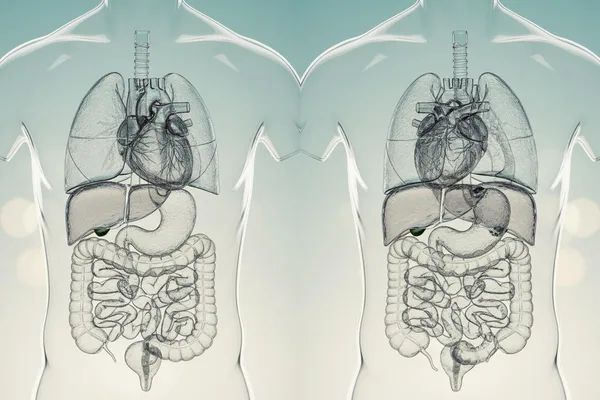
Simply put, Situs Inversus is a rare genetic condition in which the organs in your chest and abdomen are positioned opposite each other, like a mirror image, rather than in the normal human body.
Let's look at how our organs are normally located. Almost every organ in our body develops in a left-right configuration. We call this normal position (Situs Solitus) . For example, the tip of the heart is tilted to the left, the liver to the right, the stomach and spleen to the left.
However, this is completely the opposite for someone with (Situs Inversus) . That is:
- The left atrium of the heart and the left lung can be located on the right side of the chest.
- If you look at the abdomen, the liver and gallbladder may be on the left side instead of the right.
- The stomach and spleen may be on the right side instead of the left.
When the entire organ is turned in this way, it is called (Situs Inversus Totalis) . This can occur alone without any other complications. However, sometimes this condition is seen with other birth defects or with a certain combination of symptoms (syndrome). (Situs Inversus) is most common among people with a condition called (Primary Ciliary Dyskinesia) . Also, about 5% to 10% of people with (Situs Inversus) may have congenital heart defects (Congenital Heart Defect) .
What are the main types of Situs Inversus?
There are two main types of Situs Inversus . They are:
1. Dextrocardia with Situs Inversus: This is when the apex of your heart is facing the right side of your chest. The rest of your organs are also facing the other way.
2. Levocardia with Situs Inversus: In this type, the apex of the heart is normally directed to the left. However, the other organs in the abdomen are turned to the other side. This type is a little rarer, and it is more likely to be accompanied by other heart diseases.
Apart from this, if there is any other abnormality in the development of organs to the left or right, it is called (Situs Ambiguous) . In this case, although some organs are positioned abnormally, it does not happen according to a clear pattern. That is, the organs may be positioned in a slightly chaotic manner in places.
How common is this condition (Situs Inversus)?
Situs Inversus is not a very common condition. It is reported to affect about one in 10,000 people. Also, this condition is slightly more common in men than in women.
How does this (Situs Inversus) occur?
The main cause of Situs Inversus is a change in the genes, which is called a genetic mutation . There are several types of genes that help our body's organs to be positioned on the correct sides. Situs Inversus is caused by a mutation in one or more of these genes. Scientists have so far identified more than 100 genes that can cause defects in determining the sides of the body. For example, genes like `(ANKS3)`, `(NODAL)`, `(DNAH9)` can be named.
This condition is inherited in an autosomal recessive pattern . This means that for a child to have this condition, both parents must inherit the mutated gene. Simply put, both parents must be carriers of this gene, but they may not have the condition (Situs Inversus) .
Why does Situs Inversus occur? What are the risk factors?
Although the exact cause of Situs Inversus is genetic, there are certain risk factors that may contribute to it. These are:
- Having a family history of (biologically related) congenital heart disease.
- Having a family history of (biologically related) noncardiac anomalies.
- The mother has diabetes mellitus .
- Using certain cough suppressants during pregnancy.
- Using tobacco products (e.g. cigarettes) during pregnancy.
- Having a low socioeconomic level.
What are the symptoms of Situs Inversus?
It's amazing how many people with Situs Inversus don't have any symptoms! Yes, even if your organs are turned in the wrong direction, if they're functioning properly, you can go your whole life without feeling any difference or complications. You may not even know you have this condition.
However, if you have another disease or condition along with Situs Inversus , symptoms related to that disease may occur. For example:
- If you have cardiac defects , you may experience heart-related problems (such as difficulty breathing, chest pain).
- If you have a condition called Primary Ciliary Dyskinesia , mucus can build up in the lungs, leading to chronic bronchitis ( a persistent cough, phlegm) and sinusitis ( a sinus infection).
Primary Ciliary Dyskinesia is simply a condition where the fine hair-like structures (cilia) in our airways do not function properly. Their job is to push things like mucus up and out of the lungs. When these don't work, mucus builds up and causes infections.
How is Situs Inversus diagnosed?
Often, your doctor will diagnose Situs Inversus by accident when you are being treated for another condition.
Sometimes, when your doctor listens to your heart (with a stethoscope), he or she may be suspicious of this condition. A normal person's heartbeat is most clearly heard on the left side of the chest, near the lowest point of the heart. But if you have dextrocardia (heart turned to the right side ) with Situs Inversus , the heartbeat is most clearly heard on the right side of the chest.
Doctors use various imaging tests to confirm the diagnosis and determine exactly which organs are affected. These include:
- X-ray examination (X-ray)
- Ultrasound scan
- CT scan (Computed Tomography - CT scan)
- MRI scan (Magnetic Resonance Imaging - MRI scan)
These tests can clearly see how the organs are positioned.
How is Situs Inversus treated?
Since most people don't even know they have Situs Inversus , and it doesn't cause any symptoms or complications, it doesn't require any specific treatment. Even if your organs are on the wrong side, if they're working properly, you won't need surgery to turn them back to the right side.
However, if you have another disease or disorder associated with this condition, your doctor will treat those symptoms.
This is very important: If you know you have Situs Inversus , it is imperative that you inform all of your doctors.
Think about it this way. Appendicitis usually causes pain in the lower right side of your abdomen. But if your appendix is on the other side, you may experience pain in the lower left side of your abdomen. If your doctor is not aware of your Situs Inversus condition, he or she may assume that the pain on your left side is not appendicitis, and may delay emergency treatment. This can be a big problem.
Therefore, if you develop any illness in the future, this information is very important for doctors to make an accurate diagnosis. Also, it is essential that every doctor is aware of your condition before performing any surgery or other medical procedure. When performing surgery on someone with (Situs Inversus) , surgeons may have to take longer or plan differently.
Can Situs Inversus be prevented?
Situs Inversus is caused by a rare genetic mutation. Therefore, there is currently nothing we can do to prevent this condition from occurring.
What is the life expectancy of someone with (Situs Inversus)?
Most people with Situs Inversus can expect to live a normal life. You may not even know you have the condition, and you may live without any symptoms or complications. However, if your condition is associated with another health problem or defect, your prognosis will depend on the underlying condition and its treatment.
Can people with Situs Inversus get pregnant?
Yes, women with Situs Inversus can get pregnant normally and complete their pregnancy without any special incidents. This condition does not interfere with pregnancy.
What questions should I ask my doctor?
When you find out you have Situs Inversus , you may have many questions. That's normal. You can ask your doctor questions like:
- "Why did my body parts turn this way?"
- "Do I have Situs Inversus Totalis or Situs Inversus Ambiguous ?"
- "Is my condition (Situs Inversus) related to another disease or defect?"
- "Do I need any special treatment for this?"
- "What should I be especially careful about in the future?"
Finally, what to remember (Take-Home Message)
So, (Situs Inversus) is a rare genetic condition in which the organs in our body, located in the chest and abdomen, are positioned in the opposite direction from their normal position, like a mirror image. When you hear this, you may feel a little scared, "Oh, my organs are not where they should be?" But, in most cases, this does not cause any harm.
You may not have any symptoms, and your organs may function normally. Sometimes this condition can be associated with other health complications. If so, your doctor will treat that condition. However, no specific treatment is usually needed for the condition itself, called Situs Inversus .
The most important thing is to let all your doctors and healthcare providers know that you have Situs Inversus. This information can be essential for accurate diagnosis and safe treatment.
Therefore, it is important to be aware of this. If you have any further questions about this, don't hesitate to talk to your doctor.
` Situs Inversus, Situs Inversus, Organs on the other side, Genetic diseases, Heart on the right, Dextrocardia, Levocardia, Primary Ciliary Dyskinesia, Congenital heart diseases




💬 Comments (0)
No comments yet. Be the first to share your thoughts here.
Add Your Comment