Explore Health Topics
Heart Health Diabetes Women's Health Pregnancy Digestive Health Mental Health
Medical Guides → • Calculators →
✓ Medically reviewed by Dr. Priya Sammani (MBBS, PG Dip. FM) | Age — · M/F · BMI —
88%
🩺 Kidney & Urinary

Dealing with an annoying, itchy skin rash that just will not go away? Let us talk about sulconazole cream!

Dr. Priya Sammani (MBBS)

Medically reviewed by Dr. Priya Sammani (MBBS) — Updated on Oct 20, 2026 · 3 min read

Dealing with an annoying, itchy skin rash that just will not go away? Let us talk about sulconazole cream!

Have you noticed red, itchy, or peeling patches on your skin that seem to get worse with the weather? Skin fungal infections are quite common in our warm, humid climate, and they can cause a great deal of daily discomfort. Fortunately, effective treatments like sulconazole topical cream are available to help clear up these stubborn skin irritations and bring your skin back to normal.

If your doctor has prescribed this antifungal medicine, you likely have questions about how to use it safely and effectively. This complete guide will walk you through everything you need to know about sulconazole cream, from proper daily application to important precautions, possible side effects, and practical hygiene tips to prevent future infections.

⚡ Interactive Clinical Tool
🫘
Renal function (eGFR)

Measure kidney function based on creatinine value

Open Interactive Calculator →
❓ FAQ

Frequently Asked Medical Questions (FAQ)

Evidence-based clinical answers to common patient questions

How long does it take for sulconazole cream to work?

Most people notice an improvement in itching and redness within the first week of treatment. However, you must continue using the cream for the full duration prescribed by your doctor, which is typically two to four weeks, to ensure the fungal infection is completely cured.

Can I use sulconazole cream on my face?

You should only use sulconazole cream on your face if your doctor explicitly prescribes it for a facial fungal infection. The skin on your face is delicate, and you must be extremely careful to keep the product away from your eyes, nose, and mouth.

Is it safe to share my sulconazole cream with family members?

No, you should never share your prescription medicine with anyone else, even if they have similar symptoms. Fungal skin conditions can look alike but require different medical evaluations and specific treatments recommended by a qualified doctor.

What should I do if my skin gets very red and irritated after applying the cream?

Mild stinging or warmth is normal when starting treatment, but if you experience severe redness, burning, swelling, or signs of an allergic rash, stop using the cream right away and contact your doctor for guidance.

Can I apply makeup or moisturizer over sulconazole cream?

It is best to avoid applying cosmetics, lotions, or other skincare products directly over the treated area unless your doctor approves. Additional products can trap moisture, alter medicine absorption, or irritate healing skin.

📚

Verified Scientific & Medical References (PubMed / WHO)

✓ Peer-Reviewed Sources
  1. Sulconazole is a prescription antifungal medicine used to treat common skin fungal and yeast infections.
  2. Always apply a thin layer to clean, dry skin as directed by your doctor, and finish the full course of treatment.
  3. Wash your hands thoroughly before and after applying the cream to prevent spreading the infection.
  4. Wear loose, breathable cotton clothing and keep prone areas dry to support healing and prevent reinfection.
  5. Contact your doctor right away if you notice severe irritation, a rash, or if your symptoms do not improve after four to six weeks.
  6. Allergic Reactions: Inform your doctor if you have ever had an allergic reaction to sulconazole, other antifungal medicines, dyes, preservatives, or specific foods.
  7. Pregnancy: Tell your doctor if you are pregnant, planning to become pregnant, or suspect you might be pregnant.
  8. Breastfeeding: Let your doctor know if you are currently breastfeeding your baby or planning to nurse.
  9. External Use Only: This cream is formulated strictly for application on the skin. Never swallow it or apply it inside your mouth, nose, or eyes.
  10. Follow Instructions: Always follow the specific directions listed on your prescription label or provided directly by your doctor or pharmacist.
  11. Wash Your Hands: Wash your hands thoroughly with soap and water before and after applying the cream. If you are treating an infection on your hands, wash them before application only, and avoid touching other areas.
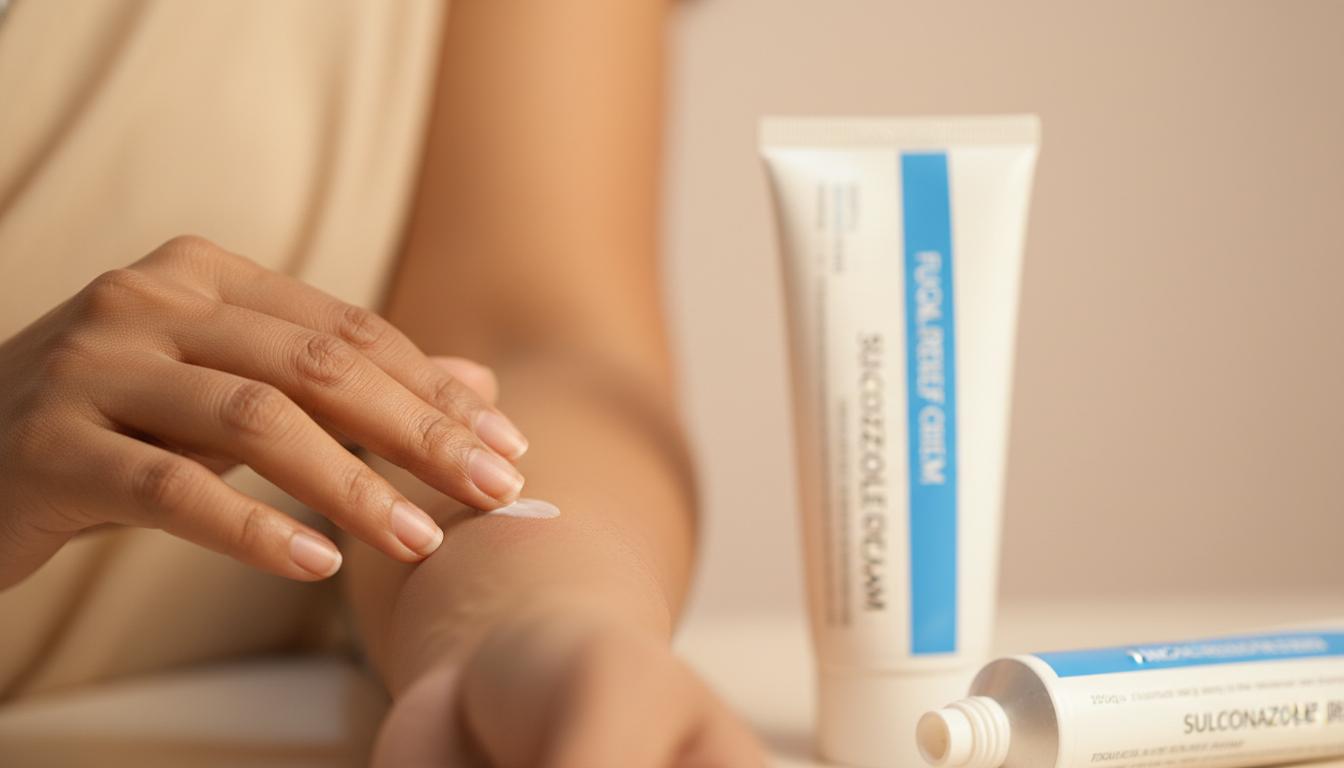
  12. Application Technique: Apply a thin layer of cream directly to the affected skin area and a small margin of healthy skin surrounding it. Gently rub the cream into the skin using clean fingers. Do not scrub harshly.
  13. Protect Your Eyes: Keep the cream away from your eyes. If accidental contact occurs, flush your eyes right away with cool tap water and call your doctor if irritation persists.
  14. Stick to the Schedule: Apply the medicine at regular intervals as prescribed by your doctor. Do not apply extra cream or use it more often than instructed, as this will not speed up healing.
  15. Complete the Full Course: Even if your skin starts to look and feel better within a few days, you must use the medicine for the full prescribed time. Stopping early allows surviving fungi to multiply and cause a relapse.
  16. Signs of a severe allergic reaction, such as swelling of the face, lips, tongue, or throat.
  17. Sudden breathing difficulties, wheezing, or tightness in your chest.
  18. Widespread, blistering hives or severe skin burning across large areas of your body.
  19. Persistent Symptoms: If your skin shows no signs of improvement after four to six weeks of consistent treatment, contact your doctor to re-evaluate your condition.
  20. For Groin Infections (Jock Itch): Dry your groin area completely after bathing or swimming. Avoid tight-fitting undergarments and synthetic fabrics like nylon or rayon that trap sweat. Wear loose-fitting, breathable cotton underwear.
  21. For Foot Infections (Athlete's Foot): Dry between your toes thoroughly after every bath or shower. Avoid wool, nylon, or rayon socks. Wear clean cotton socks and change them at least once daily, or more often if your feet sweat heavily. Choose well-ventilated shoes or sandals.
  22. Allergic Skin Rash: The development of hives, widespread redness, or blistering at the application site that worsens over time.
  23. Mild skin irritation, a temporary burning sensation, stinging, itching, or redness where you applied the cream.
  24. Childproof Storage: Keep the cream tube securely out of sight and reach of young children and pets.
  25. Temperature Control: Store the medicine at room temperature, safely below 40 degrees Celsius (104 degrees Fahrenheit), away from excessive heat and direct sunlight.
  26. Seal Tightly: Ensure the cap is closed tightly after every use to prevent contamination and drying out.
  27. Check Expiration Dates: Never use creams past their printed expiration date. Safely discard expired tubes through local pharmacy take-back programs.
  28. Cleveland Clinic. Antifungal Topical medicines: Overview and Usage Guidelines.
  29. Mayo Clinic. Fungal Skin Infections: Diagnosis and Treatment Options.
  30. National Health Service (NHS). Fungal Skin Infections and Self-Care Advice.
  31. Centers for Disease Control and Prevention (CDC). Fungal Diseases Overview and Prevention.
  32. National Institutes of Health (NIH) / MedlinePlus. Sulconazole Topical Drug Information and Safety Guidelines.
🔍 Search Keywords: sulconazole topical cream • sulconazole topical cream symptoms • sulconazole topical cream causes and treatment • sulconazole topical cream sri lanka • Dealing with an annoying, itchy skin rash that just will not go away? Let us talk about sulconazole cream!
🩺 Articles For You
Are Small Red Bumps on Your Face Driving You Crazy? Here is Everything You Need to Know About Acne Papules
Are you feeling down because of acne scars? Let's find out for sure!
Are you tired of constant sneezing, itchy eyes, and skin rashes that never seem to go away?
Is your little one constantly scratching dry, red patches? Here is how to soothe baby eczema for good.
Are stubborn back breakouts making you uncomfortable? Here is how to finally clear your skin!
What Is a Blood-Filled Pimple and Why You Should Never Pop It
💬 Patient Questions & Comments (0)

Have a question or experience to share? Post a comment or reply to other readers below.

🛡️ Plain Text Only • No Links
👤

No comments yet. Be the first to share your question or experience below.

⚠️ Important: Medical articles and information on Nirogi Lanka are strictly for educational and awareness purposes and do not substitute professional medical advice, diagnosis, or treatment. Always consult a qualified physician for any medical concerns.