The Selfish Gene: A Journey Through Evolution's Most Amazing Concept

The Selfish Gene: A Journey Through Evolution's Most Amazing Concept

Friends, have you ever wondered why life is so full of diversity? But isn't it all connected? It's like we're all part of one big family.

So, what if evolution isn't about you or me, but something much smaller? And what if it's immortal?

The concept we're going to talk about today is "The Selfish Gene." It's a fascinating idea that will change the way we view life and evolution.

Okay, let's look into it!

What are genes?

Genes are the blueprint of life, our program. They are very small. But inside them are all the instructions needed to build, reproduce , and maintain an organism. Genes determine everything from the color of your eyes to how you protect yourself from disease . Genes may seem like inanimate objects, but they are not. They continue to live.

Immortal genes

We all die someday. But genes don't. They are passed down from generation to generation. Some genes live for millions of years. Just like we get genes from our grandparents. The reason for that is natural selection for the good genes. That means the genes that are good at surviving and reproducing survive. The others die out.

The machines that genes need

Imagine you are a highly advanced vehicle. That vehicle is designed to carry your genes. According to the theory of the “selfish gene,” we are not people trying to survive. We are like machines that are driven by our genes.

  • Why do you eat? To live and to give energy to your genes.
  • Why do animals take care of their young? To pass on their genes to the next generation.
  • Why do peacocks have beautiful feathers? To attract a mate and pass on genes to the next generation.

And some animals even risk their lives to protect their young. It's like passing those genes on to the next generation. Just like you protect your phone.

The race of evolution

Now let's think deeply. Life is not just about genes living alone. It's like a big drama. There's cooperation, competition, all that.

Cheetah and deer

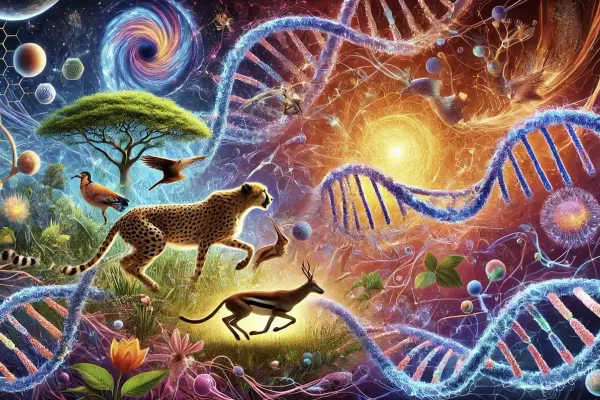
Think about a cheetah and a deer.

  • The Cheetah's genes give it sharp claws and speed.
  • The deer's genes give it fast reactions and the ability to run.

The competition between these two makes them both evolve. A faster cheetah can catch a deer. But a faster deer can escape. It's like you're running a race with a friend.

Plants and animals

Plants also produce toxins to protect themselves from animals. Animals find ways to eliminate those toxins.

Support

And genes also survive through cooperation. Like bees collecting pollen from flowers. Because bees pollinate, the bees help pass on the genes of the trees to the next generation. And there is also competition between parasites and hosts. It's like when you have a fight with your brother and sister at home.

Genes: Nature's Time Capsule

Some genes are so powerful that they haven't changed in millions of years. They're like nature's time capsules.

Hox genes

Take Hox genes, for example. They determine the body shape of animals. And there are genes that help with vision. Those genes are present in everything from bacteria to humans. That shows how important those genes are.

The selfish gene and everyday life

The “selfish gene” is not just a theory for scientists. It can also explain a lot about our everyday lives.

Love and relationships

For example, why do we seek romantic relationships? The reason is to have children. (In a girls' school, boys from some boys' schools come to town right after school and fight for a girl.) It's like birds dancing beautifully. It's like animals fighting for their mates . It's like a frog screaming loudly in the middle of the night.

Parental love

And why do parents love their children so much? The reason is that those children carry their genes. Protecting those genes is like protecting your phone.

A new perspective on evolution

We think of evolution as a competition between organisms. But according to the theory of the "selfish gene," evolution is a competition between genes. That means it's not us who are important, it's our genes who are important.

Natural Selection

We are all a collection of genes. That collection of genes changes from generation to generation. Some gene sets survive well. Others don't. Over time, the genes that survive well become more numerous. That's called natural selection.

The future of genetics

We can do a lot by understanding the "selfish gene."

Medicines

When we understand genes better, we can develop new medicines and treat genetic diseases .

Long life

Will genetic immortality allow us to live longer? Although it has not yet been discovered, scientists believe that it may be possible in the future.

Genetic engineering

With technology like CRISPR, we can edit genes. That could eliminate genetic diseases, enhance human abilities, and even stop aging! Imagine a world like that!

The wonderful journey of life

The story of the "selfish gene" is a story about competition, cooperation, and survival. It's a story that's been written over billions of years. That story has shaped every living thing.

So, the next time you look in the mirror, remember that you are not just one living being. Inside you are a multitude of immortal genes that have been passed down from generation to generation for billions of years. Those genes are what made you who you are.

We all appreciate the wonder of evolution. Because it is what made us. Understanding our genes is like understanding ourselves.

⚠️ Important: The medical articles and information on Nirogi Lanka are for general awareness only, and are by no means a substitute for professional medical advice, diagnosis, or treatment. For any medical problem you have, consult a qualified physician immediately.

💬 Comments (0)

No comments yet. Be the first to share your thoughts here.

Add Your Comment

Please calculate: 7 + 4 =
The Selfish Gene: A Journey Through Evolution's Most Amazing Concept
Physical FitnessNovember 20, 2024

The Selfish Gene: A Journey Through Evolution's Most Amazing Concept

Friends, have you ever wondered why life is so full of diversity? But isn't it all connected? It's like we're all part of one big family.

So, what if evolution isn't about you or me, but something much smaller? And what if it's immortal?

The concept we're going to talk about today is "The Selfish Gene." It's a fascinating idea that will change the way we view life and evolution.

Okay, let's look into it!

What are genes?

Genes are the blueprint of life, our program. They are very small. But inside them are all the instructions needed to build, reproduce , and maintain an organism. Genes determine everything from the color of your eyes to how you protect yourself from disease . Genes may seem like inanimate objects, but they are not. They continue to live.

Immortal genes

We all die someday. But genes don't. They are passed down from generation to generation. Some genes live for millions of years. Just like we get genes from our grandparents. The reason for that is natural selection for the good genes. That means the genes that are good at surviving and reproducing survive. The others die out.

The machines that genes need

Imagine you are a highly advanced vehicle. That vehicle is designed to carry your genes. According to the theory of the “selfish gene,” we are not people trying to survive. We are like machines that are driven by our genes.

  • Why do you eat? To live and to give energy to your genes.
  • Why do animals take care of their young? To pass on their genes to the next generation.
  • Why do peacocks have beautiful feathers? To attract a mate and pass on genes to the next generation.

And some animals even risk their lives to protect their young. It's like passing those genes on to the next generation. Just like you protect your phone.

The race of evolution

Now let's think deeply. Life is not just about genes living alone. It's like a big drama. There's cooperation, competition, all that.

Cheetah and deer

Think about a cheetah and a deer.

  • The Cheetah's genes give it sharp claws and speed.
  • The deer's genes give it fast reactions and the ability to run.

The competition between these two makes them both evolve. A faster cheetah can catch a deer. But a faster deer can escape. It's like you're running a race with a friend.

Plants and animals

Plants also produce toxins to protect themselves from animals. Animals find ways to eliminate those toxins.

Support

And genes also survive through cooperation. Like bees collecting pollen from flowers. Because bees pollinate, the bees help pass on the genes of the trees to the next generation. And there is also competition between parasites and hosts. It's like when you have a fight with your brother and sister at home.

Genes: Nature's Time Capsule

Some genes are so powerful that they haven't changed in millions of years. They're like nature's time capsules.

Hox genes

Take Hox genes, for example. They determine the body shape of animals. And there are genes that help with vision. Those genes are present in everything from bacteria to humans. That shows how important those genes are.

The selfish gene and everyday life

The “selfish gene” is not just a theory for scientists. It can also explain a lot about our everyday lives.

Love and relationships

For example, why do we seek romantic relationships? The reason is to have children. (In a girls' school, boys from some boys' schools come to town right after school and fight for a girl.) It's like birds dancing beautifully. It's like animals fighting for their mates . It's like a frog screaming loudly in the middle of the night.

Parental love

And why do parents love their children so much? The reason is that those children carry their genes. Protecting those genes is like protecting your phone.

A new perspective on evolution

We think of evolution as a competition between organisms. But according to the theory of the "selfish gene," evolution is a competition between genes. That means it's not us who are important, it's our genes who are important.

Natural Selection

We are all a collection of genes. That collection of genes changes from generation to generation. Some gene sets survive well. Others don't. Over time, the genes that survive well become more numerous. That's called natural selection.

The future of genetics

We can do a lot by understanding the "selfish gene."

Medicines

When we understand genes better, we can develop new medicines and treat genetic diseases .

Long life

Will genetic immortality allow us to live longer? Although it has not yet been discovered, scientists believe that it may be possible in the future.

Genetic engineering

With technology like CRISPR, we can edit genes. That could eliminate genetic diseases, enhance human abilities, and even stop aging! Imagine a world like that!

The wonderful journey of life

The story of the "selfish gene" is a story about competition, cooperation, and survival. It's a story that's been written over billions of years. That story has shaped every living thing.

So, the next time you look in the mirror, remember that you are not just one living being. Inside you are a multitude of immortal genes that have been passed down from generation to generation for billions of years. Those genes are what made you who you are.

We all appreciate the wonder of evolution. Because it is what made us. Understanding our genes is like understanding ourselves.

⚠️ Important: The medical articles and information on Nirogi Lanka are for general awareness only, and are by no means a substitute for professional medical advice, diagnosis, or treatment. For any medical problem you have, consult a qualified physician immediately.

💬 Comments (0)

No comments yet. Be the first to share your thoughts here.

Add Your Comment

Please calculate: 7 + 4 =