
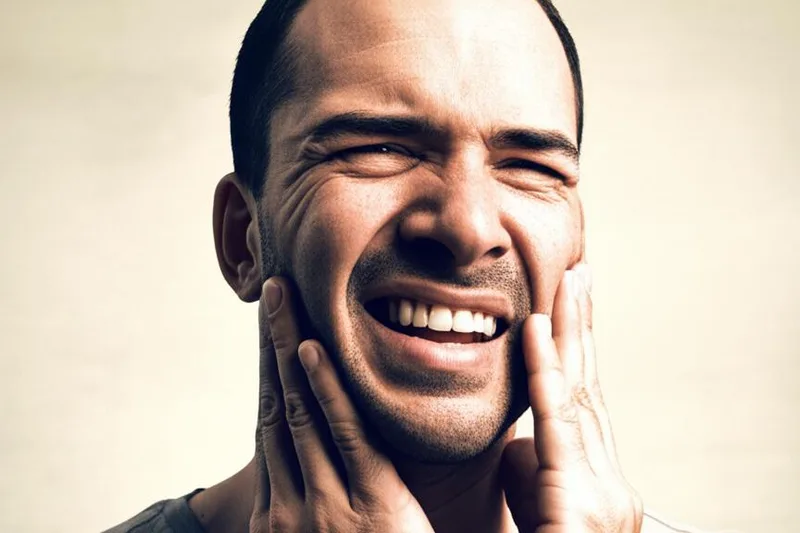
Have you ever had an unbearable pain on one side of your face when you brush your teeth, shave, or just touch your face? For some, this can be triggered by a gust of wind or a splash of water. There are times when this severe pain makes it impossible to do even daily tasks. Although many people think this is a toothache, the cause of this may be a problem with a special nerve that runs from our brain to our face. Today, we will talk about what this trigeminal nerve is, what causes it, and why this kind of pain occurs.
What is the Trigeminal Nerve?
Simply put, the trigeminal nerve is the fifth of the 12 main pairs of nerves that come out of our brain. It's also called "cranial nerve number 5." It's called a pair because we have two, one on the right side of our face and one on the left. Just like our two eyes and two ears.
The main function of this nerve is to carry all the sensations from your face, scalp, and inside your mouth, such as touch, pain, heat, and cold, to the brain. That means, if someone touches your cheek, you feel it because this nerve carries that message to the brain.
After this main nerve leaves the brain, it divides into three main branches, like branches from a tree trunk. The word "tri" means "three." So the three branches are:
| Nerve Branch | Area covered and function |
|---|---|
| 1. Ophthalmic Nerve | This carries sensations from your forehead, the front of your skull, your upper eyelid, and the area around your eye to your brain. This is a completely sensory nerve. |
| 2. Maxillary Nerve | This carries sensation to the middle part of the face, which includes the cheeks, nose, lower eyelid, upper lip, and upper gums. It also controls sensation to the palate, upper teeth, and sinuses inside the mouth. |
| 3. Mandibular Nerve | This one is a bit special. Because it has both a sensory part and a muscle-controlling (motor) part. The sensory part carries sensations from the lower jaw, lower lip, lower gums, and the front of the tongue (except for taste) to the brain. The motor part controls the main muscles involved in chewing food, clenching teeth, and swallowing. |
How do you know if there is a problem with this nerve?
If the trigeminal nerve is damaged, pressured, or otherwise affected, we may experience a number of symptoms .
Changes in sensations
Because this is the main sensory nerve in the face, when a problem occurs, abnormalities in sensation occur.
- Hyperesthesia: Some areas of the face become hypersensitive for no apparent reason. Even just touching or blowing wind can cause unbearable pain and burning.
- Anesthesia: Some areas of the face become numb, like being anesthetized for a tooth extraction.
- Jaw position loss: You can feel whether your mouth is open or closed, even when you're not in front of a mirror. If this nerve is damaged, you may lose that sensation.
Difficulty chewing food
If the motor part of this nerve is damaged, the muscles used to chew food may become weak.
- It becomes difficult to chew food .
- It becomes difficult to chew with your teeth.
- When you open your mouth, your jaw drops to one side.
If you have one or more of these symptoms, don't ignore them and see a doctor as soon as possible. He or she will examine you and help you find the exact cause.
When your doctor examines you, he or she will gently touch different areas of your face with a cotton swab or a small pin and ask you how you feel. They may also hold a cotton swab close to your eye to check for blinking (corneal reflex). This reflex is controlled by this nerve, so if it is not working, you may suspect a problem with the nerve.
Conditions affecting the trigeminal nerve
Trigeminal Neuralgia
This is the most common and severe pain associated with this nerve. Imagine Mr. Nimal getting ready to shave in the morning. As soon as he puts the razor to his cheek, he feels an unbearable pain for a few seconds, like an electric shock . He can't even talk or eat. This pain can last from a few seconds to about two minutes. Then it disappears completely. But this kind of pain can come in waves several times a day.
- Triggers: There are many things that can trigger this pain. Simple things like brushing your teeth, washing your face, shaving , talking, chewing food, laughing, or even a gust of wind on your face can start this pain.
- Causes: Most often, this is caused by a blood vessel that runs close to the nerve where it exits the brain. This disrupts the nerve's signaling system, and even a simple touch is transmitted to the brain as severe pain. In addition, diseases of the nervous system (such as `Multiple Sclerosis`) and brain tumors can also have a minor effect. Sometimes, no cause can be found.
- Tests and Treatment: After your doctor has thoroughly examined your symptoms, he or she may order an MRI or CT scan to determine the cause. Treatment may include prescription medications to help control the pain.
Trigeminal nerve injury
There is a small chance that the mandibular nerve may be damaged when a tooth is extracted, especially the last tooth in the lower jaw. This nerve can also be damaged during accidents, surgeries, and dental implants. Minor damage can cause pain, and if the nerve is severed, the area can become completely numb. If your lower lip is still tingling hours after a tooth is extracted, see your doctor or dentist immediately. The best time to treat damage is when it first occurs.
What can we do to keep this nerve healthy?
While there are no specific exercises or diets for the trigeminal nerve, there are a few things we can do to keep our entire nervous system healthy and strong. These things indirectly help the health of this nerve as well.
- A balanced diet: Foods rich in vitamins, especially B vitamins, are very good for the nervous system. Include vegetables, fruits, legumes, and grains in your daily diet.
- An active lifestyle: Daily exercise improves blood circulation in the body, which means that the nerves receive the oxygen and nutrients they need.
- Reduce stress: Excessive stress is harmful to the nervous system. Manage stress through things like meditation, yoga, and engaging in a hobby of your choice.
- Avoid smoking and drugs: These are things that directly damage nerve cells.
- Adequate sleep: A good night's sleep helps the body and nervous system recover.
- Chronic disease management: If you have diseases like diabetes and high blood pressure, it is very important to control them properly, as these diseases can damage the nerves over time.
Take-Home Message
- The trigeminal nerve is a very important nerve that carries sensations from your face and head to the brain and helps you chew food.
- A sudden, sharp, severe pain on one side of the face, similar to an electric shock, is a key symptom of trigeminal neuralgia.
- This pain can be caused by simple things like brushing your teeth, talking, or even catching a breath.
- If you experience symptoms such as facial numbness, loss of sensation, or difficulty chewing food, do not ignore it and see a doctor immediately.
- Following a healthy lifestyle and controlling diseases such as diabetes and high blood pressure are important for the health of the entire nervous system.


💬 Comments (0)
No comments yet. Be the first to share your thoughts here.
Add Your Comment