
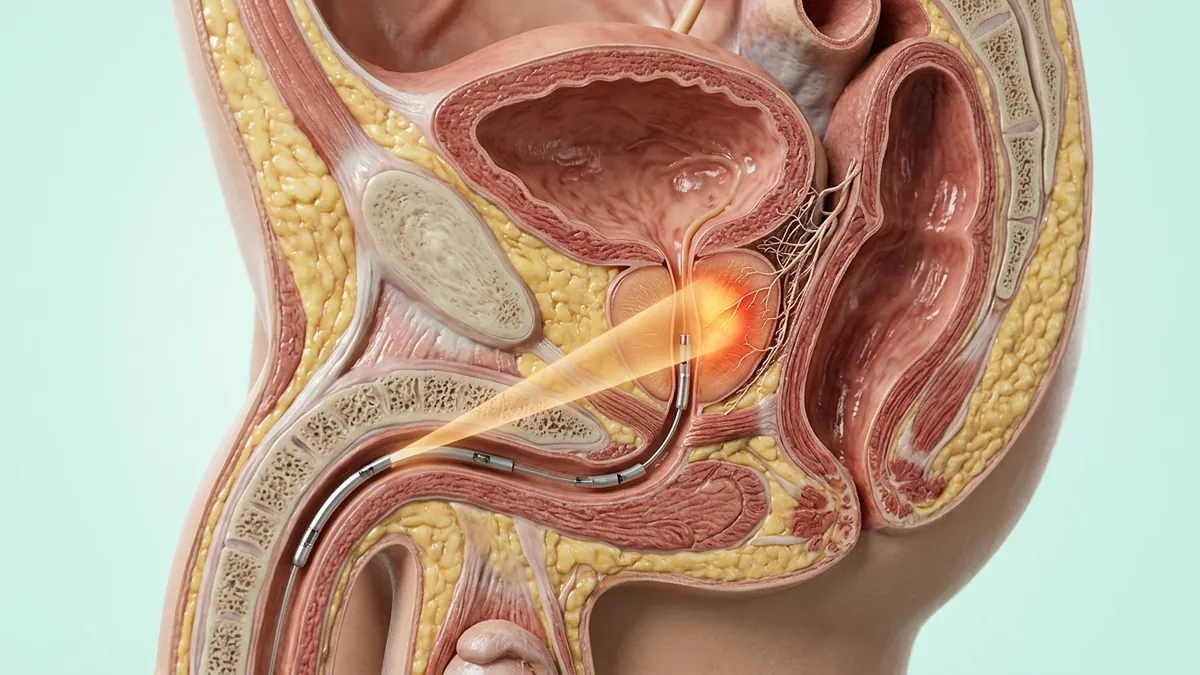
Understanding TULSA-PRO MRI-Guided Transurethral Ultrasound Prostate Ablation: Preserving Continence & Erections in Localized Disease can completely change how you weigh your treatment choices after an abnormal prostate biopsy. For decades, men diagnosed with early or intermediate prostate cancer faced an agonizing dilemma: monitor the tumor anxiously, or undergo whole-gland surgery or radiation that frequently damages delicate urinary valves and erection nerves. We rarely stop to think about how closely those tiny nerves hug the outer shell of the prostate until a diagnosis lands on the table, do we?
Today, we doctors can guide eligible patients toward a gentler, incision-free outpatient procedure known medically as sound-wave heat treatment through the urinary channel (transurethral ultrasound ablation, or TULSA). Performed entirely inside a live magnetic scanner, TULSA-PRO treats diseased tissue from the inside out while actively chilling and protecting your urinary passage and rectum. Whether you are researching newly updated Medicare reimbursement in the United States or exploring specialist centers across the United Kingdom, Canada, and Australia, knowing who qualifies—and who does not—helps you ask your specialist the sharpest questions.
📌 Key Takeaways at a Glance
- Inside-Out Precision: TULSA-PRO delivers directional thermal ultrasound from inside your urinary channel under real-time MRI heat mapping, accurate to roughly 1.4 millimeters without a single skin incision or dose of radiation.
- High Quality-of-Life Preservation: In 5-year multicenter TACT clinical trial data, up to 97% of treated men kept pad-free bladder control and roughly 87% maintained erection firmness, while 78% avoided needing secondary surgery or radiation.
- Dual Prostate Capability: Unlike older focal tools limited to tiny spots, TULSA-PRO can customize focal, partial, or whole-gland ablation and simultaneously shrink an enlarged prostate (benign prostatic hyperplasia, or BPH).
- Strict Anatomical Screening: Best suited for localized low- to intermediate-risk prostate cancer (PSA up to 15 ng/mL, Gleason 3+3 or 3+4) without dense prostate stones (calcifications) larger than 10 millimeters blocking the sound beam.
- Expanding Insurance Access: Dedicated 2025–2026 US Medicare CPT codes (including CPT 55882) now support hospital and outpatient surgical center coverage, alongside growing private specialist access in the UK, Canada, and Australia.
What Is TULSA-PRO MRI-Guided Transurethral Ultrasound Prostate Ablation and How Does It Preserve Continence & Erections?
TULSA-PRO MRI-guided transurethral ultrasound prostate ablation is an incision-free, radiation-free outpatient procedure that uses directional ultrasound heat delivered from inside the urinary channel to destroy diseased prostate tissue while actively cooling the urethra and rectum, preserving urinary continence in up to 97% and erections in up to 87% of men.
Have you ever wondered why traditional surgical prostate removal (radical prostatectomy) or external radiation so often triggers involuntary urine leakage (urinary incontinence) and trouble keeping erections (erectile dysfunction)? Think about it for a second. Your erection nerve bundles run like paper-thin telephone wires right along the outer capsule of the prostate, and your external urinary control muscle sits millimeters below the prostate tip (apex). Cutting or radiating from the outside in has to cross or graze those exact structures.
Look at what happens inside the scanner with TULSA-PRO instead. While you sleep comfortably under anesthesia inside a detailed prostate magnetic scan suite (multiparametric magnetic resonance imaging, or mpMRI), a specialized urologist gently slides a pencil-thin ultrasound rod containing 10 independent heating elements into your natural urinary channel (urethra). A robotic motor rotates that applicator slowly, sweeping directional sound energy outward toward the exact boundary your doctor drew on the live MRI screen. At the exact same time, chilled sterile water circulates continuously through both the urethral applicator and a soft cooling tube in your rectum. Meanwhile, MRI heat-sensing software (MR thermometry) checks tissue temperatures every few seconds, dialing each ultrasound element up or down automatically so heat stops at around 55°C right inside the prostate edge without cooking your erection nerves or bowel wall. Sounds much gentler on surrounding nerves, doesn't it?
Who Is an Ideal Candidate for TULSA-PRO? Key PSA Cutoffs, Gleason Grades, and Contraindications
When you visit your Primary Care Physician (PCP) or family GP clinic to review your biopsy report and prostate cancer blood test (prostate-specific antigen, or PSA), we doctors look at very specific clinical numbers before referring you to an interventional urology team. TULSA-PRO is cleared by the US FDA, Health Canada, European CE authorities, and Australian regulators for ablating prostate tissue, meaning specialists can tailor it for localized cancer, symptomatic BPH, or even carefully selected cancer recurrence after prior radiation. However, physics and tumor biology set clear boundaries that every patient should check upfront.
- Cancer Grade & Stage Cutoffs: The strongest clinical evidence supports men with organ-confined, favorable- to intermediate-risk prostate cancer—specifically International Society of Urological Pathology (ISUP) Grade Group 1 (Gleason 3+3=6, typically higher-volume) or Grade Group 2 (Gleason 3+4=7), with clinical stage T1c to T2b and no spread on staging scans.
- Baseline PSA Threshold: Pivotal trials enrolled men with a PSA of 15 ng/mL or less (with most ideal candidates sitting below 10 to 15 ng/mL). Select experienced centers occasionally treat Grade Group 3 (Gleason 4+3=7) focal lesions, though higher-grade disease carries higher recurrence risk.
- Prostate Size & Concurrent BPH: Whether your gland is 30 mL or well over 80 to 100 mL, TULSA-PRO can reach up to roughly 3 centimeters radially from the urethra, allowing doctors to ablate cancer and core out obstructive BPH tissue in one sitting.
- Critical Contraindications to Rule Out: Dense calcium deposits inside the prostate (intraprostatic calcifications) wider than 10 millimeters cast an "acoustic shadow" that blocks ultrasound waves and hides tumor cells behind them! Fluid cysts larger than 10 mL, tumors invading within 3 millimeters of the external urinary sphincter at the extreme prostate apex, or non-MRI-safe pacemakers and metallic pelvic implants can also rule out the procedure.
Now that makes sense, right? This is why a dedicated pre-treatment CT or non-contrast pelvic check for hidden calcium stones is just as vital as your biopsy score.
Step-by-Step: How Do You Prepare, What Happens Inside the MRI Suite, and How Long Does Recovery Take?
Walking into an advanced imaging procedure feels far less stressful once you know the exact timeline from preparation through follow-up. Unlike major abdominal surgery, there are no hospital ward stays, surgical drains, or skin staples to manage at home, though your prostate will temporarily swell internally as it heals.
- 7 Days to Night Before (Preparation): Under your doctor's supervision, you will pause blood thinners (such as apixaban, rivaroxaban, clopidogrel, or high-dose aspirin) if medically safe. The day before treatment, you switch to clear liquids—broth, clear apple juice, gelatin, electrolyte drinks, black tea—and use a gentle bowel-cleansing laxative or fleet enema so your rectum sits completely empty and still against the cooling device.
- Procedure Day (2.5 to 4 Hours Total): Under general anesthesia (or occasionally spinal anesthesia), your team places a temporary urinary drainage catheter—either a thin tube through the lower belly wall into the bladder (suprapubic catheter) or a standard urethral Foley catheter—plus the urethral applicator and rectal cooling sheath. While setup and live MRI 3D mapping take the bulk of the time, actual ultrasound heating averages right around 51 minutes. Almost every patient walks out and sleeps in their own bed that same evening.
- Weeks 1 to 2 (Catheter & Swelling Phase): Remember how heat destroys target cells? That treated tissue puffs up before shrinking, much like a mild sunburn inside a tight capsule. You will wear your drainage catheter at home for roughly 5 to 14 days depending on how much of the gland was treated. Most men return to desk work within 3 to 5 days.
- Months 3 to 12 (Shrinking & Surveillance): Over the first year, whole-gland TULSA shrinks prostate volume by roughly 90% and drops PSA by 86% to 95% (often hitting a low "nadir" near 0.34 to 0.90 ng/mL). Because treated margins still require vigilance, your urologist will check your PSA every 3 months, repeat an mpMRI around 6 to 12 months, and typically perform a confirmatory prostate biopsy at 12 months.
How Does TULSA-PRO Compare With Surgery, Radiation, and HIFU?
What do you think matters most when comparing focal or whole-gland ultrasound against older gold-standard therapies? Seeing how cancer control, recovery, and future backup ("salvage") options stack up side by side makes your specialist consultation infinitely clearer.
| Treatment Option | Clinical Profile, Side-Effect Rates & Next Step |
|---|---|
| TULSA-PRO (Transurethral MRI-Guided Ultrasound) | Incision-free inside-out thermal ablation with real-time MRI temperature control and dual cooling. Preserves pad-free continence in 92%–97% and erections in 75%–87% of men; about 15%–22% may need repeat ablation, surgery, or radiation within 5 years. Leaves surgical and radiation salvage doors open. What you should do: Ask an interventional urologist to review your mpMRI and check for prostate calcifications over 10 mm if you have Gleason 3+3 or 3+4 disease. |
| Robot-Assisted Radical Prostatectomy (Surgery) | Complete surgical removal of the prostate and seminal vesicles through keyhole belly incisions. Delivers definitive pathology staging and strong long-term cure rates, but carries higher risks of lasting stress urinary leakage (10%–20%) and erectile dysfunction (30%–50%+ depending on age and nerve sparing). What you should do: Choose surgery if you have higher-risk multifocal disease, heavy prostate calcifications, or prefer physical removal of the entire gland. |
| External Beam Radiation / SBRT (CyberKnife) | Targeted X-ray or proton beams delivered over 5 to 28 outpatient visits without anesthesia or catheters. Excellent cancer control, though radiation scatter can cause delayed bladder urgency, rectal irritation, and gradual erectile decline over 2 to 5 years, making later surgery technically difficult. What you should do: Consult a radiation oncologist alongside your urologist, especially if you cannot undergo general anesthesia or must stay on blood thinners. |
| Transrectal HIFU (High-Intensity Focused Ultrasound) | Ultrasound beams fired from inside the rectum without live in-bore MRI thermometry in most standard setups. Effective for smaller, posterior focal tumors, but struggles to reach anterior (front) tumors in large prostates and lacks transurethral internal cooling. What you should do: Compare HIFU directly with TULSA-PRO if your tumor sits in the front half of the prostate or your gland exceeds 50 mL. |
| Active Surveillance (Structured Monitoring) | Zero immediate procedure—uses scheduled PSA tests every 6 months, periodic mpMRI scans, and repeat biopsies to monitor slow-growing low-risk Grade Group 1 cancer, preserving 100% of baseline urinary and sexual function until treatment is truly needed. What you should do: Ask your PCP or urologist whether your low-volume Gleason 6 tumor safely qualifies for surveillance before paying for any procedure. |
Is TULSA-PRO Covered by Medicare, Private Insurance, the NHS, or Healthcare Plans in Canada and Australia?
Let's talk honestly about costs and healthcare access, because financial surprises add unnecessary stress. Until recently, men in the United States often paid 25,000 to 35,000 USD out of pocket at cash-pay centers because TULSA-PRO lacked permanent billing codes. That landscape shifted substantially on January 1, 2025, when the American Medical Association and US Centers for Medicare & Medicaid Services (CMS) activated three dedicated Category I CPT codes: CPT 55882 (complete single-physician MRI-guided transurethral ultrasound ablation, also used for Hospital Outpatient Department and Ambulatory Surgical Center facility billing), plus split two-physician codes CPT 55881 (ablation by the urologist) and CPT 51721 (device and cooling setup, often paired with an interventional radiologist). For men on Original Medicare Part B with a Medigap supplement, out-of-pocket copays at participating academic hospitals have dropped dramatically—often under $1,700 USD—though private commercial insurers and Medicare Advantage plans still frequently require prior authorization and medical-necessity appeals.
What if you live in the United Kingdom, Canada, or Australia? In Canada (where TULSA-PRO was originally invented in Toronto and holds Health Canada approval), routine provincial public coverage remains limited outside clinical trials, with private-pay centers charging roughly 25,000 to 30,000 CAD. In the UK, routine NHS commissioning is still restricted to research or specialized arrangements, though select private London and regional clinics offer self-pay or private-insurance pathways. Similarly, in Australia, TULSA-PRO is available through select private urology and interventional radiology hospitals rather than public Medicare-funded hospital lists. Wherever you live, start at your Primary Care Physician (PCP) or family GP clinic: we doctors can organize your baseline PSA and mpMRI referral so you do not pay private-clinic rates for preliminary workups.
✔️ What You Should Do & ❌ What to Avoid
- ✔️ Keep stools soft and hydration steady during recovery: Aim for 8 to 10 glasses of plain water daily and eat gentle, high-fiber everyday meals—morning oatmeal or porridge with berries, whole-grain toast, steamed greens, grilled salmon, and cooked tomatoes—so you never strain on the toilet against a healing prostate.
- ✔️ Ask early about nerve-supporting rehabilitation: Talk with your urologist about low-dose daily tadalafil or sildenafil after catheter removal to boost healthy blood flow to your erection nerves while tissue inflammation settles.
- ✔️ Secure your catheter leg strap properly: Keep the drainage bag positioned below bladder level whether resting on the sofa or walking around the house to prevent urine backflow and bladder spasms.
- ❌ Do not drink bladder irritants while the catheter is in: Skip double-shot espressos, strong afternoon iced coffees, pub pints, wine, carbonated sodas, and fiery takeout curries or spicy buffalo wings for the first 2 weeks, as they trigger painful bladder cramping.
- ❌ Avoid saddle pressure and heavy straining: Stay off road bikes, stationary Peloton saddles, rowing machines, heavy gym deadlifts, and heavy yard work for 2 to 3 weeks after your procedure.
- ❌ Never skip your 12-month follow-up MRI and biopsy: Remember how we talked about leftover microscopic prostate tissue earlier? Feeling great urinating does not replace scheduled PSA checks and imaging to confirm complete tumor clearance.
🚨 When to Seek Immediate Emergency Care (Red-Flag Symptoms)
If you or someone near you develops any of these red-flag symptoms, do not wait — call 911 (or 999 in the UK / 000 in Australia) immediately or go straight to the nearest hospital Emergency Room (ER / A&E):
- Sudden inability to pass urine or a completely blocked catheter: Painful lower belly fullness with zero urine draining into your catheter bag (or inability to urinate after catheter removal) requires urgent bladder decompression—never let an unfamiliar clinic tug forcefully on a post-procedure catheter without contacting your urology team or ER / A&E.
- Signs of bloodstream infection or urosepsis: Fever at or above 100.4°F (38.0°C), violent shivering chills (rigors), confusion, dizziness, or fast breathing (in the UK, call 999 for severe symptoms or 111 for urgent out-of-hours triage).
- Heavy, thick blood clots in the urine: Bright red ketchup-thick bleeding or large clots clogging the tubing (light pink or rosé-colored urine is expected, but thick clotting is an emergency).
- Urine or gas passing from the rectum, or severe rectal pain: Although rectal fistula was zero percent in pivotal TULSA trials, any abnormal bowel leakage or worsening pelvic pain warrants immediate hospital evaluation.
- Calf swelling, redness, or sudden chest pain and shortness of breath: Potential warning signs of a leg blood clot (deep vein thrombosis) or lung clot after pelvic anesthesia.
💡 Key Take-Home Message
- TULSA-PRO bridges the gap between anxious watchful waiting and life-altering surgery or radiation by combining inside-out ultrasound heating with real-time MRI temperature mapping and active urethral/rectal cooling.
- Men with localized Gleason 3+3 or 3+4 cancer, PSA up to 15 ng/mL, and no blocking prostate calcifications enjoy up to 97% continence preservation and simultaneous relief of enlarged-prostate urinary symptoms.
- Partner closely with your family GP or PCP and a specialized interventional urologist to verify anatomy, insurance or CPT 55882 coverage, and long-term surveillance commitment before deciding.

No comments yet. Be the first to share your question or experience below.