
Choosing a Watchman FLX Pro implant for AFib stroke prevention brings one big, practical question straight to the top of your mind: what is the exact timeline for stopping Eliquis or Xarelto after a TEE/CT check? When you live with an irregular heartbeat (non-valvular atrial fibrillation, or AFib), strong blood thinners (direct oral anticoagulants, or DOACs) protect your brain from clots, yet they can also trigger frightening nosebleeds, stomach bleeds, heavy bruising, or dangerous falls. Be honest, have you been counting down the days on your kitchen calendar hoping to put those expensive daily blood thinner tablets behind you?
Here is what we doctors always make crystal clear before you head to the hospital catheter lab: the implant goes to work right away mechanically, but your own heart tissue still needs several weeks to grow a smooth, natural lining over the device. Stopping apixaban (Eliquis) or rivaroxaban (Xarelto) even a couple of weeks before your heart scan gives the green light can invite a fresh clot right onto the implant surface. Let us walk through how this upgraded device seals your heart, what your 45-day imaging test checks, and how each stage of your medication step-down works.
📌 Key Takeaways at a Glance
- The 45-Day Milestone: Most standalone Watchman FLX Pro recipients remain on Eliquis or Xarelto (often paired with low-dose aspirin) for the first 45 days until a follow-up heart scan confirms proper sealing.
- Post-Ablation Exception: If you receive your implant alongside or shortly after an AFib heart rhythm procedure (catheter ablation), blood thinners typically continue for 3 months (90 days) before reassessment.
- Strict Scan Cutoffs: Your cardiologist checks for zero surface clots and an edge gap (peri-device leak) of 5 mm or less via throat ultrasound (TEE) or heart contrast scan (cardiac CT) before stopping Eliquis or Xarelto.
- Two-Step Medication Taper: After clearing your 45-day scan, you usually switch to clopidogrel plus low-dose aspirin until month 6, then continue daily low-dose aspirin long term.
- HEMOCOAT Upgrade: The Watchman FLX Pro adds a specialized fluoropolymer coating, three platinum X-ray markers, and a larger 40 mm size option to promote smoother tissue healing and tighter closure.
Blood pressure checker using AHA/ESC categories. Enter systolic and diastolic to get your category, risk level, and personalised advice.
What Is the Watchman FLX Pro Implant for AFib Stroke Prevention and Timeline for Stopping Eliquis or Xarelto?
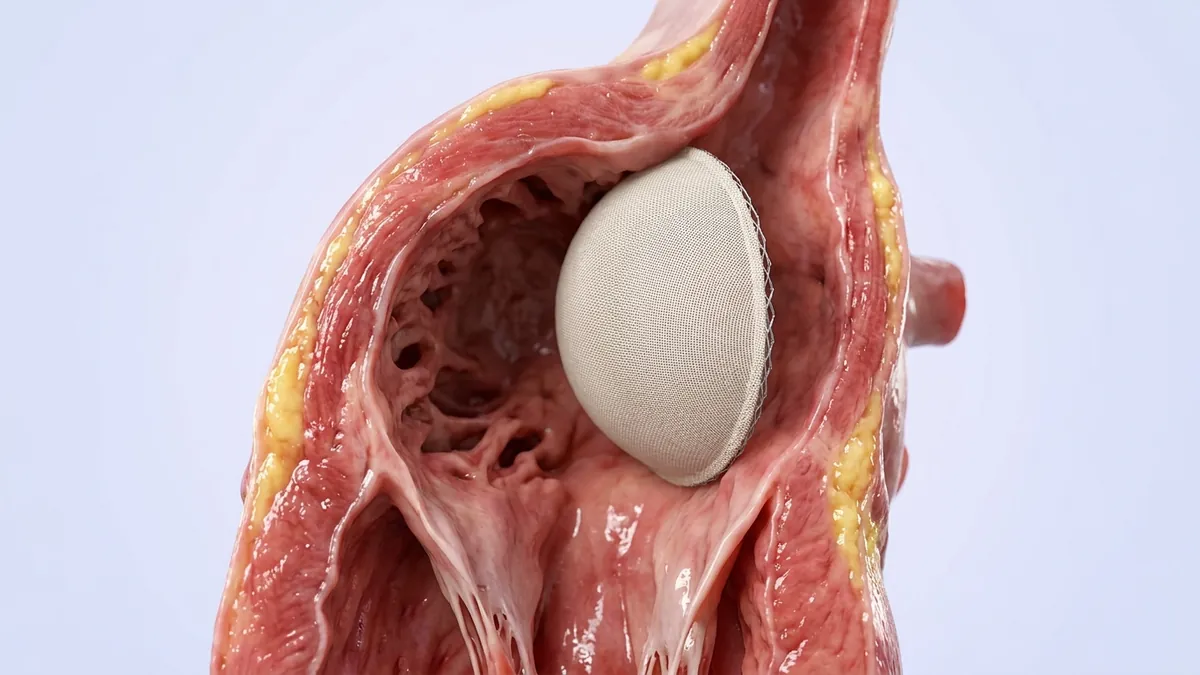
The Watchman FLX Pro is a permanent, catheter-placed heart implant that seals the left atrial appendage to prevent AFib strokes without lifelong anticoagulants. Most patients stop Eliquis or Xarelto 45 days after standalone implantation, or 90 days after combined AFib ablation, once a TEE or cardiac CT scan confirms complete closure.
Have you ever wondered why an irregular heartbeat raises stroke risk in the first place? In AFib, the upper chambers of your heart quiver instead of squeezing briskly, allowing stagnant blood to pool inside a thumb-sized pouch called the heart's ear-shaped pocket (left atrial appendage, or LAA). Roughly 90% of stroke-causing heart clots in non-valvular AFib form inside that single small pocket. Pretty surprising, right?
When we doctors evaluate you at your Primary Care Physician (PCP) or family GP clinic, we calculate both your stroke risk score (CHA2DS2-VASc) and your bleeding risk (HAS-BLED). If you need stroke protection but face recurring gastrointestinal bleeds, severe bruising, occupational trauma risks, or fall hazards—or you are already undergoing AFib catheter ablation—we refer you to a structural cardiologist or heart rhythm specialist (electrophysiologist) to consider left atrial appendage closure (LAAC). In the United States, Medicare requires a documented shared decision-making visit, while NHS specialist heart centers in the UK, provincial cardiac programs in Canada, and public or private hospital teams in Australia evaluate suitability based on bleeding risk and anatomy.
How Does the Watchman FLX Pro Seal Your Heart and Speed Up Healing?
Think about it for a second: instead of thinning every drop of blood flowing from your head to your toes for the rest of your life, what if a tiny parachute-shaped plug simply walled off the one pocket where clots hide? During a minimally invasive 45-to-60-minute hospital procedure, your specialist threads a thin flexible tube (catheter) through a vein in your upper thigh (femoral vein) up into the heart, expanding the self-fitting nitinol frame right across the mouth of the appendage. Most patients head home the very next morning—or even the same evening.
How does the newer Watchman FLX Pro improve upon earlier Watchman generations? Engineers built three targeted upgrades onto the proven FLX frame:
- HEMOCOAT Thromboresistant Coating: The fabric cap carries a specialized fluoropolymer surface designed to calm early tissue inflammation, repel sticky blood platelets, and encourage smooth natural heart lining growth (endothelialization) over the implant face.
- Three Radiopaque Platinum Markers: Bright X-ray markers along the device shoulders let your implanting cardiologist verify exact depth and alignment in real time.
- Expanded 40 mm Size Option: Alongside standard 20 mm to 35 mm sizes, the new 40 mm implant treats patients with wider heart pouch openings up to 36 mm who previously had to be turned away.
We rarely stop to think about other stroke sources, do we? Keep in mind that this implant only blocks clots coming from the left atrial appendage. It cannot treat AFib caused by narrowed rheumatic heart valves or mechanical valve replacements (valvular AFib), nor does it prevent strokes from neck artery plaque (carotid artery stenosis) or uncontrolled high blood pressure.
What Is the Exact Step-by-Step Medication Timeline After Watchman FLX Pro Implantation?
Remember how we talked about your own heart tissue growing a smooth lining over the implant? Until that living tissue seal matures, bare fabric and metal sit exposed to swirling blood inside your left atrium. That is why your specialist prescribes a strict, staged antithrombotic schedule tailored to your bleeding history and whether you also had an AFib ablation:
- Phase 1 — Day 1 to Day 45 (Early Healing Window): Most standalone implant patients take full-strength Eliquis (typically 5 mg twice daily, or 2.5 mg twice daily if age, weight, or kidney criteria apply) or Xarelto (20 mg once daily with dinner, or 15 mg for reduced kidney function), paired with low-dose aspirin (81 mg in the US and Canada; 75 mg to 100 mg in the UK and Australia). Under updated FDA labeling for Watchman FLX Pro, your cardiologist may also select a 45-day DOAC-alone regimen without aspirin, or—if you have a severe bleeding history and cannot take oral anticoagulants even briefly—start immediate dual antiplatelet therapy (DAPT) from day one.
- Post-Ablation Alternative — Day 1 to Month 3 (90 Days): Based on the landmark OPTION clinical trial, if your Watchman FLX Pro is placed during or shortly after catheter ablation for AFib, you stay on your oral blood thinner plus low-dose aspirin for 3 full months before your imaging check.
- Phase 2 — Day 45 to Month 6 (Platelet Bridge): Once your 45-day scan confirms a tight seal and no surface clot, your cardiologist stops Eliquis or Xarelto! You then take clopidogrel (Plavix 75 mg once daily) alongside daily low-dose aspirin through the 6-month mark.
- Phase 3 — Month 6 Onward (Long-Term Maintenance): At 6 months, clopidogrel stops, and you continue a single daily low-dose aspirin tablet indefinitely unless your specialist advises otherwise.
What Must Your 45-Day TEE or Cardiac CT Scan Show Before Stopping Eliquis or Xarelto?
Look closely at what happens right around week six: you never stop Eliquis or Xarelto simply because day 45 arrives on the calendar. Your cardiology team first schedules a detailed look at the implant using one of two hospital imaging tests—either a throat ultrasound of the heart (transesophageal echocardiogram, or TEE) or a specialized dye-enhanced heart scan (cardiac computed tomography angiography, or CCTA).
What is the difference for you on test day? For a TEE, you fast from food and drinks for at least 6 hours, receive comfortable twilight sedation in the hospital outpatient unit, and need a family member or friend to drive you home afterward. Increasingly, heart centers across North America, the UK, and Australia offer non-invasive cardiac CT instead—no throat probe and no sedation! Before ordering a cardiac CT, we doctors at your PCP or GP clinic check a quick blood test for kidney function (estimated glomerular filtration rate, or eGFR) to make sure the intravenous contrast dye is safe for your kidneys.
Regardless of which scan you have, the imaging specialist checks two strict clinical cutoffs before clearing you to stop Eliquis or Xarelto:
- Peri-Device Leak (PDL) of 5 mm or Less: Any unsealed gap around the edge of the Watchman FLX Pro must measure 5 mm or smaller. In modern clinical studies, over 80% to 90% of implants show zero leak at all, and almost all remaining gaps measure under 3 mm.
- Absence of Device-Related Thrombosis (DRT): The top surface of the implant must be completely free of fresh blood clots, which appear in roughly 1.5% to 2% of scans and must be distinguished from harmless, smooth tissue ingrowth (hypoattenuated thickening, or HAT).
How Do 45-Day TEE/CT Findings Change Your Blood Thinner Plan?
What do you think happens if your 45-day scan spots a tiny gap or an unexpected surface clot? Instead of guessing, we doctors and cardiologists use clear, evidence-based decision rules. Here is a straightforward comparison of what your 45-day TEE or cardiac CT report can show and exactly how each finding guides your Eliquis or Xarelto stop date:
| 45-Day Scan Finding or Scenario | Clinical Meaning & Action Step |
|---|---|
| Complete Seal or Tiny Edge Gap (Leak 0 to 5 mm, No Clot) | The implant sits securely across the left atrial appendage opening, blocking dangerous clots from escaping into your bloodstream. Small edge trickles of 5 mm or less meet established safety criteria for stopping oral anticoagulants. What you should do: Stop Eliquis or Xarelto only after your cardiologist officially confirms the result, and start your prescribed clopidogrel plus low-dose aspirin bridge through month 6. |
| Larger Edge Gap (Peri-Device Leak Greater Than 5 mm) | An unsealed channel wider than 5 mm allows turbulent blood to keep entering and exiting the appendage pouch, leaving stroke risk elevated if strong blood thinners are stopped. What you should do: Remain on Eliquis or Xarelto as directed by your heart team, and schedule a repeat TEE or cardiac CT at 6 or 12 months—or discuss plug/coil closure options with your structural cardiologist. |
| Surface Clot on the Implant (Device-Related Thrombosis / DRT) | A small blood clot has formed on the atrial face of the device before your natural heart lining finished covering it. Stopping anticoagulants now could allow that clot to break loose. What you should do: Continue (or restart) Eliquis or Xarelto uninterrupted for another 6 to 12 weeks so your body dissolves the clot safely, followed by a repeat heart scan before switching medications. |
| Smooth Tissue Layer on CT (Low-Grade Hypoattenuated Thickening) | A thin, flat, smooth layer continuous with your heart wall typically represents healthy endothelial tissue healing promoted by the HEMOCOAT surface rather than a dangerous clot. What you should do: Proceed with your cardiologist's planned transition off Eliquis or Xarelto to dual antiplatelet therapy, and keep your routine 6-month and 12-month follow-up appointments. |
| Watchman Placed With AFib Catheter Ablation | Recent ablation lines inside the left atrium create temporary inflammation that requires 90 days of full anticoagulation even when the implant seal itself looks immaculate early on. What you should do: Stay on Eliquis or Xarelto through the full 3-month post-ablation mark, complete your scheduled 3-month TEE or CT check, and transition to aspirin once cleared. |
How Should You Care for Yourself at Home After Leaving the Hospital?
Just like we mentioned earlier, most people feel pleasantly surprised by how gentle recovery feels after catheter placement. For the first 5 to 7 days, your main job is protecting the tiny femoral vein puncture site at the top of your thigh. Skip heavy grocery lifting (anything heavier than a gallon of milk, or about 4 to 5 kg), vigorous cycling, golfing, or straining in the garden while that vein seals up. Gentle strolls down your street, staying well hydrated with water, and enjoying heart-smart meals—like grilled salmon, olive oil, morning oats or porridge, berries, and leafy spinach or kale (which never clash with Eliquis, Xarelto, or Watchman the way they used to with warfarin!)—support steady recovery.
See? That is exactly why we doctors also remind you about two everyday practical details people easily overlook. First, tuck your Watchman FLX Pro Implant Card right behind your driver's license or Medicare/health card. Airport security scanners will not harm your heart implant, and the device is MRI-conditional at 1.5 and 3.0 Tesla as long as the radiology technologist reads your card settings. Second, during the first 6 months after implantation, tell your dentist before any deep teeth cleaning, tooth extraction, or gum procedure! Your family GP or cardiologist will prescribe a single preventive antibiotic dose beforehand (infective endocarditis prophylaxis) to stop mouth bacteria from settling on the healing implant.
✔️ What You Should Do & ❌ What to Avoid
- ✔️ DO take every single dose of Eliquis, Xarelto, clopidogrel, or aspirin on time: Skipping doses during the 45-day healing window invites surface clots before heart tissue covers the device.
- ✔️ DO request preventive antibiotics before dental work for 6 months: Contact your cardiologist or family GP clinic prior to dental cleanings or invasive procedures during your first half-year post-implant.
- ✔️ DO inspect your upper thigh access site daily for the first week: Mild bruising is common, so watch calmly that the spot stays soft, flat, and dry while showering gently.
- ❌ DON'T stop Eliquis or Xarelto on day 45 without verbal or written scan clearance: Wait until your cardiology team reviews your TEE or cardiac CT images and explicitly switches your prescription.
- ❌ DON'T pop over-the-counter ibuprofen, naproxen, or extra aspirin for aches: Non-steroidal anti-inflammatory drugs (NSAIDs) dramatically spike stomach bleeding risk when combined with blood thinners or clopidogrel—ask your doctor if acetaminophen (paracetamol) is safer for you.
- ❌ DON'T lift heavy weights or soak in hot tubs for 7 days post-procedure: Submerging an unhealed groin puncture in baths, pools, or spas raises infection risk.
🚨 When to Seek Immediate Emergency Care (Red-Flag Symptoms)
If you or someone near you develops any of these red-flag symptoms, do not wait — call 911 (or 999 in the UK / 000 in Australia) immediately or go straight to the nearest hospital Emergency Room (ER / A&E):
- Sudden Stroke Warning Signs (FAST): Facial drooping on one side, sudden arm or leg weakness or numbness, slurred or confused speech, or sudden loss of vision or balance.
- Signs of Fluid Around the Heart (Pericardial Effusion / Tamponade): Sharp or worsening chest pain, sudden shortness of breath when lying flat, fainting, lightheadedness, or a racing heartbeat with cold sweats.
- Uncontrolled Groin Bleeding or Expanding Lump: Bright red blood soaking through a bandage that does not stop after 10 minutes of firm pressure, a rapidly growing hard swelling in your groin, or a cold, pale, numb leg.
- Major Internal Bleeding: Vomiting blood or dark coffee-ground material, passing black tarry stools or bright red blood, or a sudden severe headache after any head bump (for non-life-threatening urgent medication questions in the UK, you can also call NHS 111, or visit a local Urgent Care center for minor groin bruise checks).
💡 Key Take-Home Message
- The Watchman FLX Pro permanently walls off the heart pouch responsible for roughly 90% of AFib-related strokes, offering long-term freedom from full-strength oral blood thinners.
- Day 45 (or day 90 after AFib ablation) is an imaging checkpoint—not an automatic stop date—requiring a TEE or cardiac CT showing zero device clot and any edge leak at 5 mm or under.
- Completing your 6-month clopidogrel-plus-aspirin bridge and keeping your PCP or family GP in the loop protects your brain while your heart lining finishes healing.




No comments yet. Be the first to share your question or experience below.