When we hear the words "beetle" or "wasp," we get a little scared, don't we? When we're doing some work in the garden, or just going outside, we hear a "ghoom..." sound in our ears, and we immediately jump. That's because we know how painful and sometimes dangerous
the venom of that animal is. But did you know that not all wasps we see are animals waiting to attack us? Also, if you don't panic if you get stung by a wasp, and you know exactly what to do, you can avoid a big risk. Let's talk about this in detail today.
Did you know that there are two types of twins?
Simply put, wasps can be divided into two main groups: solitary wasps and social wasps. The behavior of these two groups is as different as the sky and the earth.
1. Solitary Wasps
These are the kind of people who like to live alone, as their name suggests. For example, animals like Mud Daubers. These people don't cause us much trouble. They don't build big nests. They only use their venom to kill small insects that they hunt. These daubers are very peaceful. They won't sting you unless you get really close to them. So there's no need to kill or control them. Sometimes, if they build a small mud-like nest on a wall or window sill of your house, all you have to do is break it up, remove it, and run a stream of water through it to wash it off.
2. Social Wasps
These are the people we need to be a little careful with. These people live in large groups, or rather, large colonies. Imagine, when the winter is over and the sun comes out a little, a queen wasp starts building a nest by herself. Then she lays eggs and takes care of the larvae that hatch from those eggs. When this first group grows up, they take over the rest of the work. That means taking care of the newly laid eggs, enlarging the nest, and finding food. After that, the queen's only job is to continue laying eggs. By the end of the summer, some nests can have as many as 5,000 members! These group wasps will attack very fiercely if they feel the slightest threat to their nest. Here are some of the most common types of wasps we see around us:
- Paper Wasps : A type of wasp that is brown in color, has yellow stripes, and hangs down when flying. They feed their larvae on insects such as caterpillars and flies . However, they mostly eat sweet things like nectar. They build their nests in places such as under the eaves of houses and under the branches of large trees.
- Bald-faced Hornets: Despite their name, they are a type of hornet. They have black bodies with white markings. Their nests are gray and ball-shaped. They build their nests in trees, bushes, and sometimes even buildings.
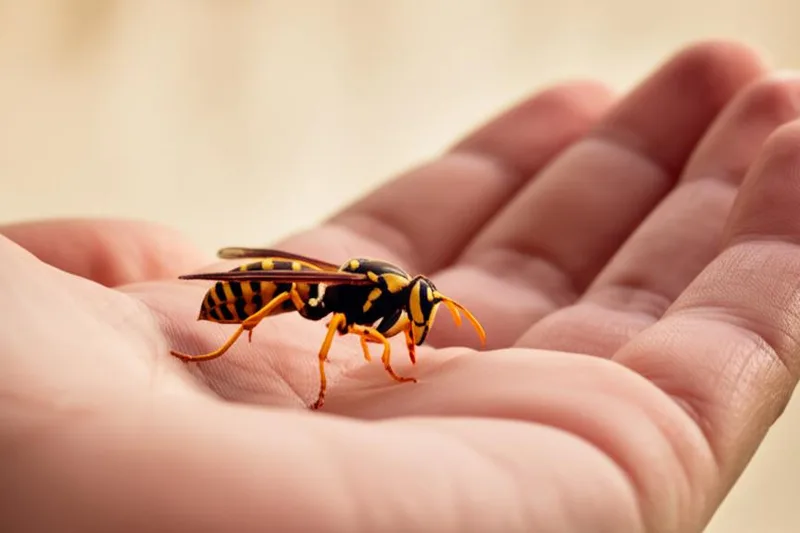
- Yellowjackets: These are the ones that often build nests underground. They have yellow and black stripes. They are very aggressive when defending their nests and when searching for sweet treats.
Health risks caused by betel nut poisoning
As beneficial as spiders are to the environment, their venom can pose serious health risks to us, especially for those with allergies to spider venom.
The important thing is that most wasps can sting more than once. Unlike a bee, a wasp can sting multiple times in the same spot or in different spots.
There are two main risks from wasp venom:
Infections and
Allergic Reactions . But most of the time, a single wasp sting causes only minor pain and discomfort. Unless you have a severe allergy or have been stung by many wasps at once, you can usually treat it at home. Some people have a large localized reaction where they were stung. This is usually not serious. However, if a wasp stings
in the nose, mouth, or throat , the swelling can cause difficulty breathing. This is an emergency.
If a snake bites you... the correct first aid to be given
Imagine you've been bitten by a bee. The sting site is red, swollen, itchy, and painful. Don't panic. Follow these steps.
| Step | Action |
|---|
| 1. Go to a calm, safe place. | Leave the area immediately to avoid being attacked by more forks. |
| 2. Removing the stinger . | Spiders usually don't shed their stingers . But if they do, scrape the stinger off with a fingernail, the edge of a credit card, or the blunt side of a knife. Avoid gripping it with your fingers. |
| 3. Wash the wound | Wash the puncture site thoroughly with soap and clean water. This will prevent infection. |
| 4. Putting something cold | Apply an ice pack wrapped in a clean cloth for 10 minutes, then remove for 10 minutes, and leave it on for about half an hour. This will reduce pain and swelling. |
| 5. To reduce swelling | If the bite is on an arm or leg, keeping that arm/leg elevated can help control swelling. |
| 6. Drug use | You can take a painkiller (Paracetamol) for pain or an antihistamine for itching only with your doctor's approval . |
If any of these symptoms occur, it could be a sign of a serious allergic reaction (anaphylaxis).
Go to the nearest hospital Emergency Department (ETU) immediately, without delay. Dangerous Symptoms
| Difficulty breathing, chest tightness | A feeling of tightness in the throat or chest tightness. |
| Wheezing (a "cheese...cheese..." sound when breathing) | A sign of airway swelling. |
| Nausea or vomiting | A sign that the poison is spreading throughout the body. |
| Dizziness or fainting | Blood pressure can drop suddenly. |
| Hives (hives) | Not just the puncture site, but the entire body. |
| Excessive sweating, anxiety | Signs that the body is in a state of shock. |
How to protect yourself from the dangers of Debara?
Prevention is always better than cure.
- Food and trash: Be careful when eating food, especially when leaving things like sugary drinks and fruit out in the open. Keep trash cans tightly closed.
- Nest removal: Early in the year, when the nests are still small, it is easier to remove them if you can identify them. However , if the nest is large, it can be very dangerous to remove it yourself. Do not take this risk, especially if you have allergies . Seek the help of a professional pest control company.
- Night operation (for professionals only): If you are removing a cage, the best time to do it is at night. This is because at that time almost all the rats are inside the cage. Rats cannot see red light. Therefore, you can use a flashlight covered with a red cellophane sheet. If they see white light, they will come straight to attack.
- Protective clothing: If you are going near a cage, be sure to wear protective clothing such as goggles , long sleeves, and gloves.
Remember, don't try to cover a raccoon's cage with something like a garbage bag. They can easily escape and attack you.
Take-Home Message
- There are two types of ants. We are most at risk from ants that nest in groups.
- A sting from a wasp usually causes only minor pain and swelling, and can be treated at home.
- Difficulty breathing , body achesIf symptoms such as dizziness occur, it may be a serious allergy. Go to the Emergency Department (ETU) immediately.
- If you have a history of allergy to wasp venom, avoid risky tasks like removing wasp nests altogether. Seek professional help.
- Always consult your doctor before taking any medication.
Wasp, Wasp, Wasp Poison, Wasp Attack, Allergy, First Aid, Wasp Sting



💬 Comments (0)
No comments yet. Be the first to share your thoughts here.
Add Your Comment