

One of the biggest misconceptions many people have is that you only need to see a women's health specialist when you are pregnant, or that a "gynecologist" and an "obstetrician" do the exact same job every single day. Whether you landed here after typing gynecologist meaning in sinhala into your search bar, or you are simply wondering what kind of doctor you need to see for pregnancy versus a routine checkup, clearing up this confusion is so important. Be honest, you have probably heard people use terms like "gynecologist," "obstetrician," "OB-GYN," or even "VOG doctor" interchangeably and wondered how they actually differ, haven't you?
When we doctors talk with patients in our clinics, we realize how confusing medical titles can be. Even though both of these specialists dedicate their lives to women's health, their day-to-day responsibilities focus on very different stages and needs of your body. Let's sit down and walk through everything in plain, everyday English so you know exactly who to turn to for every stage of your health journey.
📌 Key Takeaways at a Glance
- Gynecologist vs. Obstetrician: A gynecologist cares for your non-pregnancy reproductive health (periods, hormones, Pap smears, and pelvic issues), while an obstetrician specializes in pregnancy, childbirth, and postpartum recovery.
- The Dual Specialist (OB-GYN / VOG): Many specialists train in both fields—called an OB-GYN in the US, Canada, and Australia, or a Consultant / VOG (Visiting Obstetrician and Gynaecologist) in Commonwealth healthcare systems.
- Your First Stop: For routine cervical screening (Pap smears), birth control, or mild menstrual issues, you can often start right at your Primary Care Physician (PCP) or family GP clinic before being referred to a specialist.
- Never Wait on Red Flags: Severe pelvic pain, heavy vaginal bleeding, or sudden swelling and headaches during pregnancy require immediate medical evaluation.
Free pregnancy due date calculator. Enter your last period date or conception date to find your EDD, current trimester, and key milestones.
Who Are These Gynecologists and Obstetricians? (And What Is the Gynecologist Meaning in Sinhala?)
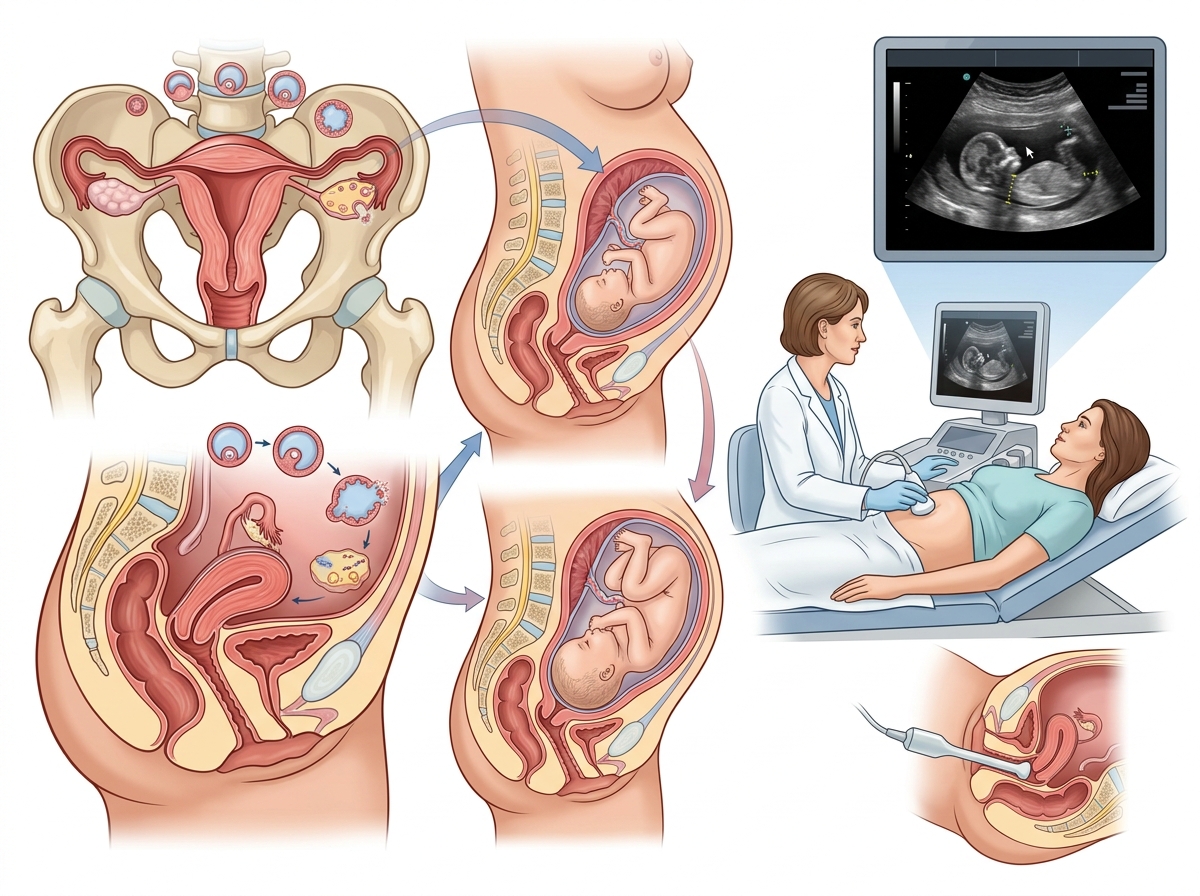
A gynecologist is a medical specialist who diagnoses and treats conditions of the female reproductive system outside of pregnancy, while an obstetrician specializes in managing pregnancy, labor, childbirth, and postpartum care. When people search for "gynecologist meaning in sinhala," it refers to a specialist in women's reproductive health (Nari Ha Prasava Vaidya / OB-GYN).
Think about it for a second: the female body goes through incredible transitions from puberty and menstruation all the way through fertility, pregnancy, and menopause. Because there is so much happening with your hormones and reproductive organs—including your uterus (womb), ovaries, fallopian tubes, cervix, and vagina—medicine divides this care into two closely linked specialties. Now that makes sense, right?
A gynecologist focuses on your lifelong reproductive health whenever you are not pregnant. From the time a teenager gets her very first period right through to post-menopause in her golden years, a gynecologist helps manage menstrual irregularities, pelvic pain, ovarian cysts, uterine fibroids, endometriosis, and preventive cancer screenings.
An obstetrician, on the other hand, is the doctor you see when a baby is on the way. So, if you have ever asked, "What is a doctor for pregnancy called?" or "Which doctor should you consult for pregnancy?"—the answer is an obstetrician! They guide you through preconception planning, routine prenatal checkups, high-risk pregnancy complications, safe labor and delivery (both vaginal births and Cesarean sections), and the critical weeks after your baby is born (the postpartum period).
What if one doctor does both? In the United States, Canada, the United Kingdom, and Australia, the vast majority of specialists complete combined training in both areas and are known as an OB-GYN (Obstetrician-Gynecologist). And if you have ever searched for vog doctor meaning or gynecologist meaning in sinhala because of family roots or medical paperwork from South Asia or Commonwealth hospitals, "VOG" simply stands for Visiting Obstetrician and Gynaecologist—the exact equivalent of a senior consultant OB-GYN! Having one doctor trained in both fields is wonderfully convenient because the same specialist already understands your complete medical history whether you are coming in for a routine checkup or preparing to welcome a baby.
What Are the Main Responsibilities of These Doctors?
Have you ever wondered whether a specific symptom belongs to your family GP clinic, a gynecologist, or an obstetrician? To make it crystal clear how we doctors divide these responsibilities—and what action you should take for each concern—take a look at the comparison table below.
| Specialist / Clinical Focus Area | What They Do & What You Should Do |
|---|---|
| Gynecologist (Non-Pregnancy Reproductive Care) | Focuses on diagnosing and treating conditions of the uterus, ovaries, fallopian tubes, cervix, and vagina, alongside hormone and menstrual health. What you should do: Book an appointment with a gynecologist (or ask your family GP for a referral) if you have heavy, painful, or irregular periods, persistent pelvic pain, suspected endometriosis, PCOS, or menopausal symptoms. |
| Obstetrician (Pregnancy, Childbirth & Postpartum Care) | Monitors the health of both mother and baby throughout pregnancy, manages conditions like gestational diabetes or preeclampsia, delivers babies, and oversees recovery after birth. What you should do: Schedule your first prenatal visit as soon as you get a positive home pregnancy test, or book a preconception visit if you have chronic health conditions and plan to conceive. |
| Combined OB-GYN (Consultant / VOG Specialist) | Provides comprehensive care across both gynecology and obstetrics, performing everything from office screenings and minimally invasive pelvic surgeries to delivering babies. What you should do: Choose an OB-GYN if you want continuity of care with one specialist who can manage your general reproductive health now and guide you through pregnancy later. |
| Preventive Screenings & Contraception (GP / PCP vs. Specialist) | Includes routine cervical cancer screenings (Pap smears and HPV testing), breast checks, STI testing, and prescribing birth control pills, patches, or IUDs. What you should do: Start at your Primary Care Physician (PCP) or family GP clinic for routine Pap tests and contraception; they will refer you to a gynecologist if a test result is abnormal or requires specialized procedures like a colposcopy. |
| Surgical & Complex Pelvic Conditions | Involves surgical management of large ovarian cysts, uterine fibroids, pelvic organ prolapse, fertility-preserving procedures, or hysterectomy. What you should do: Ask your primary doctor for a specialist referral to a gynecological surgeon so they can arrange pelvic ultrasound scans and discuss minimally invasive treatment options. |
When Should You See a Doctor for Women's Health?
How often you need to see a gynecologist or your family doctor for women's health depends on your age, your symptoms, and whether you are planning a pregnancy. We rarely stop to think about reproductive checkups when everything feels normal, do we? Yet some of the most important reasons to visit a doctor happen when you feel completely fine. Let's look at the four biggest milestones and clinical reasons to book a visit.
1. Pap Smear and Cervical Cancer Screening
A Pap smear (officially called a Papanicolaou test or cervical screening test) is a quick, life-saving screening that checks your cervix—the lower, narrow part of your womb that opens into the vagina—for early cell changes caused by the human papillomavirus (HPV). Catching these precancerous cell changes early means we doctors can treat them long before they ever turn into cervical cancer. Pretty reassuring, right?
In general, anyone with a cervix should begin regular screening between ages 21 and 25 (depending on whether you live in the US, UK, Canada, or Australia) and repeat the test every 3 to 5 years using a Pap test, an HPV test, or a combination of both. You can have this done right at your family GP clinic or with your gynecologist.
2. Birth Control and Family Planning Methods
Choosing a contraception method is never a "one-size-fits-all" decision. Whether you want to prevent pregnancy for a few years, space out your children, or use hormonal birth control to calm down heavy, crampy periods, we doctors look at your whole health picture. Do you get migraines with aura? Do you smoke? Do you want something you never have to remember to take daily?
By talking through your medical history and daily lifestyle, your doctor can help you compare oral contraceptive pills, the contraceptive patch, vaginal rings, hormone injections, or long-acting reversible contraception (LARC) like the copper or hormonal intrauterine device (IUD) and the arm implant.
3. Sexually Transmitted Infections (STIs / STDs)
Let's be completely honest—nobody enjoys talking about sexually transmitted infections (STIs), also known as sexually transmitted diseases (STDs). But we doctors treat them every single day without an ounce of judgment! If you notice unusual vaginal itching, burning when you pass urine, pelvic discomfort, sores, bleeding after sex, or a change in the color or smell of your vaginal discharge, you should see your family GP, a sexual health clinic, or a gynecologist right away.
Many common infections—like chlamydia, gonorrhea, or trichomoniasis—can sometimes cause zero symptoms at first, yet leaving them untreated can quietly affect your future fertility. A simple urine test or gentle swab gives us fast answers so we can prescribe the right antibiotics and get you feeling back to normal.
4. Pregnancy and Prenatal Care
Remember how we talked earlier about asking, "What kind of doctor do you see for pregnancy?" From the moment those two pink lines show up on a home pregnancy test, regular antenatal (prenatal) care becomes your top priority. Depending on your local healthcare setup in the US, UK, Canada, or Australia, you might book directly with an OB-GYN, or see your family GP first for initial blood tests, folic acid advice, and a formal referral to your hospital's maternity unit or obstetrician.
An obstetrician is specially trained to guide you through every trimester, keeping a close eye on your baby's growth and protecting you from pregnancy-specific conditions like gestational diabetes (high blood sugar during pregnancy) or preeclampsia (pregnancy-related high blood pressure).
What Happens When You Go to See the Doctor?
Many people—especially teenagers and young adults going for their very first visit—feel a bit anxious, shy, or embarrassed before stepping into a gynecologist's office. What do you think makes it feel so daunting? Usually, it is simply not knowing what to expect! Once you know the step-by-step routine, that nervousness melts away.
During a Routine Gynecology Visit
First, a nurse or medical assistant will check your basic vital signs: your height, weight, and blood pressure. Then, while you are fully dressed, your doctor will sit down and chat with you about your general health history, the first day of your last menstrual period, whether your cycles are regular, and any symptoms or questions on your mind.
Next, if an examination is actually needed (and for many teen visits or simple birth control consultations, a physical exam isn't even required on day one!), you will be given privacy to undress from the waist down and cover yourself with a comfortable sheet. You have every right to ask for a nurse or medical chaperone to be in the room with you to help you feel completely safe and relaxed.
If a clinical breast exam or pelvic exam is needed, the doctor will explain every step before touching you. If you are due for a Pap smear, the doctor gently uses a smooth plastic or metal instrument called a speculum to view the cervix and collects a tiny brush sample of surface cells. Taking a slow, deep breath and letting your knees fall relaxed to the sides makes a huge difference. It might feel like a brief pinch or mild pressure for a few seconds, but it should never be sharply painful. If anything hurts or if you feel nervous, tell your doctor immediately—we always adjust our pace for you!
During a Pregnancy (Obstetric) Visit
Visiting your obstetrician during pregnancy has a very exciting, reassuring rhythm. At each visit, we check your weight and blood pressure, and ask for a quick urine sample. Have you ever wondered why we test your urine at every single pregnancy visit? We are looking for hidden signs of urinary tract infections, sugar (which can point toward gestational diabetes), or protein (which can be an early clue for preeclampsia).
As your pregnancy progresses, your obstetrician will gently feel your abdomen (tummy) to check how your uterus is growing and which way the baby is lying, measure your baby bump (fundal height), and listen to your baby's rapid, galloping heartbeat with a small handheld Doppler device. They will also arrange your routine blood work and refer you to radiology or ultrasound specialists for your dating scan and detailed anatomy scans.
✔️ What You Should Do & ❌ What to Avoid
- ✔️ Do track your menstrual cycle: Keep a simple note on your phone calendar of when your period starts, how many days it lasts, and how heavy it is—this helps us doctors spot hormone patterns immediately.
- ✔️ Do write down your questions ahead of time: Whether it is painful sex, bladder leaks when you laugh, or weird cramps, bring a list so you don't forget anything in the exam room.
- ✔️ Do schedule your Pap smear away from heavy period days: If possible, book your cervical screening when you are not bleeding heavily so the lab gets the clearest cell sample.
- ❌ Don't use vaginal douches or scented washes before your visit: Douching washes away natural protective bacteria and can hide the exact clues your doctor needs to diagnose an infection accurately.
- ❌ Don't feel pressured to wax or shave before an exam: Believe us doctors when we say we do not care about body hair at all—we are only looking at your medical health!
- ❌ Don't ignore postmenopausal bleeding: Even a few drops of vaginal bleeding after you have gone through menopause (12 months without a period) must always be checked by a doctor.
🚨 When to Seek Immediate Emergency Care (Red-Flag Symptoms)
If you or someone near you develops any of these red-flag symptoms, do not wait — call 911 (US & Canada), 999 or 111 (UK), or 000 (Australia) immediately or go straight to the nearest hospital Emergency Room (ER / A&E):
- Sudden, severe lower abdominal or one-sided pelvic pain: Especially if accompanied by dizziness, fainting, shoulder-tip pain, or a positive pregnancy test (which can signal a life-threatening ectopic pregnancy or a twisted ovary/ovarian torsion).
- Heavy vaginal bleeding: Soaking through one or more thick sanitary pads or super tampons every hour for two consecutive hours, or passing very large blood clots.
- Pregnancy warning signs: Vaginal bleeding, fluid leaking from the vagina before 37 weeks, a noticeable drop in your baby's normal kicks and movements, or regular painful contractions before your due date.
- Preeclampsia danger signs in pregnancy: A severe, pounding headache that won't go away with rest, blurred vision or seeing flashing spots, sudden swelling of your face and hands, or sharp pain right under your ribs.
- High fever with pelvic pain or foul-smelling discharge: Especially after childbirth, a miscarriage, or a gynecological procedure, as this can indicate a serious pelvic or uterine infection.
💡 Key Take-Home Message
- A gynecologist looks after your reproductive system, periods, contraception, and preventive screenings like Pap smears when you are not pregnant.
- An obstetrician is the pregnancy specialist who cares for you and your baby through prenatal checkups, labor, delivery, and postpartum recovery.
- Most specialists practice as combined OB-GYNs (also known as Consultant OB-GYNs or VOGs in Commonwealth countries), offering seamless care for every chapter of your life.
- You can always start with your trusted Primary Care Physician (PCP) or family GP clinic for routine screenings and initial tests—they will coordinate specialist referrals whenever needed.
- Never let embarrassment keep you from speaking up about changes in your body; early conversations lead to simple, reassuring solutions.






No comments yet. Be the first to share your question or experience below.