

Do you sometimes feel a little pain in your chest, difficulty breathing, or a rapid heartbeat? It's normal to feel a little scared when you feel things like this. But it's not always good to ignore such symptoms. Because these can be signs of a problem with the heart , one of the most important organs in our body. So today, let's talk about who a doctor who specializes in heart problems, that is, a cardiologist , is and in what situations you should see one.
Simply put, who is a Cardiologist?
A cardiologist, or heart specialist, is a doctor who has special training and knowledge about our cardiovascular system , that is, the heart and the blood vessels connected to it .
These doctors not only diagnose and treat heart diseases, but also educate us about good habits that help maintain a healthy heart. They work in hospitals as well as private medical centers.
Some of the main conditions they treat are:
- Heart attack
- Heart failure - This means that the heart is unable to pump blood efficiently enough.
- Heart valve disease
- Arrhythmia - This means that the heartbeat is abnormally fast, slow , or irregular.
- High blood pressure
Remember, a Cardiologist is someone who has studied the health of the heart in depth and has undergone years of specialized training in the field. Therefore, it is very important to seek their advice for any heart-related problem.
What are the symptoms that indicate you should see a cardiologist?
Some of the symptoms you experience may be a sign that something is wrong with your heart. If you have any of these symptoms, it's best to talk to your doctor about them. Here are some of the symptoms to look out for.
Shortness of Breath
It's normal to feel short of breath when you're a little tired, like when you're climbing a flight of stairs. But if you feel short of breath for no apparent reason, even when you're just standing still, it could be a sign of heart failure. When the heart can't pump blood properly, it can affect the lungs and cause this condition. If you're experiencing severe shortness of breath, go to a hospital's emergency department (ETU) immediately.
Dizziness and Fainting
Dizziness can be a symptom of a number of different conditions. One of the causes is a decrease in blood flow to the brain due to unstable blood pressure or an irregular heartbeat.
Fainting is a sudden loss of consciousness caused by a decrease in blood supply to the brain. If this happens frequently, you should definitely talk to your doctor about it.
Chest Pains
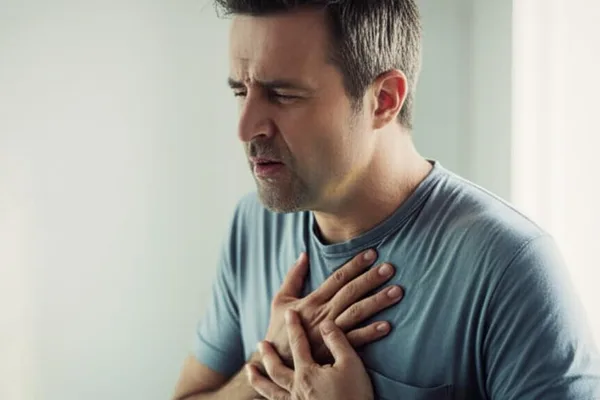
This is the main symptom that many people fear. Chest pain is medically called (Angina) . This usually occurs when the heart does not receive the necessary amount of oxygen from the blood. This pain can sometimes spread to the shoulder, left arm, or jaw .
But not all chest pain is a symptom of a heart attack. Sometimes, chest pain can be caused by gastritis or a muscle strain. However, a doctor should determine exactly what it is. So, if you have chest pain, don't ignore it.
| If you have these symptoms along with chest pain, go to the hospital immediately! | |
|---|---|
| 1. | A sudden feeling of tightness, squeezing, or pressure in the center of the chest. |
| 2. | Pain spreading to the jaw, left arm, or back . |
| 3. | Sudden, sharp chest pain accompanied by shortness of breath (especially after standing up from a short period of inactivity). |
| 4. | Nausea, dizziness, rapid heartbeat, rapid breathing, excessive sweating. |
| 5. | Very low blood pressure or heart rate. |
Fluttering sensation in the chest
Some people may feel like something is fluttering in their chest, like their heart is skipping a beat, or suddenly beating faster. We also call this palpitations . Although these are usually not dangerous, they can sometimes be a sign of an irregular heartbeat (arrhythmia). So if you experience this frequently, it's a good idea to tell your doctor.
What happens when you see a cardiologist?
When you go to see a cardiologist, he will first ask you about your symptoms, whether anyone in your family has heart disease, and your lifestyle (such as diet, exercise, smoking, etc.) . Then he will examine your body.
In addition, several tests may be performed to determine the exact condition of the heart.
- ECG (Electrocardiogram): This is a simple, painless test that records the electrical activity of the heart and checks the pattern and speed of the heartbeat.
- Echocardiogram (Ultrasound scan): This is like a scan of a baby. It takes an image of the heart and can look at many things, such as the chambers of the heart, how the valves are working, and how efficiently it pumps blood.
- Stress Test (Exercise ECG): This involves taking an ECG while you walk on a treadmill. It looks at how your heart responds when you are stressed and exercising.
- Cardiac Catheterization (Angiogram): This is a slightly more complicated test. In this test, a small tube is passed through a vein in your arm or leg and an X-ray is taken to see if there are any blockages in the coronary arteries that supply blood to your heart.
Based on the results of these tests, your doctor will diagnose your condition and provide you with a treatment plan that is right for you. This may include medication, dietary and lifestyle changes, or even surgery, such as implanting a pacemaker .
Take-Home Message
- Your heart is like the engine of your body. It's very important to take good care of it.
- Never ignore symptoms such as chest pain, difficulty breathing, frequent dizziness, or fainting.
- If you experience any of these symptoms, don't panic, but first see your family doctor. If necessary, he or she will refer you to a cardiologist.
- The earlier heart disease is detected, the greater the chance of treatment and cure. Therefore, seeking medical advice at the right time can be a life-saving factor.




💬 Comments (0)
No comments yet. Be the first to share your thoughts here.
Add Your Comment