

Hearing a word like Trisomy 18 from your doctor while talking about your developing baby can make your heart race with fear and worry. You might wonder what this condition means, why it happens, or if anything you did caused it. Please take a deep breath and know that you are not alone in feeling this way. Let us walk through what Trisomy 18 is together, in a warm, simple, and supportive way, just like talking to a trusted friend.
Medical terms can feel overwhelming when you are already worried about your pregnancy. This guide will break down everything you need to know in plain English so you can feel informed and empowered during your doctor visits. Remember that your care team is there to support you every step of the way, answer your questions, and help you make the best decisions for your family.
Let us begin by looking closely at what chromosomes are, how this extra chromosome happens, the different types of the condition, and what the future may look like for you and your baby.
- Trisomy 18 happens when a baby has an extra copy of chromosome 18 in their cells.
- It is a random genetic event and is never anyone's fault.
- Doctors can screen for and diagnose this condition during pregnancy using blood tests and ultrasounds.
- While there is no cure, supportive care can help keep your baby comfortable.
- Speaking with a genetic counselor or your doctor can help guide your family through difficult choices.
Free pregnancy due date calculator. Enter your last period date or conception date to find your EDD, current trimester, and key milestones.
What Is Trisomy 18?
Simply put, Trisomy 18 is a genetic condition caused by an issue with structures inside our bodies called chromosomes. Another name for this condition is Edwards syndrome, named after the doctor who first described it.
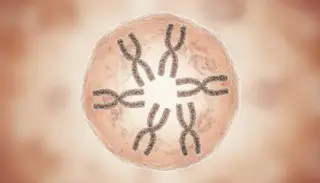
Think of your body like a large building under construction. The complete blueprint for how to build that building is stored inside books called chromosomes. Inside those books are genes, which act as instructions telling every single part of your body how to grow, from the color of your hair to how your heart beats.
Normally, a healthy baby receives 23 chromosomes from the mother and 23 chromosomes from the father, giving a total of 46 chromosomes. These chromosomes come in matching pairs, meaning there are two copies of chromosome number one, two copies of number two, and so on up to pair number 23.
In Trisomy 18, instead of the usual two copies of chromosome number 18, the baby's cells have an extra copy, giving them three copies in total. The prefix "tri" means three, which is why it is called Trisomy 18. This extra chromosome disrupts normal body development, causing many different health and physical challenges for the baby.
Types of Trisomy 18
There are three main types of Trisomy 18, and understanding them helps doctors know what to expect:
- Full Trisomy 18: This is the most common type. Every single cell in the baby's body carries the extra copy of chromosome 18.
- Partial Trisomy 18: This is very rare. Instead of an entire extra chromosome, only a small piece of chromosome 18 is extra. Sometimes this piece attaches to another chromosome, which is called a translocation.
- Mosaic Trisomy 18: This is also rare. Only some of the baby's cells have the extra chromosome, while other cells have the normal number. It is like a mosaic tile pattern where different types of cells mix together.
How Common Is This Condition?
Trisomy 18 is the second most common chromosomal condition. The most common one is Down syndrome, which is also known as Trisomy 21.
Medical statistics show that about 1 in every 5,000 babies is born with Trisomy 18. Most of the babies born with this condition are girls. However, many more pregnancies are affected by this condition than the number of babies born alive.
Because the condition causes severe medical complications, many affected babies do not survive to birth and pass away naturally inside the womb during the pregnancy.
Symptoms and Signs in Babies
Babies born with Trisomy 18 are often very small and weak. They face serious health issues and physical differences that affect how their bodies work.
Here are some common signs and physical features found in babies with Trisomy 18:
| Body Part | Common Signs |
|---|---|
| Head and Face | A smaller head, a small jaw, low-set ears, and an opening in the roof of the mouth known as a cleft palate. |
| Hands and Feet | Clenched fists with fingers overlapping each other, and rounded bottoms of the feet known as rocker-bottom feet. |
| Heart | Holes in the walls dividing the heart chambers, such as atrial or ventricular septal defects. |
| Other Organs | Structural defects affecting the lungs, kidneys, stomach, and intestines. |
| General Condition | Very slow growth, trouble feeding, weak crying, and severe intellectual and developmental delays. |
What Causes It and Who Is at Risk?
This is the question parents ask most often: "Did I do something wrong to cause this?"
Please understand that Trisomy 18 is never caused by anything you ate, drank, or did as a mother or father. It is simply a random error in cell division that happens when an egg or sperm cell forms. There is nothing anyone can do to prevent it from happening.
However, the chance of this chromosomal error happening does increase slightly as a mother gets older, especially after the age of 35. Even so, mothers of any age can have a baby with Trisomy 18.
If you have already had a child with Trisomy 18, the chance of it happening again in a future pregnancy is usually between 0.5 percent and 1 percent. But if you or your partner carry a genetic rearrangement like Partial Trisomy 18, your risk might be higher. Talk to your doctor or a genetic counselor to understand your specific situation.
Can Doctors Diagnose It During Pregnancy?
Yes, doctors can detect Trisomy 18 during pregnancy. Your doctor will first offer a prenatal screening test using a sample of your blood. While this test cannot give a 100 percent certain answer, it tells you if your baby has a higher risk for chromosomal conditions like Trisomy 18.
If the screening test shows a high risk, your doctor may suggest diagnostic tests to confirm the results:
- Chorionic Villus Sampling (CVS): A small sample of tissue is taken from the placenta during early pregnancy, usually between weeks 10 and 13.
- Amniocentesis: A small sample of amniotic fluid surrounding the baby is tested, usually done after week 15 of pregnancy.
Both of these diagnostic tests count the baby's chromosomes directly to give you a clear answer on whether Trisomy 18 is present.
Also, routine ultrasound scans performed after week 12 can spot physical signs like slowed growth, heart defects, or unusual hand positions that might point toward this condition.
Treatments and What the Future Holds
This is a very sensitive topic to discuss. There is currently no cure for Trisomy 18 because it is a genetic condition present in every cell of the baby's body.
However, having no cure does not mean nothing can be done for your baby. Doctors and nurses can provide supportive care to give your baby the most comfortable quality of life possible.
- Performing surgeries to fix serious heart defects when appropriate.
- Giving necessary medicines to manage symptoms.
- Using feeding tubes if the baby has trouble feeding by mouth.
- Providing breathing support to help the baby stay comfortable.
Some parents decide that instead of invasive medical treatments, they want to focus purely on comfort care, ensuring their baby spends their time surrounded by love, warmth, and peace without pain. These choices are deeply personal. Talk openly with your doctor about every available option.
Unfortunately, because of severe health complications, most babies with Trisomy 18 have very short lives. About half of babies born alive pass away within their first week of life, and fewer than 10 percent survive to celebrate their first birthday. Those who do live require constant medical attention.
Caring for a child with such complex needs is physically and emotionally exhausting for parents. Seeking support for yourself and your family through this journey is essential.
If you are pregnant and experience sudden severe abdominal pain, heavy vaginal bleeding, or a sudden stop in fetal movement, call 911 (US/Canada), 999 (UK), or go to your nearest Emergency Department (ER or A&E) right away. If your newborn baby is struggling to breathe, turns blue, or stops breathing, contact emergency services right away.





No comments yet. Be the first to share your question or experience below.