
Has your little one's toenail grown into the flesh? (Ingrown Toenail) Let's talk about this

Has your little one's toenail grown into the flesh? (Ingrown Toenail) Let's talk about this

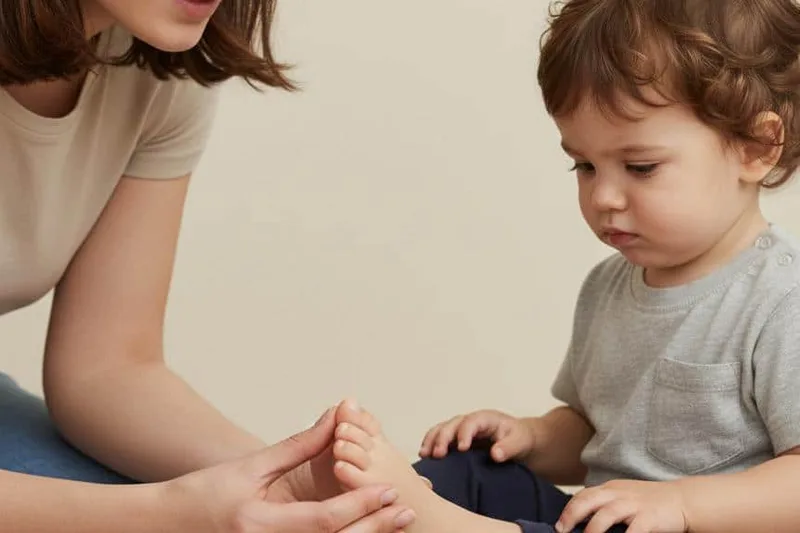
Is your little one suddenly limping when he walks? Or does he cry because he doesn't want to put on his shoes? Maybe when you look at his big toe, you see that it is red and swollen. The cause of this pain and discomfort can be a condition that is usually not serious, but can be very annoying for little ones. It is a nail that grows into the flesh. We call this an ingrown toenail . This is very common among young children. So don't panic, let's see everything you need to know about it.

Why do little children's nails go into their flesh like this?

Simply put, this is when the nail grows in a straight line, rather than a corner or side of the nail growing into the skin of the toe. This is most commonly seen on the big toe. There can be several reasons for this.

  • Tight shoes: Young children's feet grow very quickly, so shoes that were bought a few months ago may now be tight. Especially when wearing shoes that are narrow in the front and that squeeze the toes, pressure is put on the nails, making them more likely to get ingrown.
  • Wrong way to cut nails: When cutting nails, instead of cutting straight across, cut them in a circular motion on both sides and cut them very short, making it easier for the new nail to grow into the flesh. This is also the reason why some children have the habit of cutting their nails at the corners.
  • Naturally curved nails: Some children are born with slightly curved nails, and are more prone to this condition.
  • Injuries to the toes: This can also happen when a toe hits something while running or playing, causing damage to the nail.
  • Other causes: Excessive sweating of the feet, fungal infections of the nails, etc. can also sometimes cause this. Very rarely, some babies can be born with this condition (congenital onychocryptosis).

When you go to see a doctor, don't be alarmed if the doctor writes either ``onychocryptosis'' or ``unguis incarnatus'' on the paper. These are the two medical names for the condition of ingrown toenail.

What are the symptoms of this?

This condition is not that difficult to recognize. You may notice that your child changes his or her walking style due to pain and limps. You can see these signs by examining the toe.

Symptom Description
Pain If you touch the corner of the nail where it goes into the flesh, it hurts the child. He or she will not want to put on shoes.
Redness and swelling The skin around the nail appears red and swollen.
Pus When the condition becomes more severe, meaning when an infection occurs, a yellow, pus-like fluid may ooze from the area.

Although most of the time, you may think that it is an ingrown toenail, if the condition persists or recurs, it is best to see a doctor. It is important to make sure that it is not something like other conditions that can look similar, such as ``subungual exostosis`` (a bony growth under the nail) or a tumor associated with the nail.

What treatments can be done at home?

In most cases, this condition in young children can be treated with simple home remedies. Even if your child is in pain, they may not talk about it. As soon as you notice this, the first thing you should do is try to reduce the swelling.

  • Soak in lukewarm water: Soak your child's feet in a bowl of lukewarm water for 15-20 minutes twice a day. If you can, add two tablespoons of unscented Epsom salts to about a liter of water. This will help reduce swelling and pain, and also help drain any pus.
  • Gently massage: After soaking your feet in water, dry them well and massage the area where the nail has entered the flesh very gently and carefully. This will help to free up some of the ingrown nail.
  • Free the nail corner: If you can, without using any sharp tools , try to carefully lift the ingrown nail corner with your clean fingernail and pull it out. If you can do this, the pain will be greatly reduced and the wound will begin to heal faster.

Important: Never try to cut out an ingrown nail with scissors, nail clippers, or any other sharp object. This increases the risk of infection and tissue damage.

If there is pus coming out, which means there is a slight infection, you can ask your doctor to apply an appropriate antibiotic ointment. If the pain is severe, you can give your child a pain reliever such as `(acetaminophen)` (paracetamol) or `(ibuprofen)` in a dose appropriate for the child's weight and age. However, it is best to talk to your doctor about this as well.

When should you see a doctor?

If home remedies do not provide relief within a few days or if the following symptoms are present, be sure to see a doctor.

Warning sign Description
Severe pain If the child is in unbearable pain despite being cared for at home.
Spread of infection If the redness and swelling seem to be spreading up the finger.
Pus collection If it clearly looks like pus has collected under the skin.
Fever and body aches If the child has a fever and is getting worse.
Not healing If you don't see any improvement even after about a week of treatment.

Medical treatment and surgery

If home care is not successful, the doctor will provide the necessary treatment. There is nothing to fear.

What is usually done is to inject a local anesthetic into the child's finger and carefully cut out the ingrown nail. The child will not feel any pain at this time.

If this condition occurs repeatedly, the doctor may decide to use a chemical (such as phenol) or an electrical treatment (ablation) to prevent that part of the nail from growing back.

There is another treatment for children who often have this problem called ``Orthonyxia.'' Here, a small metal wire with two hooks on each side of the nail is attached to the nail, causing it to grow straight.

How can this situation be prevented?

Prevention is always better than cure. If you take care of these simple things, you can save your child from this annoying condition.

  • Choose the right shoes: When buying shoes for your children, never buy shoes that are tight, narrow, or pointy at the front. There should be room for the toes to move freely. Children's feet grow quickly, so always check the fit of the shoes.
  • Cut your nails properly: When cutting your child's nails, cut them straight across. Don't round the corners. Also, don't cut them too short. Since the nails are soft after bathing, it's also a good habit to bend the corners of the nails up a little at that time.
  • Prevent nail breakage: Teach older children and young children not to break their nails at the corners.
  • Use the right nail clipper: When cutting toenails, it's best to use a toenail clipper that is slightly wider than a fingernail clipper, with a straight edge.

Take-Home Message

  • Ingrown toenails are a very common condition in young children, so don't be unnecessarily alarmed.
  • This can often be cured with simple home remedies, such as soaking in warm water and gently massaging.
  • Never try to cut an ingrown nail with scissors or anything sharp. This will only make the situation worse.
  • If you have severe pain, signs of spreading infection, fever, or if you do not feel better within a week, be sure to see a doctor.
  • This condition can be largely prevented by using the right shoes and trimming your nails properly.

ingrown toenail, baby's nails, pediatrics, ingrown toenail, onychocryptosis, foot pain, child health

⚠️ Important: The medical articles and information on Nirogi Lanka are for general awareness only, and are by no means a substitute for professional medical advice, diagnosis, or treatment. For any medical problem you have, consult a qualified physician immediately.

💬 Comments (0)

No comments yet. Be the first to share your thoughts here.

Add Your Comment

Please calculate: 6 + 2 =
Has your little one's toenail grown into the flesh? (Ingrown Toenail) Let's talk about this
SymptomsJuly 6, 2026

Has your little one's toenail grown into the flesh? (Ingrown Toenail) Let's talk about this

Is your little one suddenly limping when he walks? Or does he cry because he doesn't want to put on his shoes? Maybe when you look at his big toe, you see that it is red and swollen. The cause of this pain and discomfort can be a condition that is usually not serious, but can be very annoying for little ones. It is a nail that grows into the flesh. We call this an ingrown toenail . This is very common among young children. So don't panic, let's see everything you need to know about it.

Why do little children's nails go into their flesh like this?

Simply put, this is when the nail grows in a straight line, rather than a corner or side of the nail growing into the skin of the toe. This is most commonly seen on the big toe. There can be several reasons for this.

  • Tight shoes: Young children's feet grow very quickly, so shoes that were bought a few months ago may now be tight. Especially when wearing shoes that are narrow in the front and that squeeze the toes, pressure is put on the nails, making them more likely to get ingrown.
  • Wrong way to cut nails: When cutting nails, instead of cutting straight across, cut them in a circular motion on both sides and cut them very short, making it easier for the new nail to grow into the flesh. This is also the reason why some children have the habit of cutting their nails at the corners.
  • Naturally curved nails: Some children are born with slightly curved nails, and are more prone to this condition.
  • Injuries to the toes: This can also happen when a toe hits something while running or playing, causing damage to the nail.
  • Other causes: Excessive sweating of the feet, fungal infections of the nails, etc. can also sometimes cause this. Very rarely, some babies can be born with this condition (congenital onychocryptosis).

When you go to see a doctor, don't be alarmed if the doctor writes either ``onychocryptosis'' or ``unguis incarnatus'' on the paper. These are the two medical names for the condition of ingrown toenail.

What are the symptoms of this?

This condition is not that difficult to recognize. You may notice that your child changes his or her walking style due to pain and limps. You can see these signs by examining the toe.

Symptom Description
Pain If you touch the corner of the nail where it goes into the flesh, it hurts the child. He or she will not want to put on shoes.
Redness and swelling The skin around the nail appears red and swollen.
Pus When the condition becomes more severe, meaning when an infection occurs, a yellow, pus-like fluid may ooze from the area.

Although most of the time, you may think that it is an ingrown toenail, if the condition persists or recurs, it is best to see a doctor. It is important to make sure that it is not something like other conditions that can look similar, such as ``subungual exostosis`` (a bony growth under the nail) or a tumor associated with the nail.

What treatments can be done at home?

In most cases, this condition in young children can be treated with simple home remedies. Even if your child is in pain, they may not talk about it. As soon as you notice this, the first thing you should do is try to reduce the swelling.

  • Soak in lukewarm water: Soak your child's feet in a bowl of lukewarm water for 15-20 minutes twice a day. If you can, add two tablespoons of unscented Epsom salts to about a liter of water. This will help reduce swelling and pain, and also help drain any pus.
  • Gently massage: After soaking your feet in water, dry them well and massage the area where the nail has entered the flesh very gently and carefully. This will help to free up some of the ingrown nail.
  • Free the nail corner: If you can, without using any sharp tools , try to carefully lift the ingrown nail corner with your clean fingernail and pull it out. If you can do this, the pain will be greatly reduced and the wound will begin to heal faster.

Important: Never try to cut out an ingrown nail with scissors, nail clippers, or any other sharp object. This increases the risk of infection and tissue damage.

If there is pus coming out, which means there is a slight infection, you can ask your doctor to apply an appropriate antibiotic ointment. If the pain is severe, you can give your child a pain reliever such as `(acetaminophen)` (paracetamol) or `(ibuprofen)` in a dose appropriate for the child's weight and age. However, it is best to talk to your doctor about this as well.

When should you see a doctor?

If home remedies do not provide relief within a few days or if the following symptoms are present, be sure to see a doctor.

Warning sign Description
Severe pain If the child is in unbearable pain despite being cared for at home.
Spread of infection If the redness and swelling seem to be spreading up the finger.
Pus collection If it clearly looks like pus has collected under the skin.
Fever and body aches If the child has a fever and is getting worse.
Not healing If you don't see any improvement even after about a week of treatment.

Medical treatment and surgery

If home care is not successful, the doctor will provide the necessary treatment. There is nothing to fear.

What is usually done is to inject a local anesthetic into the child's finger and carefully cut out the ingrown nail. The child will not feel any pain at this time.

If this condition occurs repeatedly, the doctor may decide to use a chemical (such as phenol) or an electrical treatment (ablation) to prevent that part of the nail from growing back.

There is another treatment for children who often have this problem called ``Orthonyxia.'' Here, a small metal wire with two hooks on each side of the nail is attached to the nail, causing it to grow straight.

How can this situation be prevented?

Prevention is always better than cure. If you take care of these simple things, you can save your child from this annoying condition.

  • Choose the right shoes: When buying shoes for your children, never buy shoes that are tight, narrow, or pointy at the front. There should be room for the toes to move freely. Children's feet grow quickly, so always check the fit of the shoes.
  • Cut your nails properly: When cutting your child's nails, cut them straight across. Don't round the corners. Also, don't cut them too short. Since the nails are soft after bathing, it's also a good habit to bend the corners of the nails up a little at that time.
  • Prevent nail breakage: Teach older children and young children not to break their nails at the corners.
  • Use the right nail clipper: When cutting toenails, it's best to use a toenail clipper that is slightly wider than a fingernail clipper, with a straight edge.

Take-Home Message

  • Ingrown toenails are a very common condition in young children, so don't be unnecessarily alarmed.
  • This can often be cured with simple home remedies, such as soaking in warm water and gently massaging.
  • Never try to cut an ingrown nail with scissors or anything sharp. This will only make the situation worse.
  • If you have severe pain, signs of spreading infection, fever, or if you do not feel better within a week, be sure to see a doctor.
  • This condition can be largely prevented by using the right shoes and trimming your nails properly.

ingrown toenail, baby's nails, pediatrics, ingrown toenail, onychocryptosis, foot pain, child health

⚠️ Important: The medical articles and information on Nirogi Lanka are for general awareness only, and are by no means a substitute for professional medical advice, diagnosis, or treatment. For any medical problem you have, consult a qualified physician immediately.

💬 Comments (0)

No comments yet. Be the first to share your thoughts here.

Add Your Comment

Please calculate: 6 + 2 =