
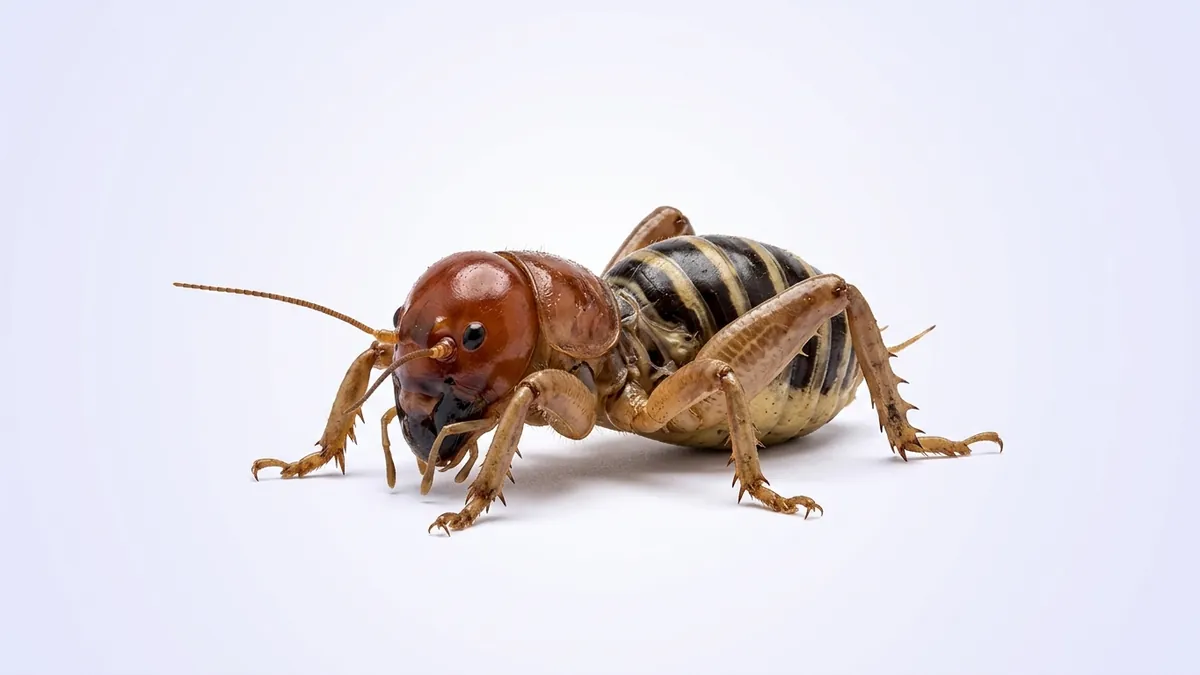
I still remember the first time a patient came into my clinic holding up a blurry photo on their phone, wide-eyed and convinced they had found a venomous mutant spider in their garage. Maybe you have had that exact same moment while scrolling online, watching a movie, or turning over a damp rock in your backyard. You spot a bulky, glossy-headed bug that looks like a cross between a spider, an oversized ant, and a cockroach—and it instantly makes your skin crawl. Meet the Jerusalem cricket.
Despite its dramatic name, this fascinating insect actually has nothing to do with the city of Jerusalem, and it is far less dangerous than its intimidating face suggests. Today, we doctors want to walk you through what Jerusalem crickets really are, whether they can bite or poison you, and exactly what to do if you ever cross paths with one.
📌 Key Takeaways at a Glance
- Not venomous or poisonous: Jerusalem crickets have no venom glands and no stinger, so they cannot poison you or your pets.
- Painful defensive bite: They possess strong jaw mouthparts (mandibles) capable of delivering a sharp pinch if picked up or trapped against your skin.
- Nocturnal soil dwellers: These solitary insects hide beneath rocks, logs, and sandy soil by day and emerge at night to scavenge.
- Beneficial garden helpers: Unlike ants or termites, they do not infest homes in colonies and actively enrich soil by breaking down decaying plant matter.
- Simple first aid works: Washing a bite promptly with soap and water prevents secondary bacterial skin infections in nearly all cases.
Vitamin D sun exposure calculator. Based on UV index, skin type, and body surface area exposed, find how long to stay in the sun for vitamin D synthesis.
What Are Jerusalem Crickets and Are They Dangerous?
Jerusalem crickets are large, flightless, nocturnal insects belonging to the genus Stenopelmatus that are native to the western United States and Mexico. They are not dangerous to humans because they carry no venom and lack a stinger, though they can deliver a painful mechanical bite if handled or provoked.
Even though "cricket" sits right in their name, they are not true crickets. Instead, they are close evolutionary cousins in the insect order Orthoptera, which also includes grasshoppers, katydids, and wetas. Entomologists have identified more than 100 distinct species across North America, with Stenopelmatus fuscus being the most widely recognized.
If you live in California, Arizona, New Mexico, or the Pacific Northwest, you might spot one wandering across your patio after a rainstorm. On the other hand, if you live in the United Kingdom, eastern Canada, or Australia, you will not find native Jerusalem crickets in your backyard—though travelers frequently encounter them in North America, and Australia has similar-looking relatives like king crickets. Pretty surprising, right? Most people assume any bug that scary-looking must be toxic, yet they pose virtually zero medical threat unless you try to grab them bare-handed.
Why Is It Called a Jerusalem Cricket?
Have you ever wondered why an insect native to western North America carries the name of an ancient Middle Eastern city? Historians and entomologists point to a fascinating linguistic quirk from the nineteenth century. When early settlers and Franciscan missionaries in the American Southwest uncovered these bizarre, human-faced bugs while digging in the soil, they were startled enough to shout "Jerusalem!" as a polite exclamation instead of swearing.
Over time, that startled cry stuck as the insect's everyday name. Depending on where you live or travel, you will also hear locals call them by several other colorful nicknames:
- Potato bug: Gardeners gave them this name because they occasionally nibble on underground tubers like potatoes, though this can be confusing since beetles and pill bugs share the same nickname.
- Skull cricket: Their oversized, smooth, yellowish-brown head bears a striking resemblance to a tiny human skull, complete with dark, bead-like eyes.
- Child of the earth (niño de la tierra): In Mexico and parts of the southwestern United States, Spanish speakers use this traditional name because of the insect's pale, plump body and baby-like head shape.
What Does a Jerusalem Cricket Look Like—and How Is It Different From True Crickets?
Think about it for a second: why do so many people mistake Jerusalem crickets for spiders or cockroaches at first glance? Unlike common field crickets, two-spotted crickets, or bright green bush crickets (katydids), Jerusalem crickets have completely lost their wings over millions of years of underground living.
Instead of slender legs built for high-speed jumping, they have thick, muscular, spiny legs designed like miniature shovels for tunneling through dirt. Their bodies measure between 1.5 and 3 inches (4 to 7.5 centimeters) long, featuring a glossy amber-brown head and a plump abdomen striped with alternating black and caramel bands. Because they are strictly nocturnal, they spend daylight hours tucked beneath flat stones, rotting logs, or damp garden mulch, occasionally wandering into cool basements or garages at night.
By contrast, common dark field crickets and green katydids have long wings folded flat over their backs, delicate thread-like antennae longer than their bodies, and a cheerful chirping song created by rubbing their wings together. Jerusalem crickets cannot chirp at all because they have no wings—a key difference that helps you tell them apart right away.
Do Jerusalem Crickets Bite or Sting? Understanding the Medical Risks
Let us clear up the biggest fear patients bring into our clinics right away: Jerusalem crickets do not have a stinger, and they do not produce venom. You cannot get envenomated by one, nor will a bite trigger systemic toxic shock like certain venomous spiders or scorpions.
However, they do have remarkably strong jaw mouthparts (mandibles). In the wild, they use those jaws to chew through tough plant roots, underground tubers, and hard-shelled insects. Their bite force is strong enough to pierce thin plastic, cardboard, and human skin. When startled, a Jerusalem cricket's first instinct is actually to freeze and play dead. If you keep poking or squeezing it, though, it will defend itself with a sharp, pinching bite that hurts immediately and may draw a tiny drop of blood.
From a medical standpoint, what do we doctors watch for after a bite? Because these insects live in soil and decaying organic matter, their mouthparts can carry surface bacteria such as Staphylococcus or Streptococcus. If bacteria enter broken skin, a localized bacterial skin infection (cellulitis) can develop over the next 24 to 72 hours. People with sensitive skin may also notice mild histamine swelling, and any soil-contaminated puncture wound is a smart reminder to verify that your tetanus booster shot (tetanus toxoid vaccine) is up to date.
What Do Jerusalem Crickets Eat and How Do They Grow?
Remember how we mentioned earlier that Jerusalem crickets cannot chirp with wings? Nature gave them a creative workaround for finding a mate. Both males and females drum their heavy abdomens rapidly against the soil, sending low-frequency seismic vibrations through the ground that humans can actually hear from up to 60 feet (18 meters) away on a quiet night.
Once a pair mates, biology takes a dramatic turn: the larger female occasionally eats the male for extra protein before laying her eggs in an underground burrow. After several weeks, tiny pale nymphs hatch and begin a remarkably slow journey to adulthood. It takes two to five years—and more than ten separate molts—for a young Jerusalem cricket to reach full size. Once fully mature, however, adults live for only two to six months.
Because they are omnivorous scavengers, their diet shifts between day and night:
- Underground plant matter: Roots, bulbs, and root vegetables such as potatoes and sweet potatoes.
- Decaying vegetation: Fallen leaves, rotting wood fibers, and composted organic debris.
- Smaller invertebrates: Soft-bodied soil grubs, worms, and smaller insects hunted under cover of darkness.
How Can You Safely Treat a Jerusalem Cricket Bite at Home?
Suppose you were moving flowerpots in your yard without gloves and got pinched on the finger. What should you do first? Because there is no venom to neutralize, treatment focuses completely on stopping mechanical pain and preventing skin bacteria from setting up camp.
Start by washing the area thoroughly with warm water and mild soap for at least 30 to 60 seconds, then gently pat it dry with a clean towel. Apply a cool compress or an ice pack wrapped in a cloth for 10 to 15 minutes to calm throbbing pain and localized swelling. You can also dab on a thin layer of over-the-counter antiseptic ointment or hydrocortisone cream if the skin feels itchy or irritated. If throbbing discomfort lingers, standard over-the-counter pain relief such as acetaminophen (paracetamol) or ibuprofen works well for most adults.
Finally, check your vaccination records. If it has been more than five years since your last tetanus booster shot—or you are unsure when you last had one—give your Primary Care Physician (PCP) or local family GP clinic a quick call so they can update it safely.
How Does a Jerusalem Cricket Bite Compare to Other Common Bugs?
When patients arrive at Urgent Care worried about an unseen bite in the yard or garage, comparing the skin reaction side by side helps us narrow down the culprit quickly. Look at how a Jerusalem cricket pinch differs from other common household or garden bites:
| Bite Type or Scenario | Clinical Explanation & Recommended Action |
|---|---|
| Jerusalem Cricket Pinch | Causes immediate sharp mechanical pain, a small single or double puncture mark, and mild localized redness without spreading venom. What you should do: Wash immediately with soap and water, apply a cool compress, and check your tetanus booster status. |
| True Cricket or Katydid | Very weak jaws that rarely break human skin; occasionally causes mild superficial irritation if handled roughly. What you should do: Clean the skin with mild soap and water and monitor for 24 hours. |
| Venomous Spider Bite | Often painless at first, followed hours later by progressive burning pain, muscle cramping, blistering, or systemic nausea. What you should do: Seek prompt evaluation at your local Urgent Care center or hospital Emergency Room (ER / A&E). |
| Secondary Bacterial Skin Infection (Cellulitis) | Develops 24 to 72 hours after any soil-exposed bug bite, causing expanding warmth, throbbing tenderness, pus, or fever. What you should do: See your Primary Care Physician (PCP) / family GP clinic or Urgent Care the same day for prescription antibiotics. |
What Should You Do If You Spot One in Your Yard or Garage?
Finding a three-inch insect marching across your garage floor is startling, we completely get it. Before you reach for a heavy-duty chemical spray or a shoe, pause for a second and remember one crucial fact: Jerusalem crickets are strictly solitary creatures. Unlike ants, cockroaches, or termites, they never form colonies, never nest inside drywall, and will not multiply inside your house.
Outdoors, they actually perform an important ecological job. By chewing through decaying leaves and aerating soil tunnels, they recycle nutrients back into your garden beds while serving as a vital food source for owls, foxes, lizards, and songbirds. If one wanders indoors under a door gap, simply place a sturdy plastic cup or glass jar over it, slide a stiff piece of cardboard or thick leaf underneath, and release it gently into a shaded garden bush away from your foundation. Sealing worn weatherstripping along garage doors is all you need to keep future night wanderers outside.
✔️ What You Should Do & ❌ What to Avoid
- ✔️ Wear thick gardening gloves: Always put on sturdy leather or rubber-coated gloves before lifting rocks, firewood, or flowerpots in your yard.
- ✔️ Use the cup-and-cardboard method: Safely relocate any cricket found indoors back into outdoor soil without touching it.
- ✔️ Clean bites promptly: Wash any pinch mark immediately with soap and clean running water to clear away soil bacteria.
- ❌ Do not poke or pick them up bare-handed: Even if the bug appears still or dead, handling it triggers a painful defensive bite.
- ❌ Do not spray harsh indoor pesticides: Chemical sprays are unnecessary for solitary stray insects and expose your family and pets to avoidable fumes.
- ❌ Do not ignore worsening warmth or redness: Spreading redness after 24 hours signals bacterial infection rather than venom and needs medical care.
🚨 When to Seek Immediate Emergency Care (Red-Flag Symptoms)
If you or someone near you develops any of these red-flag symptoms, do not wait — call 911 (or 999 in the UK / 000 in Australia) immediately or go straight to the nearest hospital Emergency Room (ER / A&E):
- Signs of a severe allergic reaction (anaphylaxis): Trouble breathing, wheezing, throat tightness, or swelling of your lips, tongue, or face.
- Systemic distress: Sudden dizziness, fainting, confusion, rapid heartbeat, or widespread hives breaking out across your body.
- Rapidly spreading skin infection: Red streaks moving up your arm or leg, rapidly expanding hot swelling, or pus draining from the bite site.
- High fever or chills: Developing a fever above 100.4°F (38°C) or body shakes within days of a soil-contaminated bite.
💡 Key Take-Home Message
- Scary look, harmless nature: Jerusalem crickets have zero venom and cannot sting, despite their large skull-like heads and bulky bodies.
- Respect their space: Their strong jaws are built for roots and soil, so they only bite humans in self-defense when grabbed or trapped.
- Solitary garden allies: Spotting one in your garage is a harmless stray encounter, not a sign of a household infestation.
- Focus on basic hygiene: Simple soap-and-water cleaning and an up-to-date tetanus shot protect you completely from minor skin infections.






No comments yet. Be the first to share your question or experience below.