

One of the biggest challenges for a mother or father when visiting a doctor, especially with a small child, is giving the injection. The baby starts crying and struggling as soon as he sees the needle. At that time, we are also very sad. So, how great would it be if there was a way to reduce the pain felt during this injection? Today, we are talking about something that can help with that. That is, numbing creams.
What is this numbing cream?
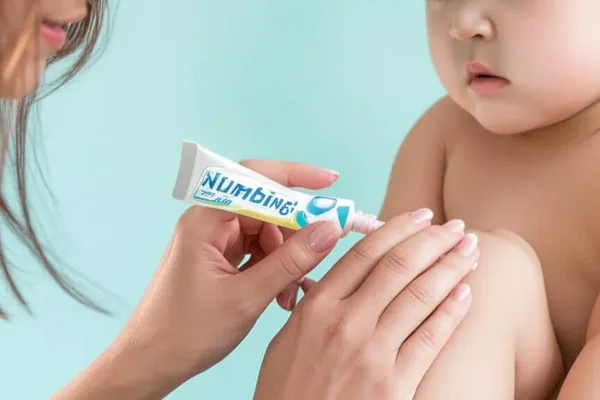
Simply put, this is a topical anesthetic cream. In medical terms, this is called a "topical anesthetic." "Topical" means applied to the skin. "Anaesthetic" means numbing. This cream usually contains 4% of the numbing drug "Lidocaine."
When you apply this cream to your baby's skin, the nerves in the area where it is applied will temporarily numb. It's like when a doctor gives you an injection in your gums before pulling out a tooth. But this is not an injection, it's just a cream. This way, the sharp pain you feel when you get the injection will be largely gone. You don't need a prescription from a doctor to buy this cream from a pharmacy. However, it's always safest to talk to your pediatrician before using it on your baby.
Does this cream really work for injection pain?
Yes, this cream can significantly reduce the pain of the injection. However, it cannot be said that it will eliminate the pain 100%. The baby may still feel things like pressure when the needle goes in. But since there is no sharp pain, the baby will be much less anxious.
Remember, distraction techniques are very important for best results, rather than using this cream alone.
Imagine, while applying the cream and giving the injection, you give the baby a favorite toy, or blow bubbles, or sing a song with him. Then the baby's attention is diverted from the injection. Then he doesn't feel even the slightest pressure. Over time, the baby automatically learns that injections are not something to be afraid of.
Okay, now let's see how to whip this cream exactly.
It is very important to know exactly how to use this. If you use it incorrectly, it will not give the desired results. Follow the steps below.
| Steps | What to do and description |
|---|---|
| 1. Know where to inject. | This is the most important thing. Before you see the doctor, ask the doctor or nurse exactly where to give the injection. Some injections are given in the upper arm, while others are given in the thigh. So it's important to know the correct place. |
| 2. Cleanse and dry the skin. | Wash the injection site thoroughly with soap and water, pat dry with a clean cloth, and avoid applying the cream to areas with cuts or abrasions. |
| 3. The amount of cream | If the baby weighs less than 10 kilograms (22 pounds), place a dot of cream the size of a rupee coin. If the baby weighs more than 10 kilograms, place a dot of cream the size of a five rupee coin. |
| 4. Time to spread the cream. | It takes about 30 minutes for the numbing cream to take effect, so apply the cream about an hour before your injection. For example, if your appointment is at 10 a.m., apply the cream around 9 a.m. |
| 5. Cover with a bandage | Cover the area where you applied the cream with a clear bandage or plastic wrap. But don't rub the cream in . Spread it out in a thick layer. This will help the cream absorb better into the skin. |
| 6. Don't let the baby touch it. | Do not let your baby touch the area where you applied the cream or put it in their mouth. If any cream comes out of the bandage, wipe it off. Be careful not to get it in the eyes, nose, or mouth. Wash your hands thoroughly after applying the cream. |
When do you remove the cream?
When you go to see the doctor, the nurse or doctor will wipe off the cream and clean the area with alcohol before giving the injection. After removing the cream, the area will still be numb for about an hour . So there's nothing to worry about.
Is this cream safe to use?
In general, this cream is fairly safe if you follow the instructions carefully. However, there are a few things you should be aware of.
- Allergies: Do not use this cream if your baby is allergic to Lidocaine.
- Follow the instructions: Read and follow the instructions on the cream's package exactly.
- Do not apply to large areas: Do not apply this cream to large areas of the body. Limit it to the injection site.
- For medical purposes only: This should be used for medical purposes only.
- Do not apply too often: Do not apply this cream more than once within two hours.
- Check the expiration date: Be sure to check the expiration date before using.
- Keep out of reach of children: Keep the cream tube safely out of reach of children.
Side effects and when to see a doctor
You may notice some minor changes after applying this cream, but if any symptoms appear, you should take action immediately.
| Characteristic/condition | What to do |
|---|---|
| Common side effects (don't worry) | |
| Temporary paleness of the skin | This is normal. The skin color will return to normal as the cream wears off. |
| When to seek immediate medical advice | |
| Skin redness, itching, rash | Immediately wipe off the cream and call your doctor. |
| If the baby swallows the cream or gets it in the eyes/nose | Wash the area immediately with water. Then call a doctor. If in doubt, you can call the National Poison Information Center at the Colombo National Hospital for advice. |
| When to go to the hospital's Emergency Treatment Unit (ETU) immediately (symptoms of a severe allergy) | |
| Swelling of the face, lips, or body, hives, fever or chills, difficulty breathing, wheezing | These could be signs of a serious allergy. Take your baby to the nearest hospital's Emergency Department (ETU) immediately. |
So as you can see, although this cream is very useful, we need to be very careful when using it. Always remember, the baby's safety comes first.
Take-Home Message
- Numbing cream can be helpful to reduce injection pain, but always talk to your doctor before using it on your baby.
- For best results, apply the correct amount to the correct area about an hour before the injection.
- Just like applying the cream, distracting the baby while giving the injection is also very important.
- If you experience any symptoms such as redness, itching, or blistering after applying the cream, remove the cream immediately and call your doctor .
- If you notice severe allergy symptoms such as difficulty breathing and swelling , take your baby to the hospital's Emergency Treatment Unit (ETU) immediately.




💬 Comments (0)
No comments yet. Be the first to share your thoughts here.
Add Your Comment