

When your baby is about 6 months old, we gradually introduce him to solid foods from liquid foods, right? This is a very beautiful and new experience. The baby's world is expanding with new tastes and new smells. So, a question that comes to many mothers at this time is, "Is it good to give yogurt to the baby? When can I give it?" Yogurt is one of the best foods to give to the baby when starting solid foods. But there are a few things we need to be careful about when giving it. Let's talk about it today.
How to introduce yogurt to a baby?
Yogurt is generally a very safe and nutritious food for babies. But when you buy yogurt from the store, you need to read the label carefully. You need to be very careful about these two things in particular.
| What not to give | Reason and what to do |
|---|---|
| Honey | It is completely forbidden to give honey to babies until they are one year old . Honey can contain bacteria that can cause a serious food poisoning called botulism. |
| Added Sugar | Most of the flavored yogurts available in the market have added sugar or other sweeteners. These do not provide any nutritional benefits to the baby. Therefore, choose plain/natural yogurt without added sugar . If you want to add flavor, add some finely chopped fruit. |
The most important thing is that when you introduce a new food to your baby, give only one food at a time . After giving that food, do not give another new food for at least three days. That way we can be sure that the baby will not be allergic to that food or not. Dairy products can cause allergies in some babies, so think about this especially when giving yogurt.
If anyone in your family has a dairy allergy or lactose intolerance, be sure to talk to your doctor before starting to give your baby yogurt.
Be aware of allergy symptoms!
Watch your baby closely for any of these symptoms after giving them yogurt. These could be signs of an allergy.
| Signs of an Allergic Reaction |
|---|
| - Vomiting |
| - Diarrhea (stomach ache) |
| - Skin rash or redness |
| - Swelling of the lips, tongue, or around the eyes |
If you notice any of these symptoms, stop giving your baby yogurt immediately and inform your doctor . The doctor will advise you on what to do next. He or she may tell you to try giving your baby yogurt again in a while, as some allergies go away with time.
What are the nutritional benefits of yogurt?
Yogurt is a superfood rich in protein, calcium , phosphorus, and vitamin B. Protein helps your baby's muscles grow, and calcium strengthens bones and teeth.
But the most valuable thing in yogurt is the live bacterial cultures it contains. We call these probiotics . Simply put, these are "good bacteria." These good bacteria help maintain a healthy balance in the baby's intestines. This makes it easier for the baby to digest food. In the long run, research has found that foods containing probiotics can also help protect against many diseases such as obesity and diabetes.
It is enough to give your baby about half a cup of yogurt at a time.
How to make yogurt for a baby?
Once you've made sure your baby isn't allergic to yogurt , you can add some finely chopped fruit to add a little flavor and sweetness. But be careful to chop the fruit into very small pieces or mash it well, as the pieces can get stuck .
Good fruits to add to yogurt:
- Strawberries
- blueberry
- Peaches
- Banana
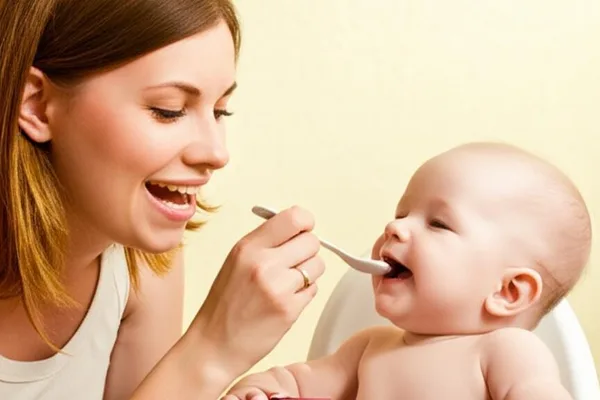
You can feed your baby with a spoon. Or let your baby try to hold the spoon and eat. Sure, that will make a little mess. But that's part of the way your baby learns new things.
Keep these things in mind when introducing new foods:
Before introducing new foods, ask yourself these questions.
| How do you know if your baby is ready for solid foods? | |
|---|---|
| Keeping your head straight | Can your baby hold their head up on their own without help? This is a very important developmental milestone for starting solid foods. |
| Interest in eating | Does your baby look at you with interest while you're eating? Does he try to touch your food? Does he open his mouth when you bring a spoon closer? These are good signs. |
| Ability to swallow food | When you first give food from a spoon, your baby may push it out with their tongue. This is called the tongue-thrust reflex. Gradually, your baby will learn to use their tongue to push the food down their throat and swallow. |
Be careful about foods that may cause allergies.
By the time a baby is one year old, they should have been introduced to the main foods that are commonly known to cause allergies . The latest opinion is that introducing these foods early can reduce the risk of developing allergies to those foods in the future.
- Well-cooked eggs
- Cow's milk and related products (yogurt, cheese)
- Soy
- Wheat
- Sesame
- Fish and other seafood
- Nuts like peanuts (Creamy Peanut Butter) and cashews (ground into a paste)
While doing all of this, if you have any problems or doubts, the best thing to do is to seek advice from your doctor .
Take-Home Message
- Giving yogurt to your baby is a great nutritional choice when they start eating solid foods after 6 months.
- Do not give honey to babies under one year of age for any reason. Also, choose natural yogurt instead of yogurt with added sugar.
- When introducing a new food, only give it one at a time and watch for signs of allergy (vomiting, diarrhea, skin rashes) for at least 3 days.
- If there is a family history of dairy allergies, talk to your doctor before giving yogurt.
- Never hesitate to ask your doctor to resolve any concerns or doubts you may have regarding your baby's nutrition.




💬 Comments (0)
No comments yet. Be the first to share your thoughts here.
Add Your Comment