Do you know about the little 'emergency center' in your body? (Adrenal Medulla) - Let's talk about this!

Do you know about the little 'emergency center' in your body? (Adrenal Medulla) - Let's talk about this!
Today we're going to talk about a very amazing and very important part of our body. It's like a little 'emergency control center' in our body. We call it the ``Adrenal Medulla''. You may not have heard of this name before, but the work it does is very important to you. So, let's see what it is, how it works, and what it does to us.

What is this `(Adrenal Medulla)`?

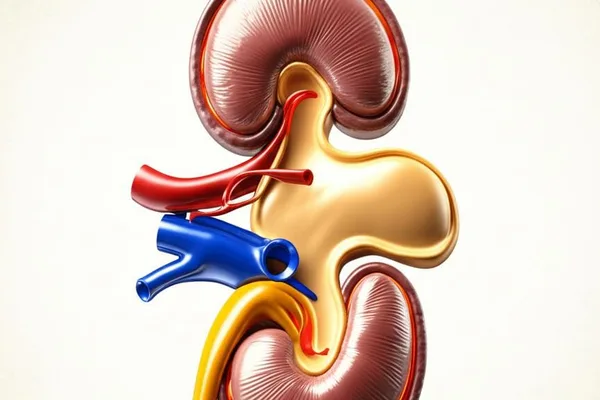
Simply put, the `(Adrenal Medulla)` is the small part on the inside of your `(Adrenal Gland)`, which is what we call the adrenal gland in Sinhala. Imagine, this adrenal gland is like a small triangular hat above your two kidneys. You have two kidneys, a little below the rib cage. These two adrenal glands are located above those two kidneys. This adrenal gland is made up of two main parts. The large part on the outside is called the `(Adrenal Cortex)`. The `(Adrenal Medulla)` that we are talking about today is the relatively small part on the inside. So, this `(Adrenal Medulla)` is where the important hormones that control our autonomic nervous system `(Autonomic nervous system)` are released. Do you know what this autonomic nervous system is? It is the one that controls things that happen automatically without us even thinking about it. For example, things like your heart rate, breathing , and sweating.

What happens to the `(Adrenal Medulla)`? The most important role!

The main function of this `(Adrenal Medulla)` is to prepare our body to face an emergency, or what we call stress . This happens by releasing a special group of hormones, namely `(Catecholamines)`. Have you heard of `(Adrenaline)` and `(Noradrenaline)`? (These are also called `(Epinephrine)` and `(Norepinephrine)`. Those two hormones belong to this `(Catecholamines)` group. Imagine that you are walking on the street and suddenly a dog comes chasing you. Then that feeling of palpitations, the rapid heartbeat, the feeling of being cold, the urge to run – come on, all of that happens within a few seconds because of the hormones coming from this `(Adrenal Medulla)`. That is what we call the `(Fight-or-flight response)`. That is, the response that prepares the body to 'fight or run' . This is because of the response:
  • Even if you have an injury, you feel less pain at that time.
  • Your strength and speed will suddenly increase.
  • Attention to the environment is increasing greatly .

What is the role of `(Adrenaline)`?

The hormone ``Adrenaline`` is released from the ``Adrenal Medulla`` when blood sugar levels drop or during exercise. It helps the body deal with emergencies in the following ways:

What happens with `(Noradrenaline)`?

This hormone also helps the body cope with stress. Here's how:
  • Increases blood sugar levels .
  • Blood vessels constrict (some of them).
  • Raises blood pressure.
Not only that, `(Norepinephrine)` (that's `(Noradrenaline)` itself) also does things like:
  • Helps store memories in the brain.
  • Helps you wake up in the morning.
  • Increases attention and coordination.
  • It also supports mental health.

What is the structure of the `(Adrenal Medulla)`?

This is a bit scientific, but let's try to understand it simply.
  • Blood supply : Since the adrenal medulla secretes hormones, it requires a good blood supply. It receives blood from branches of major blood vessels such as the inferior phrenic artery, renal artery, and abdominal aorta.
  • Nerve supply: The nerve called `(Greater splanchnic nerve)` helps the `(Adrenal Medulla)` communicate with the rest of the body. This nerve belongs to the `(Autonomic nervous system)` that we discussed earlier.
  • `(Chromaffin cells)`: These are a special type of cell found in the `(Adrenal Medulla)`. These cells contain small granules `(granules). When an emergency signal comes from the `(Splanchnic nerve)`, these `(Chromaffin cells)` release their granules. Then the hormones `( Adrenaline )` and `(Noradrenaline)` are added to the blood.

What diseases affect the `(Adrenal Medulla)`?

Conditions that affect the adrenal medulla are usually rare , but they can sometimes be life-threatening. The majority of these conditions are adrenal tumors. Most of these tumors are benign, meaning they are not cancerous. However, some types of cancer can occur. Sometimes these tumors can be inherited. Some of the types of tumors that can develop in the adrenal medulla are:
  • Ganglioneuroma: This is a tumor that can develop in both adults and children. It arises from cells of the autonomic nervous system.
  • Neuroblastoma: This is a cancer that develops in nerve tissue. It is most common in children. It can develop in the abdomen, chest, or even around the spinal cord.
  • Paraganglioma: This is also a tumor that arises from the chromaffin tissue of the adrenal glands. It can develop in the peripheral nervous system and affect areas such as the limbs, head, neck, and abdomen.
  • `(Pheochromocytoma)`: This tumor affects the release of `(Epinephrine)` and `( Norepinephrine )` hormones. This condition can cause a sudden, dangerous increase in blood pressure. This is called `(Hypertensive crisis)`.

What are the symptoms of Adrenal Medulla Cysts?

These tumors often grow very slowly . So you may not notice any symptoms at first. Most often, they are discovered incidentally, during an imaging study done for another reason. (They are also called adrenal incidentalomas.) However, if symptoms of an adrenal medulla tumor occur, they can affect the following systems:
  • Blood pressure (e.g. high blood pressure )
  • Digestive system (e.g. stomach pain, nausea)
  • Nervous system (e.g., headache, sweating)
  • Respiratory system (e.g., difficulty breathing)
  • Urinary system

What are the symptoms of a ``Hypertensive crisis''?

A `(Hypertensive crisis)`, that is, a dangerous increase in blood pressure, can occur if the hormones released by the `(Adrenal Medulla)` cannot be properly controlled by even a small `(stress). Imagine, even something as simple as bending forward or eating certain foods can cause these symptoms:
  • Chest pain
  • Excessive sweating (Hyperhidrosis)
  • Headache
  • Syncope
  • Nausea and vomiting
  • Epilepsy (abnormal electrical activity in the brain)
  • Difficulty breathing (Dyspnea)
Important: If you have symptoms like these, it may be a condition that requires urgent medical attention.

Are there other conditions that affect the `(Adrenal Medulla)`?

Yes, if this hormone level is abnormally high, it can also be linked to some mental health problems. For example:
  • Addiction
  • Anxiety
  • Attention deficit hyperactivity disorder (ADHD)
  • Depression
  • Panic disorder
  • Post-traumatic stress disorder (PTSD)
These hormones are not the only cause of these conditions, but an imbalance in these hormones can contribute to them.

What are the treatments for `(Adrenal Medulla)` diseases?

The type of treatment you need will depend on your diagnosis and the severity of your symptoms. Treatment may include:
  • Treatment for `(Hypertensive crisis)`: Emergency treatment is needed to lower blood pressure. This can be done with medications like `(Vasodilators).` These medications quickly widen the constricted blood vessels.
  • Treatment for tumors and cancer:Cysts often require surgery. The surgeon may have to remove one or both of your adrenal glands. Cancerous cysts may require radiation therapy and chemotherapy.

How do I keep my `(Adrenal Medulla)` healthy?

By taking good care of yourself, you can keep your adrenal glands, or the adrenal medulla, functioning at a good level. The following things can help with this:
  • Live an active lifestyle: Exercise regularly . Walking for at least 30 minutes a day is also good.
  • Eat a nutritious diet: Eat more vegetables, fruits, legumes, and whole grains. Reduce sweet and fatty foods.
  • Drink plenty of clean water: Try to drink at least 8 glasses of water a day.
  • Managing stress: Deep breathing exercises and meditation can help reduce stress. Find a method that works for you.
  • Get preventive care: Get regular (physical exams) so you can identify any problems early.

In summary, what to remember! (Take-Home Message)

Hormones produced by your adrenal medulla control how your body responds to emergencies, or stress. These hormones give you the strength to survive dangerous situations. However, if these hormone levels become abnormally high, it can cause a number of health problems, some of which can be life-threatening.
If you have any doubts or fears about an adrenal medulla tumor, a hypertensive crisis, or an increase in hormones, you should definitely consult an endocrinologist. Then you will know exactly what is going on. Don't worry, there are good treatments for most things now.

⚠️ Important: The medical articles and information on Nirogi Lanka are for general awareness only, and are by no means a substitute for professional medical advice, diagnosis, or treatment. For any medical problem you have, consult a qualified physician immediately.

💬 Comments (0)

No comments have been posted yet. Add your comment here for the first time.

Add your comment

Please calculate: 5 + 5 =
Do you know about the little 'emergency center' in your body? (Adrenal Medulla) - Let's talk about this!
How the Body WorksSeptember 9, 2025

Do you know about the little 'emergency center' in your body? (Adrenal Medulla) - Let's talk about this!

Today we're going to talk about a very amazing and very important part of our body. It's like a little 'emergency control center' in our body. We call it the ``Adrenal Medulla''. You may not have heard of this name before, but the work it does is very important to you. So, let's see what it is, how it works, and what it does to us.

What is this `(Adrenal Medulla)`?

Simply put, the `(Adrenal Medulla)` is the small part on the inside of your `(Adrenal Gland)`, which is what we call the adrenal gland in Sinhala. Imagine, this adrenal gland is like a small triangular hat above your two kidneys. You have two kidneys, a little below the rib cage. These two adrenal glands are located above those two kidneys. This adrenal gland is made up of two main parts. The large part on the outside is called the `(Adrenal Cortex)`. The `(Adrenal Medulla)` that we are talking about today is the relatively small part on the inside. So, this `(Adrenal Medulla)` is where the important hormones that control our autonomic nervous system `(Autonomic nervous system)` are released. Do you know what this autonomic nervous system is? It is the one that controls things that happen automatically without us even thinking about it. For example, things like your heart rate, breathing , and sweating.

What happens to the `(Adrenal Medulla)`? The most important role!

The main function of this `(Adrenal Medulla)` is to prepare our body to face an emergency, or what we call stress . This happens by releasing a special group of hormones, namely `(Catecholamines)`. Have you heard of `(Adrenaline)` and `(Noradrenaline)`? (These are also called `(Epinephrine)` and `(Norepinephrine)`. Those two hormones belong to this `(Catecholamines)` group. Imagine that you are walking on the street and suddenly a dog comes chasing you. Then that feeling of palpitations, the rapid heartbeat, the feeling of being cold, the urge to run – come on, all of that happens within a few seconds because of the hormones coming from this `(Adrenal Medulla)`. That is what we call the `(Fight-or-flight response)`. That is, the response that prepares the body to 'fight or run' . This is because of the response:
  • Even if you have an injury, you feel less pain at that time.
  • Your strength and speed will suddenly increase.
  • Attention to the environment is increasing greatly .

What is the role of `(Adrenaline)`?

The hormone ``Adrenaline`` is released from the ``Adrenal Medulla`` when blood sugar levels drop or during exercise. It helps the body deal with emergencies in the following ways:

What happens with `(Noradrenaline)`?

This hormone also helps the body cope with stress. Here's how:
  • Increases blood sugar levels .
  • Blood vessels constrict (some of them).
  • Raises blood pressure.
Not only that, `(Norepinephrine)` (that's `(Noradrenaline)` itself) also does things like:
  • Helps store memories in the brain.
  • Helps you wake up in the morning.
  • Increases attention and coordination.
  • It also supports mental health.

What is the structure of the `(Adrenal Medulla)`?

This is a bit scientific, but let's try to understand it simply.
  • Blood supply : Since the adrenal medulla secretes hormones, it requires a good blood supply. It receives blood from branches of major blood vessels such as the inferior phrenic artery, renal artery, and abdominal aorta.
  • Nerve supply: The nerve called `(Greater splanchnic nerve)` helps the `(Adrenal Medulla)` communicate with the rest of the body. This nerve belongs to the `(Autonomic nervous system)` that we discussed earlier.
  • `(Chromaffin cells)`: These are a special type of cell found in the `(Adrenal Medulla)`. These cells contain small granules `(granules). When an emergency signal comes from the `(Splanchnic nerve)`, these `(Chromaffin cells)` release their granules. Then the hormones `( Adrenaline )` and `(Noradrenaline)` are added to the blood.

What diseases affect the `(Adrenal Medulla)`?

Conditions that affect the adrenal medulla are usually rare , but they can sometimes be life-threatening. The majority of these conditions are adrenal tumors. Most of these tumors are benign, meaning they are not cancerous. However, some types of cancer can occur. Sometimes these tumors can be inherited. Some of the types of tumors that can develop in the adrenal medulla are:
  • Ganglioneuroma: This is a tumor that can develop in both adults and children. It arises from cells of the autonomic nervous system.
  • Neuroblastoma: This is a cancer that develops in nerve tissue. It is most common in children. It can develop in the abdomen, chest, or even around the spinal cord.
  • Paraganglioma: This is also a tumor that arises from the chromaffin tissue of the adrenal glands. It can develop in the peripheral nervous system and affect areas such as the limbs, head, neck, and abdomen.
  • `(Pheochromocytoma)`: This tumor affects the release of `(Epinephrine)` and `( Norepinephrine )` hormones. This condition can cause a sudden, dangerous increase in blood pressure. This is called `(Hypertensive crisis)`.

What are the symptoms of Adrenal Medulla Cysts?

These tumors often grow very slowly . So you may not notice any symptoms at first. Most often, they are discovered incidentally, during an imaging study done for another reason. (They are also called adrenal incidentalomas.) However, if symptoms of an adrenal medulla tumor occur, they can affect the following systems:
  • Blood pressure (e.g. high blood pressure )
  • Digestive system (e.g. stomach pain, nausea)
  • Nervous system (e.g., headache, sweating)
  • Respiratory system (e.g., difficulty breathing)
  • Urinary system

What are the symptoms of a ``Hypertensive crisis''?

A `(Hypertensive crisis)`, that is, a dangerous increase in blood pressure, can occur if the hormones released by the `(Adrenal Medulla)` cannot be properly controlled by even a small `(stress). Imagine, even something as simple as bending forward or eating certain foods can cause these symptoms:
  • Chest pain
  • Excessive sweating (Hyperhidrosis)
  • Headache
  • Syncope
  • Nausea and vomiting
  • Epilepsy (abnormal electrical activity in the brain)
  • Difficulty breathing (Dyspnea)
Important: If you have symptoms like these, it may be a condition that requires urgent medical attention.

Are there other conditions that affect the `(Adrenal Medulla)`?

Yes, if this hormone level is abnormally high, it can also be linked to some mental health problems. For example:
  • Addiction
  • Anxiety
  • Attention deficit hyperactivity disorder (ADHD)
  • Depression
  • Panic disorder
  • Post-traumatic stress disorder (PTSD)
These hormones are not the only cause of these conditions, but an imbalance in these hormones can contribute to them.

What are the treatments for `(Adrenal Medulla)` diseases?

The type of treatment you need will depend on your diagnosis and the severity of your symptoms. Treatment may include:
  • Treatment for `(Hypertensive crisis)`: Emergency treatment is needed to lower blood pressure. This can be done with medications like `(Vasodilators).` These medications quickly widen the constricted blood vessels.
  • Treatment for tumors and cancer:Cysts often require surgery. The surgeon may have to remove one or both of your adrenal glands. Cancerous cysts may require radiation therapy and chemotherapy.

How do I keep my `(Adrenal Medulla)` healthy?

By taking good care of yourself, you can keep your adrenal glands, or the adrenal medulla, functioning at a good level. The following things can help with this:
  • Live an active lifestyle: Exercise regularly . Walking for at least 30 minutes a day is also good.
  • Eat a nutritious diet: Eat more vegetables, fruits, legumes, and whole grains. Reduce sweet and fatty foods.
  • Drink plenty of clean water: Try to drink at least 8 glasses of water a day.
  • Managing stress: Deep breathing exercises and meditation can help reduce stress. Find a method that works for you.
  • Get preventive care: Get regular (physical exams) so you can identify any problems early.

In summary, what to remember! (Take-Home Message)

Hormones produced by your adrenal medulla control how your body responds to emergencies, or stress. These hormones give you the strength to survive dangerous situations. However, if these hormone levels become abnormally high, it can cause a number of health problems, some of which can be life-threatening.
If you have any doubts or fears about an adrenal medulla tumor, a hypertensive crisis, or an increase in hormones, you should definitely consult an endocrinologist. Then you will know exactly what is going on. Don't worry, there are good treatments for most things now.
⚠️ Important: The medical articles and information on Nirogi Lanka are for general awareness only, and are by no means a substitute for professional medical advice, diagnosis, or treatment. For any medical problem you have, consult a qualified physician immediately.

💬 Comments (0)

No comments have been posted yet. Add your comment here for the first time.

Add your comment

Please calculate: 5 + 5 =