
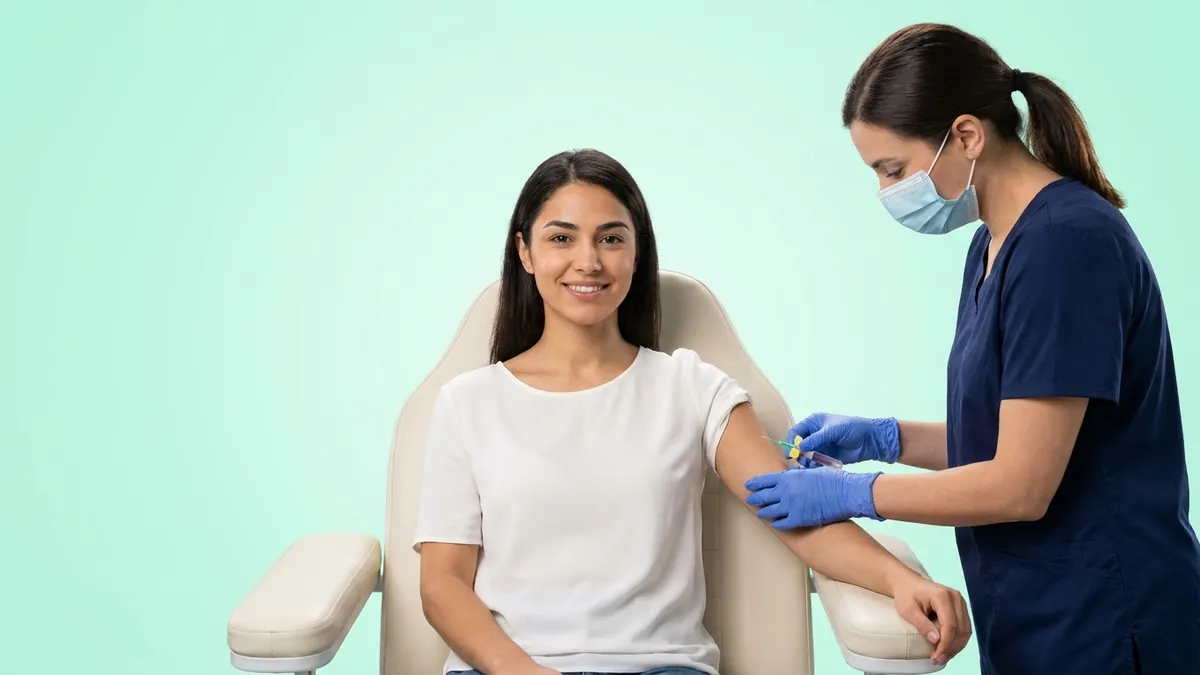
Do you remember the COVID-19 pandemic ? We were all stuck at home, scared. Maybe you had a cold or a cough and got better. Then you thought, "I don't know if I have COVID." Or maybe after getting the vaccine , you thought, "Am I immune now?" Today, we're going to talk about a test that can help you answer those questions.
What exactly is an Antibody Test?
Simply put, this is a test that looks for something called antibodies in your blood. Antibodies are special proteins that our immune system makes when we get an infection, such as the COVID-19 virus , into our bodies. It's like an army protecting our country. These antibodies are what fight the virus and make us healthy. The same thing happens when we get a vaccine; that is, our body makes antibodies that can fight it without getting sick.
So, this antibody test, or serology test as some call it, doesn't check whether you currently have the COVID-19 virus in your body. Instead, it checks whether you've ever had COVID-19 before , or whether your immune system has made antibodies in response to the vaccine you received.
Most importantly: If you currently have COVID-19 symptoms and want to know if you have the disease, you should get a diagnostic test like PCR or Rapid Antigen. An antibody test cannot tell you if you have a current infection.
What are COVID-19 antibodies and how long do they last?
After the COVID-19 virus, that is, the SARS-CoV-2 virus, enters our body, our immune system mainly produces two types of antibodies.
- IgM antibodies: These are the first antibodies to be produced after an infection. Like the first troops to arrive at the start of a battle. These usually last for a short time.
- IgG antibodies: These are produced a little later. But these are the ones that stay in our bodies the longest, and if the virus comes back, they remember it and fight it. These are the experienced, long-term protection army.
It usually takes about 2-3 weeks after you have COVID-19 for these antibodies to build up enough to be detected by a test. So, if you suspect you have the disease, waiting a little longer before taking this test is the best way to get the most accurate result.
How long these antibodies last varies from person to person. Antibody levels can decrease over time. But even when antibodies are low, some cells in our immune system (memory cells) "remember" the virus. So, if you are infected with the virus again, your body can respond more quickly and prevent the disease from getting worse.
Types of Antibody Tests and How to Understand Them?
When you go for an antibody test, there are several ways the results come back. This is very important to understand.
| Test Type | What does this mean? |
|---|---|
| Qualitative Test | This only tells you whether or not you have antibodies in your blood (positive/negative). It does not tell you how many there are in a number. |
| Semi-quantitative Test | This shows an antibody level, but it is only relevant to that test. It cannot be compared with a test from another lab. |
| Quantitative Test | This gives a precise number of antibodies in your blood. These results can be compared with other quantitative test results. Your doctor can get a good idea of what your antibody levels are by looking at this report. |
How do you understand the test results?
Whatever the result of the report you receive, it's important to talk to your doctor to find out exactly what it means.It is mandatory, because even if there is an antibody level, research is still being conducted on what kind of protection it provides.
What are the benefits of the results of an antibody test?
- If a positive (+) result is obtained:
- This means that you have been previously infected with COVID-19 , or that your body has developed antibodies in response to the vaccine you received.
- While this may provide some level of protection, don't assume you're 100% safe . Even if you have antibodies, you can still get sick. That's why it's important to continue practicing good hygiene .
- If a negative (-) result is obtained:
- There may be several reasons for this.
- You may have never had COVID-19.
- Even though you got sick, you probably didn't have enough time for your body to produce antibodies because you took the test too soon.
- The level of antibodies produced in your body may be too low for the test to detect.
- The type of antibody produced by the vaccine you received may be different from the type of antibody your test detects.
Sometimes a test can give a false positive result. For example, you may have antibodies to another coronavirus that caused a common cold before, causing the test to be falsely positive. This is called a "false positive." Also, the test can show a negative result even though you actually have antibodies. This is called a "false negative."
Who should take this Antibody Test?
Anyone who is interested can get tested if they do not currently have COVID-19 symptoms. It can be especially helpful in these situations:
- If you have been confirmed to have had COVID-19 before, find out if you have antibodies in your body now.
- If you have never had COVID-19, but suspect you may have it without symptoms.
- If you have received a COVID-19 vaccine and would like to know how your body has responded to it.
It's best to talk to your doctor for advice before having this test. He or she can explain which test is best for you and how to interpret the results.
💡 Take-Home Message
- A COVID-19 antibody test looks at whether your body has produced antibodies in response to a previous infection or vaccine.
- This test cannot tell if you currently have COVID-19 infection . You would need to have a PCR or Antigen test for that.
- A positive test means that you have some immunity. But don't think that it's 100% protection. Continue to follow good health habits.
- Whatever your test result, be sure to see your doctor to understand it fully and learn about the next steps to take.
- Antibody levels can decrease over time, so getting booster vaccine doses can help keep immunity high.





Janiw kuna arsuwinakas jichhakamax uñt’ayatäkiti. Aka chiqanx amuyt’awim jan ukax jiskt’awim yapxatañamawa.