

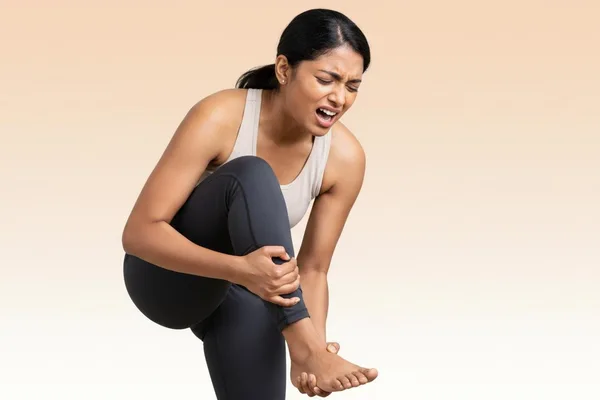
Have you ever had a sudden, sharp pain when you accidentally tripped or bumped your hand while running around the playground or doing household chores? Sometimes we think it's just a sprain, but it can be something more serious. Today we're going to talk about a special type of fracture that can occur at such times.
What exactly is an Avulsion Fracture?
Simply put, this is also a fracture. But this one is a little different. Imagine that your bones and muscles are connected to each other by strong ropes. In medicine, we call these ropes tendons and ligaments . A tendon connects a muscle to a bone, and a ligament connects a bone to another bone, keeping the joints strong.
Now, what happens when you suddenly change direction, jump, or run fast? Your muscle pulls in one direction. Then the bone that is attached to it moves in the other direction. If this pull is too strong, the tendon (or ligament) can come off the bone where it is attached. That's what we call an ``Avulsion Fracture .'' It's like when you try to remove something that is stuck to a wall, a small piece of plaster comes off with it.
Where do these types of breaks most often occur?
Although this injury can occur at any joint, it is most commonly seen in places like these:
Is this a serious situation? Do I have to go to ETU?
You might think, "Oh, do I need to run to the hospital for this little sprain?" But the truth is, we treat any fracture as a serious condition. Because if it's not treated properly, it can misalign, cause bigger problems later, and limit the movement of the joint.
So if you have even the slightest suspicion that you have a broken bone, the best thing to do is go straight to the nearest hospital's Emergency Department (ETU) . The doctors will then examine you thoroughly and give you the necessary treatment.
Who is most affected by this situation?
These injuries are most common in athletes. Footballers, cricketers, netball players, ballet dancers, and gymnasts are at increased risk due to sudden changes in direction, jumping, and sprinting.
But this isn't just something that happens to athletes. Even an ordinary person can have an accident like this, such as tripping over a step or getting their hand caught in the ground while falling.
What are the causes of an avulsion fracture?
This is often caused by sports, especially sports that involve sudden changes in body movements and put a lot of pressure on the body.
- Sudden change of direction: In sports like football and basketball.
- Sprinting : In athletics.
- Kicking: Karate, Football.
- High jump: netball, volleyball.
- Striking the ground with your hand outstretched when falling.
- Sudden increase or decrease in speed.
- Sliding along the ground in a game like baseball.
What are the symptoms of this?
In addition to the severe pain that comes with an accident, there are several other symptoms that you may notice. It is important for you and your doctor to recognize these clearly.
| Symptom | Description |
|---|---|
| Sudden, sharp pain | Severe pain at the moment of the accident. |
| Swelling and bruising | The injury site is swollen and turns blue/purple. |
| Hearing a 'popping' or 'popping' sound | Some people may hear a popping sound when the bone fragment comes off. |
| Difficulty moving | Inability to bend or extend the affected joint or arm/leg. |
| Inability to bear weight | If the accident occurred in a leg, the inability to walk with weight bearing or limping. |
How does the doctor recognize this?
When you go to the ETU, the doctor will first ask you about the details of the incident.
The details you give to the doctor are very important. So, be sure to explain everything clearly, such as how the incident happened, the pain you felt, the noise you heard, etc. If you are taking any other medications, tell them about them as well.
Then, the doctor will examine the injury site. He will check for swelling, pain, and whether you can move your arm/leg.
Next, several tests are performed to confirm whether there is a fracture.
- X-ray: In most cases, this fracture can be clearly seen on an X-ray.
- CT scan: If the X-ray is not clear, or if you need to see the damage to the surrounding soft tissues, a CT scan may be done.
How is it treated?
The treatment depends on where the bone is broken, the size of the broken bone, and how far it is from the main bone. This is usually the treatment that is done.
- Rest: Resting the injured part is essential.
- Icing: Applying ice for 15-20 minutes several times a day is a great way to reduce swelling and pain.
- Immobilization: Plaster of Paris (POP) or a splint is used to stop the broken bone from moving.
- Medication: The doctor will prescribe painkillers to control pain and swelling.
- Physical Therapy: Once the bone has healed, physical therapy exercises are very important to regain joint movement and muscle strength.
Do you need to have surgery?
Most avulsion fractures do not require surgery. They heal with rest and a cast.
However, if the broken bone is more than 2 centimeters away from the main bone , or if the joint is unstable, surgery may be necessary. The surgeon will cut the skin, reposition the bone fragments, and use pins, screws, or plates to fix them in place. This surgery is performed under anesthesia, so you will not feel any pain.
How long does it take to recover? How do I get back to normal?
It usually takes 3 to 12 weeks for a broken bone to fully heal. This time varies depending on your age, health, and the severity of the injury.
You will need to wear a cast for a few weeks and may need to use crutches.
The most important thing is to completely avoid putting weight on the affected arm/leg until your doctor tells you to. If you rush back to playing, running, or jumping, you could risk re-injuring the same area and delaying recovery even further.
After you recover, you will need to see an orthopaedist. He or she will monitor your progress, take additional X-rays if necessary, and advise you when you can resume normal activities and sports.
Take-Home Message
- An avulsion fracture is when a small piece of bone is torn away from a tendon or ligament.
- Although this is common among players, it is a danger that can happen to anyone.
- Sudden sharp pain, swelling, and a 'cracking' sound are the main symptoms.
- If you suspect a broken bone, treat it as an emergency and go to a hospital's Emergency Department (ETU) immediately.
- Follow your doctor's instructions exactly. Avoid rushing back into sports or lifting weights.
- The risk of such accidents can be reduced by warming up and stretching the body thoroughly before playing sports or exercising.




💬 Comments (0)
No comments have been posted yet. Add your comment here for the first time.
Add your comment