

Have you ever thought about how important it is for us to breathe? This process that we do without stopping for a single moment is indispensable to our lives. Especially with the Corona pandemic, many people have started talking about the "oxygen level", a machine that looks like a small clip that you put on your finger. So, what exactly is this blood oxygen level? How does it affect our health? Today we will talk about it all in a simple way, in a way that you can understand.
What is blood oxygen level?
Simply put, the amount of oxygen in your blood is what we call your blood oxygen level.
To explain this a little, think of our body as a vehicle. A vehicle needs fuel to run. Similarly, every cell in our body, even the smallest part of it, needs energy to work. The "fuel" that cells need to produce this energy is oxygen .
When we breathe in through our nose or mouth, this oxygen goes to our lungs. From there, it is absorbed into the blood. The blood then distributes this oxygen to all the cells throughout the body. After the cells use this oxygen to make energy, they release carbon dioxide as a waste product. This carbon dioxide is again carried to the lungs by the blood. When we exhale, this carbon dioxide leaves the body.
Our bodies are very good at regulating the amount of oxygen in our blood. Low levels of oxygen in the blood, a condition called hypoxemia , can be very dangerous for our bodies. This can be especially harmful to our brain and heart . Low levels of oxygen in the blood can be a sign that our lungs or circulatory system are not working properly.
How do you measure oxygen levels?
There are two main ways to measure blood oxygen levels. One is by taking a blood sample and the other is by using a small machine that is familiar to most people and is attached to a finger.
1. Arterial Blood Gas (ABG) test
This is the most accurate and detailed method. Normally, when we donate blood, we take blood from a vein. But for this test, blood is taken from an artery. Because the blood in the arteries has the most oxygen.
This ABG test can measure not only the oxygen level, but also many other important information such as the amount of carbon dioxide in the blood and the acid-base balance (pH balance) of the blood.
2. Pulse Oximeter
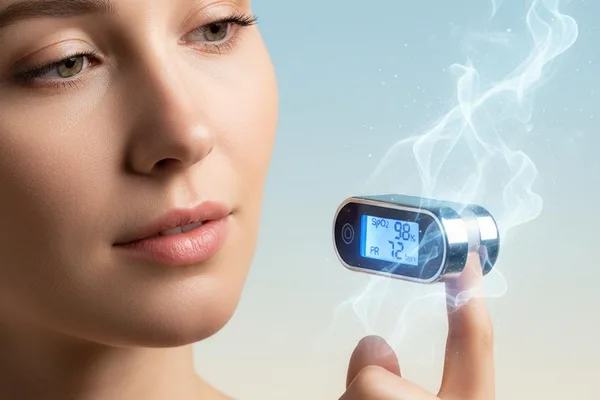
This is the little clip-like device we all know that you attach to your finger, earlobe, or toe. It allows you to quickly and painlessly get a rough idea of how much oxygen is in your blood.
We call the level measured by this the SpO2 level.This shows how much of your blood is saturated with oxygen. It also shows your heart rate. As well as being used in hospitals, many people are now using this device at home.
Why would a doctor check your oxygen levels?
Your doctor may decide to check your oxygen levels if you have certain symptoms.
| Circumstances that lead to testing | Examples |
|---|---|
| In emergency and critical situations |
|
| To monitor chronic conditions |
|
| To measure the success of treatments | If you are receiving oxygen therapy in a hospital, doctors will regularly check your oxygen levels to make sure you are getting the right amount of oxygen. |
What is a normal oxygen level?
The most important thing is to talk to your doctor to find out exactly what your normal level is.
In a generally healthy person, if oxygen saturation is between 95% and 100% as measured by a pulse oximeter, that is a very good level.
However, if you have a chronic lung disease like COPD, your normal oxygen levels may be a little lower than this. Your doctor will explain to you what level is right for you at that time. Also, someone living at a high altitude may naturally have a slightly lower oxygen level.
Another thing to keep in mind is that home pulse oximeters are not always 100% accurate. Sometimes your actual oxygen level may be 2% - 4% higher or lower than what it shows. So if you have any doubts, it's best to get checked by a doctor.
What is low oxygen levels (Hypoxemia)? What are its causes?
Hypoxemia is a medical condition in which the oxygen level in the blood drops below normal levels. This is a condition that requires attention because the lower the oxygen level, the greater the chance of damage to the body's organs.
Main reasons why oxygen levels may decrease
- Heart disease: When the heart's function weakens, blood cannot be pumped properly throughout the body, which can impair oxygen delivery.
- Lung diseases: Diseases like asthma, emphysema, and bronchitis reduce the lungs' ability to absorb oxygen.
- Sleep Apnea: Frequent pauses in breathing during sleep can cause oxygen levels to drop during the night.
- Some painkillers: Strong painkillers and some medications can slow down breathing and lower oxygen levels.
- Damage to lung tissue: Inflammation or scarring in the lungs can interfere with oxygen exchange.
- Areas with higher altitudes: As altitude increases, the amount of oxygen the body receives decreases because the oxygen concentration in the air decreases.
Symptoms of low oxygen levels
When your blood becomes low on oxygen, you may experience the following symptoms. These may vary from person to person and depending on the severity of the condition.
| Symptom | Description |
|---|---|
| Difficulty breathing | Difficulty breathing, a feeling of suffocation. |
| Heart palpitations | The heart starts working faster to provide the body with the oxygen it needs. |
| Headache | It can be caused by the brain not getting enough oxygen. |
| Cough and fatigue | Frequent coughing and a feeling of chest tightness. |
| Confusion | Decreased memory due to effects on brain function. |
| Blue skin, lips, and nails | This is a serious symptom. It occurs when there is a significant decrease in oxygen in the blood. |
How to increase oxygen levels naturally?
If your oxygen levels are a little low, or if you're just trying to stay healthy, these things can help you.
- Breathe fresh air: Keep the windows open at home. Go outside for a short walk during the day. This will increase the amount of oxygen your body receives.
- Avoid smoking: If you are a smoker, quit today. Within two to three weeks of quitting, your blood circulation will improve significantly. Within a few months, your shortness of breath will be significantly reduced. Both of these increase the body's ability to get oxygen.
- Do breathing exercises:Simple breathing exercises can open your airways and increase the amount of oxygen entering your blood.
But remember this! If you have a serious condition like pneumonia, or if you have serious symptoms like difficulty breathing or blue lips, these natural remedies alone will not be enough. In such a case, go to a hospital's Emergency Department (ETU) immediately.
When should you see a doctor?
If you are using a Pulse Oximeter at home, keep these things in mind:
- If your oxygen level is 92% or lower , call your doctor .
- If the oxygen level is 88% or lower , immediately go to the Emergency Department (ETU) of the nearest hospital .
If you have a chronic condition like COPD or asthma, it is important to follow your doctor's advice as directed. If you develop new symptoms or if your symptoms worsen, see a doctor immediately.
Take-Home Message
- The level of oxygen in the blood is an important indicator of our body's health.
- The normal oxygen saturation (SpO2) of a healthy person is between 95% - 100%.
- A pulse oximeter is a useful tool for getting a rough idea of your oxygen levels at home, but its accuracy can be affected by things like nail polish, bright light, and movement.
- Low blood oxygen levels (Hypoxemia) are a serious condition. Difficulty breathing, confusion, and bluish skin/lips are some of its serious symptoms.
- If your oxygen level is below 92%, call a doctor. If it is below 88%, go to the ETU immediately.
- If you have any concerns about your health, always seek advice from a qualified medical professional without guessing.




💬 Comments (0)
No comments have been posted yet. Add your comment here for the first time.
Add your comment