
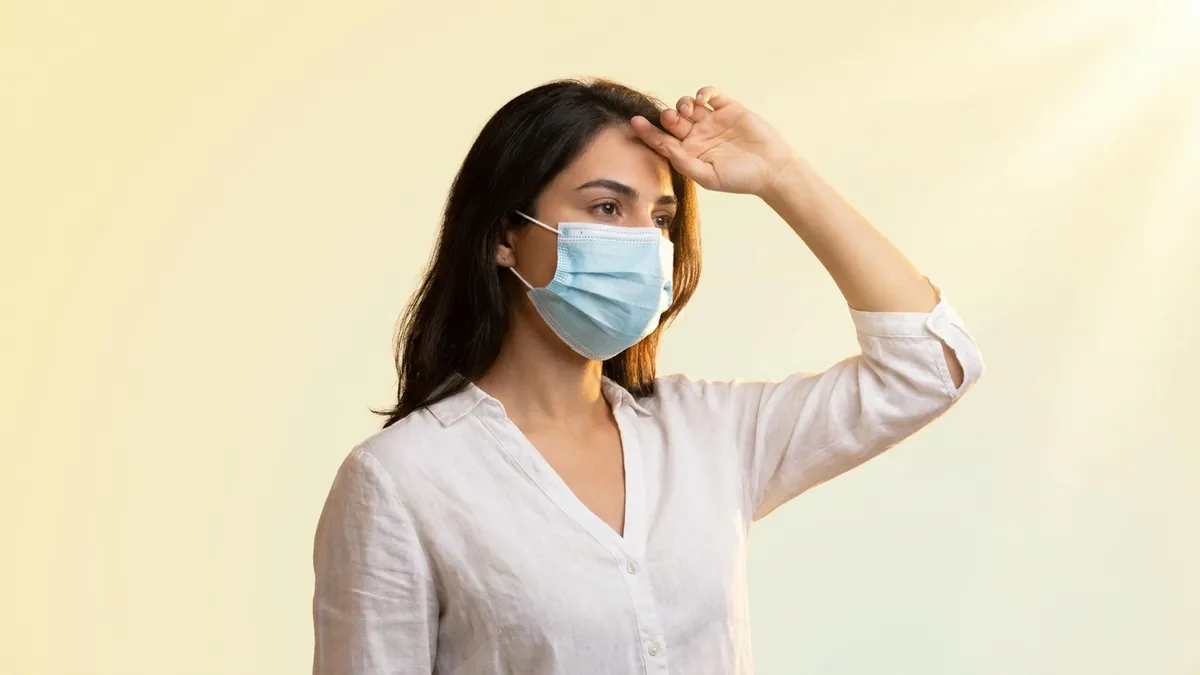
During the early days of the COVID-19 pandemic, one of the things we all thought and hoped for was that, 'When the weather gets warmer and the sun gets warmer, this pandemic will naturally subside.' Because we had a little idea in our minds that viruses have a hard time surviving heat and humidity. But did that really happen? What happened to the virus when the weather changed? Let's talk about this in a little more depth and simplicity.
Why did we think the heat would kill the virus?
There is a main reason why this idea comes to our minds. That is the common cold and flu that we all know. Just think, even in our country, these kinds of respiratory diseases often spread during cold, rainy weather, right? That is called a seasonal pattern. So, since this new coronavirus also affects the respiratory system, we thought it would behave in the same way.
That is, there was a strong belief that it would spread more during the cold season and decrease when the warm season arrived. Even scientists initially expressed different opinions about this.
But, the most important thing we need to understand here is that not all viruses are the same. Especially (COVID-19) is a new virus to the world. So no one knew exactly how it would behave and how it would respond to the climate.
What really happened in the world and in our country?
What actually happened was completely different from what we expected. Early in the pandemic, COVID-19 began to spread very rapidly, even in countries with hot and humid climates like Australia and Iran.
Even if we think about our Sri Lanka, it is the same. Our country has a warm climate all year round. But the spread of the virus has not stopped in any way. Although the spread has been controlled at times, it was not due to the weather, but to the health safety measures we followed. This makes it clear to us that warm weather alone cannot stop the spread of the coronavirus .
Can a virus adapt to every environment?
Yes, some viruses have that ability. Different strains of a virus can arise. These new strains can adapt to different environmental conditions, such as heat, cold, dryness, and humidity. Even if a virus is found to be killed at a certain temperature in a laboratory test, it behaves very differently in the real world. Because in the real world, there are many other factors that affect the spread of viruses beyond just the weather.
Things that affect the spread of viruses more than weather
When it comes to the spread of a virus, especially a pandemic like (COVID-19), weather is only one small factor. There are several factors that have a much stronger impact. Let's take a look at what they are in this table.
| The main influencing factor | How it affects (in simple terms) |
|---|---|
| Human behavior | The virus spreads easily through things like not wearing masks, not washing hands, going to crowded places, and holding parties. It doesn't matter how nice the weather is. |
| Human movement | When people move from one area to another, from one country to another, the virus moves with them. This has nothing to do with the weather. |
| New strains of the virus | When new variants of the virus emerge, they can sometimes spread more quickly than previous variants. They can also sometimes be more resistant to different environmental conditions. |
| People's immunity | The immunity that people in a given area gain through vaccination or recovery from the disease has a major impact on controlling the spread of the virus. This is also unrelated to the weather. |
So what should we do?
What all of this makes clear to us is that we absolutely cannot rely on the weather to control a viral pandemic . Whether it's sunny, rainy, cold, or hot, we need to think about our safety the same way all year round.
The most dangerous thing that can happen is to abandon safety measures thinking, "It's not a problem because it's hot right now." Because the virus needs people to spread, not certain weather conditions.
Therefore, for the safety of you and your family, it is essential to always follow the advice given by doctors and health authorities.
- Wearing a face mask correctly.
- Wash your hands thoroughly with soap or use a sanitizer.
- Maintaining distance from others.
- Avoid crowded places as much as possible.
- If you have symptoms , stay home and seek medical advice.
- Receiving the appropriate doses of vaccines on time.
If we do these things correctly, we have a much better chance of protecting ourselves from the virus, no matter what the weather is like. Every pandemic is different. So, what works for one person may not work for another. The best thing to do is to always be vigilant and follow health advice .
💡 Take-Home Message
- Warm weather alone cannot be relied upon to eliminate pandemics like the coronavirus (COVID-19).
- The spread of a virus is more affected by factors such as human behavior, travel, and the nature of the virus than by weather.
- Every virus behaves differently. The seasonal patterns that apply to the common cold and flu may not apply to new viruses.
- Regardless of the weather, be sure to follow the safety advice (such as wearing a mask and washing your hands) provided by your doctor and health authorities throughout the year.





Janiw kuna arsuwinakas jichhakamax uñt’ayatäkiti. Aka chiqanx amuyt’awim jan ukax jiskt’awim yapxatañamawa.